2026-07-27
What kind of person is a good candidate for a sub-brow lift? Cases with good results, before and after photos, and its history, concept, and techniques.
This article by Dr. Tak Woo-hyun of Tailor Plastic Surgery delves into the sub-brow lift, covering its history, ideal candidates, design methods, surgical techniques, and post-operative care. It highlights the benefits for thick eyelids and outer eyelid sagging.
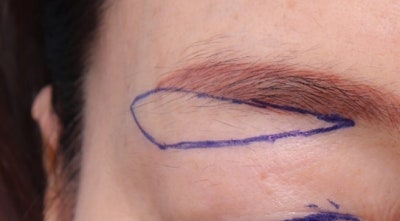
Hello, I am Tak Woo-hyun, director of Tailor Plastic Surgery!
I started this personal blog to share insights and my considerations on surgical procedures that I couldn't fully elaborate on our YouTube channel or website.
Today, I will write about the sub-brow lift as my first topic.
The order will be:
1. History and Concept of the Surgery
2. Indications (Which cases are the best candidates)
3. Design Methods
4. Surgical Techniques and Key Points
5. Progress and Post-operative Care
1. Let's start with the history and concept.
The history of the sub-brow lift is older than you might think. The first published paper was presented in 1976 by a person named Parkes in the United States.
1976 Laryngoscope. Parkes ML, Kamer FM, Merrin ML. ‘Infrabrow lift’ |
In which cases is it the best surgery?
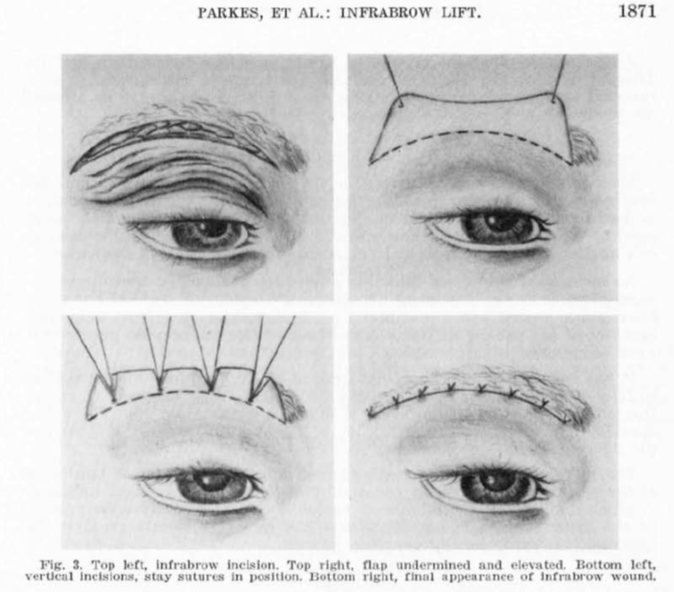
It's simply the concept of removing skin and meticulously suturing it to match the shape.

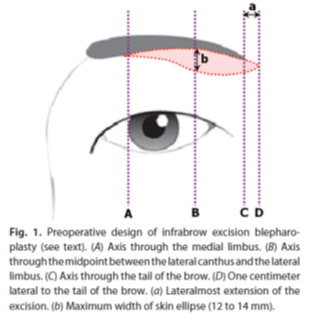
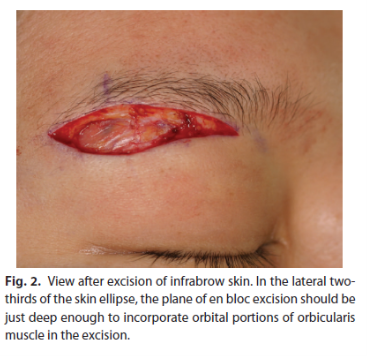
The first paper published in the East was by the Department of Plastic Surgery at Yonsei University Severance Hospital. It was in 2008, and if you look closely at the authors, Kwan-Chul Tark, my father, was one of them. At that time, there was a more detailed description of design methods and surgical techniques.
Subsequently, various papers approached it in different ways, and to minimize eyebrow descent after a sub-brow lift, methods such as periosteal fixation and frontalis sling techniques evolved.
I personally used the periosteal fixation method extensively until about 10 years ago, but because it involves fixing the orbicularis oculi muscle, which needs to move, to the immobile periosteum, it often caused neurological symptoms such as discomfort, nausea, and vomiting. So, I no longer use it. Instead, I now use the frontalis sling method, which involves suspending the orbicularis oculi muscle to the frontalis muscle. This method helps prevent eyebrow descent as much as possible.
Another important concept here is the skin zones.
Three Skin Zones in the Asian Upper Eyelid Pertaining to the Asian Blepharoplasty Yeop Choi, MD, PhD, Hyun Gu Kang, MD,y and Yong Seok Nam, PhD / J Craniofac Surg 2017;28: 892–897 |
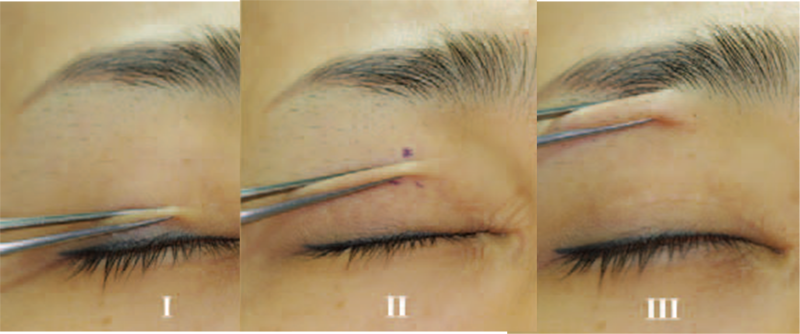
Our eyelid skin is thicker closer to the eyebrow and gradually thins as it descends towards the eyelashes. The thick skin area is called Zone 3 skin. If a double eyelid crease is created in this area, the skin fold will be thick, and the crease will not be well-maintained. Therefore, it's important to avoid creating a double eyelid in this area and instead reduce this area while widening the thinner skin area below. This is why the sub-brow lift is a good surgery for East Asians with thick eyelids, as it can directly remove this Zone 3 skin. Some plastic surgeons claim that this surgery is ineffective and recurs quickly, but I believe that's because they haven't encountered good indications or applied it to unsuitable patients.
To summarize, the advantages of a sub-brow lift compared to traditional upper blepharoplasty are:
It's effective for eyes that appear thick by reducing the thick skin area.
It can more effectively improve sagging of the outer eyelid.
And finally, it allows for more extensive removal of fibrous fat.
However, there are also limitations:
It cannot change the double eyelid crease.
It's difficult to remove eyelid skin close to the nose.
Ptosis correction cannot be performed with this incision.
The distance between the eyebrow and eye becomes closer (though this is also true for upper blepharoplasty).
So, moving naturally to the indications:
2. Indications (Which cases are the best candidates)
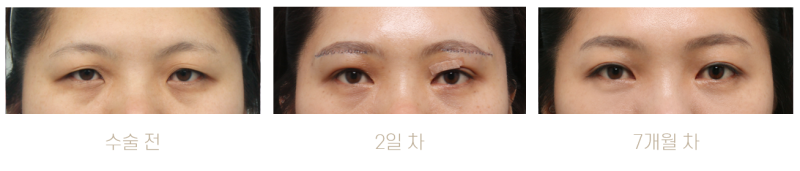
-First, there should be an adequate space between the eyebrow and the eye.
Typically, when the eye is open, if the size of the iris fits between the eyebrow and eyelashes about 1 to 1.5 times, it's suitable for a sub-brow lift. If it's wider than that, it's a good candidate. Of course, some people whose iris doesn't even fit once don't look particularly stuffy after the surgery, so it's more accurate to make this decision through direct examination.
It's a good indication when there is significant sagging of the thick skin on the outer part of the eyelid.
And sometimes, there are people who don't want to create a double eyelid, so it can be well-applied to them too.
3. Design Methods
Moving on to design, I personally use various forms of designs.
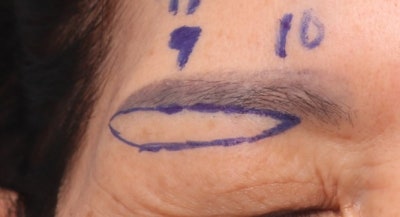
Depending on the shape of the double eyelid and the form of sagging, I might use an oval design or a trapezoidal design. Cases extending to the front of the eyebrow are also increasing, but that area is more prone to visible scarring, so great care must be taken.
4. Surgical Techniques and Key Points
When making the incision near the eyebrow, including one or two rows of eyebrow hairs in a diagonal incision is key to making the scar less visible. This is a similar method to forehead reduction.
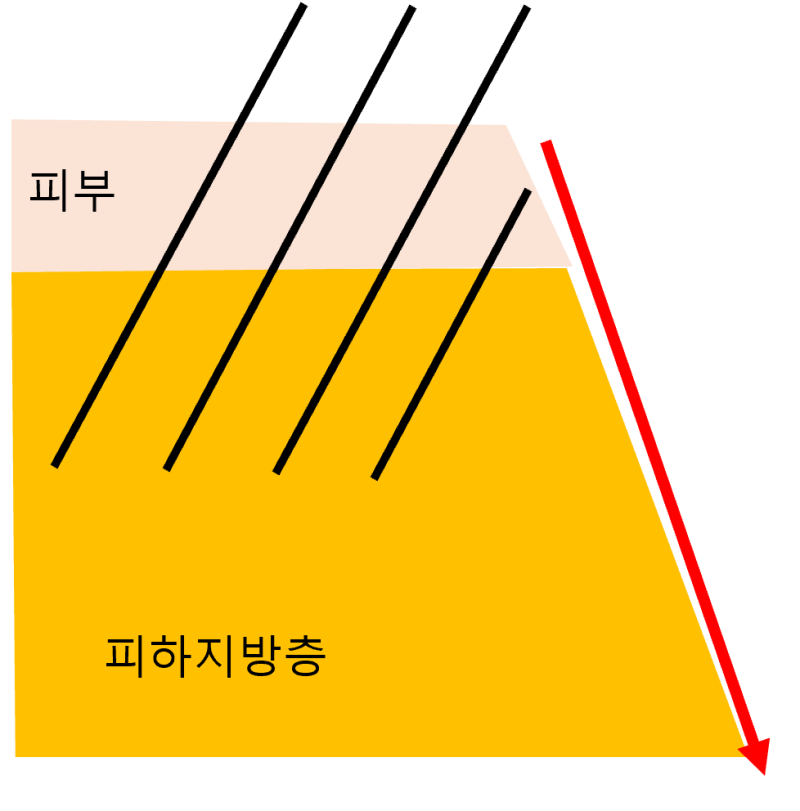
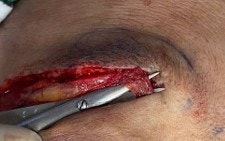
During the surgery, a portion of the corrugator muscle can also be removed. Of course, since it's only a partial removal compared to what's removed in an endoscopic forehead lift, it doesn't completely prevent glabellar wrinkles. This also helps to minimize eyebrow descent.
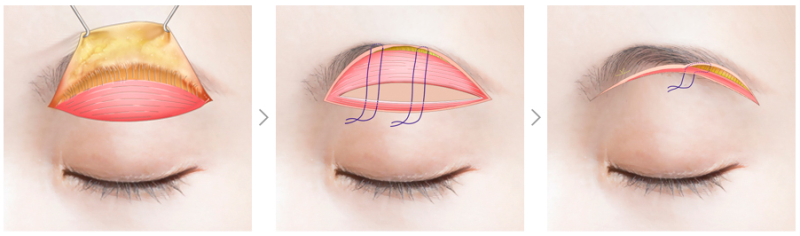
This diagram explains the orbicularis oculi sling method, where the orbicularis oculi muscle from the eyelid is suspended to the frontalis muscle to minimize eyebrow descent. However, it only reduces descent; it's impossible to make the eyebrows go higher or prevent them from descending at all.
This is the next important part: the cross-section of the suture. Because the skin thickness near the eyebrow and on the eyelid is quite different, another key point to minimize scarring is to match these thicknesses using the orbicularis oculi muscle during suturing.
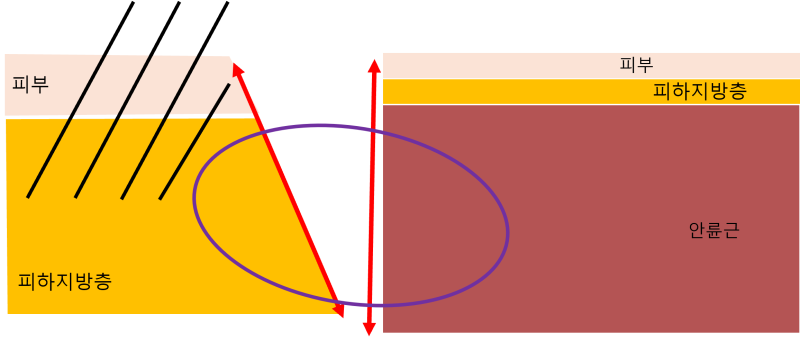
When the subcutaneous layer suturing is complete, both sides are almost healed, and the skin suturing is done with very smooth tension, just for finishing.
5. Progress and Post-operative Care
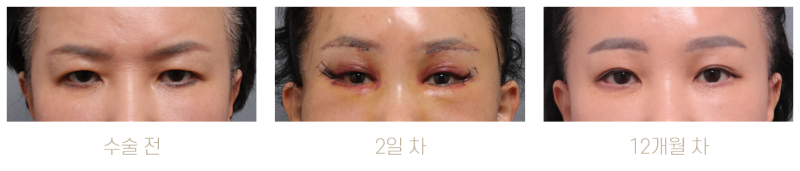
Stitches are usually removed on day 7. For about 1-2 months afterward, the scar may appear slightly red, and it's necessary to cover it with makeup during this period. After 3 months, it gradually fades. Visiting the clinic at this time for treatments like Fraxel laser can make it even less visible.
Bruising and swelling vary greatly among individuals, but significant swelling can last for about 2-3 weeks, and some people may have bruising until this period.
From an aesthetic perspective, there can be discomfort and the eyebrows may appear significantly lower for 1-2 months, which can feel awkward. However, after 3 months, it becomes functionally more comfortable, and it's a period of adaptation. So, it's generally best to consider the 3-month mark as when a certain level of results becomes apparent.
This concludes my post on everything about the sub-brow lift.
I've linked content on the same topic that was covered on the Tailor Plastic Surgery YouTube channel, so please refer to it.
#SubBrowLift #EyelidSagging #SubBrowLiftSurgery #SubBrowLiftScar #SubBrowLiftReview #SubBrowLiftEffect #SubBrowLiftDuration #SubBrowLiftSurgeryReview #TailorPlasticSurgery
Frequently Asked Questions
What is a sub-brow lift?
A sub-brow lift is a surgical procedure that involves making an incision below the eyebrow to remove excess thick skin from the sagging eyelid. It specifically focuses on directly reducing the thick skin area (Zone 3) of the eyelid to improve the appearance of thick-looking eyes and effectively correct outer eyelid sagging.
Who is a suitable candidate for sub-brow lift surgery?
Sub-brow lift surgery is suitable for individuals with adequate space between the eyebrow and the eye, and significant sagging of the thick skin on the outer part of the eyelid. It can also be a good option for those who wish to maintain a natural eye shape without creating a double eyelid crease.
What are the advantages of a sub-brow lift?
Compared to traditional upper blepharoplasty, a sub-brow lift can improve thick-looking eyes by reducing the thick skin area and more effectively correct outer eyelid sagging. Additionally, it offers the advantage of more extensive removal of fibrous fat.
Can eyebrow descent be prevented after surgery?
Yes, techniques are used during surgery to minimize eyebrow descent. The ‘frontalis sling method’, which involves suspending the orbicularis oculi muscle to the frontalis muscle, helps to reduce eyebrow descent as much as possible. However, it is impossible to make the eyebrows go higher or prevent them from descending completely.
How long is the recovery period after sub-brow lift surgery?
Stitches are typically removed on day 7 after surgery. Significant swelling and bruising may last for about 2-3 weeks, and the scar may appear red for 1-2 months before gradually fading after 3 months. The period when functional comfort and adaptation are achieved is usually from the 3-month mark.
How should I manage the scar after sub-brow lift surgery?
During the initial 1-2 months after surgery, the scar may appear slightly red, so it's advisable to cover it with makeup. As 3 months pass, the scar gradually fades. Visiting the clinic at this stage for treatments such as Fraxel laser can help manage the scar to make it even less visible.