2026-09-07
Why You Shouldn't Neglect Inflammation Around Root Canal-Treated Teeth (Extraction and Implant) at Geumho-dong Dental Clinic
Neglecting inflammation around root canal-treated teeth can lead to bone loss and tooth mobility, often requiring extraction and implant placement with bone grafting. Early detection is crucial.
Hello.
This is Dr. Kim Tae-young, the head director of Bareunyoung Dental Clinic in Geumho-dong, where I introduce cases personally treated by the head director.
When teeth that have undergone root canal treatment a long time ago are used for an extended period, inflammation often develops around the treated root, dissolving the surrounding bone or causing tooth mobility.
When we undergo root canal treatment, also known as endodontic treatment,
we lose the ability to feel temperature stimuli or pain, except for proprioception.
Therefore, in most cases, symptoms are not noticed until periodontal disease or cavities have progressed significantly.
When the bone around a tooth has been absorbed to the point where extraction is necessary,
the first treatment option is often an implant.
In such cases, if the surrounding bone where the implant is to be placed has been absorbed,
alveolar bone grafting must be performed concurrently.
Today, we will look at two similar cases.
I've had a toothache for a long time, but I was scared to come.
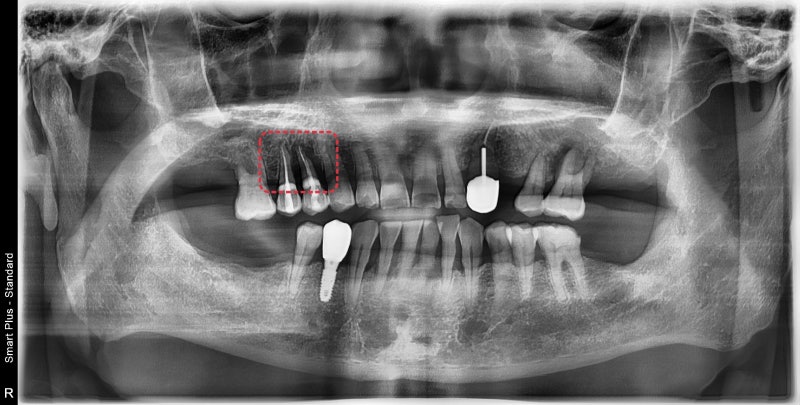
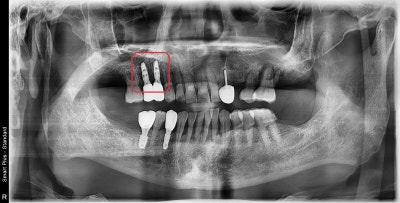
This patient had lost multiple molars and many teeth were loose due to periodontitis.
However, due to fear of dental treatment, they had been taking medication and enduring the pain until it became uncontrollable, at which point they visited our clinic.
The areas marked in the photo had undergone root canal treatment in the past,
and inflammation had developed around them, leading to the absorption of the bone supporting the teeth,
and tooth mobility was observed.
The diagnosis indicated that extraction was necessary,
but since the patient had a fear of dental treatment,
we decided to proceed with treatment while controlling the pain as much as possible.
We used anesthetic cream and a pain-free anesthesia device to minimize pain during the anesthesia process before starting the treatment.
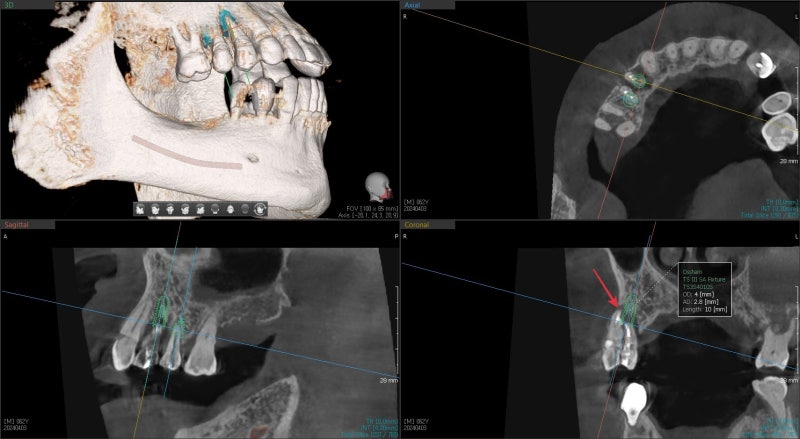
Although immediate implant placement after extraction is ideal,
the area indicated by the arrow had been absorbed due to inflammation,
meaning that even if an implant were placed, there would be no surrounding bone,
and it would inevitably be exposed.
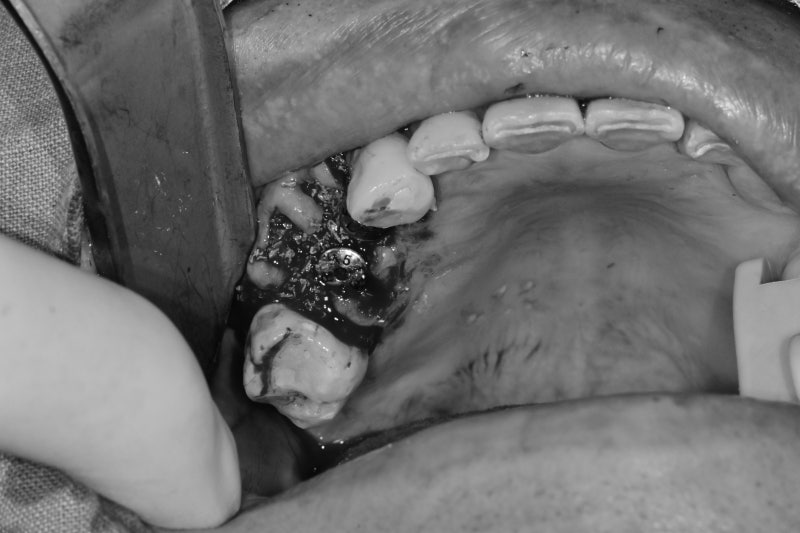
If surgery is performed by incising the gum in the extraction site after tooth removal,
it can help secure the surgical field during the operation.
However, when performing alveolar bone grafting (bone graft),
the fixation of the bone graft material in the surgical area would be weakened,
and absorption of the existing alveolar bone could occur.
To maximize the success rate of bone grafting,
we performed the surgery without gum incision.
These are photos after waiting for the graft material to sufficiently solidify and completing the prosthetic work.
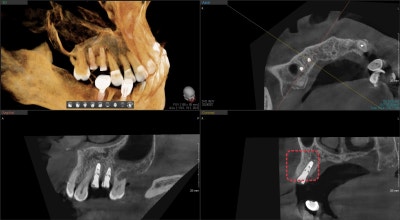
Fortunately, approximately 4 months after the surgery, a 3D CT scan confirmed the formation of white bone around the implant.
Currently, even in the full photo taken a year later, there appear to be no particular issues.
Although the patient waited a little longer than other patients after implant surgery,
their diligent cooperation led to excellent results.
The patient also expressed regret, saying that the treatment was more manageable than they had feared and that they wished they had come to the dentist for care sooner.
Nevertheless, having overcome their dental phobia, they decided to proceed with treatment on the opposite side.
Currently, the painful area has been resolved, and due to a busy schedule, the treatment for the opposite side is being postponed.^^;
A root canal-treated tooth became loose and inflamed a long time ago.
Here are photos of the second patient.
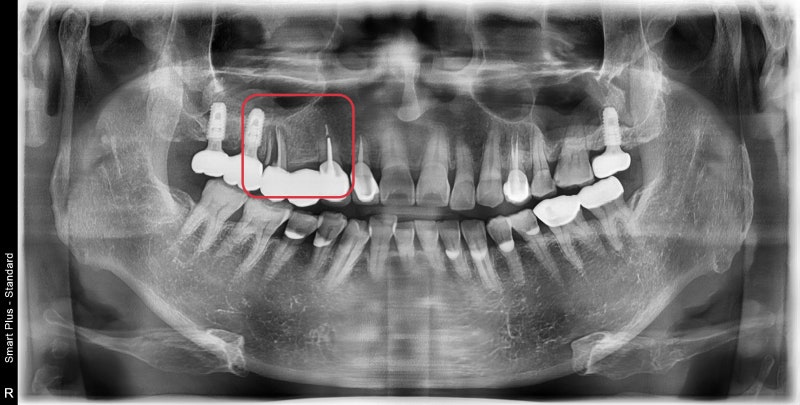
This is a similar case to the first patient.
This time, the patient had undergone bridge treatment using a root canal-treated tooth.
There was a strong chewing implant nearby,
and since the patient was accustomed to strong chewing forces,
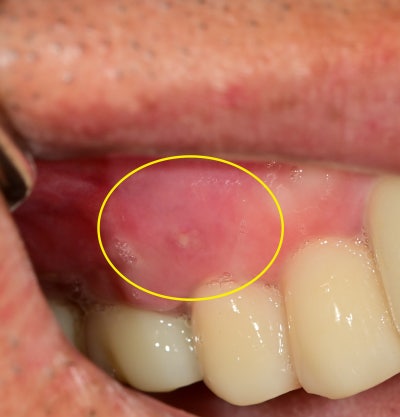
the root of the tooth in front of the implant fractured, leading to internal inflammation.
Intraoral photos showed that the gum around this tooth was intermittently inflamed.
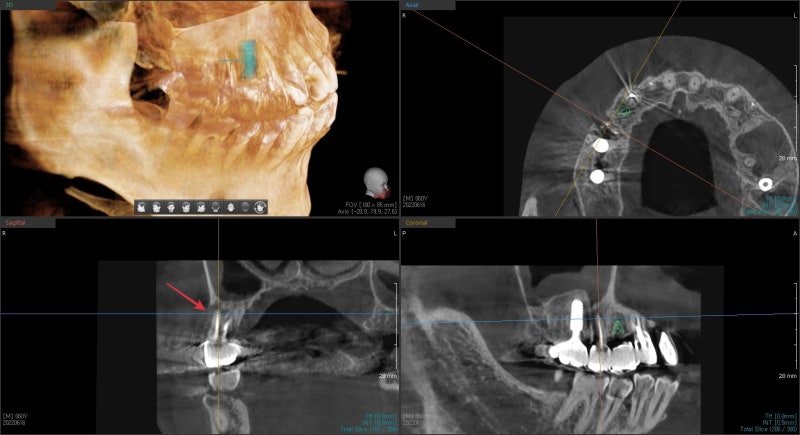
Again, the initial 3D CT showed that the bone forming one wall surrounding the tooth was absorbed,
exposing the tooth root. In this case, immediate implant placement after extraction
was accompanied by alveolar bone grafting, using the existing gum as a barrier membrane.
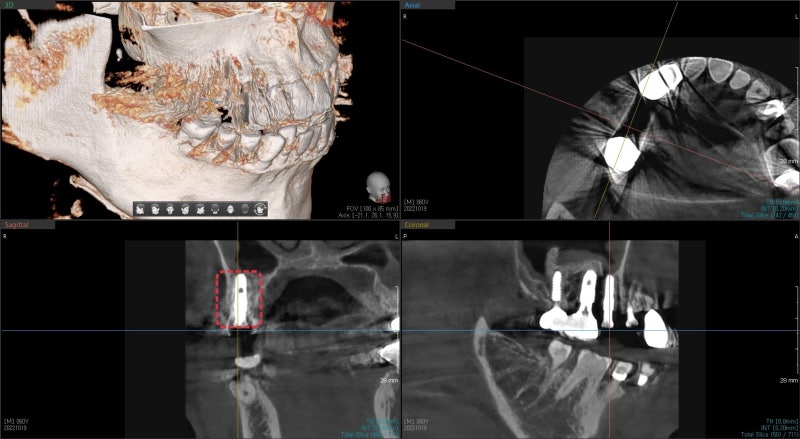
This is a photo taken 4 months after the surgery.
White bone formation was observed around the implant.
The assessment of bone and implant stability also showed good values, allowing for the completion of prosthetic treatment.
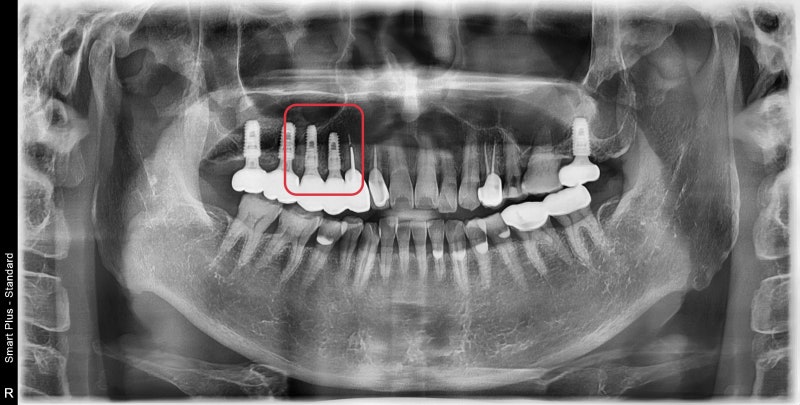
This is a photo from their most recent visit.
Among the bridge teeth, the front tooth was preserved with re-prosthesis without extraction,
and implants were placed in the two spaces behind it.
This patient has been using them well and coming for regular check-ups for the past 2 years.
Root canal-treated teeth are vulnerable to cracks or root inflammation.
When a tooth undergoes root canal treatment,
it loses its vitality within the root,
becoming susceptible to re-contamination and having reduced fracture resistance.
While not all teeth develop such symptoms after root canal treatment,
it can vary depending on chewing habits and the occlusal state of each tooth.
Even if implant surgery is successful
and strong bone is restored,
it is essential to prevent and manage peri-implantitis through implant maintenance to ensure healthy oral health.
Today, I have explained the symptoms that can occur in root canal-treated teeth.
If you are experiencing similar symptoms or discomfort,
we recommend visiting a nearby dental clinic for an examination.
Thank you^^
▼Related cases to read
We believe that proper treatment leads to proper results. My goal is to create a trustworthy dental clinic where everyone who visits with worries can leave feeling relieved. - Bareunyoung Dental Clinic
Directions: 2nd floor, JYJ Building, 179 Dongho-ro, Jung-gu, Seoul. Right in front of Exit 6 of Yaksu Station, towards Yaksu Market. Use Village Bus No. 5 (Yaksu Station), Village Bus No. 12 (Namsan Town, Yaksu Police Station), Bus Stop (Yaksu Heights, Sindang Social Welfare Center, Gaon Library, Geumho Tunnel Entrance). From YuYu Pharma towards Geumho Station.
This post was written directly by Bareunyoung Dental Clinic for the purpose of providing medical information and hospital advertising (in compliance with Article 56, Paragraph 1 of the Medical Act). The photos are taken from individual patients, and results, as well as side effects (prosthesis detachment, pain), may vary depending on the individual after surgery/procedure, so please consult sufficiently with your medical team before making a decision.
Frequently Asked Questions
Why are root canal-treated teeth prone to inflammation?
Teeth that have undergone root canal treatment lose the ability to feel temperature stimuli or pain, except for proprioception, making it difficult to notice symptoms even if periodontal disease or cavities have progressed significantly. Additionally, after root canal treatment, the vitality within the tooth root is lost, making it susceptible to re-contamination and fracture.
What happens if inflammation around a root canal-treated tooth is left untreated?
If inflammation develops around the root of a root canal-treated tooth, it can dissolve the surrounding bone, leading to tooth mobility. This can result in the absorption of the bone supporting the tooth, eventually necessitating extraction.
When is bone grafting necessary after tooth extraction for an implant?
Yes, it may be necessary. If the bone around the tooth has been absorbed to the point where extraction is required, and there is insufficient bone in the area where the implant is to be placed, alveolar bone grafting must be performed concurrently. This is to create an environment where the implant can be firmly fixed.
How long does it take for bone to form after implant surgery?
The time it takes for the bone graft material to solidify and for bone to form after surgery varies among individuals. However, in the case presented in the article, bone formation around the implant was observed in a 3D CT scan approximately 4 months after surgery. Prosthetic treatment is then completed.
Is maintenance important after implant surgery?
Yes, it is very important. Even if implant surgery is successful and strong bone is restored, consistent implant maintenance is essential to prevent peri-implantitis and maintain a healthy oral condition.
Is treatment possible even if I have a fear of dental procedures?
Yes, it is possible. In the case presented in the article, for a patient with a fear of dental treatment, treatment began after anesthesia was administered with anesthetic cream and a pain-free anesthesia device, minimizing discomfort. You can consult sufficiently with your medical team to plan for pain control.