2025-11-03
#15 SH Plastic Surgery Clinic Director Kim Sung-hoon, 'Faces are remembered by ‘structure,’ not ‘trends’' – Reflecting on Perfect Glow
Director Kim Sung-hoon discusses how facial aesthetics should prioritize underlying structure over fleeting trends, drawing insights from the K-beauty show 'Perfect Glow.' He emphasizes that lasting beauty comes from structural integrity, not just superficial changes, and outlines current plastic surgery trends focusing on naturalness, durability, and functional restoration.

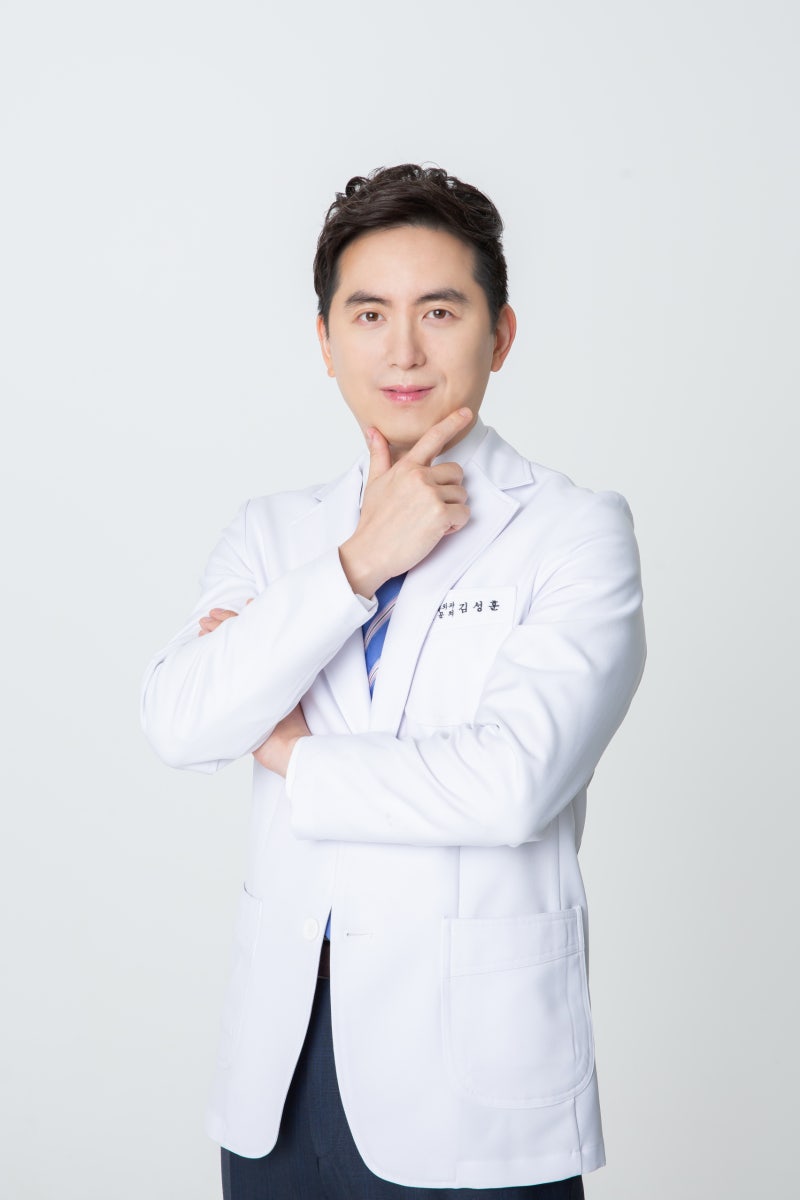
Hello, I am Director Kim Sung-hoon, a facial designer.
Working in Gangnam, trends always change rapidly.
Just a few months ago, ‘clear lines’ were the mainstream, but these days, ‘natural, yet long-lasting’ is heard more often.
Recently, the entertainment show 'Perfect Glow' covered the process of opening a K-beauty shop in New York,
and it seems that Korean aesthetics, which are effective on the international stage, are once again gaining attention.
This program was not just a makeup or skincare show,
but a reality show that actually applied Korean beauty to the foreign market and checked the reactions.
While briefly watching this program in passing,
questions that patients often ask me suddenly came to mind.
‘Director, what kind of face is considered beautiful now?’
Whenever I get asked that, I have a most common answer...
‘A long-lasting face is one whose structure does not collapse.’
What I said is not merely a beauty-oriented statement.
As shown in Perfect Glow, while superficial beauty can lead to a ‘successful reaction’ in the global market,
I once again thought that for it to last long on our actual faces, structural completeness must follow.
In other words, makeup is temporary, but fundamental solutions for the sustainability of change are important!
From the facial skeleton, the elasticity of soft tissues, skin thickness, to the flow of expressions,
all these elements must be in harmony to truly become a ‘long-lasting face.’
I believe future trends should be prepared in this way.
Thoroughly designing from the structural design stage rather than superficial changes, accurately diagnosing each individual's anatomical conditions (skin, fascia, cartilage, etc.), and establishing surgical/procedural strategies that consider ‘maintenance and stability’ after the change!
Watching the trials and errors and reactions that Perfect Glow's New York pop-up salon experienced while introducing Korean aesthetics to foreign consumers, I had these thoughts in my consultation room.
‘Yes, visible changes (makeup) alone are not enough.
If the structure, which comes from the aging process, shakes, that change (makeup) will soon shake.’
Through my articles, which I will continue to upload,
I hope you will explore with me why structure is the primary condition in rhinoplasty, forehead lifts, and full-face lifts,
and what methods and materials create truly sustainable aesthetics.
In that sense, today I briefly touched upon recent plastic surgery trends, from my own perspective.
I have organized it based on my own philosophy.
1. The Present of Facial Plastic Surgery — ‘Undetectable, yet Functional’
The most frequently heard keywords in the consultation room this year are ‘naturalness’ and ‘sustainability.’
Surgeries that preserve the flow of facial expression muscles without harming the framework formed by the facial bones, fascia, and soft tissues are gaining popularity.
Recent papers show that functional rhinoplasty goes beyond simply refining the shape,
and is reported to simultaneously improve breathing and aesthetic balance.
Ultimately, the essence of plastic surgery has expanded from aesthetics to the restoration of function and structure.
On the other hand, ‘liquid rhinoplasty,’ a non-surgical method of raising the bridge of the nose with injections, has garnered attention in the media,
but it has structural limitations.
While immediate changes are visible in the short term,
if skin thickness, vascular distribution, and the possibility of future revision surgery are not considered, it can lead to complex problems.
2. Rhinoplasty — The Law of ‘Height + Length’ for Asian Anatomy
Asians generally have thicker skin, lower nasal bones, and limited septal cartilage compared to Caucasians.
Therefore, simply approaching rhinoplasty by ‘raising’ the nose makes it difficult to achieve ideal results.
The balance of the face is completed by raising the height of the nasal tip while naturally extending the length of the nose.
In a recent study on Asian rhinoplasty published in PRS (Plastic and Reconstructive Surgery),
structural augmentation techniques such as septal extension graft (SEG) and derotation graft (DRG) have been proven to be stable long-term.
Dorsal preservation rhinoplasty (DP) is also a temporary trend,
but ‘structural correction’ is still essential to avoid side effects such as overcorrection or line collapse.
In short, what is more important than the name of the surgical method is a design tailored to each patient's anatomy and goals.
Reference: A Comparative Study of Septal Extension Graft versus Derotation Graft for Short Nose Correction in Asian Rhinoplasty 156(3):p 349e-361e, September 2025.
3. Material Selection ‘Human-Derived Materials’
The beauty keyword for 2025 is ‘sustainable aesthetics.’
This is why autologous costal cartilage is the most trusted in terms of nasal tip support and long-term stability.
If cartilage is insufficient, donated costal cartilage, ear cartilage, or remaining septal cartilage can be combined and used depending on their role.
This approach aligns with recent clinical trends that go beyond simple aesthetics to functional rhinoplasty, an integrated approach to breathing and structure.
On the other hand, non-surgical rhinoplasty can provide short-term satisfactory results,
but over time, tissue fibrosis or vascular damage can make future structural reconstruction more difficult.
Reference: Functional and esthetic outcomes of functional rhinoplasty for internal nasal valve dysfunction in Asian patients
4. Forehead Lift — The Technique to Revive the Frame of the Upper Face
After the era when masks were commonplace, people became more sensitive to the impression of the upper face.
They realized that the forehead, eyebrows, and temple areas determine half of the facial impression.
This is why people in their 30s and 40s choose endoscopic forehead lifts.
According to recent meta-analyses,
the average lift amounts for the medial, central, and lateral areas were reported as 3.25mm, 3.86mm, and 4.35mm, respectively, proving long-term stability.
However, the results of a lift depend on detailed muscle dissection and the choice of fixation methods (anchors, polymer pins, etc.),
so it must be entrusted to an experienced and well-planned surgeon.
Reference: Long-term Stability in Endoscopic Brow Lift: A Systematic Review and Meta-Analysis of the Literature 14 November 2024
5. Trends and Responsibility — ‘Remaining Structure’ over ‘Visible Change’
These days, facial details are magnified and consumed in entertainment shows and short-form content.
‘Celebrity eyebrow angles’ or ‘the shadow of the nasal bridge’ can even become a trend.
However, trends are temporary.
What patients need is not a ‘celebrity face print,’
but a structural blueprint tailored to their own bones, fascia, and lifestyle.
Trends are the lighting, and structure is the framework. Even if the lighting changes, the framework supports the face.
I meet countless faces every day, but ultimately, the standard for good surgery boils down to one thing:
‘Does the structure hold up after 5 years, rather than just looking beautiful now?’
I believe this is the real trend in plastic surgery for 2025.
SH Plastic Surgery Clinic
https://youtu.be/rkhc2zodIx4?si=7zy91K479_G5MTcj