2026-07-14
Comprehensive Guide to Rhinoplasty Materials|From Silicone Side Effects and Autologous Rib Cartilage Warping to Ear Cartilage Absorption (Bridge vs. Tip Comparison)
This guide covers rhinoplasty materials, including silicone side effects, autologous rib cartilage warping, and ear cartilage absorption, comparing their use for the nasal bridge and tip.

From silicone side effects to autologous rib cartilage warping
When considering rhinoplasty, the most common searches are for
silicone side effects, donor rib cartilage side effects, and autologous rib cartilage warping.
In this article, following the order explained in the video,
we will summarize the structure and principles of rhinoplasty materials.
1️⃣ Materials Used in Rhinoplasty
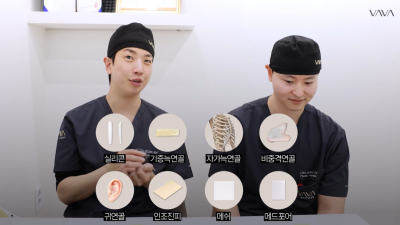
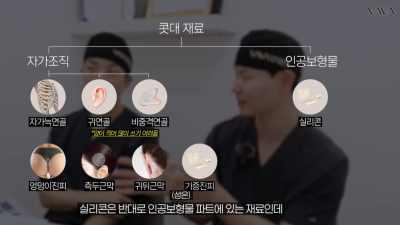
Materials used in rhinoplasty are broadly divided into autologous tissues and artificial implants.
This structure was also explained first in the video.
① Autologous Tissues
These are materials harvested from one's own body.
- Autologous rib cartilage
- Ear cartilage
- Septal cartilage
- Buttock dermis
- Temporalis fascia
- Postauricular fascia
Autologous tissues have high compatibility with the body
and, even if a capsule forms, it tends to be very thin.
However, immediately after transplantation, the blood supply is cut off,
so until new blood vessels grow in,
they undergo a temporary period of limited nutrient supply.
② Artificial Implants
These are implants manufactured externally.
- Silicone
- (If necessary) Other implant materials
Silicone has the advantage of maintaining a consistent shape
and not undergoing absorption or warping.
However, due to the body's foreign body reaction,
a capsule can form,
and in some cases, it can become thick.
In other words, materials for the nasal bridge are chosen from within these two broad categories:
- Autologous tissue
- Artificial implant
Now, we will summarize
the characteristics of each material,
silicone side effects, ear cartilage absorption, and autologous rib cartilage warping,
one by one.
✔ Silicone for Nasal Bridge

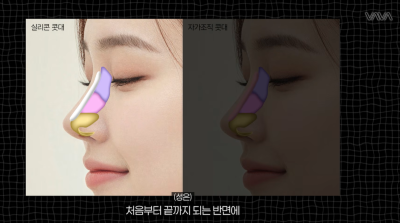
The nasal bridge is the area where height and a straight line are created.
Shape retention and stability are important.
It maintains a consistent shape with minimal deformation, is not absorbed,
and can be removed.
Silicone remains a stable material for the nasal bridge.
However, excessive height setting or design that does not consider skin laxity
can lead to side effects.
Silicone is the most commonly used material for nasal bridge rhinoplasty.
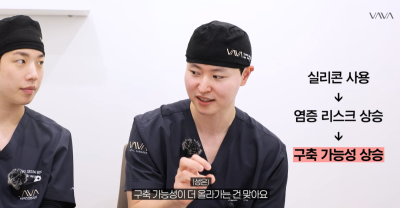

However, the causes of silicone side effects are often
excessive height setting and unreasonable design rather than the material itself.
✔ Autologous Tissue for Nasal Bridge
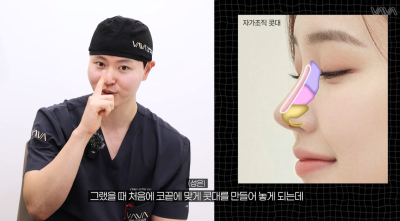
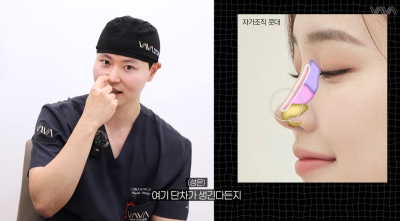
When autologous tissue is placed in the nasal bridge, until it receives blood supply,
the cartilage is deprived and its size decreases. If the absorption rate is high after initially shaping the nasal bridge to match the tip,
problems such as a step deformity or a sunken area can occur.
Conversely, if the absorption rate is too low, it can lead to a thick nasal dorsum or a protruding dorsal hump,
resulting in reduced predictability of the outcome.
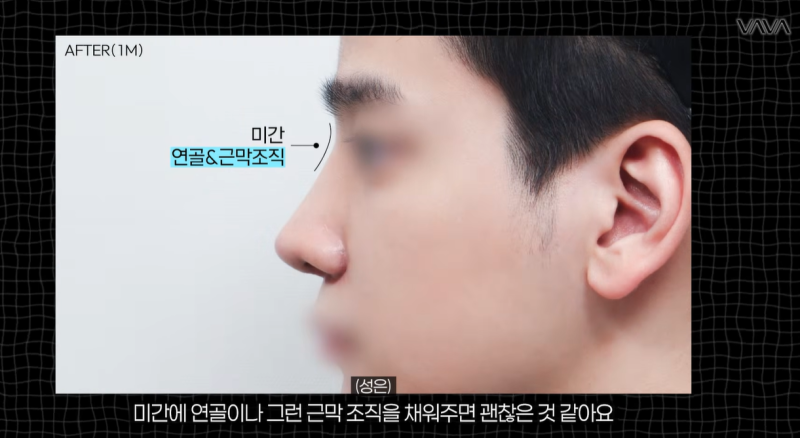
*It is suitable for cases with a dorsal hump but only a slightly low glabella.
2️⃣ Difference Between Implants and Autologous Tissue - Capsule Formation
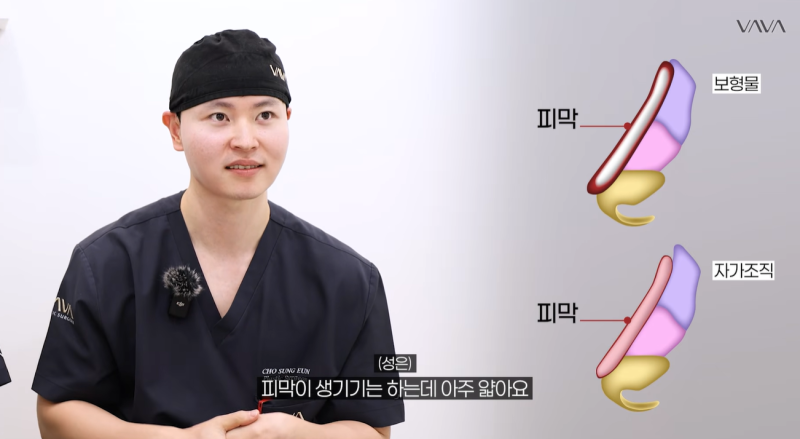
Capsule formation is frequently mentioned in relation to rhinoplasty materials.
When a foreign body enters our body, a membrane forms around it.
When using an implant (e.g., silicone),
this capsule can form relatively thickly.
If this capsule becomes excessively thick or hard,
it can cause contracture or shape deformation.
On the other hand, autologous tissues like autologous rib cartilage, septal cartilage, and ear cartilage
are tissues from one's own body,
so even if a capsule forms, it tends to be very thin.
There is a difference:
- Implants → relatively thick capsule formation possible
- Autologous tissue → thin capsule formation
3️⃣ Nasal Tip Materials
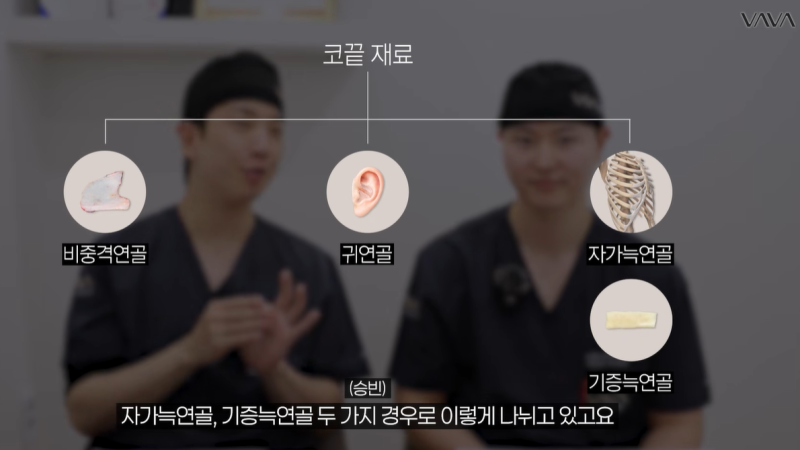
Nasal tip cartilage = acts as a pillar to raise the tip,
thus requiring strong cartilage.
✔ Septal Cartilage
Most commonly used in primary surgery and provides good support.
✔ Ear Cartilage
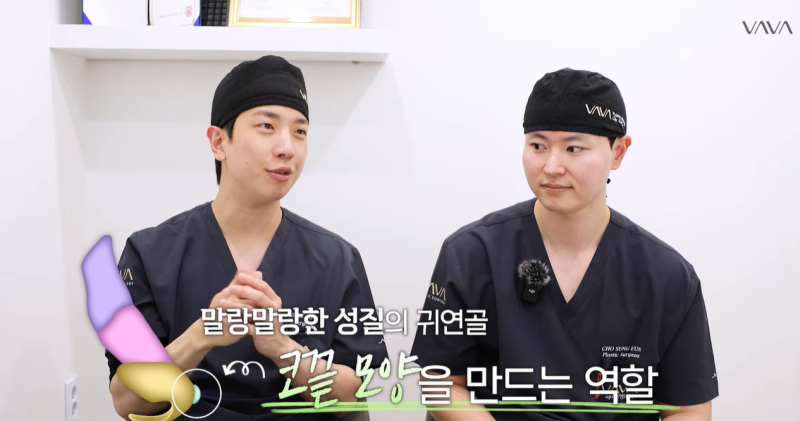
It has good elasticity and is advantageous for creating a natural shape.
However, the absorption rate varies depending on the purpose of use.
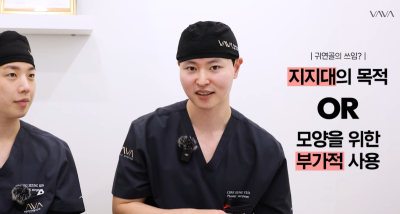

- When used alone as a support → relatively high absorption
- Septal + ear cartilage / Donor rib + ear cartilage → less absorption
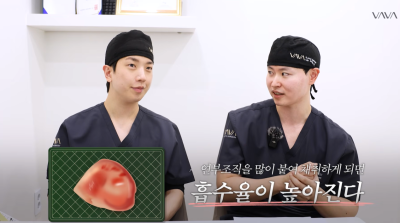
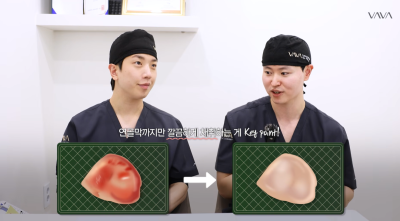
Also, when harvesting ear cartilage,
leaving too much soft tissue can increase the absorption rate,
so precise harvesting up to the perichondrium is important.
✔ Autologous Rib Cartilage
Can create strong support
and is suitable for revision surgery or cases with weak structures.
4️⃣ Autologous Rib Cartilage Warping, What's the Reality?
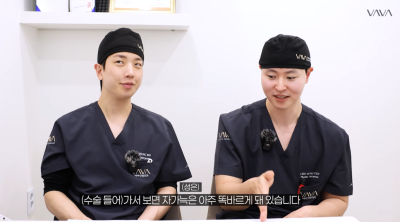
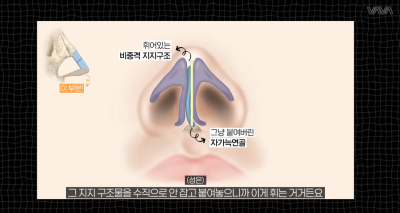
Autologous rib cartilage warping
is a theoretical concept that rib cartilage can bend over time.

However, in cases confirmed through revision surgery at Baba Plastic Surgery,
there were almost no instances where the autologous rib cartilage itself was warped.
Most cases were due to:
- ✔ Fixation on a warped septal support structure, or
- ✔ Failure to accurately erect the central pillar vertically.
In other words, it was a problem with structural design.
At Baba Plastic Surgery,
the central pillar is precisely vertically aligned,
and autologous rib cartilage is reinforced in a double-layer structure at the nasal tip,
so cases where the autologous rib cartilage itself warps and causes problems are rare.
Ultimately, what's important is not the cartilage, but the design of the support structure.
■ Reasons to Recommend Autologous Rib Cartilage for Primary Surgery


Recently, autologous rib cartilage is sometimes chosen for primary rhinoplasty.
The reasons are:
Creating a strong support from the beginning
reduces the possibility of collapse over time
and lowers the chance of needing revision surgery.
Revision surgery involves
time costs, financial burden, and tissue damage.
Therefore, considering long-term stability,
choosing autologous rib cartilage can be one method.
Ultimately, rhinoplasty is not
a matter of which material to use,
but how to design it.
Thank you.


