2026-05-18
Asymmetric Eye Correction and Ptosis Revision Surgery Case
A revision surgery case for a patient who had undergone multiple asymmetric eye correction procedures at other clinics but continued to experience asymmetry and ptosis. Simple conjunctival advancement alone often results in recurrence, so alternative surgical approaches are frequently needed. Both eyes were corrected together for symmetry. While post-op swelling may cause temporary differences, the patient showed good symmetry at the one-week mark, and stable recovery is expected if maintained t
Asymmetric eye correction, asymmetric eyes, ptosis correction
This post is about the above topics.
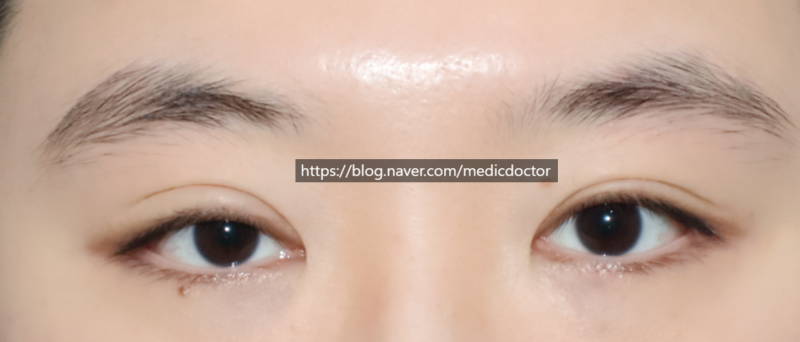
In the photo, the left eye appears more drowsy compared to the opposite side.
The crease line also looks relatively higher.
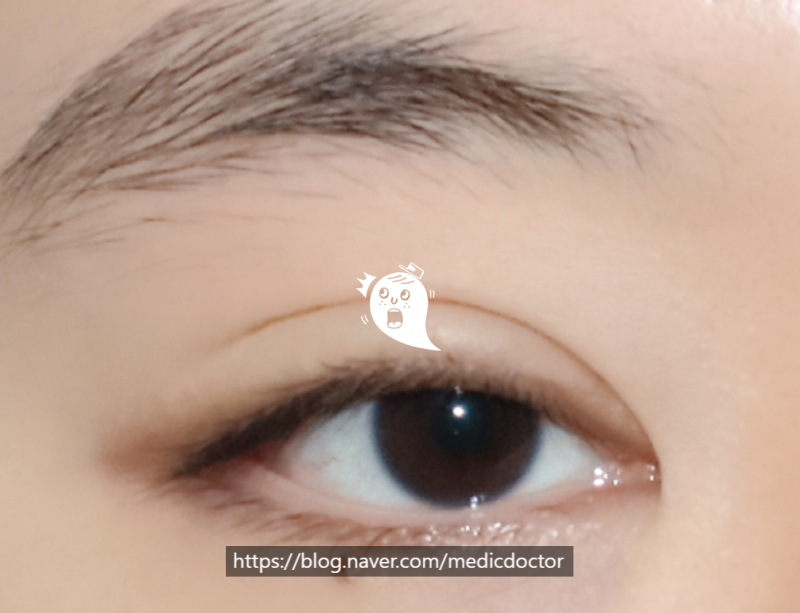
The patient mentioned having undergone surgery several times at other clinics, but the correction kept failing, which is why she visited us.
Generally, simply advancing the conjunctiva alone tends to result in frequent recurrence, so a different type of surgery is often required.
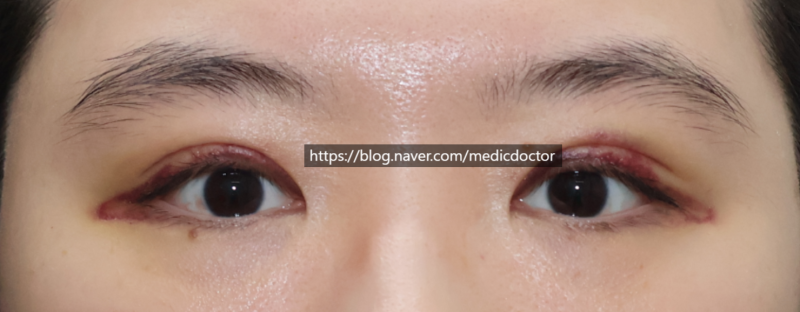
The surgery was performed on both eyes, and the symmetry is well-aligned.
Before the surgery, we explained that the swelling could subside differently on each side, and that immediately after surgery, the left side in the photo might appear larger. However, in this patient's case, she contacted us during the recovery period, feeling anxious because the left eye in the photo (actually the patient's right eye) appeared more swollen.
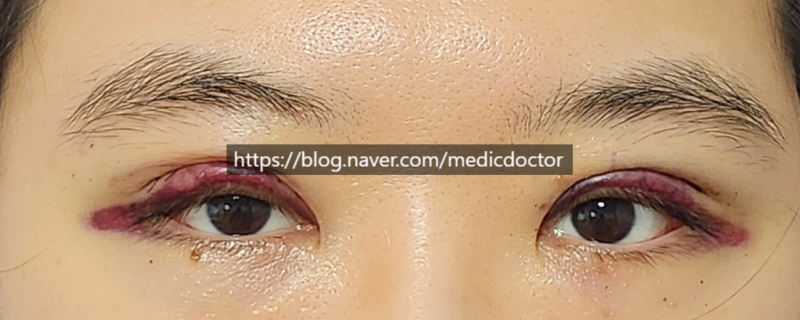
Looking at the photo the patient sent, it does appear slightly that way. However, in the one-week photo, you can see that the symmetry is well-aligned. Of course, we'll need to wait for more swelling to subside, but it appears the symmetry will be well-maintained over time.
Occasionally, both eyes may look different for up to about two weeks due to swelling. If a difference remains within three weeks, early correction may be necessary. Or, if it is determined to be swelling, you must strictly follow the medical staff's instructions.
If the result is maintained through the six-month mark, recovery should proceed without major issues.
There is still some swelling, but the symmetry appears well-aligned.
Continued follow-up is necessary, as recurrence can occur in rare cases.
Frequently Asked Questions
Why is recurrence so common after asymmetric eye correction?
Surgical methods that simply advance the conjunctiva tend to have a high recurrence rate. Therefore, depending on the patient's condition, a different surgical approach is often required, and correction tailored to the underlying cause is essential for stable results.
Why do both eyes appear different in size immediately after surgery?
Immediately after surgery, swelling may subside at different rates on each side, causing one eye to look larger or more swollen than the other. Such asymmetry due to swelling can persist for up to about two weeks, so it is important to monitor the recovery progress.
How long should asymmetry persist after surgery before early correction is needed?
If a difference between the eyes still remains after three weeks, early correction may be necessary. However, since the difference may simply be due to swelling, this judgment must always be based on examination and guidance from the medical staff.
When do ptosis correction results stabilize?
If the results are well-maintained through six months after surgery, recovery can generally be considered successful without major issues. However, since it takes time for swelling to fully subside, consistent follow-up observation is recommended during this period.
Can revision surgery be performed after multiple procedures at other clinics?
The patient in this case had also undergone several surgeries at other clinics that failed to correct the issue, so revision surgery was performed. Both eyes were operated on together to achieve symmetry, and the appropriate method must be selected based on the patient's specific condition.
Is there a possibility of recurrence after ptosis correction?
Although rare, recurrence can occur, so continued follow-up observation is necessary even after surgery. To maintain the results, it is important to closely follow the medical staff's instructions throughout the recovery period.