2026-07-20
[Eye Health] How is Zeaxanthin, good for eyes, different from Lutein?
Learn about zeaxanthin, a crucial eye nutrient often overshadowed by lutein. Discover its role in macular health, antioxidant properties, and blue light protection.
![[Eye Health] How is Zeaxanthin, good for eyes, different from Lutein?](/uploads/smileeye2019/221734456215/f422bb44df6715d3.png)
How are Zeaxanthin and Lutein different?!
Hello. This is Gangnam Smile Eye Clinic, helping you rediscover the happy smile of enjoying sight!
When it comes to eye health, lutein is often the first thing that comes to mind!
Today, we'll introduce zeaxanthin, which is just as important as lutein but not as widely known.

Zeaxanthin is a pigment that plants produce themselves to block harmful ultraviolet rays.
Like lutein, it is most abundantly distributed in the macula, the central part of the retina.
Given that approximately 30% of macular pigment is lutein and about 70% is zeaxanthin,
zeaxanthin can be said to be an ingredient just as important as lutein.
1. Isomer of Lutein
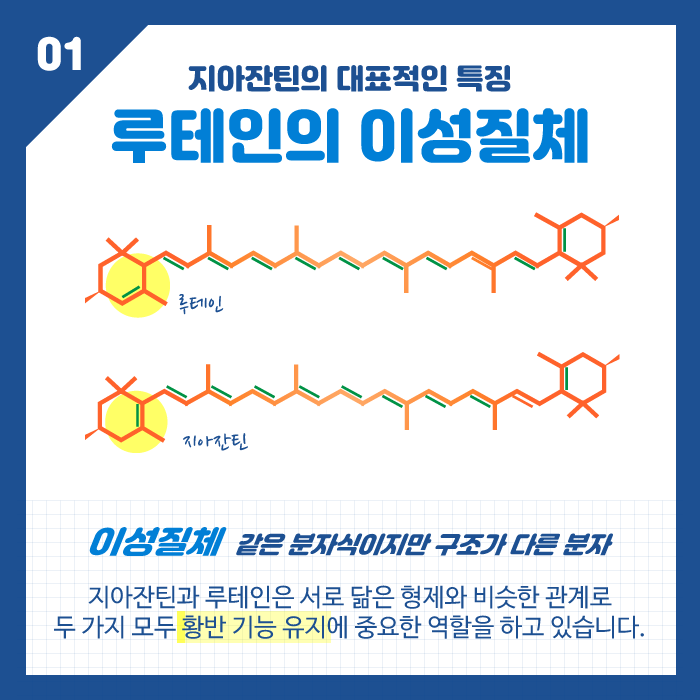
Macular pigment is composed of approximately 30% lutein and 70% zeaxanthin,
and both play crucial roles in maintaining macular function.
Zeaxanthin is an isomer of lutein, so zeaxanthin and lutein can be seen as having a relationship similar to that of siblings.
* Isomer: Molecules with the same molecular formula but different structures
2. Antioxidant Action
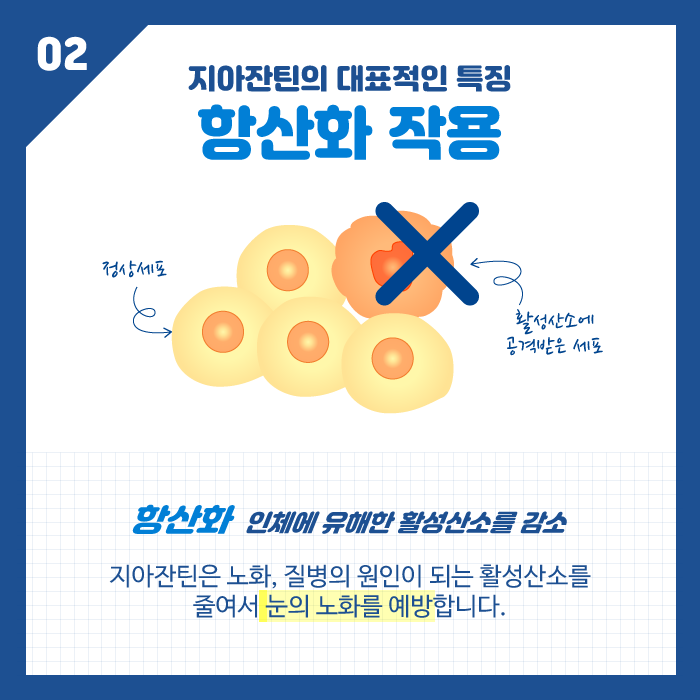
Zeaxanthin performs antioxidant action by reducing reactive oxygen species, which are harmful oxygen molecules that attack cells in the body.
Since reactive oxygen species attack normal cells and cause aging and disease,
it is important to consistently consume zeaxanthin to protect eye health.
* For additional explanation, refer to the lutein section below.
3. Blue Light Blocking

Zeaxanthin can prevent eye aging and macular degeneration through its 'sunglasses in the eye' action, which blocks blue light.
It is good to protect eye health through zeaxanthin, which blocks blue light to protect photoreceptor cells and prevent macular degeneration.
* For additional explanation, refer to the lutein section below.
4. Nutrients to take with Lutein
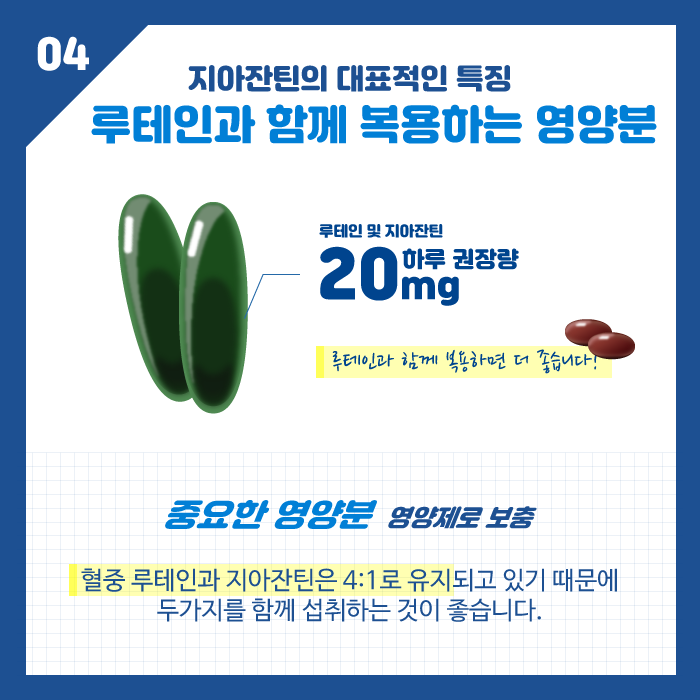
Since blood lutein and zeaxanthin are maintained at approximately a 4:1 ratio, it is best to consume both together.
Even in green and yellow vegetables rich in lutein (such as spinach and kale), zeaxanthin is present in very small amounts.
Therefore, it is recommended to supplement zeaxanthin with a nutritional supplement.
Let's prevent eye aging and macular degeneration with zeaxanthin!
Eye supplements can vary in effectiveness depending on their ingredients and content, so it is necessary to choose one with good ingredients and accurate content.
Be sure to take care of your eye health with the eye supplements recommended by Smile Eye Clinic!





Frequently Asked Questions
What is zeaxanthin?
Zeaxanthin is a pigment that plants produce themselves to block harmful ultraviolet rays. It is most abundantly distributed in the macula, the central part of the retina, and is an important component, accounting for approximately 70% of macular pigment.
What is the relationship between zeaxanthin and lutein?
Zeaxanthin is an isomer of lutein, sharing a relationship similar to that of siblings. Macular pigment is composed of approximately 30% lutein and 70% zeaxanthin, and both play crucial roles in maintaining macular function.
What are the benefits of zeaxanthin for eye health?
Zeaxanthin performs antioxidant action by reducing reactive oxygen species that attack cells in the body. It also helps prevent eye aging and macular degeneration through its 'sunglasses in the eye' action, which blocks blue light.
Should zeaxanthin and lutein be taken together?
Yes, it is recommended to take them together. Since blood lutein and zeaxanthin are maintained at approximately a 4:1 ratio, consuming both together is effective. Green and yellow vegetables rich in lutein contain very little zeaxanthin, so supplementing with a nutritional supplement is recommended.
Where is zeaxanthin primarily distributed in the eye?
Zeaxanthin is most abundantly distributed in the macula, the central part of the retina. It accounts for approximately 70% of macular pigment and is a key component that plays an important role in maintaining macular function along with lutein.