2026-05-18
Cheongdam Snuplastic Surgery - Ectropion Correction, Should Canthoplasty Be Done Together?
Ectropion correction and canthoplasty serve completely different purposes. Canthoplasty is purely cosmetic, removing the epicanthal fold, while ectropion is a functional condition where eyelashes irritate the cornea, treated with procedures like Hotz surgery. In children, ectropion often improves naturally with growth, so observation and conservative treatment take priority, with surgery only for severe cases. If recommended as a package, verify whether the procedure is therapeutic or cosmetic.

Hello.
This is Snuplastic Surgery.
Recently,
a young patient came in.
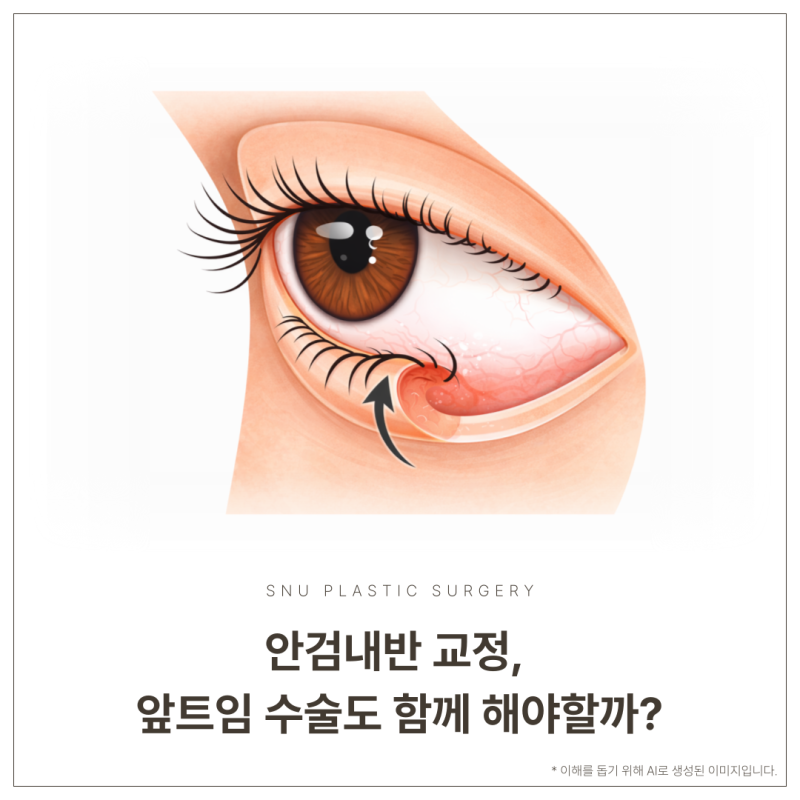
With her lower eyelid slightly rolling inward,
her eyelashes were irritating her eye—
she was concerned about 'ectropion' symptoms.
But when she consulted at another clinic,
she heard, "Let's do canthoplasty along with ectropion correction."
The patient
"Isn't canthoplasty a cosmetic procedure?"
came back to see me.
To conclude upfront,
this patient's judgment was correct.
Is Canthoplasty Necessary for Ectropion Correction?
I believe that ectropion correction and
canthoplasty (medial canthoplasty) have
completely different purposes and indications.
1. What is Canthoplasty? (Epicanthal Fold Removal)
Canthoplasty is
purely a cosmetic procedure.
It removes the skin covering the inner corner of the eye (epicanthal fold)
to give the eyes a wider, brighter appearance,
or changes the eyelid crease
from parallel to double-eyelid.
2. What is Medial Canthoplasty?
When related to disease,
we use a separate surgical name:
'medial canthoplasty'.
It's a therapeutic procedure that releases tension
when the inner corner of the eye is pulled tight
due to scar contracture from burns or trauma.
👉 In conclusion,
in typical congenital or pediatric ectropion,
there's almost never a need for both procedures.
Because the rolling eyelid problem and the skin fold at the eye corner
are anatomically and functionally
separate issues.
Why Does Ectropion Occur?
Ectropion is a condition where the eyelid margin
rolls inward, with eyelashes
irritating the cornea.
Especially in children and younger adults,
ectropion typically falls into one of these two categories:
1. Epiblepharon
The eyelid isn't actually rolling—rather,
there's excessive cheek tissue or excess skin and muscle in front of the eyelid,
pushing the eyelashes upward.
When a child gains weight, symptoms appear:
frequent tearing, eye rubbing, and light sensitivity.
2. Trichiasis
The eyelid margin itself is normal,
but the hair grows in the wrong direction—
toward the eye.
The hair follicles themselves are oriented abnormally.
Always Surgery? NO! You Can Observe
Many parents ask,
"If it's irritating the eye, shouldn't we do surgery?"
But the first treatment for pediatric ectropion
is not surgery.
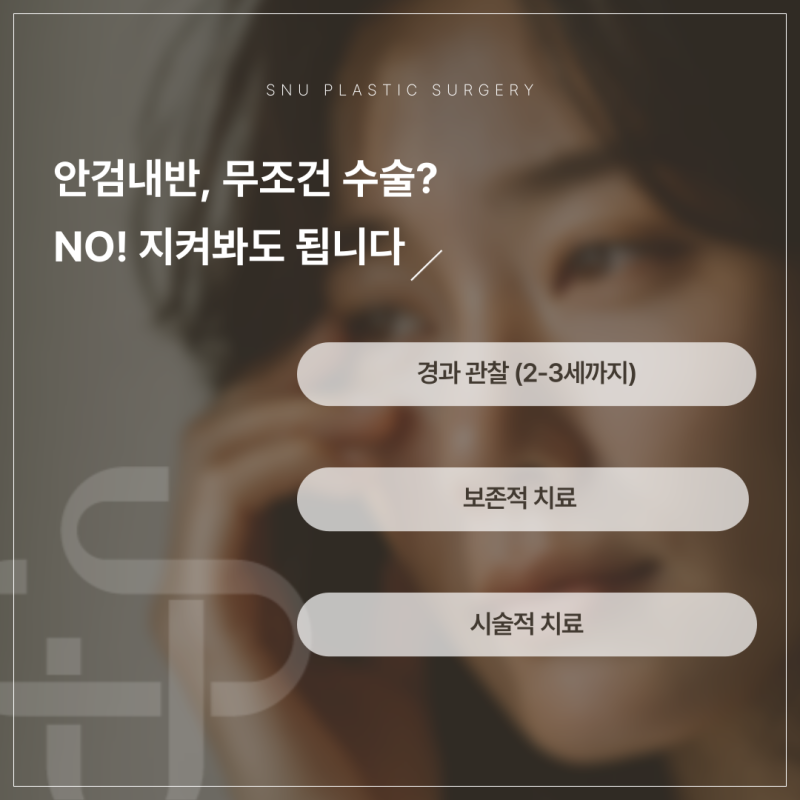
1. Observation (until age 2-3)
As the child grows, facial bones develop and
cheek fullness decreases—the condition often
improves on its own.
If symptoms aren't severe, there's
no need to rush surgery even until age 5-6.
2. Conservative Treatment (Epilation)
If eyelashes are irritating the cornea,
first try removing the eyelashes (epilation)
to see if that resolves it.
However, eyelashes regrow in about a month,
so epilation is only a temporary solution.
3. Procedural Treatment
For localized trichiasis, electrolysis or
laser hair follicle ablation can be considered.
However, the recurrence rate is around 50%,
so it's not a perfect solution,
and multiple procedures may be needed.
When Surgery is Needed & The Standard Procedure (Hotz)
So when should we operate?
Most university hospitals recommend surgery
when corneal damage occurs repeatedly
or symptoms are severe and don't improve by age 6.
✅ The Standard Procedure: Hotz Surgery
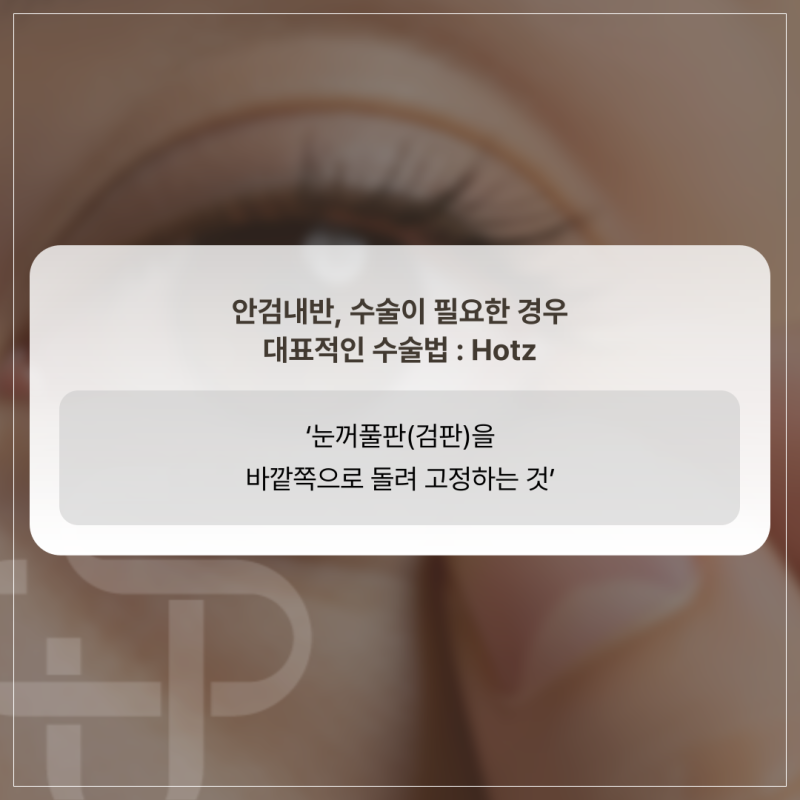
The Hotz procedure, commonly called ectropion surgery,
involves 'rotating and fixing the eyelid cartilage outward'.
The skin below the eyelid is incised in a crescent shape.
Excess skin and the orbicularis oculi muscle are removed appropriately.
The eyelid cartilage is hooked and fixed to the skin,
rotating the eyelid margin slightly outward
to change its direction.
According to published research,
both the Hotz procedure and modified Hotz procedures
show functionally satisfactory results in pediatric epiblepharon patients,
and demonstrate high success rates
in elderly ectropion patients.
Conclusion: Is Canthoplasty Necessary for Ectropion Patients?
Absolutely not.
Canthoplasty is for cosmetic purposes—
to make the eye appear larger and brighter.
Ectropion surgery is to protect the eye—
restoring function.
While it's not anatomically impossible
to do both procedures simultaneously,
canthoplasty is not necessary for ectropion correction.
If any clinic recommends both procedures
as a package,
make sure to ask whether it's
therapeutic canthoplasty
(medial canthoplasty)
or purely cosmetic canthoplasty.
Website
📌 KakaoTalk Channel (click the image below to navigate)

Frequently Asked Questions
Is canthoplasty absolutely necessary for ectropion correction?
No, it's not necessary at all. Canthoplasty is a cosmetic procedure to remove the epicanthal fold, while ectropion correction is a functional procedure to protect the eye, so they have completely different purposes and indications. In typical congenital or pediatric ectropion, canthoplasty is almost never needed.
Do children with ectropion need immediate surgery?
No, immediate surgery isn't necessary. The first treatment for pediatric ectropion is observation, not surgery. Since the condition often improves naturally as facial bones grow and cheek fullness decreases, if symptoms aren't severe, there's no need to rush surgery even until age 5-6.
How do epiblepharon and trichiasis differ?
They have different causes. Epiblepharon occurs when excessive cheek tissue or excess skin and muscle in front of the eyelid pushes the eyelashes upward, while trichiasis occurs when the eyelid margin is normal but hair follicles are oriented abnormally, causing hair to grow toward the eye.
Can eyelash removal solve ectropion?
Temporary relief is possible, but not a permanent solution. When eyelashes irritate the cornea, epilation can be attempted first, but since eyelashes regrow in about a month, this approach has limitations. For localized trichiasis, electrolysis or laser hair follicle ablation can be considered, but the recurrence rate is around 50%.
How is ectropion surgery (Hotz) performed?
The procedure involves rotating and fixing the eyelid cartilage outward. The skin below the eyelid is incised in a crescent shape, excess skin and the orbicularis oculi muscle are removed, and then the eyelid cartilage is hooked and fixed to rotate the margin slightly outward. High success rates are reported in both pediatric epiblepharon and elderly ectropion patients.
What's the difference between canthoplasty and medial canthoplasty?
The purposes differ. Canthoplasty is a cosmetic procedure to remove the epicanthal fold and make the eye appear wider and brighter or change the eyelid crease, while medial canthoplasty is a therapeutic procedure to release tension when the inner corner of the eye is pulled tight due to scar contracture from burns or trauma.