2026-07-20
What is Pterygium? Causes, Symptoms, and Treatment Methods
Pterygium, often mistaken for cataracts, is a growth on the eye's white part that can distort vision and appearance. It's common in those with high sun exposure and can recur even after surgery. Early diagnosis and treatment are crucial.
What is Pterygium? Causes, Symptoms, and Treatment Methods - Gangnam Smile Eye Clinic
Clear your blurry vision.
This is Gangnam Smile Eye Clinic.
What would you think if your eye wasn't its proper shape,
but severely bloodshot and looked like a distorted circle?
‘Oh, how can a person's eye look distorted?’
For those who say that, there is actually such a disease.
It's called pterygium.
If you've never heard this term before, you must read this post
all the way through.
Especially if you're young and spend a lot of time outdoors.
What is pterygium?
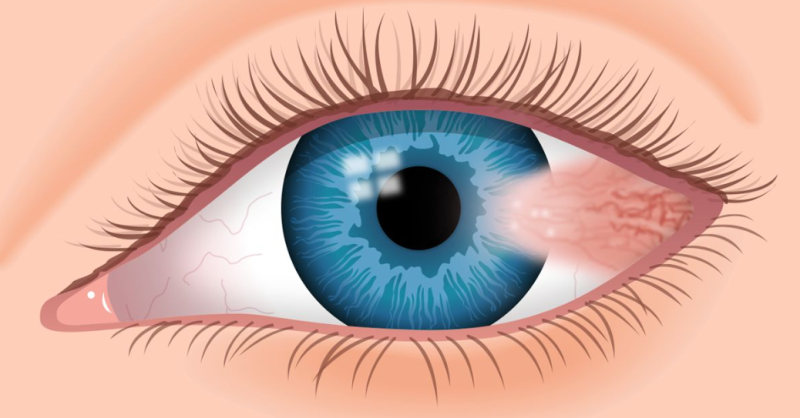
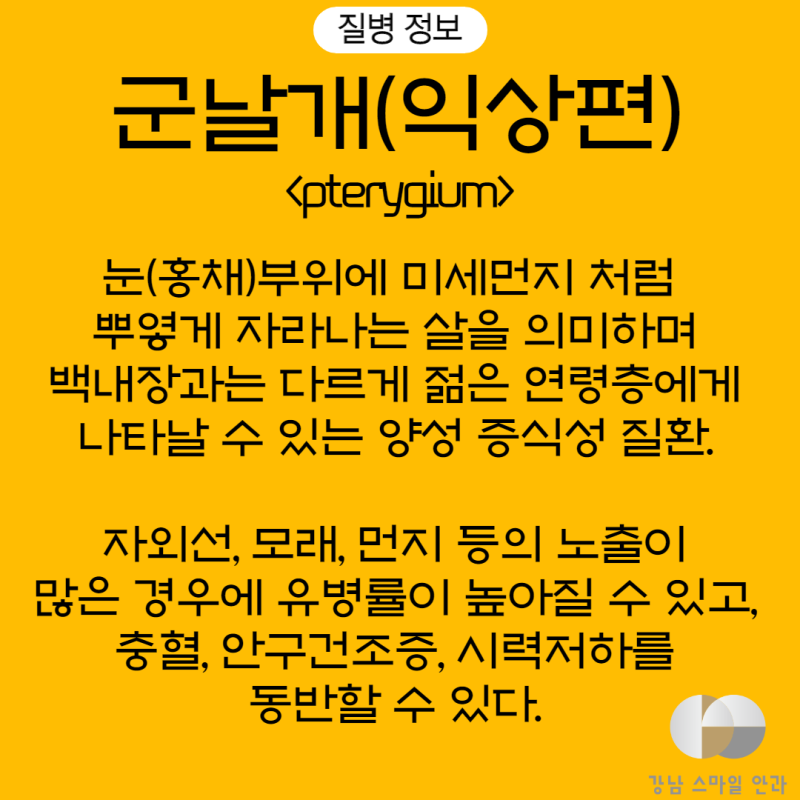
This disease refers to a condition where fibrovascular tissue
proliferates and invades from the white part of the eye (medial conjunctiva)
towards the black pupil (cornea).
It's commonly described as a 'white film' on the eye.
It's one of the diseases that many people misunderstand
due to its similar symptoms to cataracts.
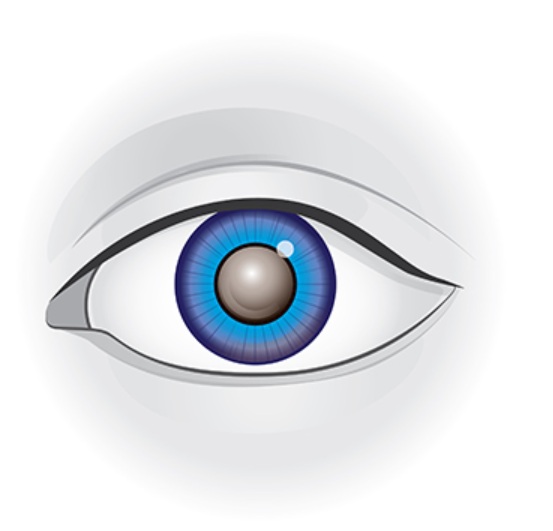
For reference, cataracts are a disease where clouding progresses
throughout the entire lens, causing the entire eye, not just a part of it,
to appear to change to a cloudy color, and it causes visual impairment.
On the other hand, pterygium, unless severe,
does not cause visual impairment and is characterized by a gradual clouding
from a specific area towards the center, not affecting the entire eye.
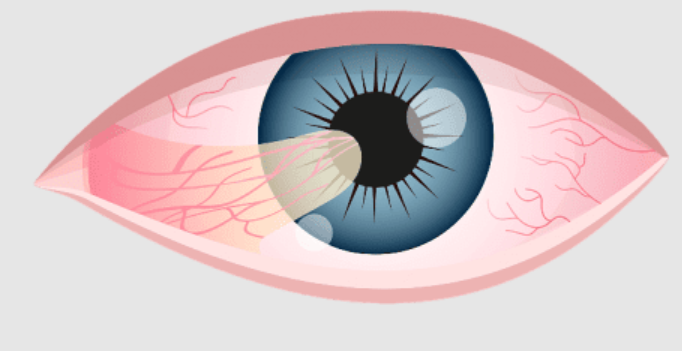
Problems with Pterygium
As mentioned earlier, when afflicted with this disease,
the proliferated tissue gradually moves from the white part to the black part,
appearing as if a cloudy film covers it,
and instead of looking like a normal spherical eye,
it appears somewhat distorted.
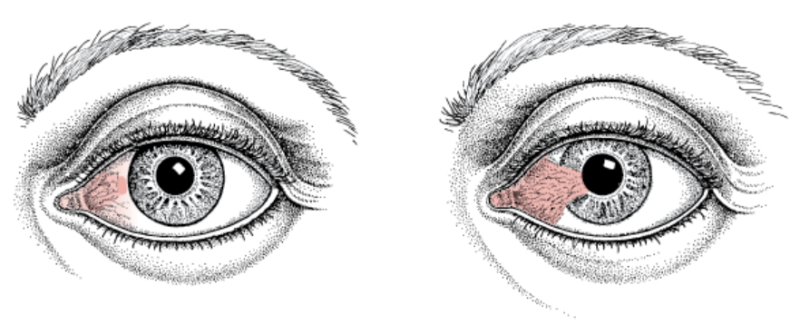
This particular aspect is more likely to cause
cosmetic and aesthetic problems rather than functional ones.
Therefore, in modern society, where appearance is also a competitive factor,
it can be a significant disadvantage.
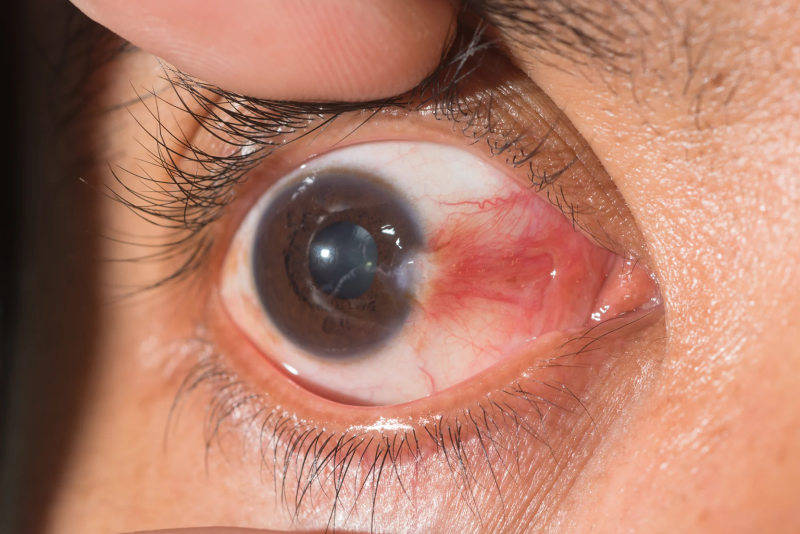
Furthermore, it's problematic that the exact cause of this condition
has not been identified.
However, because it frequently occurs in people who spend a lot of time outdoors,
its causes are considered to be
UV radiation, dust, and dry air.
Additionally, since pterygium is a proliferative disease,
young individuals with active metabolism
have a high possibility of recurrence even after surgery.
This is another problem.
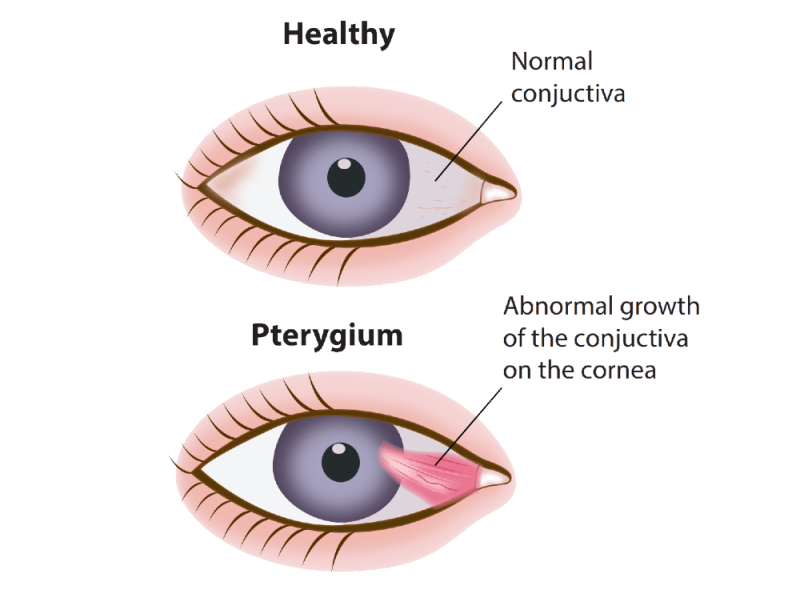
Symptoms
Fortunately, in mild cases, it merely looks like simple redness,
and it's not a disease that causes vision problems or functional issues.
Since the affected area expands over time,
early treatment is important.
When you're tired, your eyes may appear
more bloodshot than usual.
Moreover, if the symptoms worsen, the cornea can be compressed,
leading to astigmatism. If the pterygium invades the pupil,
it can cause visual impairment, so
special attention is required.
Pterygium Treatment Methods
Pterygium is a proliferative disease,
and its growth rate varies among individuals
and does not grow at a constant speed.
Therefore, undergoing surgery to remove it as soon as it's discovered
is the best treatment method.
Removing the fibrovascular tissue covering the cornea and conjunctiva
is the general surgical method. However,
if it's simply removed, there's a possibility of recurrence,
so it's important to have it completely removed
through a specialized ophthalmology clinic.
<Conclusion>
If you've read this post carefully to the end,
you'll know that unlike cataracts,
this disease is highly likely to appear
even in active young individuals, and if it does,
there's a high risk of recurrence even after surgery.
If your eyes easily become bloodshot
and you experience a lot of dryness, for the sake of your eye health,
do not neglect it. We recommend visiting a nearby ophthalmologist
to receive an accurate diagnosis and consultation.
▼ Phone Consultation ▼
☎ 02) 553-0210
▼ Go to KakaoTalk Consultation ▼
▼ Directions ▼
Frequently Asked Questions
What is pterygium?
Pterygium is a condition where fibrovascular tissue grows from the white part of the eye (inner conjunctiva) towards the black pupil (cornea). It is often described as a 'white film' covering the eye.
How is pterygium different from cataracts?
Pterygium involves the growth of fibrovascular tissue in a specific part of the eye, whereas cataracts are a disease where the entire lens becomes cloudy, causing vision impairment. Pterygium does not usually cause vision impairment unless it is severe.
What are the main causes and symptoms of pterygium?
The exact cause of pterygium is unknown, but it is strongly associated with outdoor activities and factors like UV radiation, dust, and dry air. Initially, it may present as simple redness, but as it progresses, it can press on the cornea, causing astigmatism, or lead to vision impairment if it invades the pupil.
How is pterygium treated?
Since pterygium is a proliferative disease, surgical removal as soon as it is discovered is the best treatment. The common surgical method involves removing the fibrovascular tissue covering the cornea and conjunctiva.
Is there a possibility of pterygium recurrence after surgery?
Yes, pterygium can recur even after surgery. The recurrence rate is known to be higher in younger individuals with active metabolism, so it is important to have it completely removed by an ophthalmology specialist.
How can I prevent pterygium?
Since one of the main causes of pterygium is strongly related to outdoor activities and factors like UV radiation, dust, and dry air, protecting your eyes with sunglasses during outdoor activities and avoiding dryness can be helpful.