2026-09-09
What Does Corrected Vision Mean? Understanding the Difference Between Corrected and Uncorrected Vision
Understand what corrected vision means, how it compares to uncorrected vision, and why visual acuity alone does not reflect complete ocular health.
Hello, this is Gangnam Smile Eye Clinic :)
When getting an eye exam at an ophthalmology clinic,
you have probably heard the terms
'uncorrected vision' and 'corrected vision.'
"My vision is 20/200 without glasses, but 20/20 with them.
So, what is my actual vision?"
or
"Does having 20/20 corrected vision mean my eyes are completely healthy?"
Many people often wonder about these questions.
Today, we will clarify the easily confused concept of corrected vision, explain how it differs from uncorrected vision,
and explore why corrected vision is so important.
What Does Corrected Vision Mean?

Corrected vision refers to the visual acuity measured
after compensating for refractive errors
using corrective devices such as glasses or contact lenses.
Simply put,
it checks how clearly you can see while wearing your glasses or lenses.
That is the best way to understand it.
For instance, if your vision is 20/200 without glasses,
but improves to 20/20 with them, your readings are:
Uncorrected Vision: 20/200 (0.1)
Corrected Vision: 20/20 (1.0)
The key takeaway here is that having low uncorrected vision
does not necessarily mean your eye's visual potential is low.
If the blurriness is merely due to a refractive error—such as myopia or astigmatism—
where light fails to focus precisely on the retina,
properly correcting the focal point with glasses or lenses
can significantly sharpen your vision.
Uncorrected vs. Corrected Vision: What's the Difference?
Distinguishing between the two is quite simple.
👀 Uncorrected Vision (Naked-Eye Vision)
This is your visual acuity measured with the naked eye, without wearing glasses or contact lenses.
Think of it as the measurement obtained when someone who normally wears glasses takes them off and reads the eye chart.
👓 Corrected Vision
This is your visual acuity measured at its sharpest after correcting refractive errors with glasses or contact lenses.
Therefore, even for the same person, there can be a substantial gap between uncorrected and corrected vision.
For example,
Uncorrected Vision 20/200 (0.1) → Corrected Vision 20/20 (1.0)
indicates that once the focus is properly adjusted through lenses,
you are fully capable of resolving much smaller letters on the eye chart.
Why Is Corrected Vision So Important?
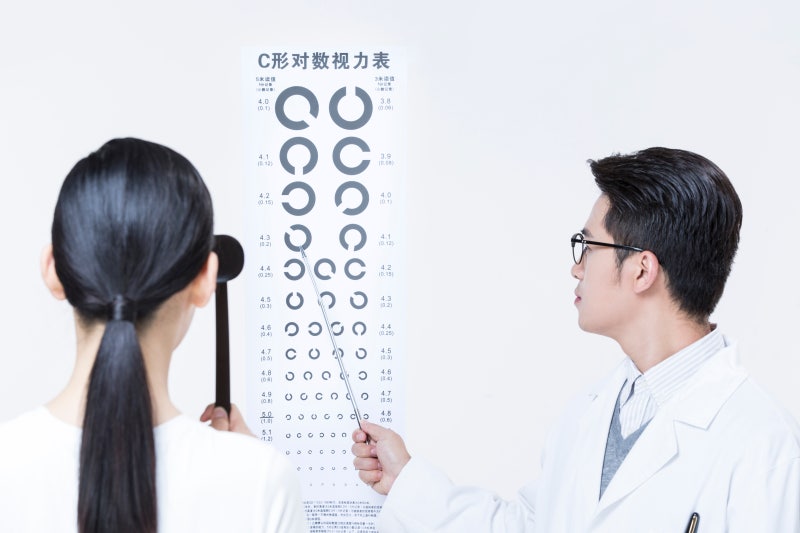
When ophthalmologists assess your vision,
they do not just look at "what score you get."
It is crucial to determine whether poor naked-eye sight is caused solely by routine myopia or astigmatism,
or if your vision fails to reach normal clarity even with optimal optical correction.
For instance,
if uncorrected vision is 20/200 (0.1) but corrected vision reaches 20/20 (1.0),
it means proper refractive correction is sufficient to provide sharp vision.
On the other hand,
if uncorrected vision is 20/200 (0.1) and corrected vision only reaches around 20/60 (0.3),
it is necessary to investigate whether other underlying factors exist beyond an incorrect prescription.
Potential causes might include structural abnormalities in the cornea, crystalline lens, retina, or optic nerve,
as well as conditions such as amblyopia (lazy eye).
Therefore, corrected vision serves as a vital indicator
to evaluate the visual potential and functional capacity of the eye.
Does High Corrected Vision Always Mean Your Eyes Are Healthy?
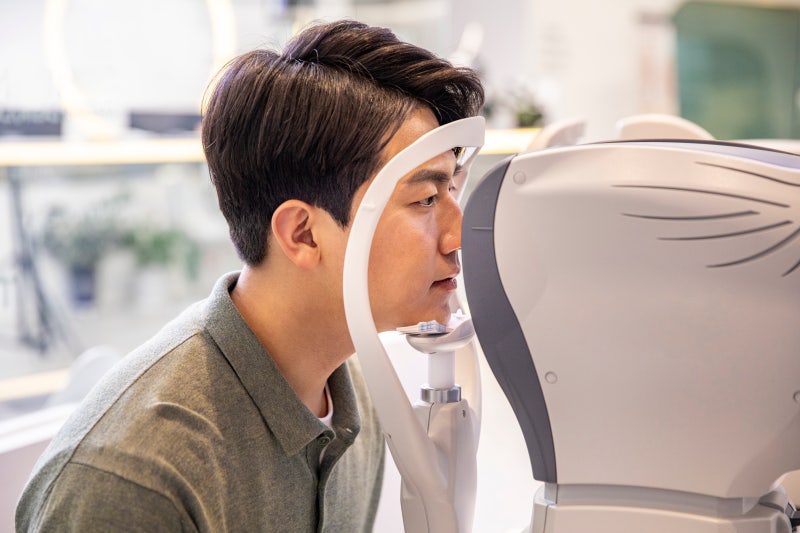
There is an important caution to keep in mind.
Having good corrected vision does not guarantee that your eyes are entirely healthy.
Because a visual acuity test primarily checks how small an object you can distinguish,
visual acuity alone cannot gauge the overall health of your eyes.
For example, even if someone achieves a crisp 20/20 vision,
it does not automatically ensure that their intraocular pressure (IOP), cornea, lens, and retina are all healthy.
Conversely, failing to reach expected corrected vision does not immediately mean you have a severe, untreatable eye disease.
It is best to consider visual acuity as just one piece of diagnostic information regarding ocular health.
When necessary, additional detailed evaluations—such as tonometry, slit-lamp biomicroscopy, fundus examination, and OCT—
should be performed to thoroughly evaluate the eye.
Will Vision Correction Surgery Change Your Corrected Vision?
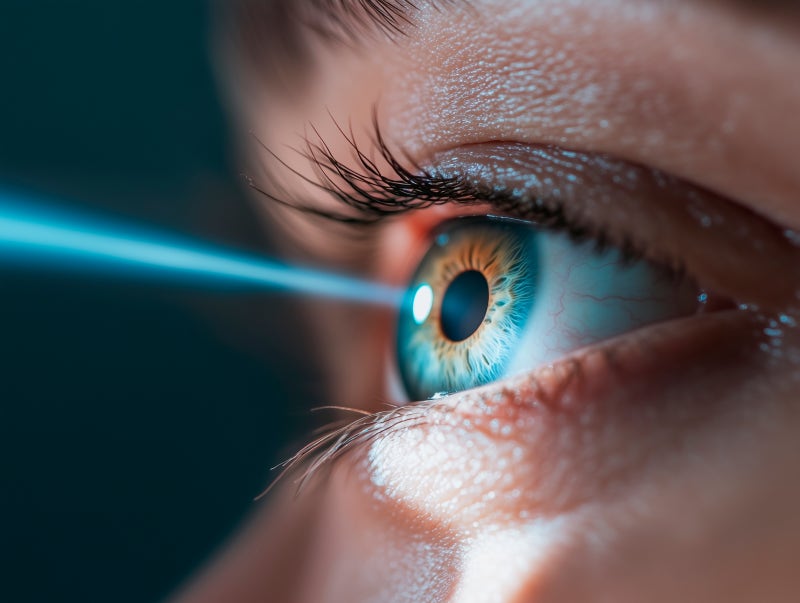
At this point, you might wonder about the relationship between refractive surgery and corrected vision.
Procedures such as LASIK, LASEK, and SMILE
aim to correct refractive errors directly so that you can see clearly with the naked eye, without relying on glasses or contact lenses.
Before surgery:
Uncorrected Vision ↓
With glasses or lenses
→ Corrected Vision ↑
After refractive surgery, the goal is to enjoy everyday life at that sharp, corrected baseline without needing external aids.
However, not everyone achieves identical postoperative results.
Various factors must be comprehensively evaluated, including corneal shape and thickness, overall ocular health, individual refractive profiles,
and the degree of myopia and astigmatism.
Therefore, if you are considering vision correction surgery,
rather than asking, "My vision is X right now, so what number will I get after surgery?"
it is essential to undergo an accurate eye exam to check surgical candidacy and discuss realistic, expected outcomes.
Remember Corrected Vision Like This
Here is a simple summary to clear up any confusion regarding corrected vision:
Uncorrected Vision: Vision measured without glasses or contact lenses
Corrected Vision: Vision measured with refractive errors compensated by glasses or lenses
Thus, even if your uncorrected vision is low, having high corrected vision
indicates that you can achieve clear sight once refractive errors are properly managed.
Conversely, if vision cannot be adequately improved even with glasses or lenses,
further medical evaluation is warranted to identify any underlying causes.
Most importantly,
a single vision score cannot determine your overall ocular health.
Regular comprehensive eye examinations are essential
to monitor not just visual acuity, but the total health of your eyes.
Gangnam Smile Eye Clinic
An eye exam is not just a process of reading numbers off a chart;
it is a fundamental evaluation to assess the current status of your vision health.
If you experience blurriness despite wearing glasses, or if your eyesight has recently changed,
please visit an eye clinic for an accurate checkup to determine whether it is a simple prescription change or another underlying cause.
In particular, if you are contemplating refractive surgery, it is critical to determine the best surgical method
after thoroughly evaluating not only your uncorrected and corrected vision, but also overall ocular structures including the cornea and retina.
💙 For SMILE Surgery, Trust Gangnam Smile Eye Clinic 💙
💙🤍 𝖦𝖠𝖭𝖦𝖭𝖠𝖬 𝖲𝖬𝖨𝖫𝖤 𝖤𝖸𝖤 𝖢𝖫𝖨𝖭𝖨𝖢 💙🤍
𝗧𝗛𝗘 𝗟𝗜𝗚𝗛𝗧 𝗔𝗡𝗗 𝗧𝗛𝗘 𝗢𝗖𝗘𝗔𝗡 𝗜𝗡 𝗬𝗢𝗨𝗥 𝗦𝗠𝗜𝗟𝗘



Frequently Asked Questions
What is the difference between corrected and uncorrected vision?
The difference lies in whether corrective aids are worn. Uncorrected vision is measured with the naked eye without corrective tools, whereas corrected vision is measured after correcting refractive errors with glasses or contact lenses.
Does having 20/20 (1.0) corrected vision mean my eyes are completely healthy?
No, having sharp vision does not guarantee that the entire eye is healthy. Eye charts only measure your ability to resolve small details; comprehensive tests are needed to evaluate IOP, corneal health, and retinal integrity.
Why doesn't my vision improve well even when wearing glasses?
Beyond an inaccurate prescription, underlying structural issues in the eye or amblyopia (lazy eye) may be responsible. Further testing such as tonometry, fundus exams, or OCT is needed to evaluate the cornea, lens, retina, and optic nerve.
Does vision correction surgery make uncorrected vision equal to corrected vision?
Refractive surgery aims to allow you to experience clear, corrected-level vision with the naked eye. Procedures like LASIK or LASEK reshape the cornea to correct refractive errors directly, enabling crisp sight without glasses.