2026-09-07
Oksu-dong Crown-Treated Tooth with Pain: Retreatment Endodontic Process
This article details two cases of retreatment endodontics for teeth with crowns that developed pain or recurrent inflammation, explaining the diagnostic and treatment processes.
Hello,
This is Dr. Kim Tae-young, chief director of Bareunyoung Dental Clinic, personally explaining treated cases.
When examining patients, we sometimes find signs of inflammation around the tooth root on X-rays.
Of course, textbook-wise, if there are signs of root inflammation, it is an indication for what we know as root canal treatment, or endodontic treatment.
However, if patients have no subjective symptoms, and during regular check-ups, the inflammation is small and not growing, we sometimes advise monitoring it since there is no discomfort.
In some cases, patients remain symptom-free even after two years, while in most cases, symptoms develop over time, leading them to schedule an appointment.
Today, I'd like to introduce two cases: one where symptoms developed belatedly in a crown-treated tooth, requiring root canal treatment, and another where inflammation recurred in the root of an already root-treated tooth, necessitating retreatment endodontics.
‘My tooth area keeps swelling and feels sensitive when I brush.’
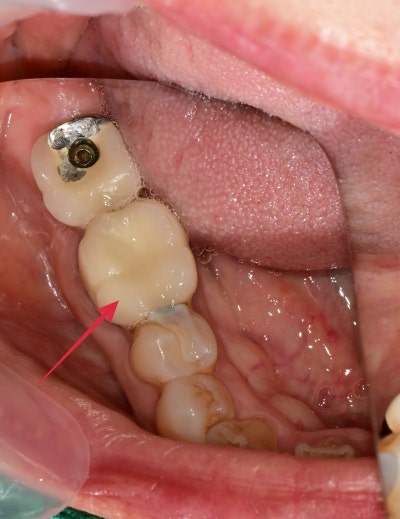
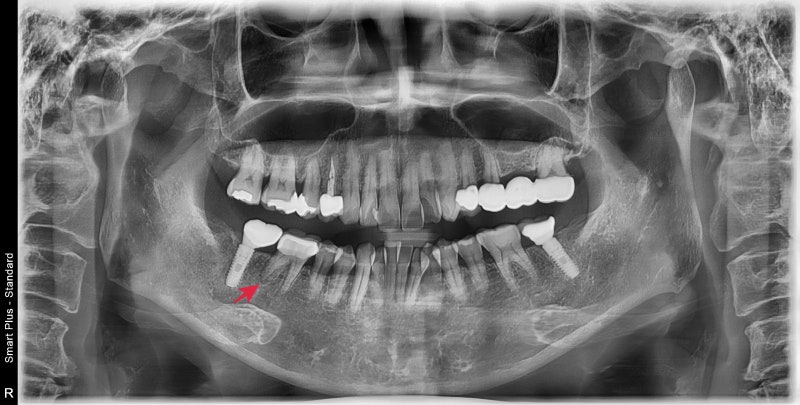
The patient visited us complaining that the gum around their molar was swollen and sensitive when touched during brushing.
A panoramic X-ray revealed signs of inflammation around the root of a tooth that had previously received crown treatment.
To confirm in detail, a separate X-ray was taken of only that tooth.
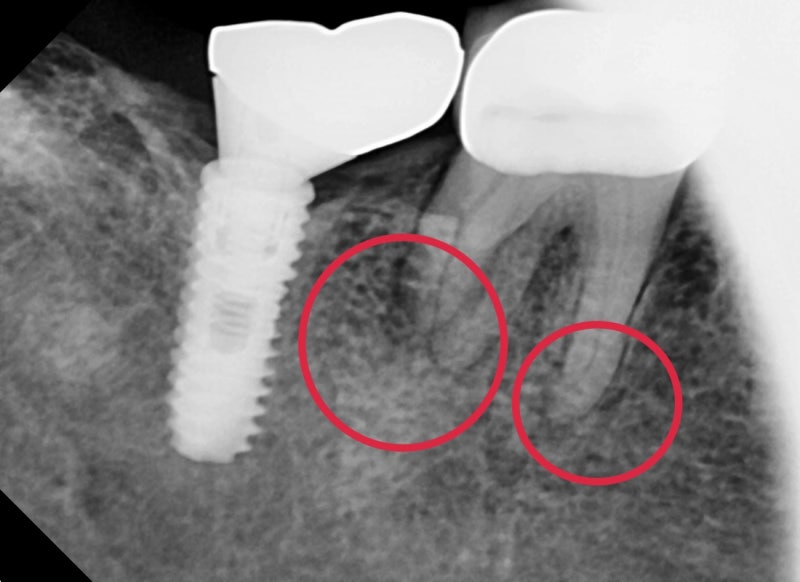
All four roots of the molar showed inflammation.
The pain was due to pressure caused by the inflammation, leading to discomfort.
Typically, in such cases, continuous irritation to the tooth causes the pulp canals to narrow due to calcification, a self-protective response by the tooth.
This can make it challenging to locate the canal orifices.
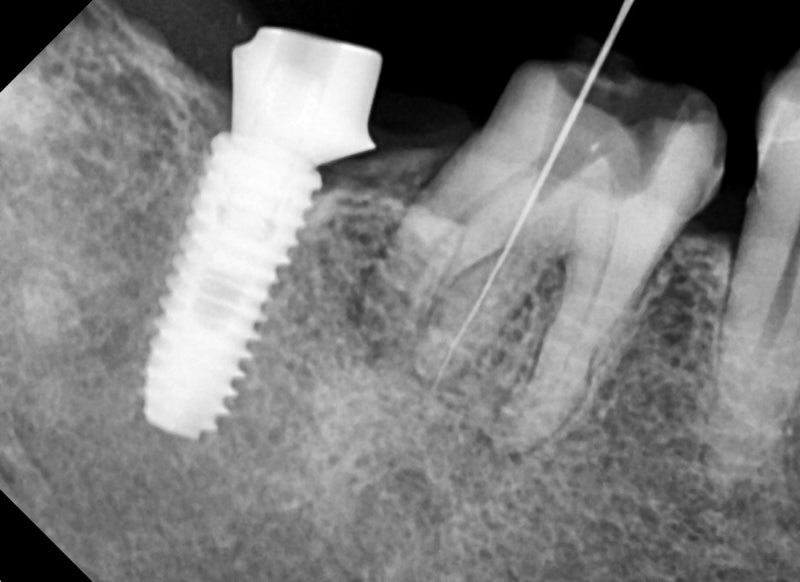
We took confirmation X-rays periodically to locate the canals.
After much effort, all four canals were found, and disinfection was performed multiple times until the symptoms subsided.
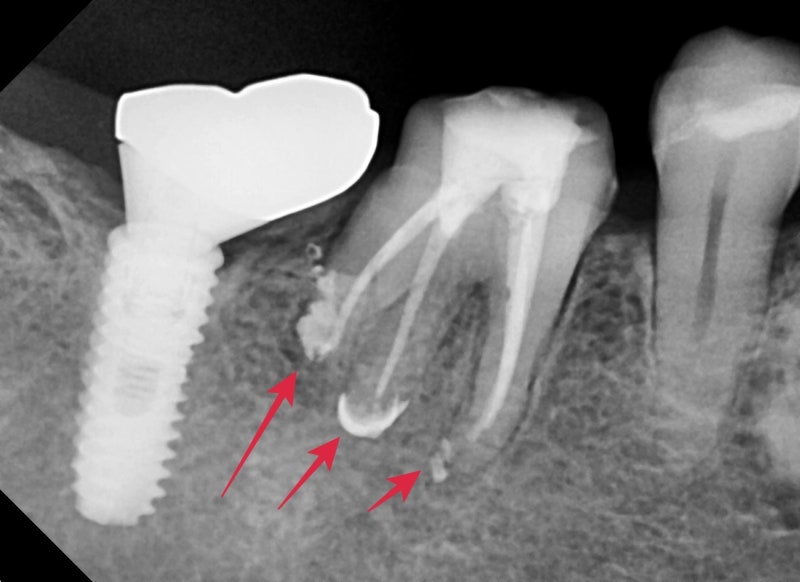
This is an X-ray taken immediately after the root canal treatment was completed.
In severely inflamed teeth, the material used to seal the root canal sometimes extends beyond the root apex, as indicated by the arrow, sealing the outer area as well.
Of course, this material is biocompatible, so some of it may be absorbed over time.
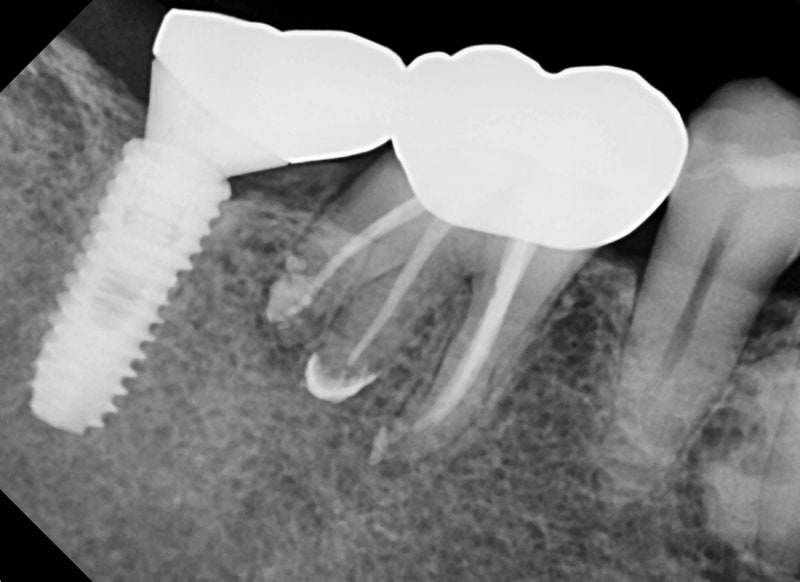
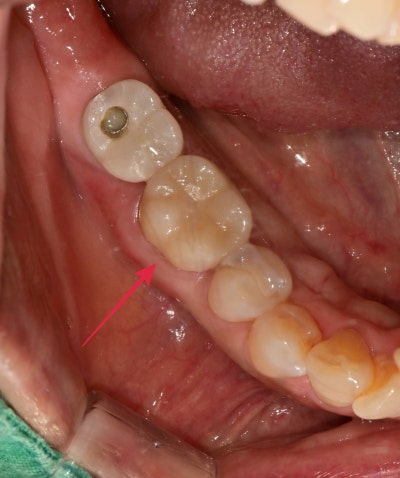
These are X-ray and intraoral photos taken 10 months later.
The patient reported no pain or discomfort compared to before the treatment, and the signs of inflammation around the root have improved.
Since the tooth had significant inflammation before treatment, we are regularly checking it with concern.
Fortunately, it is maintaining well.
‘It feels uncomfortable and throbbing even when I'm still.’
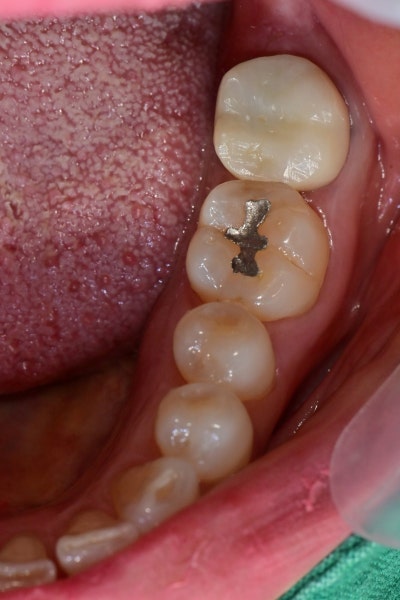
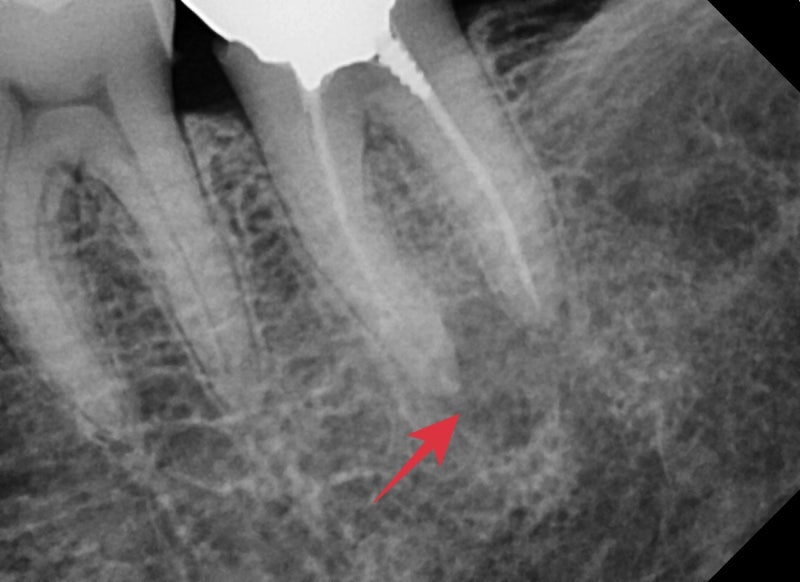
The patient visited us experiencing pain in a tooth that had previously undergone root canal treatment and was crowned.
The X-ray showed signs of inflammation below the root.
Since the root canal treatment was performed a long time ago and a post was also placed in the root, retreatment endodontics seemed difficult.
After explaining the current situation to the patient, they expressed a desire to at least attempt retreatment endodontics.
They wanted to preserve their natural tooth for as long as possible and were also considering the possibility of symptom recurrence in the future.
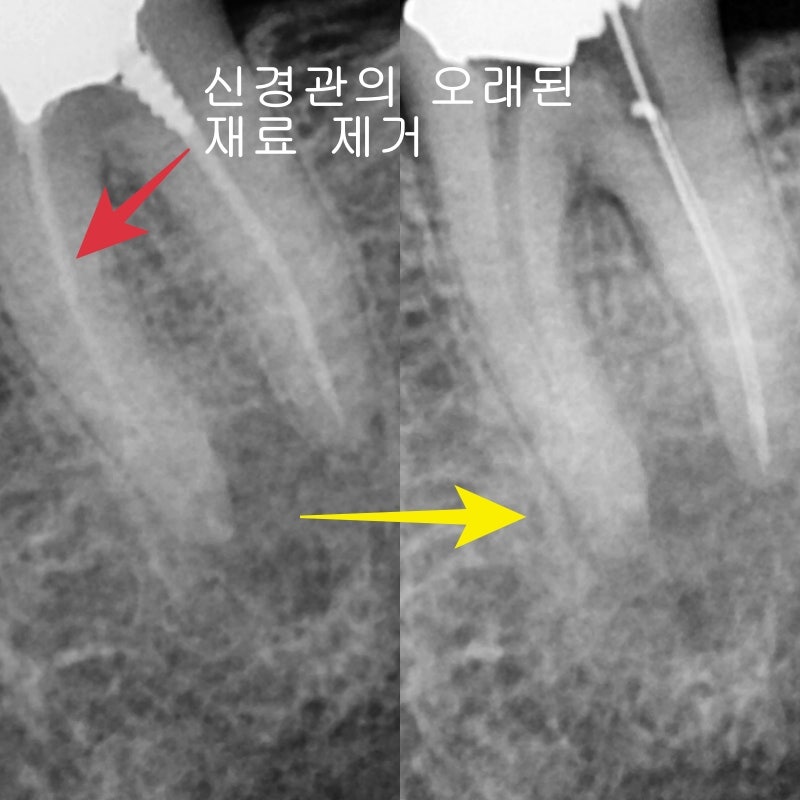
It is quite challenging to completely remove old restorative materials from the root of a tooth that has undergone old root canal treatment.
We took photos periodically to confirm removal, and fortunately, we were able to remove both the post and the restorative material within the root.
We increased the number of intracanal disinfections compared to conventional root canal treatment to ensure thorough removal of the source of inflammation.
The patient's excellent cooperation and adherence to appointments led to the resolution of pain and increased comfort by the final stages.
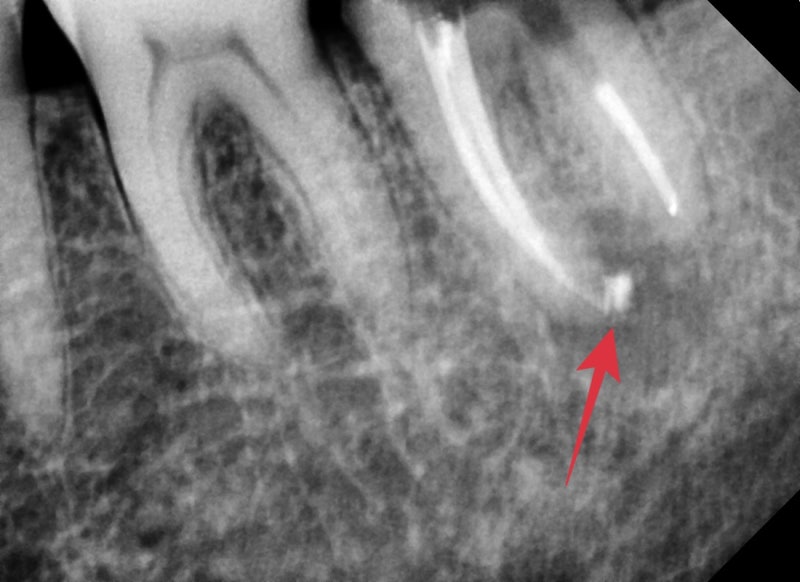
This is an X-ray taken after the root canal treatment was completed.
Similar to the first case, though not intentionally, the filling material appears to envelop the root.
We hope that the bone around the tooth, which was absorbed due to inflammation, will slowly regenerate over time.
Fortunately, the symptoms have completely resolved, and the patient should be able to enjoy comfortable chewing for several years without major issues.
Today, I explained the process of removing a crown and performing root canal treatment or retreatment endodontics when symptoms arise in a crown-treated tooth.
Although the immediate discomfort has been alleviated, we will continue to monitor the condition through regular check-ups to help you maintain good oral health.
I hope your questions have been answered.
Please note that the treatment direction may vary depending on the progression of the lesion and symptoms.
If you are experiencing similar discomfort, we recommend visiting a dental clinic for an accurate diagnosis.
Thank you.
▼ Related cases you might find helpful
‘We believe that proper treatment yields proper results. My ideal dental clinic is one where all patients who visit with worries can leave feeling reassured and confident. – Bareunyoung Dental Clinic’
‘Directions: 2nd floor, JYJ Building, 179 Dongho-ro, Jung-gu. Directly in front of Exit 6 of Yaksu Station, towards Yaksu Market. Use Village Bus 5 (Yaksu Station), Village Bus 12 (Namsan Town, Yaksu Police Station), or bus stops (Yaksu Heights, Sindang Social Welfare Center, Gaon Library, Kumho Tunnel Entrance) from Yuyu Pharma towards Kumho Station.’
‘This post was written directly by Bareunyoung Dental Clinic for the purpose of providing medical information and hospital advertising (in compliance with Article 56, Paragraph 1 of the Medical Service Act).’
Frequently Asked Questions
Can tooth pain occur even after crown treatment?
Yes, it is possible. Even a tooth that has received crown treatment can develop inflammation around the root over time, leading to delayed symptoms such as pain, gum swelling, or sensitivity. In such cases, root canal treatment or retreatment endodontics may be necessary.
Why does tooth root inflammation occur?
Tooth root inflammation can occur due to various reasons, and if signs of root inflammation are visible on an X-ray, it is an indication for root canal treatment (endodontic treatment). Even without subjective symptoms, regular check-ups are important for monitoring.
How is retreatment endodontics different from regular root canal treatment?
Retreatment endodontics is performed when inflammation recurs in a tooth that has already undergone root canal treatment or has a crown. The process of locating or removing the pulp canals can be more challenging due to calcification (narrowing of the canals), old restorative materials, or posts.
How long does it take for pain to disappear after retreatment endodontics?
During the root canal treatment process, disinfection is performed multiple times until the symptoms subside. Once the treatment is completed, you should experience relief from pain and feel comfortable. Teeth with severe inflammation require continuous observation.
Can I use my tooth for a long time after retreatment endodontics?
Yes, if the inflammation is resolved through retreatment endodontics, you should be able to enjoy comfortable chewing for several years without major issues. However, it is important to continuously monitor the tooth's condition through regular check-ups even after treatment.
Are there cases where it is difficult to find the pulp canal during root canal treatment?
Yes, there are. When continuous irritation is applied, the tooth may develop a calcification reaction, narrowing the pulp canal as a self-protective measure, which can make it challenging to locate the canal orifices. In such cases, X-rays are taken periodically to help find the canals.