2026-07-20
LASIK, LASEK Surgery and Autologous Serum: What Is It?
Learn about autologous serum eye drops used after LASIK/LASEK surgery, how they're made from your own blood, and their benefits for healing and preventing dry eyes.
Autologous serum: why is it needed and what is its connection to our eyes after surgery?
-
Hello, this is Gangnam Smile Eye Clinic.
For those who have looked into vision correction, some may know about it, and some may not.
Let's find out what autologous serum is, how it's related to surgery, and why it's recommended, in this article.
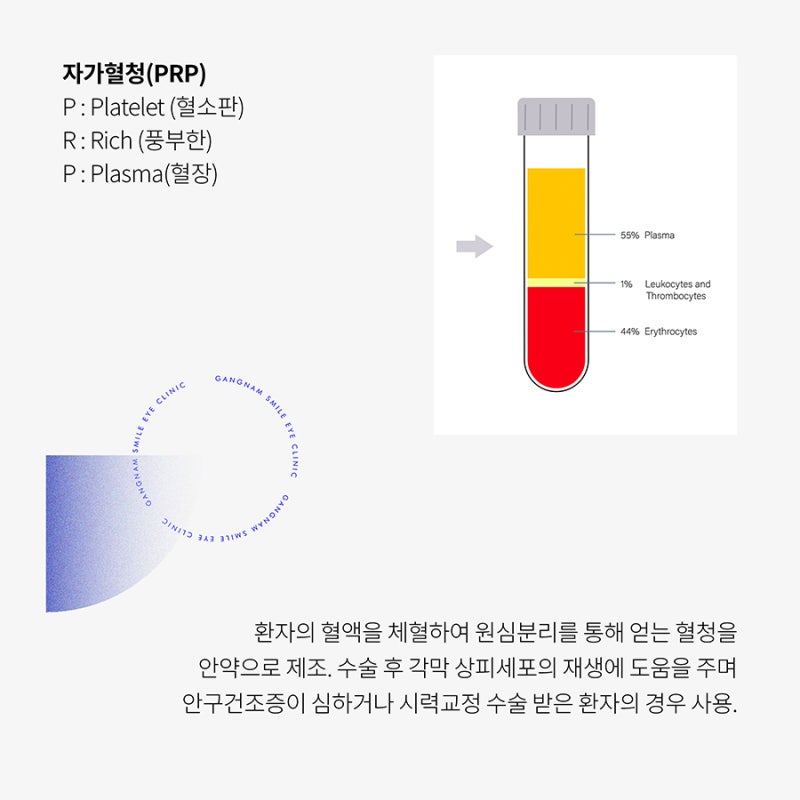
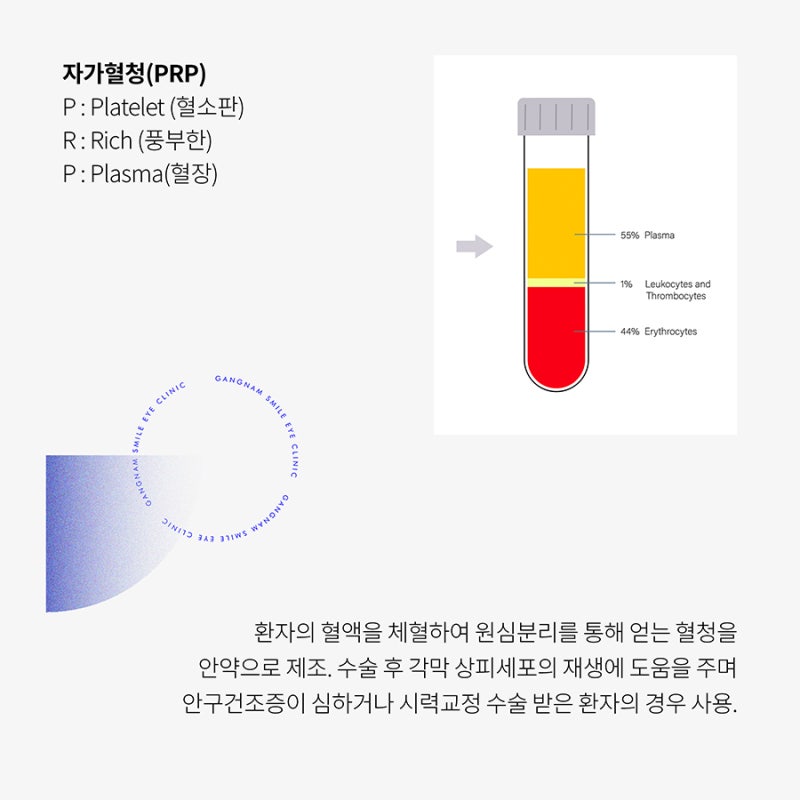
Autologous serum is made by drawing the patient's blood and centrifuging it.
Through this centrifugation, the blood separates into three layers: plasma, platelets, and red blood cells.
Among these, the middle layer, PRP platelets, is used to produce autologous serum eye drops.
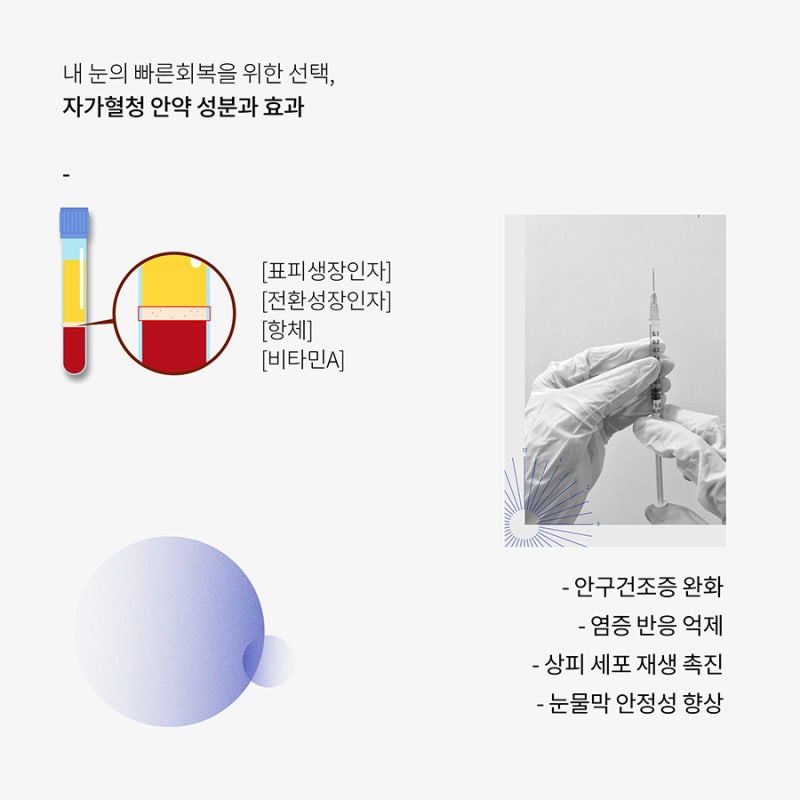
The middle layer of PRP platelets contains growth factors necessary for the body's healing mechanisms, such as epidermal growth factor, transforming growth factor, antibodies, and vitamin A.
Through the secretion of cytokines, it attracts blood stem cells to the damaged area, aiding in rapid regeneration.
It also includes substances that induce regeneration-related growth in epithelial tissue and essential components found in natural tears.
Furthermore, since these eye drops are made from serum extracted from the patient's own blood, there are no side effects from external antibiotics or other eye drop ingredients.
They also have anti-inflammatory effects, which can alleviate pain and prevent dry eyes that may occur after surgery.
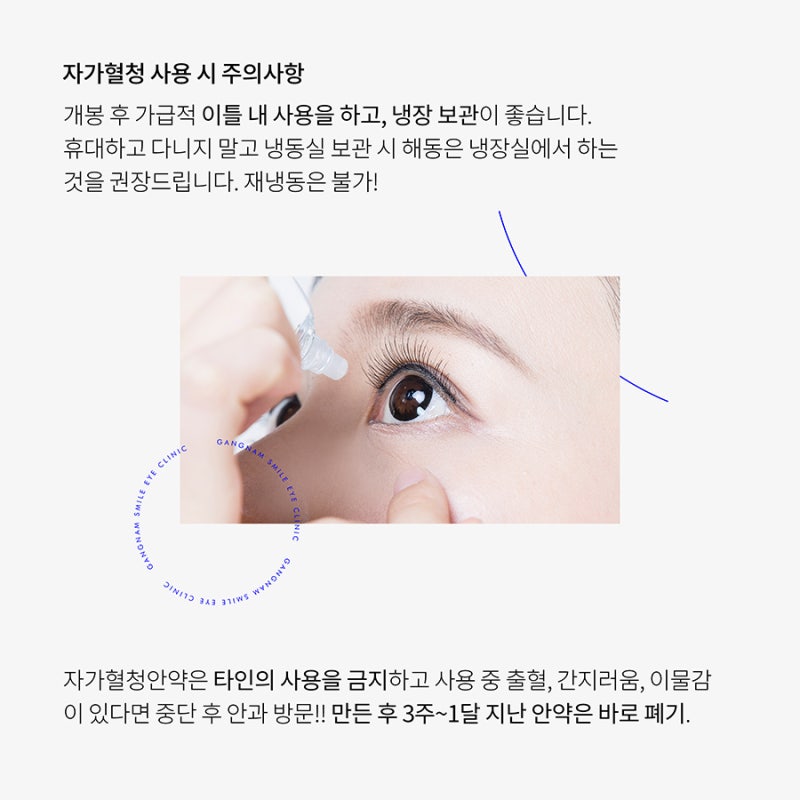
For autologous serum eye drops:
1. Use within two days of opening if possible, and refrigeration is recommended.
2. Do not carry them around.
3. For eye drops stored in the freezer, thaw by moving them to the refrigerator; re-freezing is not allowed.
4. If you experience bleeding, itching, or a foreign body sensation during use, stop and visit a nearby ophthalmologist.
5. Discard eye drops that are 3 weeks to 1 month old after preparation.
Please keep these precautions in mind. :)

Autologous serum is not an 'absolutely' necessary eye drop, but it is recommended for preventing dry eyes and depending on the condition of the eye's cornea.
It is most advisable to use it after sufficient consultation with medical staff. :)
This time, we learned about autologous serum.
Was the information about autologous serum helpful?
If you have any questions or need a consultation, we will gladly assist you at any time.
💙🤍 𝖦𝖠𝖭𝖦𝖭𝖠𝖬 𝖲𝖬𝖨𝖫𝖤 𝖤𝖸𝖤 𝖢𝖫𝖨𝖭𝖨𝖢💙🤍
𝗧𝗛𝗘 𝗟𝗜𝗚𝗛𝗧 𝗔𝗡𝗗 𝗧𝗛𝗘 𝗢𝗖𝗘𝗔𝗡 𝗜𝗡 𝗬𝗢𝗨𝗥 𝗦𝗠𝗜𝗟𝗘





Frequently Asked Questions
What are autologous serum eye drops?
Autologous serum eye drops are made from PRP platelets obtained by drawing a patient's own blood and centrifuging it. These eye drops contain growth factors necessary for human healing and essential components of natural tears.
How do autologous serum eye drops help after LASIK/LASEK surgery?
Autologous serum eye drops help promote rapid regeneration of damaged areas and induce epithelial tissue growth after surgery. They also have anti-inflammatory effects, which alleviate pain and are effective in preventing dry eyes that may occur after surgery.
Are there any side effects when using autologous serum eye drops?
No, autologous serum eye drops are made from serum extracted from the patient's own blood, so there are no side effects from external antibiotics or other eye drop ingredients. However, if you experience bleeding, itching, or a foreign body sensation during use, you should stop using them and visit an ophthalmologist.
How should autologous serum eye drops be stored?
Autologous serum eye drops should preferably be used within two days of opening and stored in the refrigerator. Eye drops stored in the freezer should be thawed by moving them to the refrigerator, and re-freezing is not allowed. Eye drops that are 3 weeks to 1 month old after preparation should be discarded.
Are autologous serum eye drops essential for all LASIK/LASEK patients?
No, autologous serum eye drops are not 'absolutely' essential. They are primarily recommended by medical staff for preventing dry eyes and depending on the patient's corneal condition. It is most advisable to use them after sufficient consultation with medical staff.