2026-09-07
Kumho Station Dental Clinic: When to Replace an Old Crown and What to Watch Out For (Treating Weakened Teeth Due to Secondary Caries)
Learn when to replace old dental crowns, common reasons for replacement like secondary caries, and crucial post-treatment care.
Hello.
I'm Dr. Kim Tae-young, director of Bareunyoung Dental Clinic at Kumho Station.^^
We typically perform crown treatments for various reasons, including
deep cavities, fractured teeth, or intentional prosthetic treatment due to abnormal tooth shape.
Patients often ask,
‘How long can I use a crown after it's placed?’
When consulting, I often use analogies to make it easier to understand.
For example, even if you buy the same pair of shoes,
the lifespan varies depending on your gait, habits, and care.
Similarly, in dental prosthetic treatment,
the lifespan of the prosthesis can differ based on chewing habits, oral hygiene, and the condition of the tooth.
However,
while we generally explain that the lifespan is about 7 to 10 years,
some people use them for much longer, so
we don't unconditionally recommend replacing a crown just because a certain period has passed.
Generally,
re-treatment of a crown is recommended when there is
fracture, detachment, gum recession, or secondary caries.
Before removing a crown, we evaluate the tooth and
make a diagnosis. However, the inside of a crowned tooth
cannot be seen with X-rays,
so even if internal decay has progressed, there's no way to know how severe it is.
Especially for teeth that have undergone root canal treatment, there's no pain from decay,
making it even harder to detect.
Occasionally, a tooth may look fine on the outside, but when the crown is removed, the internal decay is so severe that
the tooth cannot be saved and extraction is necessary.
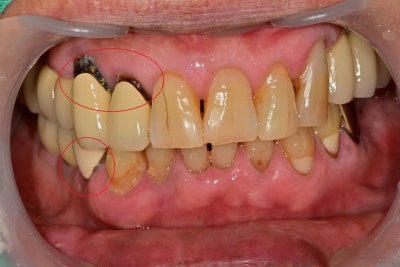
Among the teeth marked with a red circle,
the tooth surrounding the upper crown already shows significant
secondary caries visible to the naked eye.
The patient also expressed a desire to have it re-crowned and used as much as possible, as it was aesthetically displeasing.
As mentioned earlier,
the decay was already quite advanced visually,
and if the inside was too compromised upon removal, there was a possibility of extraction.
I explained this to the patient, and we proceeded with the removal.
Indeed...
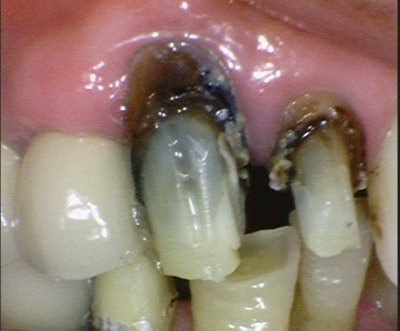
the internal decay was extensive.
After removing the decay, leaving as much healthy tooth structure as possible,
we reinforced it with a strong material and prepared the tooth for crowning.
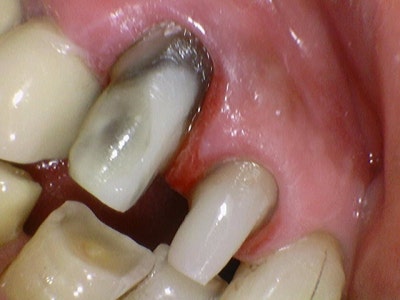
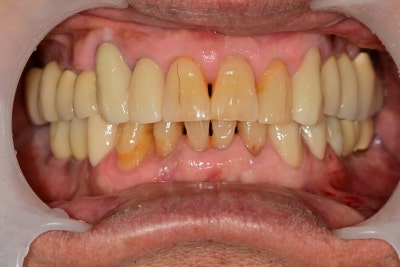
Although the tooth had discolored to black, the areas that were not decayed but
healthy were preserved.
After shaping the tooth for crown retention, the crown was re-attached.
Although extraction was considered for this tooth,
it was a canine, which performs an important function,
so we decided it was better to preserve it
and try to use it for as long as possible.
In this case, fortunately,
a small portion of the tooth crown remained,
allowing us to reinforce the tooth and then place the prosthesis.
From now on, maintenance is even more crucial.
Maintenance doesn't involve anything special.
These are things you've probably heard many times:
Thorough brushing after mealsPlaque control using oral hygiene productsAvoid hard and chewy foodsRegular check-ups for occlusion assessment
Not all cases can be like this, but
before considering implants,
if there's a situation where natural teeth can be used a bit longer,
I believe it's a good approach to try.^^
Frequently Asked Questions
How long can a crown be used?
The lifespan of a crown depends on individual chewing habits, maintenance, and the condition of the tooth. Generally, we explain it's about 7 to 10 years, but some people use them longer with good care. It's not always necessary to replace it just because a certain period has passed.
When should a crown be replaced?
Re-treatment of a crown is primarily recommended when the prosthesis is fractured or detached, gum recession occurs, or secondary caries develops beneath the crown. If these issues arise, removing the crown and considering re-treatment is advisable.
How is secondary caries under a crown diagnosed?
The inside of a crowned tooth cannot be seen with X-rays, making it difficult to accurately determine the presence or severity of internal decay. This is especially challenging for root canal-treated teeth, as there is no pain to indicate decay.
Does severe secondary caries always require extraction?
Yes, occasionally, even if the outside looks healthy, when the crown is removed, the internal decay may be so severe that the tooth cannot be saved and extraction is necessary. However, it's always best to try to preserve the tooth as much as possible.
How should I care for my teeth after crown re-treatment?
After crown re-treatment, thorough brushing after meals, plaque control using oral hygiene products, avoiding hard and chewy foods, and regular dental visits for occlusion assessment are crucial. Consistent care extends the life of your tooth.
Can natural teeth be preserved even after crown treatment?
Yes, it's possible. If there's a situation where natural teeth can be used longer before considering implants, it's a good approach to try to preserve them as much as possible through conservative treatment, as shown in the case example.