2025-07-24
Diastasis Recti Self-Diagnosis and Abdominal Strengthening Exercises
Learn how to self-diagnose diastasis recti and discover effective at-home abdominal strengthening exercises to improve core strength and reduce abdominal protrusion after pregnancy.

Many individuals who have experienced pregnancy and childbirth are concerned about changes in their abdomen.
Today, we will explain how to self-diagnose diastasis recti and introduce abdominal strengthening exercises you can do at home.
1. What is Diastasis Recti?
Diastasis recti is a condition where the expanding uterus during pregnancy causes the rectus abdominis muscles to separate sideways.
The rectus abdominis is a muscle located in the center of the abdomen, structured as two muscle bundles meeting at the midline.
During pregnancy, hormonal changes and uterine expansion cause the connective tissue between the rectus abdominis muscles to stretch.
If this gap does not narrow after childbirth, the condition of diastasis recti persists.
This can lead to a protruding abdomen or weakened core strength.
2. Simple Self-Diagnosis Method
Here's a simple self-diagnosis method you can do at home.
First, lie down comfortably with your knees bent.
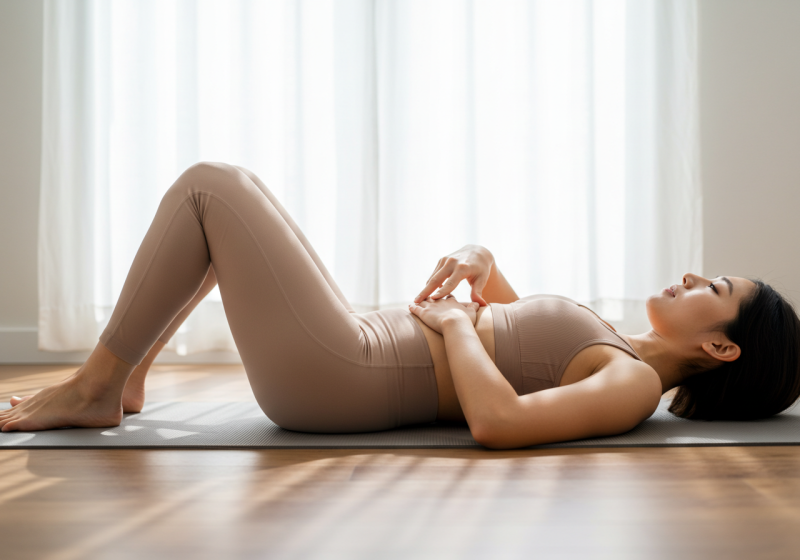
Place the fingers of one hand vertically above your navel, and gently lift your head while engaging your abdominal muscles.
At this point, check the depth and width of the gap where your fingers sink in.
If you feel a gap of two or more finger-widths, there is a high probability of rectus abdominis separation.

Check the area below the navel and the xiphoid process using the same method.
This is because the degree of separation can vary depending on the location.
If you feel a gap of three or more finger-widths, or if the depth is significant, it is recommended to consult a specialist.
3. Abdominal Strengthening Exercises You Can Do at Home
Correct exercises are crucial for improving rectus abdominis separation.
The following exercises can be performed safely at home.
Start with breathing exercises.
While lying down, inhale through your nose, expanding your belly, and exhale through your mouth, pulling your navel towards your spine.
Repeat this movement 10 times for 3 sets.
The Dead Bug exercise is also suitable.
While lying down, bend your knees at a 90-degree angle and extend your arms towards the ceiling.
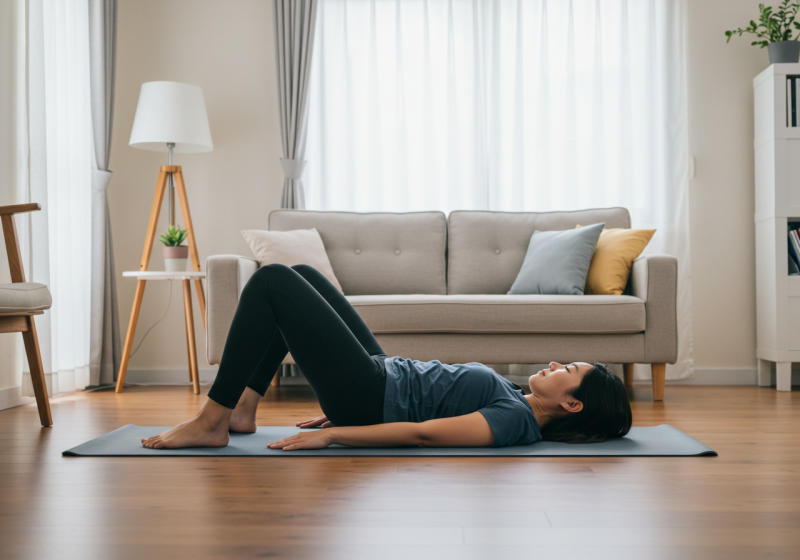
Slowly extend one arm and the opposite leg simultaneously, then return to the starting position.
The Bridge exercise strengthens both the core and gluteal muscles.
While lying down with your knees bent, lift your hips to form a straight line with your body.
Hold for 3 seconds, then slowly lower down.
For plank variations, start with the Knee Plank, where your knees are on the floor.
Support your body with your elbows and knees, engaging your abdomen, and hold for 30 seconds.
Increase the duration as you become more accustomed to it.
4. When Professional Treatment is Needed
In most cases, consistent exercise can lead to improvement, but in the following situations, professional consultation is necessary.
If a gap of three or more finger-widths persists even 6 months after childbirth, get an examination.
If you experience persistent lower back pain in daily life, or if you notice a protrusion in your abdomen when coughing, treatment may be helpful.
If there is no improvement despite consistent exercise, or if there are severe changes in your abdominal appearance, surgical treatment may be considered.
In such cases, it is best to consult a specialist to find the method that is right for you.
5. Precautions and Lifestyle Habits
When exercising, never overexert yourself; adjust the intensity according to your condition.
Exercises like crunches or sit-ups can worsen rectus abdominis separation, so they should be avoided.
Maintain correct posture in daily life, and when lifting heavy objects, engage your abdomen to stabilize your core.
When coughing or sneezing, placing your hands over your abdomen as if embracing it can also be helpful.
Consistency is key.
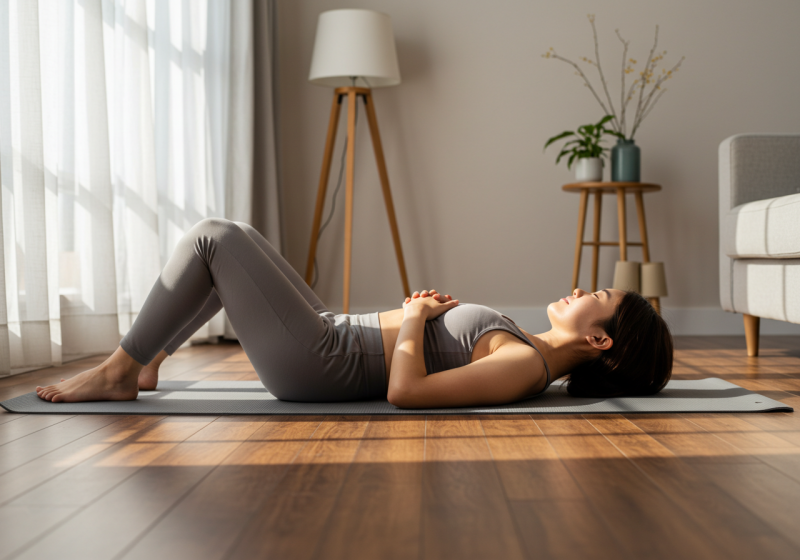
Even 15-20 minutes of regular exercise daily can certainly lead to improvement.
If you have any questions, please do not hesitate to consult a specialist.