2026-07-14
Correction for Asymmetrical Eyes After Double Eyelid Surgery: A Delicate Approach to Balancing the Eyes
Asymmetrical eyes can impact first impressions. This post discusses correcting uneven eyes, whether congenital or acquired, using precise methods like the Agma program and considering Hering's Law for optimal results.

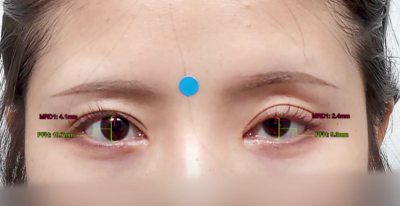
In our faces, the eyes are a crucial point that determines our first impression.
However, if the size or shape of both eyes, or the height of the eyelids, appear different,
it can be perceived as ‘asymmetrical eyes,’ making the overall impression subtly awkward or
giving the impression that one eye looks tired.
Asymmetrical eyes can be congenital, but they can also occur due to acquired factors such as lifestyle habits, aging, or trauma.
Therefore, today we will be posting about the correction of asymmetrical eyes, whether congenital or acquired.
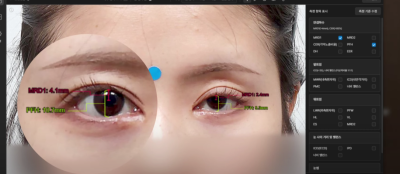
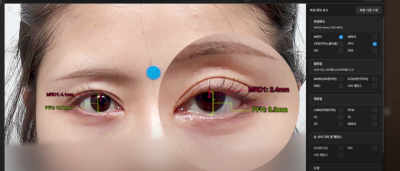
Some people come to us with both eyes drooping after double eyelid surgery or before surgery, while
others come with only one eye drooping.
Typically, when patients visit the hospital with such conditions, consultations are usually conducted by measuring eye size from photos. However, at VAVA Plastic Surgery,
*we utilize the Agma program to determine precise measurements and establish a surgical plan.
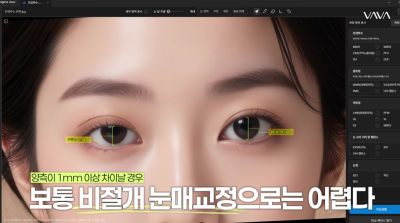

When analyzed with the program, if there is a difference of more than approximately 1mm between both sides, non-incisional ptosis correction is usually difficult to perform.
In such cases, incisional ptosis surgery is performed. If unilateral ptosis were to be corrected with non-incisional ptosis correction,
accurate correction would be difficult, and the likelihood of recurrence would be high, which is why we recommend the incisional method.
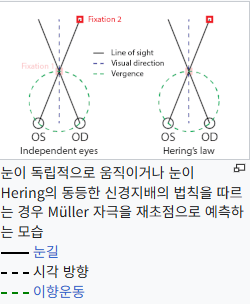
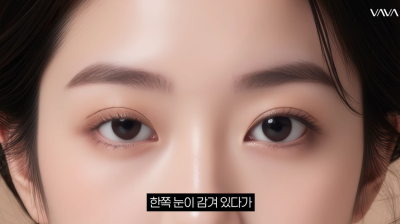


In cases of unilateral ptosis (where only one eye droops) rather than both eyes being different, the surgical difficulty is higher than in cases where both eyes have ptosis, and this is due to Hering's Law.
Hering's Law: Describes how the eyes move independently or follow Hering's Law of Equal Innervation,
predicting the re-focusing of Müller's muscle stimulation.
If one eye was drooping and was corrected through ptosis surgery,
the opposite, previously fine eye, might start drooping, requiring even more
precise work.
Unilateral Ptosis (Difference before and after bilateral correction)
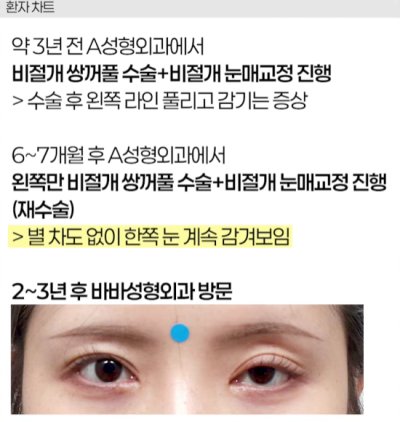
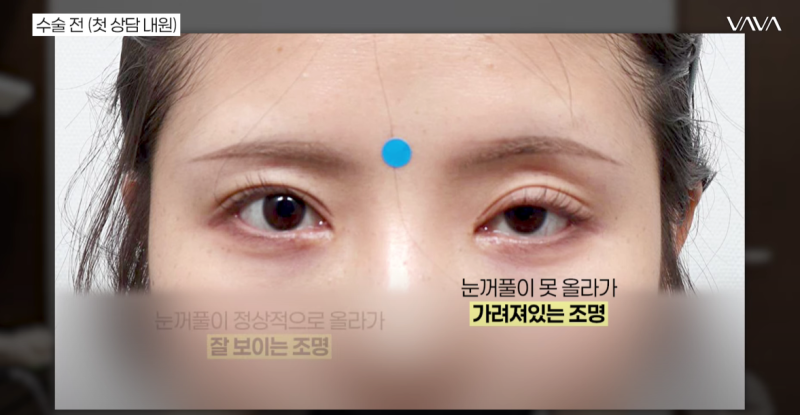
I will provide further explanation by introducing a patient who visited us with such a case.
Before visiting our hospital, the patient had a history of receiving non-incisional double eyelid surgery and non-incisional ptosis correction twice at another hospital.
Despite undergoing ptosis correction and double eyelid surgery twice, the strength of both eyes was not corrected at all, and they appeared droopy.
Especially when looking at the eyes straight on, the left eye clearly showed a reflection (light reflecting in the pupil), but
the right eye did not show any reflection.
1st Correction
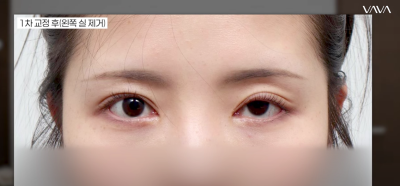
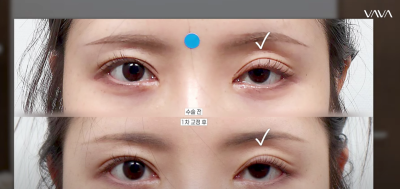
In the first correction, only the problematic right eye (in the photo) was corrected, but
the patient felt almost no change compared to before the surgery.
2nd Correction
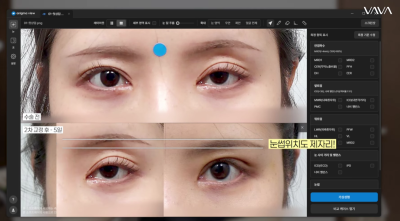
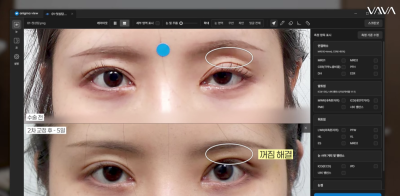
The second correction was performed two weeks after the first correction,
and after the second correction, changes in the height difference between both eyes, eyebrow position, and sunken areas
could be observed.
Problems after 2nd Correction
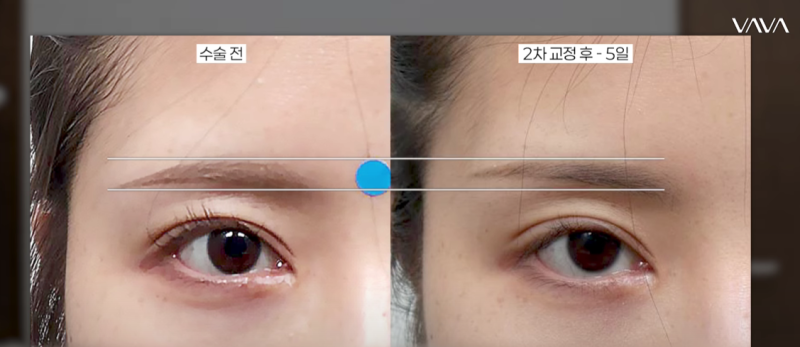
After some time, the patient felt that the left eye (in the photo) suddenly became heavy and
revisited. Therefore, the left eye (in the photo) was also addressed.
3rd Correction
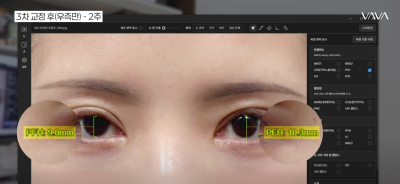
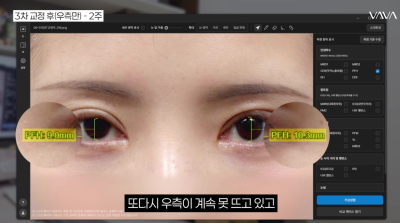
Although symmetry was somewhat achieved, the right eye (in the photo) gradually experienced
sinking and weakening of its opening strength over time, so the patient underwent simultaneous bilateral correction for the fourth time.
4th Correction (Final) Bilateral Eye Correction
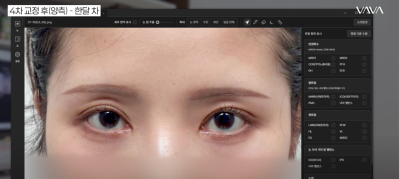
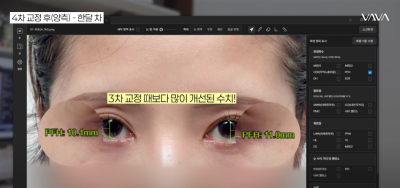
After the final correction, the previous heavy feeling in the right eye improved,
and when the eyes were open, the difference could be adjusted to a normal value of 0.5mm.
Dominant Eye and Non-Dominant Eye

In this case, it's not just one eye that needs correction, but both eyes simultaneously,
because Hering's Law is more strongly manifested when the dominant eye has ptosis.
The eye that is primarily relied upon to receive visual information among the two eyes is called the dominant eye, and the opposite eye, which is not primarily responsible for visual information,
is referred to as the non-dominant eye.
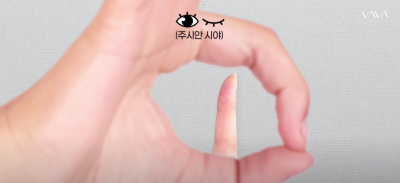
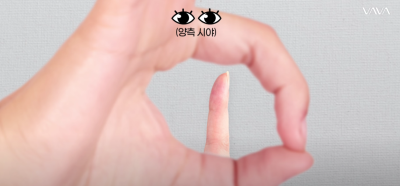
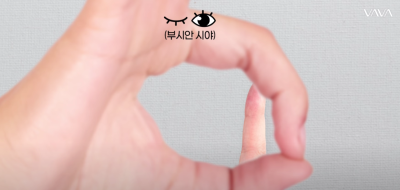
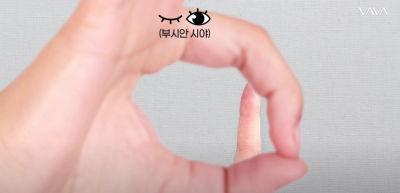
If you do a simple self-test, when you look with your dominant eye, the position of your finger doesn't
change much compared to looking with both eyes. However, if you close your right eye and look with your left eye, the position of your finger changes significantly.

Statistically, most people are right-eye dominant.
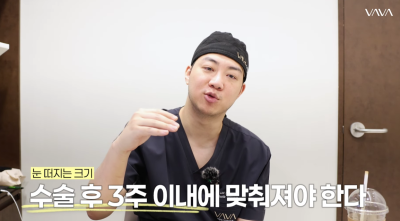
After ptosis correction, the size of the eye opening should be adjusted within 3 weeks post-surgery for it to be considered accurately corrected. If not corrected,
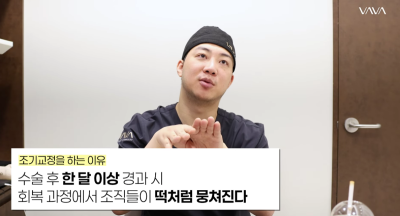
early correction should be performed because after more than a month post-surgery, tissues can clump together like dough during the recovery process.
Today, we've posted about methods for correcting asymmetrical eyes. Even after multiple corrections for asymmetrical eyes,
or in severe cases of asymmetrical eyes, one side might be under-corrected, one side might be over-corrected, or the opposite side might become smaller. Such phenomena can occur.
As this is a surgery with many variables, it must be performed by experienced medical staff with excellent surgical skills to achieve good results.
This has been VAVA Plastic Surgery. Thank you.