2026-09-07
Causes and Treatments for Front Tooth Cavities (Aesthetic Treatment, Resin) at Oksu-dong Dental Clinic
Learn about the causes of front tooth cavities, especially cervical caries, and their treatment methods, including aesthetic resin fillings, from Dr. Kim Tae-young at Bareunyoung Dental Clinic in Oksu-dong.
Hello,
This is Dr. Kim Tae-young, the head director of Bareunyoung Dental Clinic in Oksu-dong, directly explaining treated cases.
When cavities occur on the front teeth rather than the molars,
the symptoms are one thing, but the affected area is easily noticeable.
When speaking or smiling, the tooth surface, corroded and eroded by the cavity,
is exposed, and instead of the usual white tooth color,
a black or dark brown tooth surface is often discovered, leading patients to visit the dental clinic.
Generally, cavities that form at the junction of the tooth and gum are called
cervical caries.
These are typically more common in middle-aged and older adults than in younger individuals.
Today, we will explore a case where front tooth cavities, specifically cervical caries, occurred,
along with their causes and treatment methods.
My front teeth look black in several places.
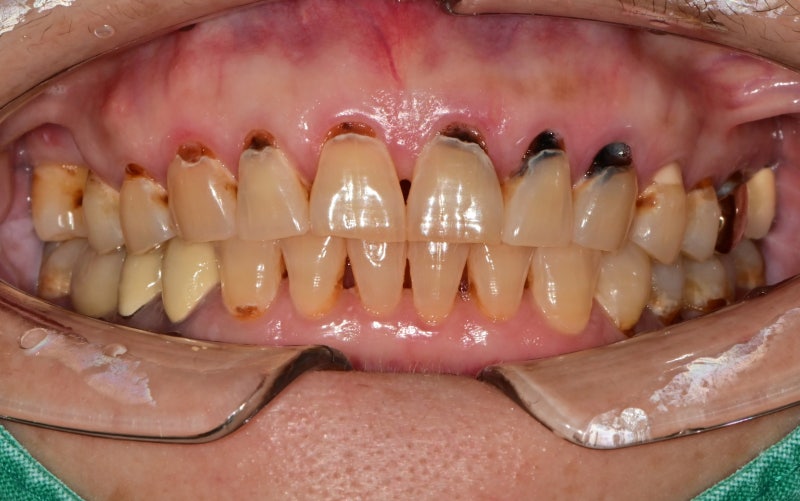
The patient visited us, stating that the area where the gums meet the teeth had been eroded and looked black for some time.
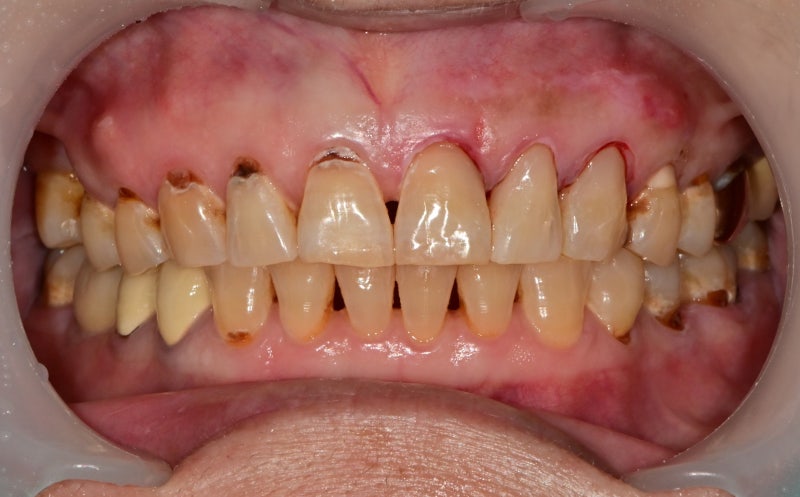
As seen in the initial examination photo, some areas have been treated,
but particularly from the upper front teeth to the premolars, multiple teeth are eroded and have cavities.
Generally, the causes of cervical caries are:
1. Decrease in saliva and changes in its composition
2. Frequent consumption of acidic foods
3. Imbalance of pH in the oral cavity....
These are the three main causes we can identify.
The commonality is that the activity of cariogenic bacteria becomes more vigorous when the oral environment changes.
In middle-aged and older adults, 'the first cause, a decrease in saliva and changes in its composition,' can occur more frequently than in younger individuals.
Saliva is continuously secreted in the oral cavity and plays a role in cleansing various parts of the mouth.
When this cleansing action is not performed smoothly due to changes in the amount or composition of saliva secreted from the salivary glands due to aging,
it aids the activity of cariogenic bacteria.
Not only aging but also systemic diseases like Sjögren's syndrome can lead to decreased salivary secretion,
resulting in multiple cervical caries.
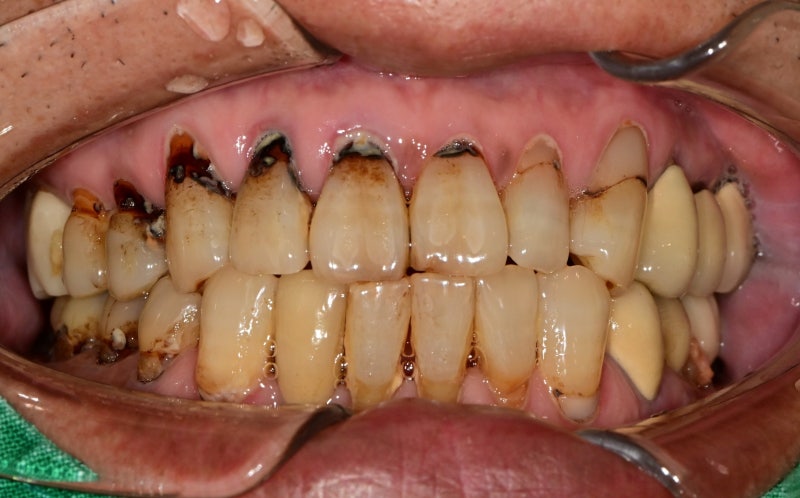
This is another patient's oral condition.
With receding gums and ineffective brushing,
the accumulation of calculus and plaque was accelerated, leading to advanced caries.
For cervical caries, treatment generally involves removing the decay and then performing resin restoration.
There is also an insurance-covered material called GI for filling cervical cavities after treatment,
but for larger areas or parts of the front teeth where aesthetic factors are important,
because the color and texture of GI are unaesthetic,
we sometimes recommend resin.
Returning to the case, the depth of the cavity progression in such instances
cannot be determined by X-rays, so after all the decay is removed,
we can assess how deep it has progressed.
If the cavity has progressed to the nerve or the cavity area is extensive,
and resin treatment alone is not sufficient,
additional treatments such as root canal therapy or crowns may be necessary.
Resin Treatment in Conjunction with Gum Treatment
While it is important to remove cavities and treat them aesthetically with resin,
periodontal treatment, or gum treatment, should always precede it.
Cavity treatment performed when the gums are swollen and poorly managed
will not only be ineffective but also short-lived, leading to new cavities.
This photo shows the day the upper half was treated first.
Although there were several deep cavities, materials for nerve stabilization were used,
and the treatment was completed naturally with resin, matching the color, without root canal therapy.
Treatment for the other side remained,
but the patient was unable to visit for a while due to personal reasons.
I was worried that if only one side was treated and the other neglected, the cavities might progress further,
but recently, the patient visited to complete the remaining treatment.
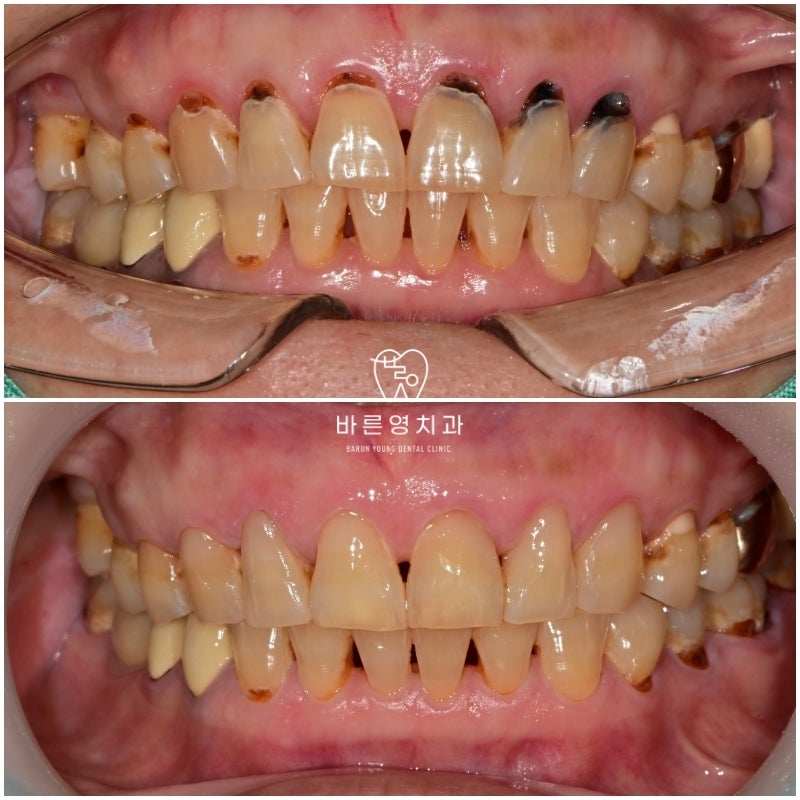
This is a photo before treatment and
a photo taken when the patient came for a check-up after all gum treatment and resin treatment were completed.
During the period the patient did not visit, plaque had accumulated around the gums again,
so we were able to thoroughly clean the surrounding area again and complete the resin treatment.
Although there are still a few cavities to be treated on the lower teeth,
treating the most visible and urgent areas first seems to bring a sense of relief.
Since materials like resin are organic composites, if the surrounding area is not well managed
and plaque continues to accumulate, there is a possibility of secondary cavities developing around the resin.
Therefore, we will need to diligently provide periodontal care every time the patient visits.^^
Cervical caries
can progress due to inadequate brushing, but
cavities that suddenly appear simultaneously in multiple teeth
may be related to systemic diseases, medications, and changes in the oral environment.
Therefore, if you have similar concerns,
we recommend visiting a nearby dental clinic for a consultation.
I hope your questions have been resolved,
and I will see you next time with another case.
Thank you!^^
▼ Related cases you might find helpful
We believe that proper treatment leads to proper results. My ideal dental clinic is one where all patients who visit with worries leave feeling reassured and confident. - Bareunyoung Dental Clinic
Directions
JYJ Building, 2nd floor, 179 Dongho-ro
Right in front of Exit 6 of Yaksu Station, towards Yaksu Market
Village Bus 5 (Yaksu Station)
Village Bus 12 (Namsan Town, Yaksu Police Station)
Bus stops (Yaksu Heights, Sindang Social Welfare Center, Gaon Library, Geumho Tunnel Entrance)
From Yuyu Pharmaceutical towards Geumho Station
This post was written directly by Bareunyoung Dental Clinic for the purpose of providing medical information and hospital advertising (in compliance with Article 56, Paragraph 1 of the Medical Service Act).
Frequently Asked Questions
Why do front tooth cavities occur easily?
Front tooth cavities are easily exposed and noticeable when speaking or smiling. Specifically, cervical caries, which form at the junction of the tooth and gum, frequently occur in middle-aged and older adults rather than younger individuals.
What are the main causes of cervical caries?
The main causes of cervical caries are a decrease in saliva and changes in its composition, frequent consumption of acidic foods, and an imbalance of pH in the oral cavity. Aging or systemic diseases like Sjögren's syndrome can also cause decreased salivary secretion, leading to multiple cervical caries.
How are front tooth cavities treated?
Front tooth cavities are primarily treated by removing the decay and then performing resin restoration. If the cavity has progressed to the nerve or the area is extensive, making resin alone insufficient, additional treatments like root canal therapy or crowns may be necessary.
Is gum treatment necessary before resin treatment?
Yes, gum treatment must precede it. If cavity treatment is performed when the gums are swollen and poorly managed, it will not only be ineffective but also short-lived, leading to new cavities.
Can cavities recur after resin treatment?
Yes, resin is also an organic composite, so if the surrounding area is not well managed and plaque continues to accumulate, there is a possibility of secondary cavities developing around the resin. Therefore, consistent periodontal care is crucial.
What materials are used for front tooth cavity treatment?
Resin is primarily recommended. While GI, an insurance-covered material, is available, resin is preferred over GI for front teeth due to its aesthetic importance, as GI's color and texture can be unaesthetic.