2026-05-23
SKYPE
JK Plastic Surgery serves patients from around the world and uses Skype for post-op follow-ups with international patients who cannot return to Korea in person.
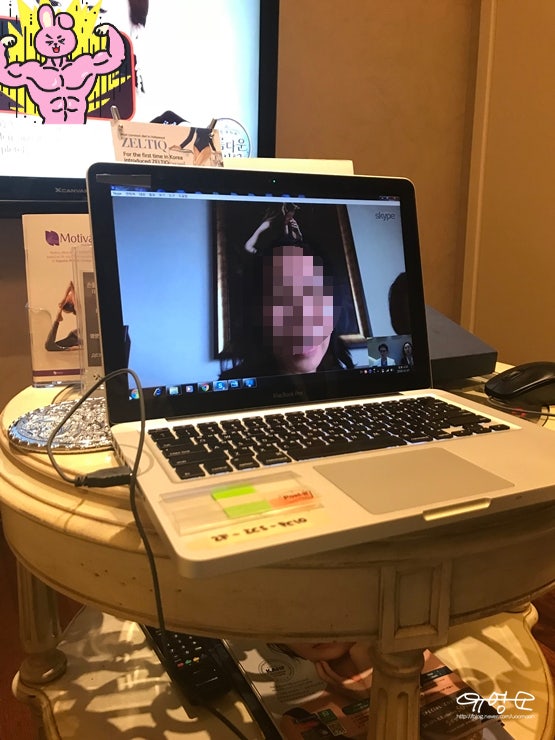
JK Plastic Surgery welcomes patients not only from Korea, but from all around the world.
From nearby China, Taiwan, Hong Kong, and Japan, to Southeast Asia including Thailand, Vietnam, and Myanmar; the Middle East including the UAE, Egypt, and Saudi Arabia; Central Asia including Russia, Kazakhstan, Ukraine, and Turkmenistan; Europe including the UK, France, Germany, Italy, and the Netherlands; the Americas including the United States, Canada, and Brazil; and Oceania including Australia and New Zealand.
Writing it all out feels like poring over a world map with my daughter — ha!
Working at a hospital recognized not just domestically but on a global scale fills me with great pride and a deep sense of responsibility.
Because patients come from so many different countries (I wish I could speak every language in the world, but that is simply not realistic), we always have interpreters and coordinators on hand for the various language groups.
That said, English truly is the universal language! Even after decades of studying it, at first I could barely understand what patients were saying and struggled to explain things the way I wanted to — it was frustrating and discouraging. But by consistently working on my conversational English and interacting directly with patients, I have reached a level where I can hold full conversations and explain procedures without much trouble.
Whatever it may be — continuing to use and apply what I know and have learned, without falling into complacency so as not to forget, feels like a new kind of challenge and learning in itself.
It is a very refreshing and enjoyable kind of stimulation.
SKYPE
Anyway...
Of course, coming in person is always best, but for overseas patients who cannot fly back to Korea every time just for a follow-up, we connect via Skype to check in on how they are doing and talk through their progress and any questions they may have.
This patient was a Thai national living in Canada. We were seeing each other for the first time three months after her nose surgery.
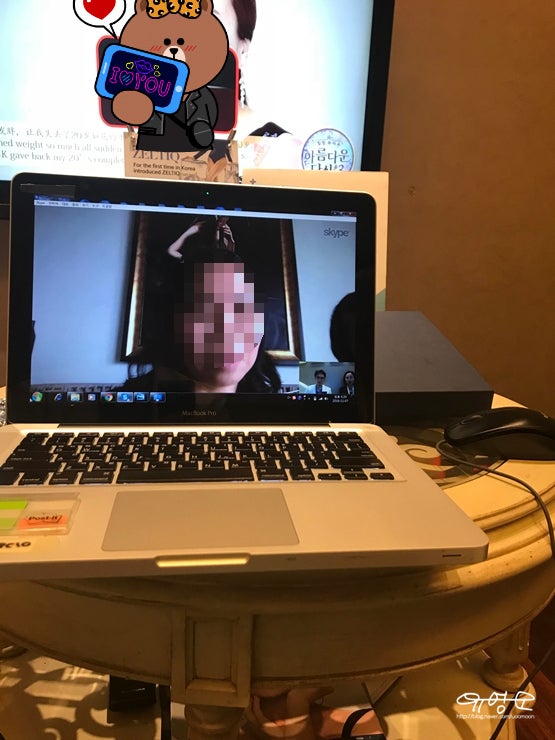
She had a short nose with quite visible nostrils, so the procedure involved adequate length extension while also lowering the nostrils slightly.
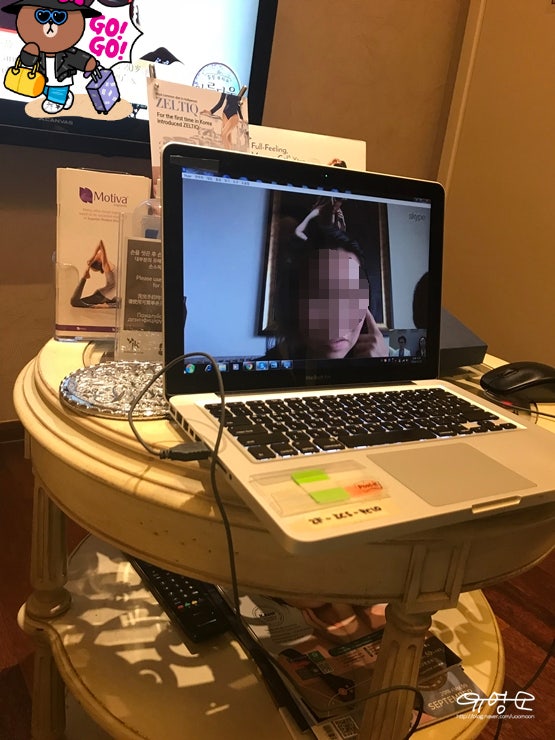
She said she has been doing well with no issues. She also had some questions about eye surgery, so I gave her a general overview of the procedure options.
We said our goodbyes with an invitation to stop by the next time she visits Korea. Bye-bye :)
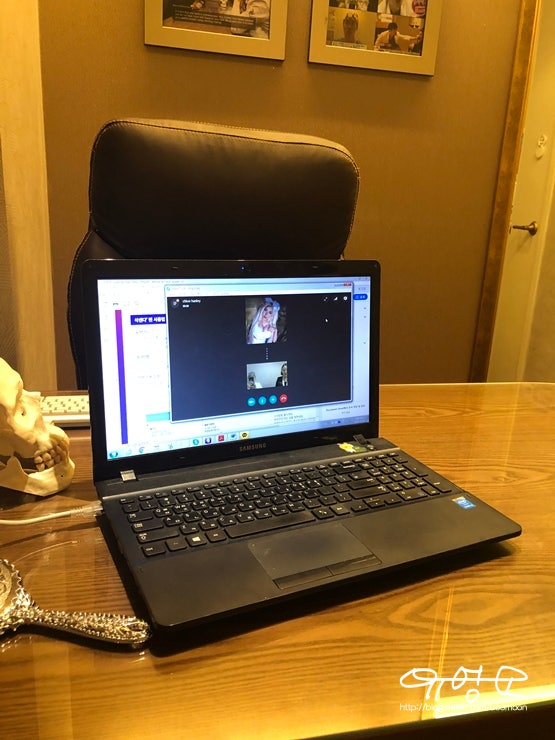
Next, a check-in with another patient who had also undergone nose surgery.
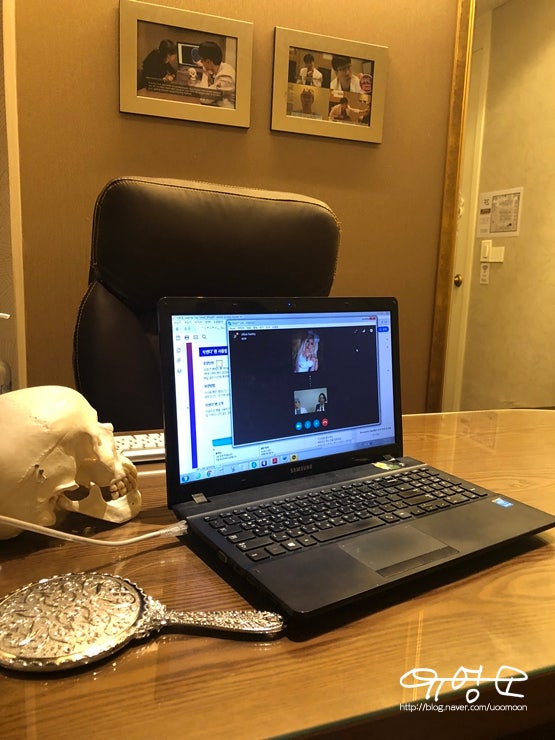
It seemed like she might be asleep... after quite a long wait,
...
..
.
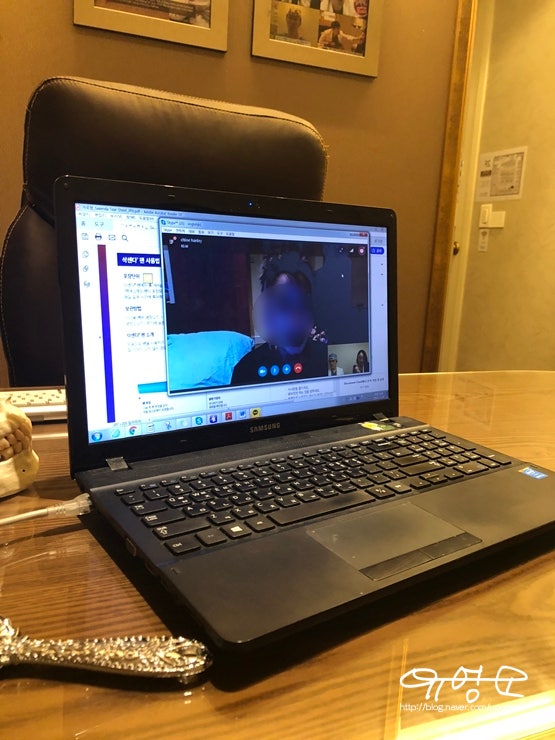
It was lovely to see her again — about two months after her nose surgery.
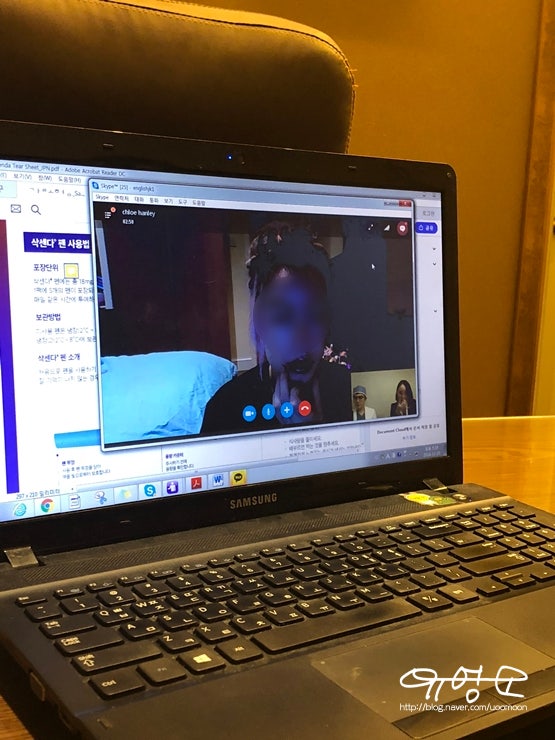
Her nose was already quite beautiful to begin with, but she had wanted to correct a dorsal hump and a drooping nasal tip.
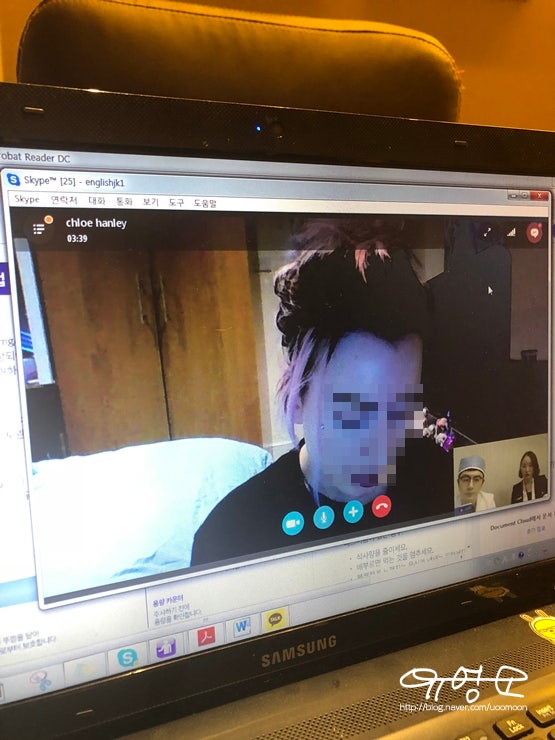
She also pulled up the progress photos she had been taking along the way to show me.
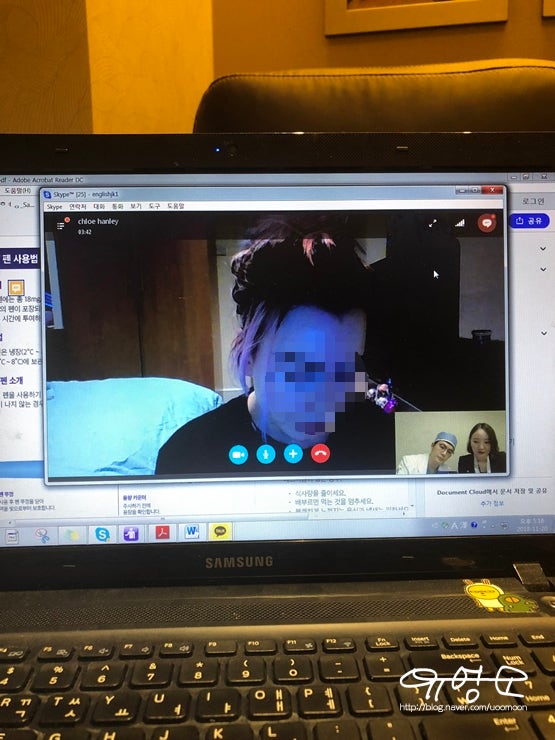
Well...
To be honest...
She showed quite a lot of them...
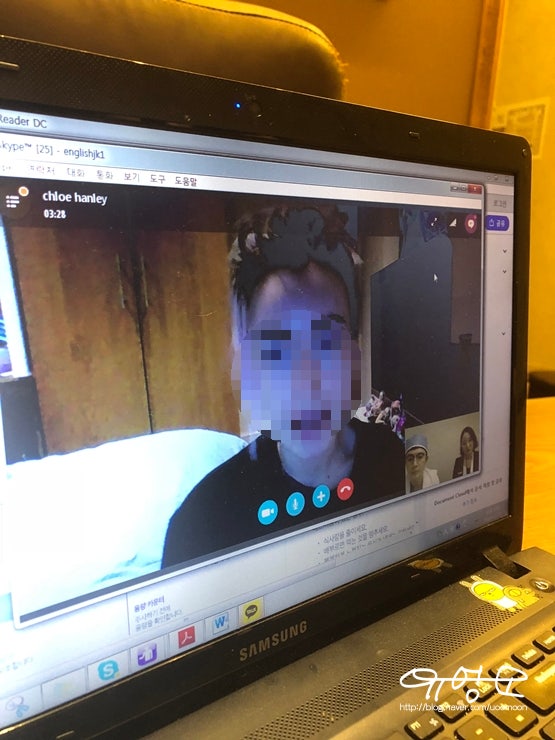
After a wonderful conversation with her as well, we wrapped things up and agreed to meet in person the next time she comes to Korea. :)
There are still many restrictions and regulations around telemedicine in Korea. It is true that there are not many areas in Korea so remote that people genuinely cannot access medical services — public health physicians and various healthcare infrastructure are distributed throughout the country.
The foundational principle of medicine — that a doctor must see, hear, and physically examine a patient directly — along with concerns that introducing telemedicine would further concentrate patients at large hospitals in Seoul and the greater metropolitan area and create additional problems, are understandable worries.
Even so, how far and in what ways we should follow the currents of the times is something that will require much more discussion and understanding, I believe.
That is all for now!