2026-09-07
Yaksu Station Dental Clinic: Treatment for Periapical Inflammation Due to Cracked Teeth (Implants, Alveolar Bone Grafting)
This article discusses treatment for periapical inflammation caused by cracked teeth, including extraction, alveolar bone grafting, and immediate implant placement. Early intervention is crucial for better outcomes.
Hello.
I'm Dr. Kim Tae-young, director of Bareunyoung Dental Clinic in Yaksu-dong.^^
In several previous cases,
I've explained various treatment methods for cracked teeth.
The case I'll show you today is
when inflammation develops around a tooth with a crack extending to the root,
leading to bone loss in the surrounding area.
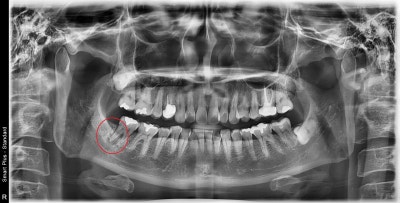
The patient was diagnosed with the need for extraction of the lower right molar at another dental clinic.
Although there was some pain in the past, there are no symptoms currently,
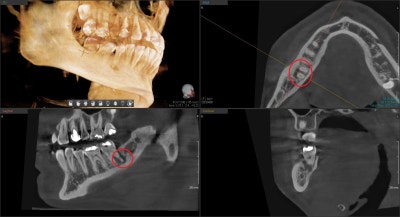
but significant bone loss around the tooth can be observed.
A CT scan provides a clearer view.
The dark areas around the root indicate alveolar bone loss due to inflammation.
On the radiograph, this is a typical pattern of alveolar bone loss
seen when a root is cracked.
Although there are no symptoms yet, inflammation has already developed around the tooth root,
and in such cases, root canal treatment will not heal it, so extraction is necessary.
Fortunately, in the current situation, immediate implant surgery with alveolar bone grafting was possible after extraction.
If more time had been delayed, the extent of bone loss would have been more extensive, doubling the treatment period.

If you look at the area marked with a red circle, you'll see a clear crack line visible to the naked eye.
The main cause of inflammation would have been bone loss around the significantly progressed crack towards the root.
Immediately after extraction, implant surgery and alveolar bone grafting are performed simultaneously.
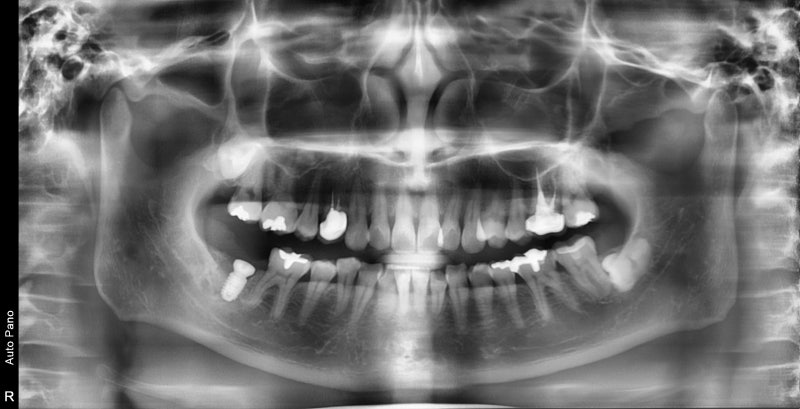
Fortunately, initial stability was good,
so a second surgery for future prosthetics was performed at the same time,
and a large amount of alveolar bone grafting was performed in the distal root space of the tooth.
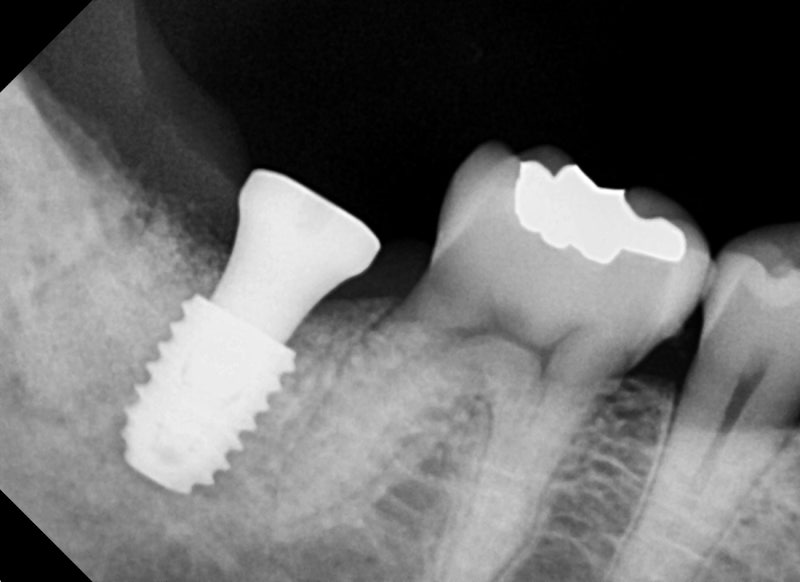
This is a photo after 2 months.
The area where alveolar bone grafting was performed healed very well, as intended.
Healing was good, and the implant's stability was also excellent, so the prosthetic stage was immediately initiated.
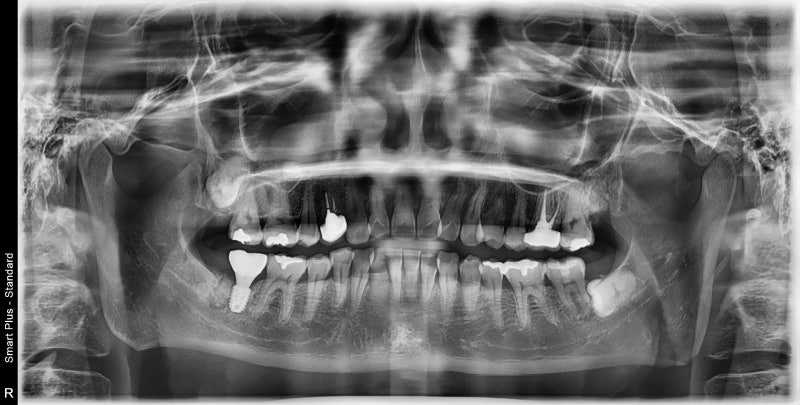
Although the strength of the alveolar bone grafted area is not yet as strong as the surrounding bone,
it has reached a strength sufficient to support the implant,
and over time, it will be replaced by surrounding alveolar bone.
Fortunately, the patient sought treatment as soon as an abnormality was noticed,
allowing for the beautiful completion of the prosthesis within 2 months.^^
Recently, the patient mentioned experiencing occasional pain in the lower left molar in a symmetrical position.
This tooth also carries a potential risk for cracking,
so it needs to be observed continuously with occlusal adjustments and symptom checks.
The treatment plan for a cracked tooth varies depending on where and how the crack occurred.
If the crack is only in the crown portion of the tooth,
symptoms can be alleviated with root canal treatment and prosthetic treatment,
but if the crack has already progressed to the root, no amount of root canal treatment
can prevent reinfection, so in most cases,
by the time patients become aware, significant alveolar bone absorption has usually already occurred.
While preserving the tooth and using it for as long as possible is important,
starting treatment quickly when symptoms appear
can shorten the treatment period and allow for a relatively simpler treatment method.
Thank you^^
Frequently Asked Questions
Do cracked teeth always require extraction?
No, not necessarily. The treatment plan varies depending on the location and extent of the crack in the tooth. If the crack is only in the crown portion of the tooth, symptoms can be alleviated with root canal treatment or prosthetic treatment, but if the crack has progressed to the root, extraction is usually necessary.
Why is root canal treatment difficult for teeth with cracks extending to the root?
Teeth with cracks extending to the root are difficult to treat with root canal therapy because reinfection is inevitable. In such cases, a significant portion of the bone around the tooth (alveolar bone) has often already been absorbed, making extraction unavoidable.
Is immediate implant placement possible after extracting a cracked tooth?
Yes, it is possible. As in the case described in the article, if initial stability is good after extraction, implant surgery can be performed simultaneously with alveolar bone grafting. This can shorten the treatment period and allow for a relatively simpler treatment process.
Why is alveolar bone grafting necessary?
When inflammation occurs around the tooth root, alveolar bone can be lost. Sufficient bone is needed to place an implant, so alveolar bone grafting is required to replenish the lost alveolar bone. This helps ensure stable implant fixation.
What happens if treatment for a cracked tooth is delayed?
Delaying treatment can lead to extensive bone loss, which may double the treatment period. Furthermore, the treatment method may become more complex, or the prognosis may worsen, so it is crucial to start treatment promptly when symptoms appear.
How long does recovery take after cracked tooth treatment?
In the case described in the article, the patient started treatment as soon as an abnormality was noticed, allowing for the completion of extraction, implant placement, alveolar bone grafting, and prosthetics within 2 months. Early treatment significantly helps shorten the treatment period.