2026-09-07
Yaksuyeok Dental Clinic: Treating Cracked Teeth (MTA)
Learn about cracked teeth, their causes, and treatment options, including MTA, at Yaksuyeok Dental Clinic.
Hello.
This is Dr. Kim Tae-young from Bareunyoung Dental Clinic, Yaksuyeok.
Today, I'd like to discuss cracked teeth, a topic we've covered before.
Cracked teeth are caused by chewing habits (for those who enjoy hard or chewy foods) and strong occlusal forces.
Micro-cracks can exist in anyone, and as long as there are no symptoms, they are considered normal teeth and treatment is usually not performed.
However, if such cracks progress further, pain may develop,
and if a lesion appears clinically on an X-ray, treatment or even extraction may be necessary.
‘The filling I had before fell out.’
The treatment began when the patient visited us because a gold restoration, which had been placed at another dental clinic, had fallen out.
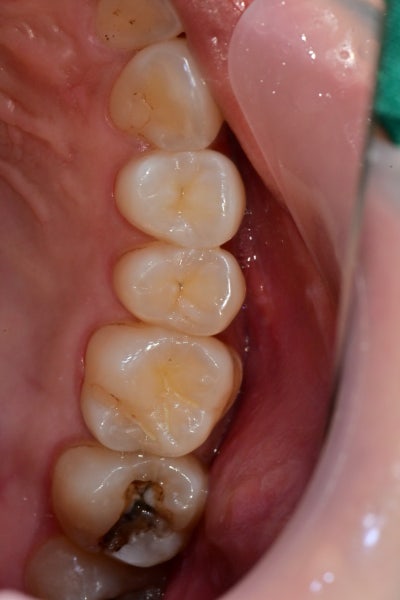
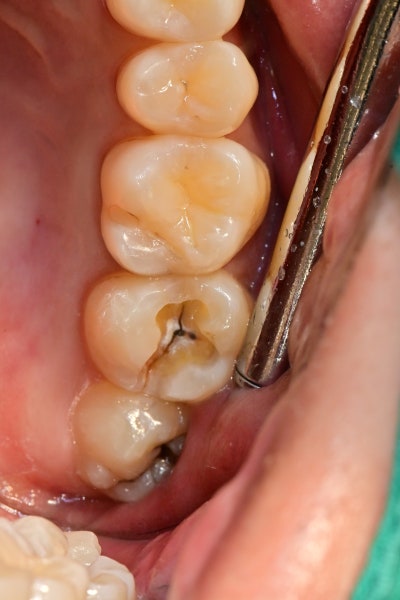
The patient came in because the restoration on the leftmost molar (excluding wisdom teeth) had fallen out.
Since there was no pain or significant clinical issues, we proceeded with a standard inlay treatment.
While removing secondary decay inside, we discovered a crack on the chewing surface.
In fact, when a crack of this extent is found, a crown is usually the correct treatment, but since the patient had no symptoms or discomfort,
we assumed the crack was superficial and not deep,
and after informing the patient about the precautions for cracked teeth, we decided to try inlay treatment first.
However, after the inlay was bonded, the patient visited us again due to pain during chewing.
Looking back, there might have been warning signs, but the patient might not have noticed them,
and since they weren't chewing on the left side, they might have been fine for a short while.
In such cases, the crack had progressed significantly, so we decided to proceed with root canal treatment first.
But...
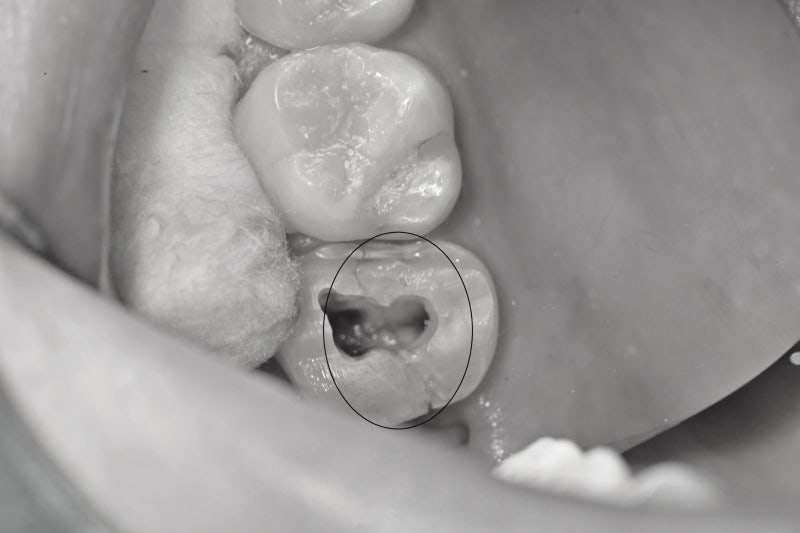
Upon opening the tooth, we found that the crack had extended all the way to the root.
It's rare for symptoms not to be clearly present at this stage.
There was a crack running through the tooth from side to side,
and it extended all the way to the bottom of the tooth.
When a crack has progressed to that extent, extraction is usually recommended.
The patient considered extraction but wanted to try to save the tooth for as long as possible before that,
so we decided to proceed with root canal treatment and then have them use a temporary crown.
In such cases, if root canal treatment is performed all the way to the apex, there's a high chance the tooth will split further,
so we used a material called MTA to preserve the nerve in the root area,
and after performing root canal treatment only on the upper part, we decided to monitor the symptoms.
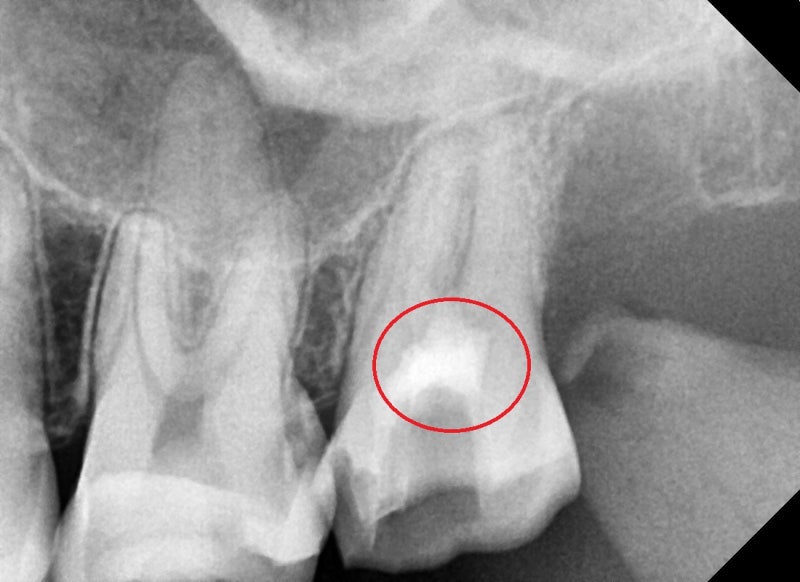
With advancements in materials, various approaches to root canal treatment are possible depending on symptoms and cases.
By preserving some of the nerve, we give vitality to the tooth, allowing it to be maintained for as long as possible.
The patient used a temporary crown for a certain period,
and since the pain disappeared and they reported being able to chew a little without discomfort,
we are now proceeding with the final restoration.
Since the crack has already progressed significantly,
the long-term prognosis is likely not good,
but we completed the treatment, placing great importance on maintaining the tooth before extraction.
If the symptoms had not improved, we would have naturally proceeded with extraction,
but for now, we will continue to monitor the symptoms, allowing the patient to live with their natural tooth, and follow up.
Frequently Asked Questions
Why do teeth crack?
Cracked teeth are primarily caused by chewing habits and strong occlusal forces. Enjoying hard or chewy foods, or having strong forces applied to your teeth, can lead to micro-cracks. Minor cracks without symptoms are sometimes considered normal.
When should a cracked tooth be treated?
If a tooth has a crack but no symptoms, immediate treatment may not be necessary. However, if the crack progresses, causing pain or visible lesions on an X-ray, treatment is required. If you experience pain, it's crucial to visit a dentist immediately for diagnosis.
In what cases is MTA treatment used?
MTA treatment is used when the nerve inside the tooth is damaged, but root canal treatment all the way to the apex is difficult. Especially when a crack has progressed deeply into the root, requiring consideration of extraction, MTA can be attempted to preserve the nerve in the root area, maintain the tooth's vitality, and save the natural tooth.
Can a cracked tooth be saved without extraction?
Yes, in some cases, attempts can be made to save a tooth without extraction. As in the case described in the article, even when a crack has progressed deeply into the root, MTA material can be used to preserve part of the nerve and maintain the tooth. However, the long-term prognosis may not always be favorable.
What should I do if I experience pain after cracked tooth treatment?
If you experience pain after cracked tooth treatment, you should visit your dentist immediately for a re-diagnosis. In the case described in the article, pain during chewing occurred after inlay bonding, leading to the discovery of a deeper crack and subsequent root canal treatment. Pain can be a sign of crack progression.