2026-07-09
Yeoksam-dong Plastic Surgery: Upper and Lower Blepharoplasty for Drooping Eyelids
If you're concerned about drooping eyelids, upper and lower blepharoplasty can help. This article from Yeoksam-dong Plastic Surgery explains how these procedures address aging around the eyes, considering factors like age, skin elasticity, and overall facial balance for natural-looking results.


Aging around the eyes can begin sooner than you think.
The eye area is one of the first parts of the face where we notice changes due to aging.
You might find your eyes looking heavier than before, or hear comments that you look sleepy in photos.
Some people start to worry about drooping eyelids when they frequently hear they look tired, even after getting enough rest.
Indeed, the skin around the eyes is thin and undergoes a lot of movement, so signs of aging tend to appear there relatively early.
Many people attribute drooping eyelids solely to skin aging.
However, in reality, it's a complex issue involving not just the skin, but also the muscles, fat, and ligament structures.
When the upper eyelid sags and covers the pupil, the eyes can appear smaller, and a habit of using the forehead muscles to open the eyes may develop.
Conversely, in the lower eye area, changes in fat position combined with decreased skin elasticity can create puffy undereyes or deep shadows.
That's why at Yeoksam-dong Plastic Surgery, we emphasize examining the entire structure of the eye area, not just the sagging skin.

Changes also differ depending on age group.
While some people consider this surgery to be for middle-aged individuals,
there are also cases where people in their 20s seek consultations to improve drooping eyes and create a clearer eye line.
From the late 30s, some individuals start to feel a slight heaviness in their eyelid skin.
After the age of 40, it becomes more common for eyelid drooping to be accompanied by changes under the eyes.
After 50, decreased skin elasticity becomes more pronounced, and changes in facial impression due to eye drooping can become quite noticeable.
For those aged 60 and above, there are cases where functional discomfort, such as obstructed vision, is discussed alongside cosmetic concerns.
Therefore, Yeoksam-dong Plastic Surgery explains that it's more important to assess the current condition of the eyes than the age itself.
In what cases might upper blepharoplasty be considered?
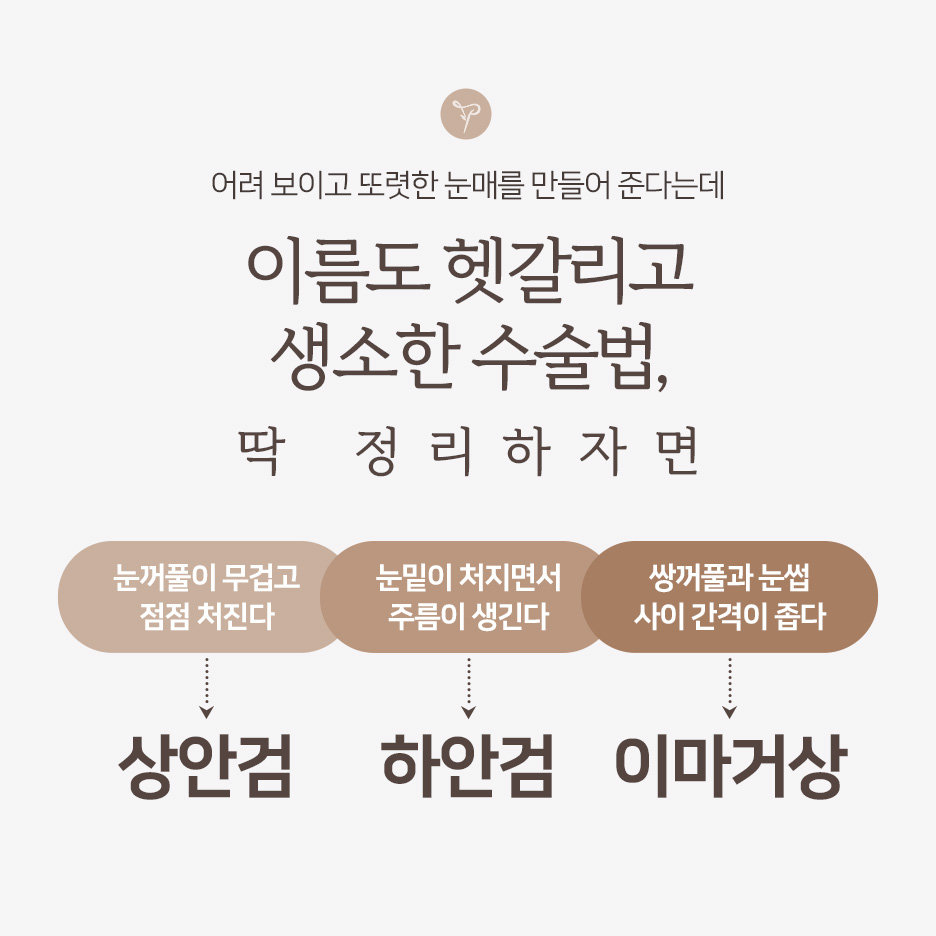
Upper blepharoplasty is a method considered to improve changes related to upper eyelid drooping.
There are cases where the eyelid skin sags, causing the double eyelid line to become blurry or making it feel difficult to open the eyes.
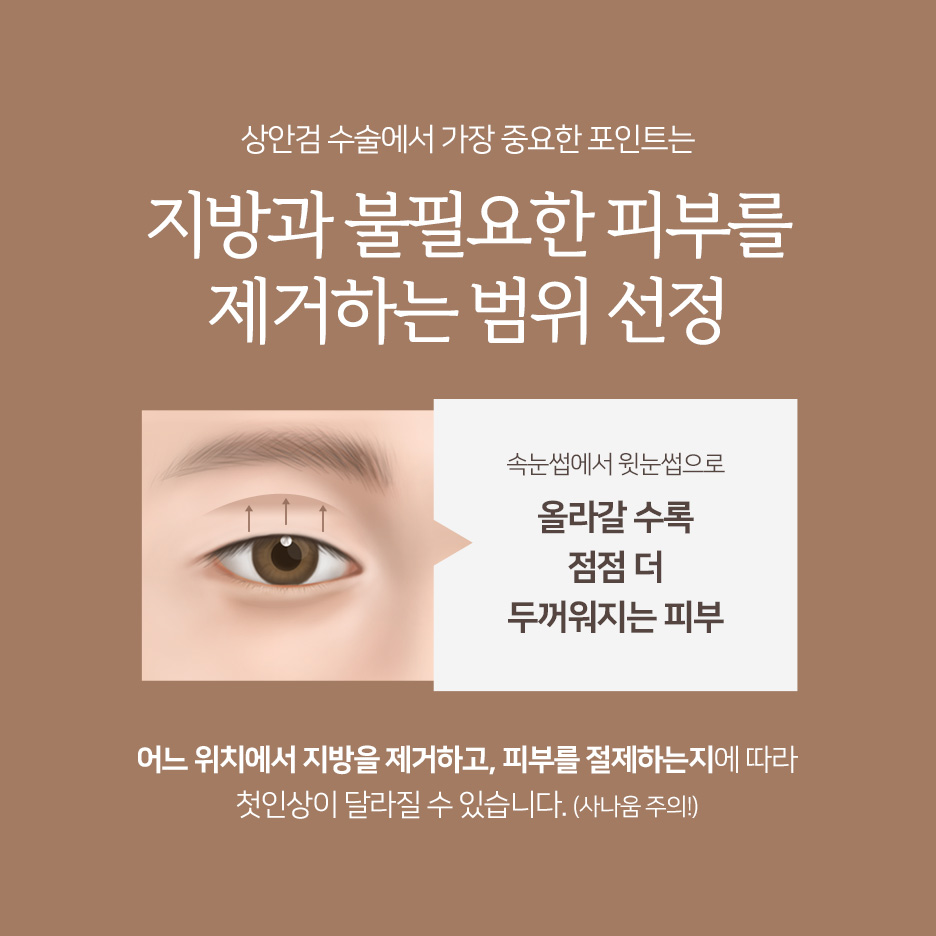
Especially when the eyelid starts to cover the pupil, the eyes can appear smaller than they are, and vision may feel obstructed.
In such cases, Yeoksam-dong Plastic Surgery will assess the current condition of the eyelid skin, the strength of the eye-opening muscles, and eyebrow position.
This is because even if it looks like the same eye drooping, the causes are not always identical.
Lower blepharoplasty focuses on age-related changes that appear in the lower eye area.
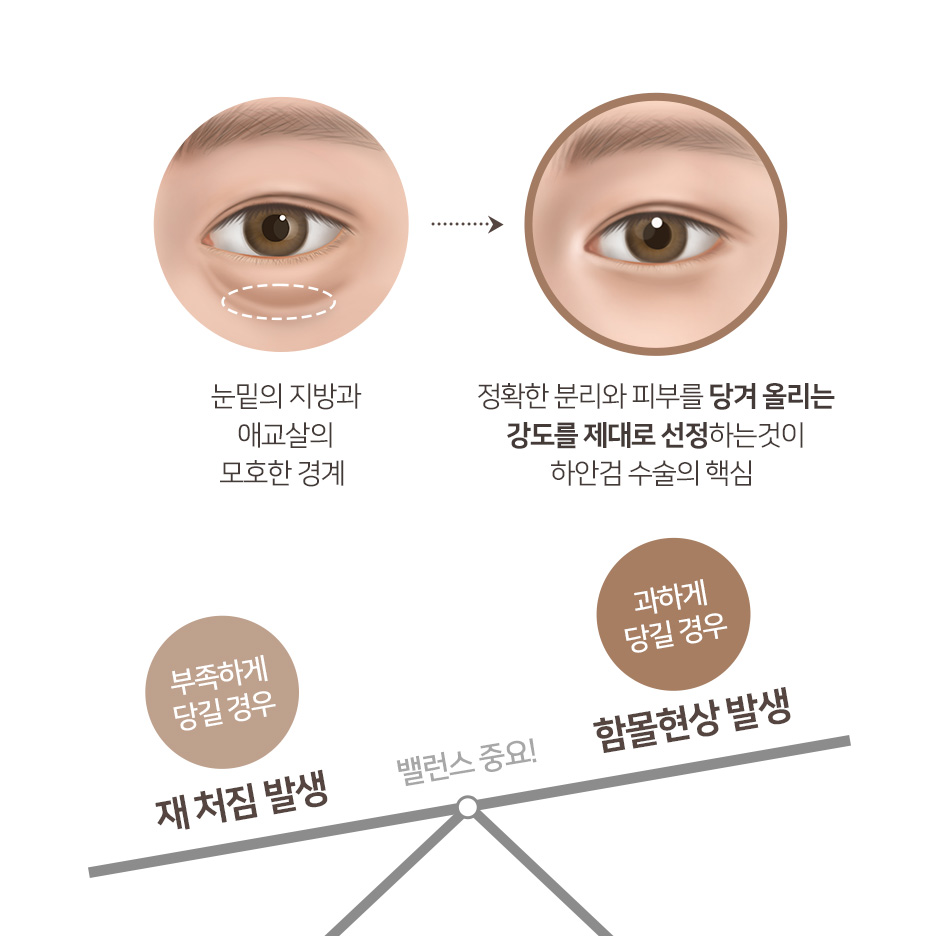
Common causes include bulging undereye fat, sagging skin, fine wrinkles, and shadows that resemble dark circles.
In particular, if undereye fat protrudes forward, it can lead to an impression of looking more tired and older than one actually is.
Additionally, the area below the fat may appear hollow, making the boundary even more prominent.
Therefore, at Yeoksam-dong Plastic Surgery, we emphasize the process of analyzing the condition of the undereye fat, skin elasticity, and the presence of tear troughs.
There are also cases where upper and lower blepharoplasty are considered together.
The eyes are an area where the upper and lower parts appear connected.
So, while there are cases where only the upper eyelid droops or only the undereye area changes,
it's not uncommon for changes in both areas to appear simultaneously.
For example, if the upper eyelids are heavy and drooping, and the undereye fat also protrudes,
the overall tired impression can be further emphasized.
Since there are cases where the overall balance of the eyes needs to be considered,
Yeoksam-dong Plastic Surgery emphasizes the process of identifying where the current changes originated.
A natural impression is also an important factor.
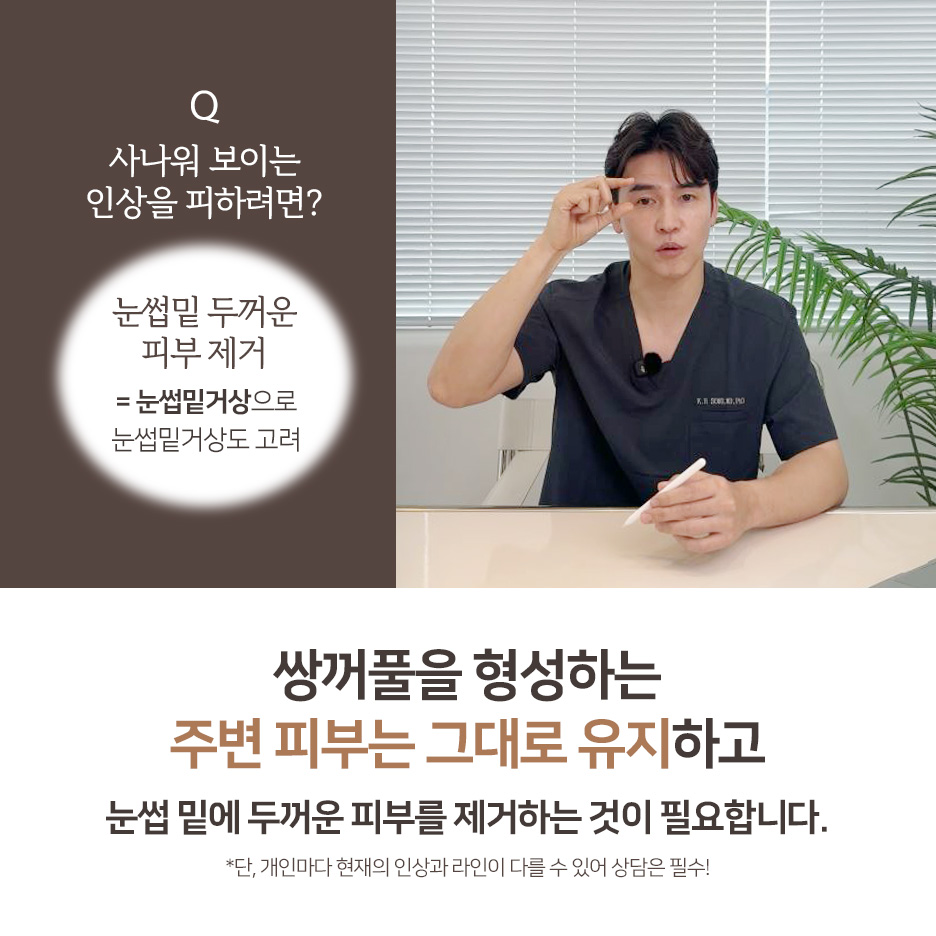
During surgery, rather than simply making the eyes larger, a natural impression is often prioritized.
This is because many prefer a result that harmonizes with the current face rather than an overly pulled look.
Since the eyes affect the overall facial impression, it's crucial to consider the eyelid condition and facial proportions together.
At Yeoksam-dong Plastic Surgery, when planning upper and lower blepharoplasty, we prioritize considering overall balance
rather than just removing sagging skin.
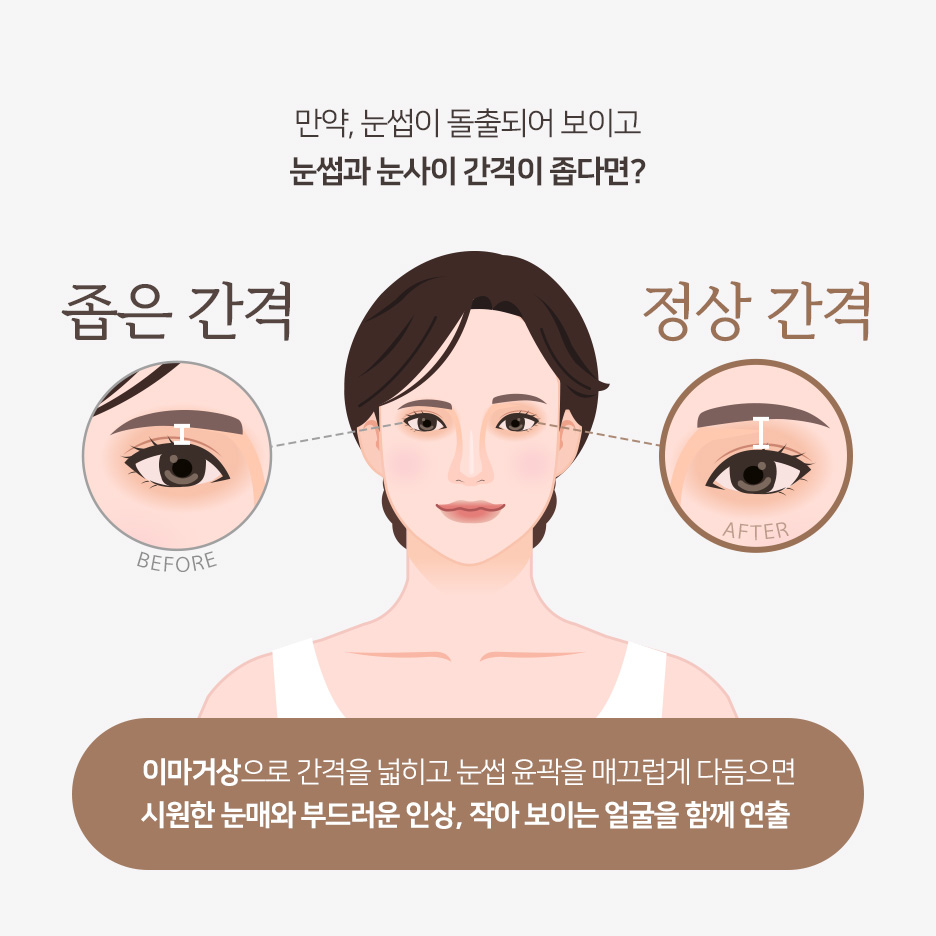
The important thing is to understand your current eye condition.
Both upper and lower blepharoplasty are methods considered to improve drooping eyelids, but there are differences in the areas applied and the causes.
For some, upper eyelid drooping may be the central problem,
while for others, bulging undereye fat might have a greater impact.
In some cases, both changes appear together.
Therefore, at Yeoksam-dong Plastic Surgery, rather than judging solely by age or symptoms,
we emphasize the process of objectively analyzing the current eye condition.
Ultimately, the beginning of improving drooping eyelids is not about deciding whether upper or lower blepharoplasty is more important,
but about understanding what changes are occurring in your current eyes.
Planning the direction based on this analysis can help achieve a more natural and
harmonious eye area.
Eye area changes appear differently for each person.
Not everyone in the same age group experiences the same type of eye drooping.
For some, upper eyelid changes may begin first,
while for others, bulging undereye fat or sagging skin may be more noticeable first.
Therefore, it's important to first assess your own eye condition rather than simply comparing it to others' cases.
Yeoksam-dong Plastic Surgery also emphasizes a comprehensive examination of skin condition, fat distribution, eye-opening strength, and eye area structure,
rather than judging eye drooping by a single criterion.
Ultimately, eye area improvement can begin with understanding your current condition.
What complementary surgeries might be beneficial?
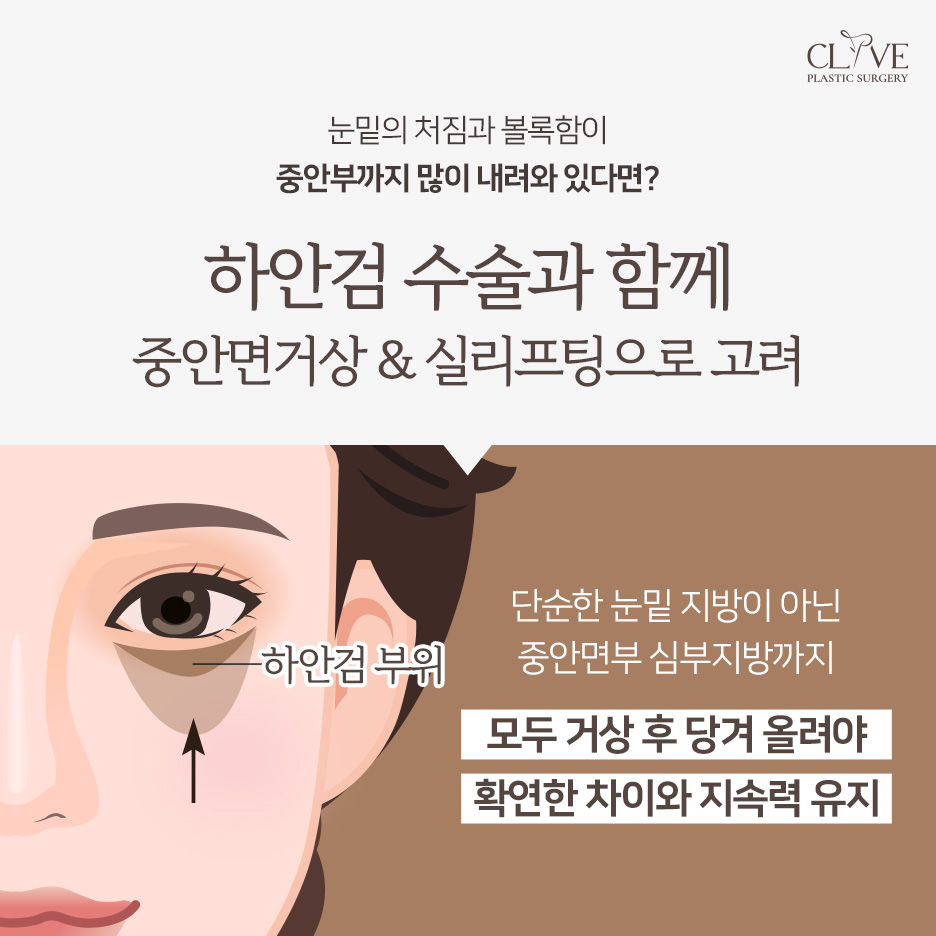
Even after addressing undereye fat and sagging skin with lower blepharoplasty, if the midface is also sagging,
the boundary between the undereye and cheek may still appear prominent.
In such cases, midface lift may be considered to complement the sagging from the undereye to the anterior cheekbone area.
Additionally, if decreased skin elasticity or changes in the facial contour are present, thread lifting may also be considered.
Thread lifting can be used to support sagging tissues,
and it has the advantage of being able to address not only the eye area but also the midface and jawline.
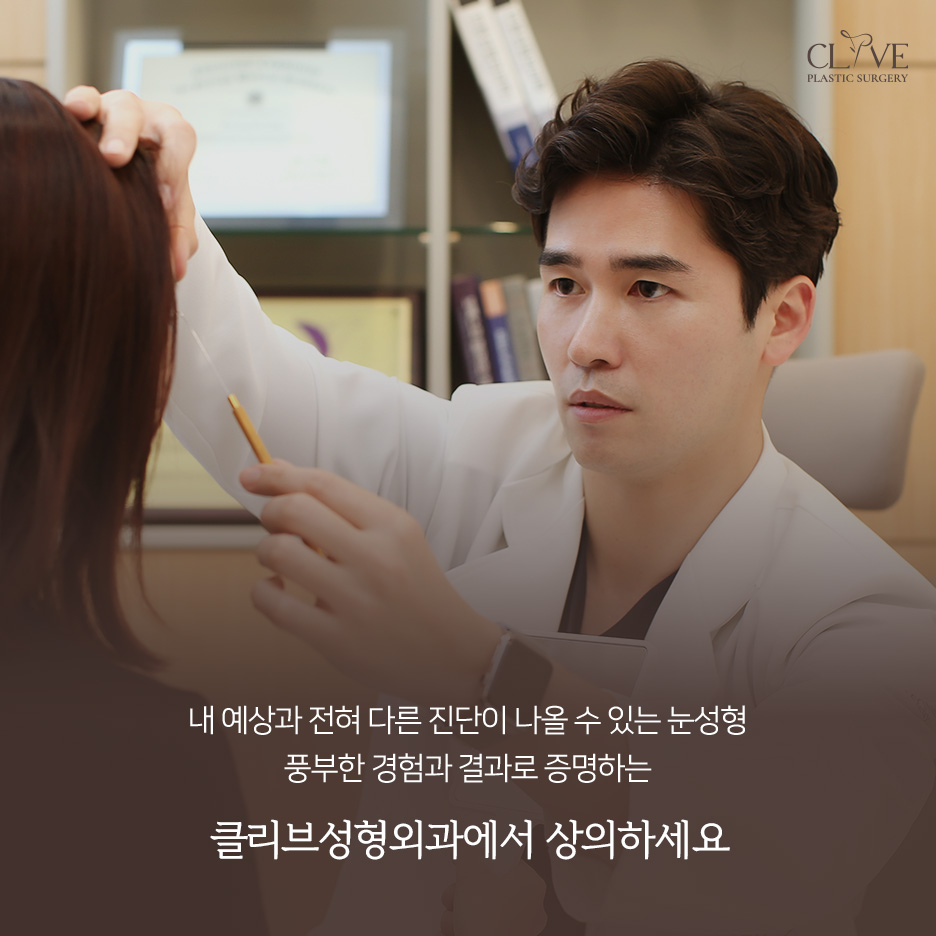
However, midface lift or thread lifting are not necessary in all cases.
The direction considered may vary depending on whether eye area aging is the primary concern, if midface sagging is present, or what the skin's elasticity is like.
Therefore, when planning upper and lower blepharoplasty, it can be important to consider the overall balance and harmony of the face
rather than just looking at the eye area individually.
This concludes our post on upper and lower blepharoplasty at Yeoksam-dong Plastic Surgery.