2026-09-07
Yaksuyeok Dental Clinic: When Inflammation Occurs Around the Root of a Root-Canal-Treated Tooth, Extraction and Socket Preservation (Treatment for Implant Placement)
This article discusses extraction and socket preservation for root-canal-treated teeth with inflammation, a necessary step before implant placement when immediate surgery is not possible.
Hello.
I'm Dr. Kim Tae-young, director of Bareunyoung Dental Clinic at Yaksuyeok Dental Clinic.^^
One of the treatments that patients fear most in dentistry is
root canal treatment.
Root canal treatment generally requires at least 2-3 visits or more,
and pain can sometimes accompany the treatment.
Furthermore, after a long time has passed since root canal treatment,
secondary decay may occur around old restorations,
or inflammation may develop around the root.
By the time symptoms are noticed, a significant amount of bone around the tooth has usually dissolved,
which is why most patients visit us at that stage.
Today, we will discuss what treatment is necessary for surgery when a tooth needs to be extracted but immediate surgery is difficult.
A tooth that had root canal treatment 10 years ago has become inflamed.
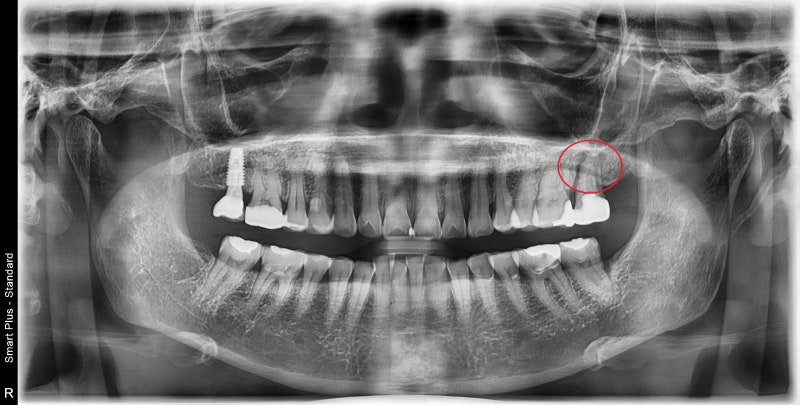
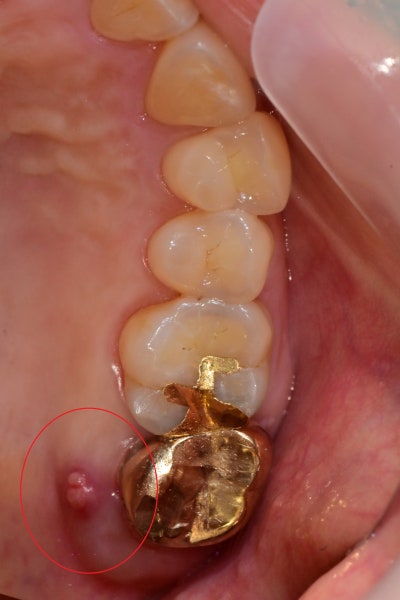
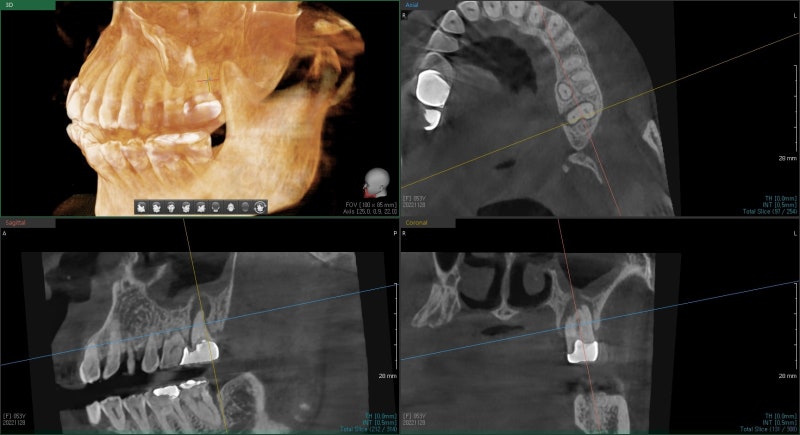
This patient was diagnosed with severe inflammation and recommended for extraction at another dental clinic before visiting us.
The X-ray already showed severe periapical inflammation, and there was even
a pus pocket formed on the palate side.
Tooth mobility had also developed, making re-root canal treatment seem impossible.
Before extraction, a CT scan was taken to evaluate the surrounding alveolar bone.
The bone around the tooth root had been absorbed due to inflammation,
making immediate implant surgery after extraction impossible.
We decided to form bone in the extraction site through alveolar bone grafting and then proceed with the surgery.
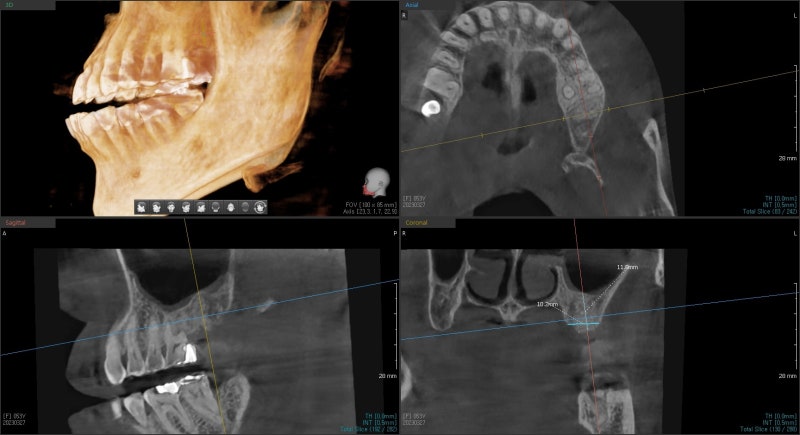
Through alveolar bone grafting in the socket-like space where the tooth used to be,
we maintained the volume and waited.
For this patient, implant surgery was performed 4 months later after sufficient bone formation.
Bone formation was good, and not much absorption occurred,
allowing us to set a very favorable angle for implant placement.
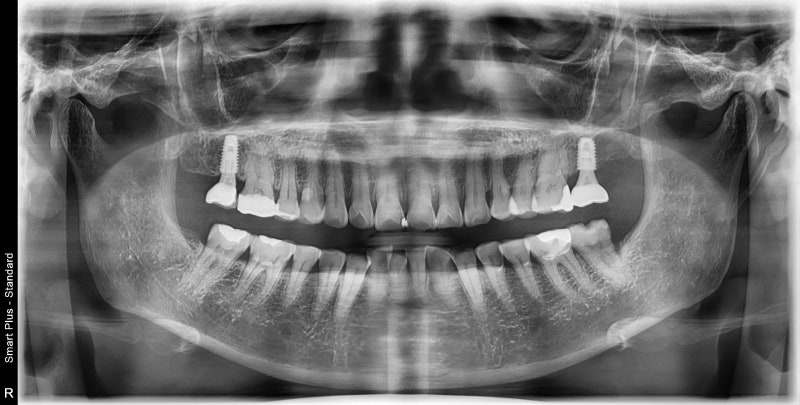
This is a photo of the completed prosthesis after waiting for the implant to integrate with the surrounding bone.
We've looked at the treatment required for implant surgery after extraction.
Performing alveolar bone grafting in the surrounding area simultaneously with extraction is called
socket preservation.
Socket preservation helps maintain the volume of residual bone and
assists in achieving an ideal placement angle during surgery,
so it is advisable to perform it during extraction if possible.
Generally, the bone around the last molar in the upper jaw tends to be
porous, but the patient is still using it well without any issues.^^
Moving forward, we will focus on maintenance through occlusion checks and regular check-ups.
Thank you.
Frequently Asked Questions
What causes inflammation in a tooth after root canal treatment?
Yes, inflammation around a root-canal-treated tooth can occur due to secondary decay around old restorations or inflammation around the root. Usually, by the time symptoms are noticed, a significant amount of bone around the tooth has already dissolved.
What is socket preservation?
Socket preservation is a treatment performed after tooth extraction to prepare for implant surgery. It involves grafting alveolar bone into the extraction site to maintain the volume of residual bone and form new bone. This helps ensure an ideal angle for implant placement.
Are there cases where immediate implant placement after extraction is difficult?
Yes, if a significant amount of bone around the tooth root has been absorbed due to inflammation, immediate implant surgery after extraction is difficult. In such cases, socket preservation must be performed to form sufficient bone before implant placement.
How long does it take from socket preservation to implant placement?
The bone formation period can vary for each patient. In the case presented in the article, implant surgery was performed 4 months after socket preservation, once sufficient bone had formed. The duration may vary depending on the individual's condition.
Is socket preservation recommended for all extractions?
Yes, it is advisable to perform socket preservation during extraction if possible. This is because it helps maintain the volume of residual bone and assists in achieving an ideal placement angle for implant surgery.