2026-09-07
Yaksu Station Dental Implant Surgery: Essential Post-Op Care and Recovery Precautions
Learn essential post-operative care for dental implants at Yaksu Station, including managing swelling, diet, oral hygiene, and activities to avoid for successful osseointegration.
Hello.
I’m Dr. Kim Tae-young, chief director of Bareunyoung Dental Clinic at Yaksu Station.^^
In previous posts, I explained the dental implant placement process,
from extraction and timing of placement to bone grafting and sinus lift procedures.
This time, I’d like to discuss the precautions for post-implant surgery care and recovery, which many people are curious about.
Patients frequently ask about certain things after surgery:
‘When can I eat after surgery?’
‘How should I brush my teeth after implant surgery?’
‘When can I exercise or drink alcohol?’
Implant treatment isn’t over just because the implant has been placed.
Good results can only be expected if the osseointegration process, where the implanted implant stably fuses with the jawbone, proceeds well.
Today, I’ll summarize the essential precautions for post-implant surgery care and recovery, categorized by timeline.
Why Initial Hemostasis is Important After Implant Surgery
The day of implant surgery is the most crucial period for hemostasis and initial stability.
Stable protection of the surgical site during this time ensures a smooth recovery process.
Keep the gauze in place for the instructed time.
Immediately after surgery, you will be asked to bite down on gauze to reduce bleeding.
Generally, it’s recommended to apply pressure for about 1-2 hours, and you should avoid removing the gauze too frequently to check.
Avoid spitting out saliva or blood frequently.
Forceful spitting or rinsing can dislodge blood clots.
It’s best to swallow saliva naturally.
Do not touch with your tongue or hands.
Repeatedly touching the surgical site can hinder recovery.
Avoid hot foods and using straws.
On the day of surgery, it’s best to stick to lukewarm or cold foods, and refrain from using straws.
When is Swelling Most Severe After Implant Surgery?
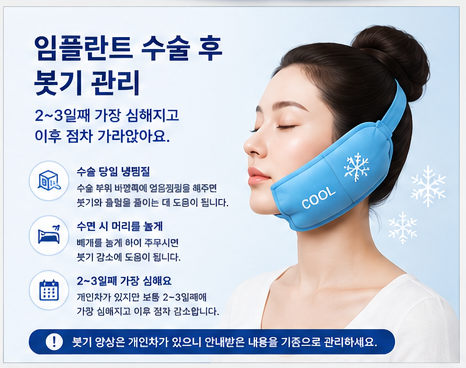
Swelling after implant surgery is a normal part of the recovery process.
It typically peaks on the 2nd to 3rd day after surgery and then gradually subsides.
On the day of surgery, applying an ice pack to the outside of the cheek near the surgical site can be helpful.
Additionally, keeping your head slightly elevated while sleeping can help reduce swelling.
How Should I Eat After Implant Surgery?
We receive many inquiries about eating after implant surgery.
Immediately after surgery,
it’s best to stick to soft foods like
porridge, gruel, yogurt, and soft tofu.
About one week after surgery, once the gums have recovered to some extent,
you can return to a normal diet depending on your recovery status.
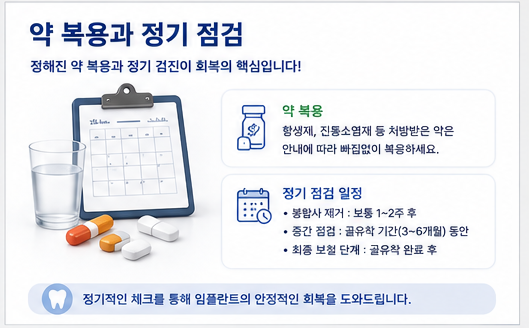
However, since implant osseointegration usually takes about 3-6 months,
caution is needed with very hard foods like nuts, ice, and dried squid.
When Can I Brush My Teeth After Implant Surgery?
Maintaining oral hygiene is very important even after implant surgery.
In fact, not brushing can increase the risk of inflammation.
Immediately after surgery, due to bleeding and swelling at the surgical site,
you can usually start brushing the day after surgery,
but the surgical site should be managed gently, being careful not to let the toothbrush bristles touch it too forcefully.
Actions to Avoid After Implant Surgery
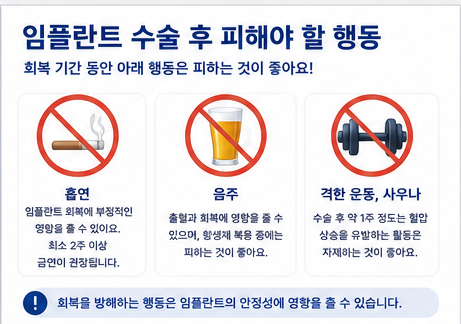
Smoking
Smoking is a major factor that can affect the implant osseointegration process.
It is recommended to abstain from smoking for at least 2 weeks after surgery.
Alcohol Consumption
Alcohol can affect bleeding and the recovery process, and it’s best to avoid it while taking antibiotics.
Strenuous Exercise
It is recommended to refrain from activities like intense workouts, running, and saunas for about 1 week after surgery.
Osseointegration is the Key to Implants
The most important process in implant recovery is osseointegration.
Osseointegration refers to the process where the implant surface stably fuses with the jawbone.
This usually takes about 3-6 months, and it’s crucial to manage the area to avoid excessive force during this period.
The reason post-implant surgery care is so important is precisely because of this osseointegration process.
If you experience these symptoms, please contact your dental clinic.
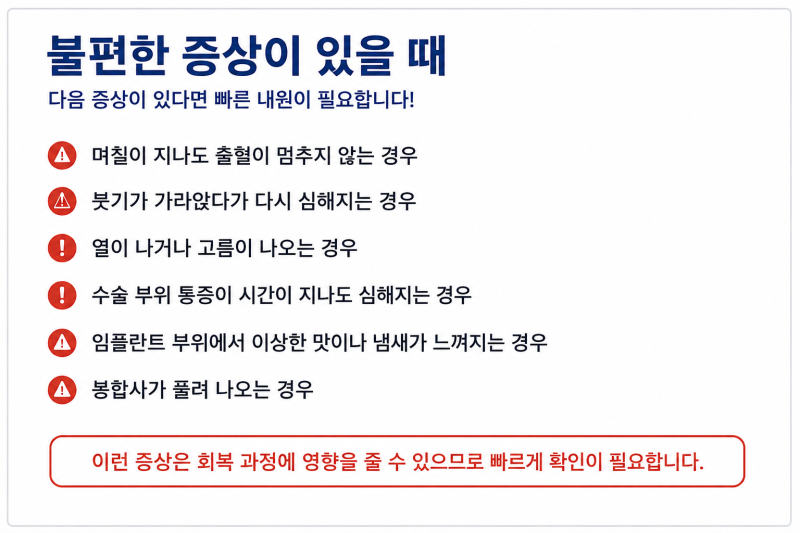
It’s advisable to seek dental care if you experience any of the following symptoms:
Persistent bleedingWorsening or re-swellingFeverPus dischargeIncreasing painPersistent strange odor or taste
Key Summary
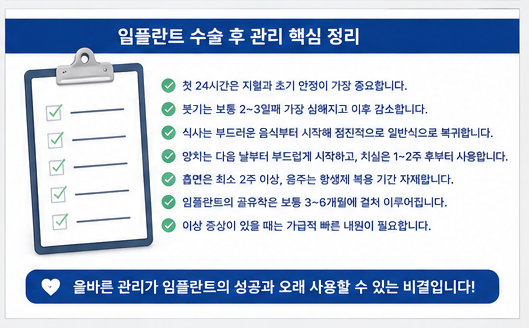
For the first 24 hours after implant surgery, hemostasis and stability are crucial.
Swelling usually peaks on the 2nd to 3rd day.
It’s best to start with soft foods.
Brushing is possible from the next day, but the surgical site must be managed carefully.
Smoking and alcohol consumption are recommended to be avoided during the recovery period.
Implant osseointegration typically takes 3-6 months.
If you experience any unusual symptoms, it’s best to contact your dental clinic for a check-up.
In Conclusion
As I provide implant treatments at Yaksu Station Dental Clinic, I believe that the outcome of an implant
is not determined solely on the day of surgery.
Post-operative care during the recovery period is also a crucial part of the treatment process.
Of course, recovery patterns can vary from patient to patient,
and instructions may also differ,
so I recommend prioritizing the individual guidance you receive after the procedure.
This has been Bareunyoung Dental Clinic at Yaksu Station.^^
We believe that proper treatment leads to proper results.We strive to provide care so that all who visit can leave with a more comfortable feeling.Bareunyoung Dental Clinic
This post was written in compliance with Article 56, Paragraph 1 of the Medical Service Act for the purpose of providing medical information.
Frequently Asked Questions
When can I eat after implant surgery?
Immediately after implant surgery, it's best to eat soft foods like porridge, gruel, yogurt, and soft tofu. About 1 week after surgery, once the gums have recovered to some extent, you can return to a normal diet, but very hard foods like nuts should be avoided during the 3-6 month osseointegration period.
When is swelling most severe after implant surgery?
Swelling after implant surgery is a normal part of the recovery process and generally peaks on the 2nd to 3rd day after surgery. To alleviate swelling, applying an ice pack to the outside of the cheek near the surgical site on the day of surgery and keeping your head slightly elevated while sleeping can be helpful.
When can I brush my teeth after implant surgery?
Oral hygiene is important even after implant surgery, so you can usually start brushing the day after surgery. However, the surgical site should be managed gently, being careful not to let the toothbrush bristles touch it too forcefully, and consistent hygiene is necessary to reduce the risk of inflammation.
When can I smoke and drink alcohol after implant surgery?
Smoking after implant surgery can affect the osseointegration process, so abstaining for at least 2 weeks is recommended. Alcohol can affect bleeding and recovery, and it's best to avoid it while taking antibiotics. Strenuous exercise should also be avoided for about 1 week.
What should I do if I experience unusual symptoms after implant surgery?
If you experience persistent bleeding, worsening or re-swelling, fever, pus discharge, increasing pain, or a persistent strange odor/taste after implant surgery, you should immediately contact your dental clinic for a check-up.
What is the most important recovery process after implant surgery?
The most important recovery process after implant surgery is ‘osseointegration.’ Osseointegration is the process where the implant and jawbone stably fuse, usually taking about 3-6 months. Managing the surgical site to avoid excessive force during this period is crucial for successful implant results.