2026-09-07
Yaksu Station Dental Clinic: Is an implant always necessary for every missing tooth? (Why implant diagnoses differ)
This article discusses common patient questions about dental implants, specifically whether every missing tooth requires an implant and the importance of restoring the rearmost molars for optimal chewing function and long-term dental health.
Hello.
I'm Dr. Kim Tae-young, director of Bareunyoung Dental Clinic at Yaksu Station.^^
In the past, when a tooth had a problem and needed to be extracted, adjacent teeth were trimmed for a bridge, or if that wasn't possible, the space was left empty.
However, nowadays,
a very beneficial procedure called 'implants' has emerged,
allowing us to restore teeth without touching adjacent teeth, provided surgery is possible!!
When 1 to 2 teeth are lost,
implant surgery is needed for that number of teeth, but
when multiple teeth are lost, patients often ask:
1. Is an implant needed for every single missing tooth?or2. Can I skip the very last molar?
I receive these two questions frequently.
1. Is an implant needed for every single missing tooth?
Ideally, having an implant at every tooth position would certainly
provide stronger support, but
when making a diagnosis with efficiency in mind,
considering the surrounding alveolar bone condition, the patient's situation, and oral health,
if the bone quality is relatively good, one implant can be skipped. However,
if alveolar bone grafting is required or the bone quality is poor,
placing an implant for each tooth is beneficial for the long-term prognosis.
2. Can I skip the very last molar?
For those who have lost large molar teeth,
it's often due to very strong chewing forces that fractured the tooth,
or severe periodontitis around the tooth requiring extraction.
The two rearmost large molars in the mouth
are responsible for most of the chewing force.
If only one of the two is replaced with an implant,
chewing efficiency might decrease slightly,
but there won't be significant discomfort in daily life.
However, from a long-term perspective,
the function of the lost tooth
is shared by the remaining teeth,
which can affect the lifespan of those remaining teeth.
Therefore, we recommend restoring even the rearmost teeth if possible.
Considering the patient's age, situation, surgical feasibility, etc.,
there are indeed cases where the very last molar is not replaced.
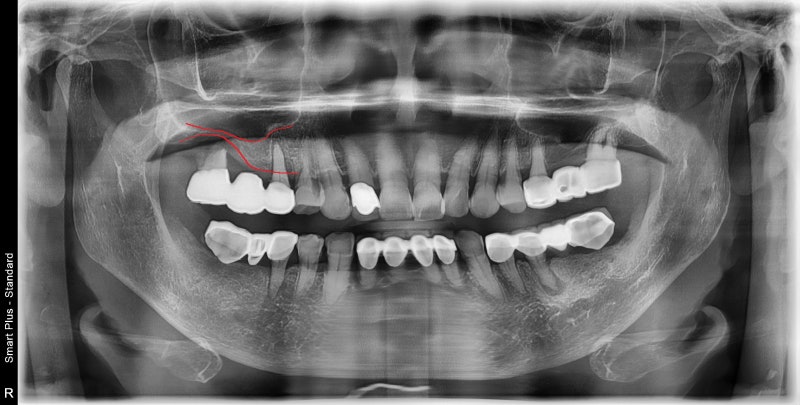
I was told I need a molar.
This was an elderly patient living near Yaksu Station.
They visited our clinic after seeing it near Yaksu Station.
An X-ray revealed inflammation at the root,
and insufficient bone volume.
They also had a cantilever prosthesis on the rearmost molar, which seemed to have been done long ago before implants became common, putting strain on the tooth.
We decided to start with one side first.
The elderly patient said they didn't think they needed the very last molar, and only wanted to have two implants placed in the front.
For the insufficient alveolar bone, we performed a sinus lift to create enough bone.
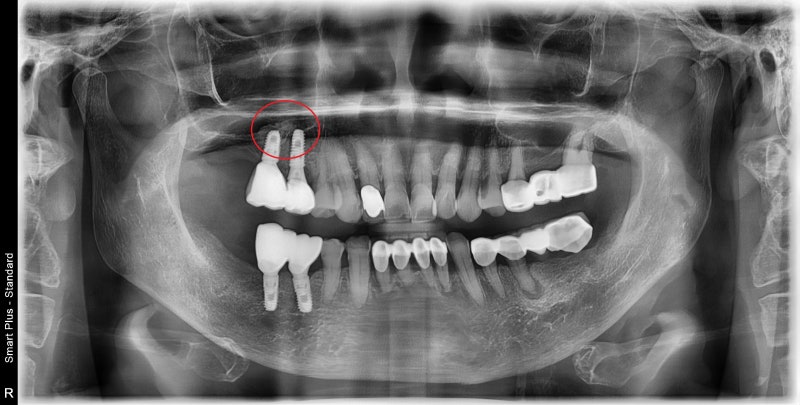
After one side was completed...
‘Food seems to get stuck there, and chewing feels awkward and ineffective.’
Since one molar was missing,
chewing could be a bit uncomfortable compared to before.
Over time, they gradually adapted,
and now eat well, but
they expressed a desire to have all teeth, including the very last molar, restored on the opposite side.
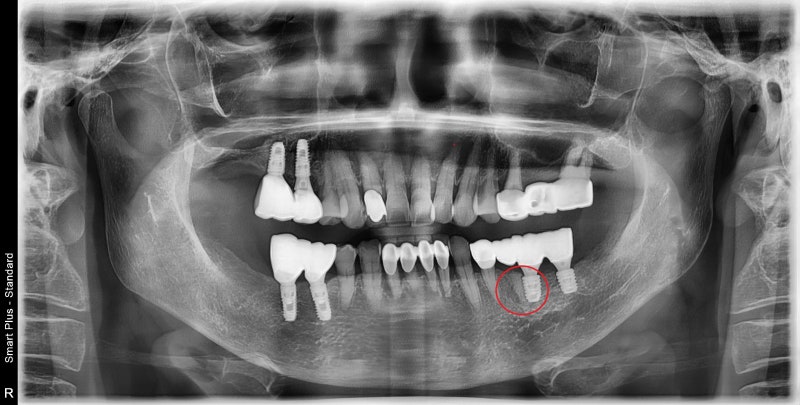
Due to inflammation around the tooth,
the alveolar bone had melted away.
We performed alveolar bone grafting
and restored even the rearmost tooth.
The past discomfort during chewing has completely disappeared.
Thus,
even a single molar makes a difference
in terms of chewing efficiency.
Therefore,
from a long-term perspective,
unless surgery is impossible,
it is better to restore even the rearmost teeth.
Thank you.^^
Frequently Asked Questions
Do I always need an implant for every missing tooth?
Yes, for the loss of 1-2 teeth, implant surgery is usually needed for the number of teeth lost. However, for multiple tooth loss, the diagnosis is made efficiently considering the surrounding alveolar bone condition, patient's situation, etc. If the bone quality is good, one implant might be skipped.
Is it absolutely necessary to get an implant for the very last molar?
Yes, we recommend restoring even the rearmost teeth if possible. The two rearmost large molars in the mouth are responsible for most of the chewing force, and if only one is implanted, chewing efficiency can decrease and affect the lifespan of the remaining teeth.
Is implant possible even with weak alveolar bone?
Yes, it is possible. Placing implants one by one in areas with weak alveolar bone is beneficial for the long-term prognosis, and implant surgery can be performed by creating insufficient bone through procedures like alveolar bone grafting or sinus lift.
What is the chewing efficiency like after implants?
Chewing efficiency after implants is very important. Especially if the rearmost molar is not restored, chewing efficiency can decrease, and you might experience discomfort from food getting stuck. Restoring even the rearmost teeth can eliminate past chewing discomfort.
What factors are considered during implant diagnosis at Yaksu Station Dental Clinic?
At Yaksu Station Dental Clinic, during implant diagnosis, we comprehensively consider various factors such as the surrounding alveolar bone condition, the patient's age and overall health, oral condition, and surgical feasibility to establish the most efficient treatment plan with a good long-term prognosis.