2026-09-07
Yaksu Station Dental Clinic: Don't Lose Your Teeth to Periodontal Disease with Tingling Gums
Periodontal disease, once common in middle-aged adults, now affects younger individuals due to various factors. It progresses slowly, often unnoticed until advanced stages. Learn about symptoms, treatments, and prevention at Yaksu Station Dental Clinic.
Yaksu Station Dental Clinic: Don't Lose Your Teeth to Periodontal Disease with Tingling Gums
Periodontal disease, in the past, primarily affected middle-aged adults in their 40s and 50s as aging progressed. However, recently, many younger individuals are experiencing periodontal disease due to various factors such as smoking, the quantity and type of food consumed, and their oral health status.
However, periodontal disease is an oral condition that progresses very slowly, often without the patient realizing there's a problem with their gums. Furthermore, the initial symptoms appear temporarily and then quickly disappear, often leading to delayed early intervention and requiring more complex treatments.
Today, with Yaksu Station Dental Clinic, we will learn about what periodontal disease is, its symptoms, and how it is treated.
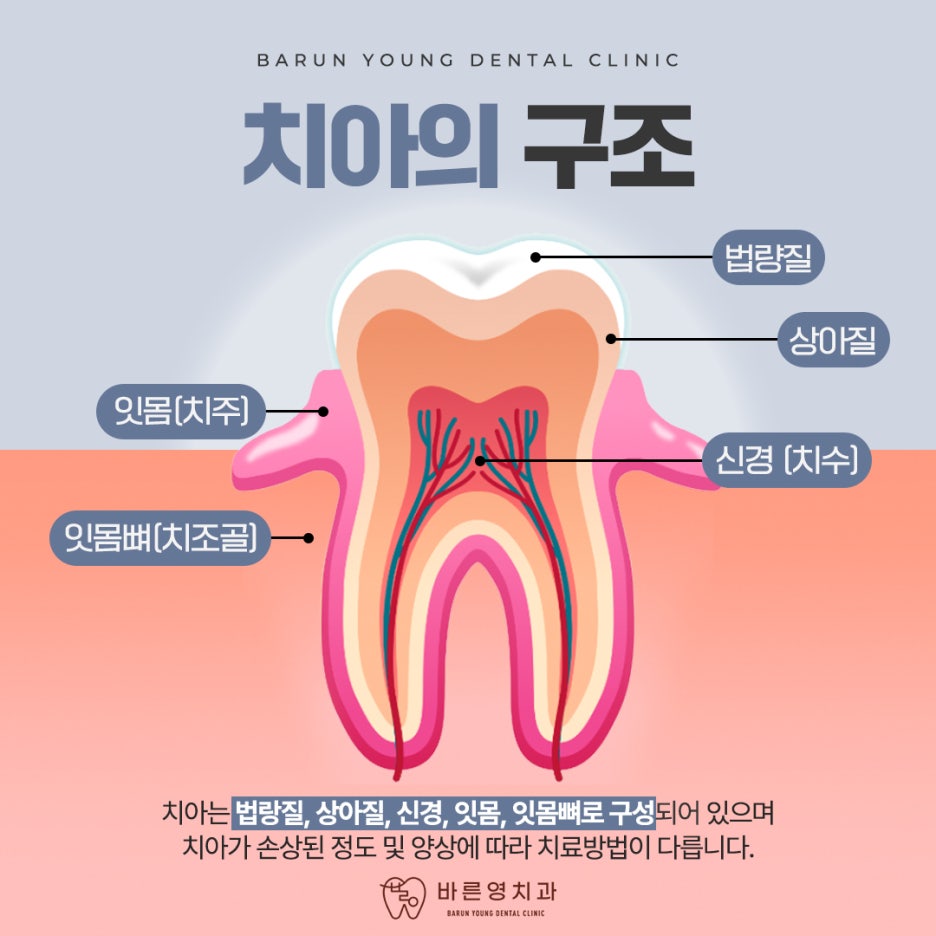
Periodontal disease is an inflammation of the tissues surrounding the teeth, including the periodontium (gums), periodontal ligaments, and alveolar bone. It is commonly referred to as ‘gum disease’. The name ‘gum disease’ (풍치, pungchi) is derived from the fact that severe cases can cause teeth to feel sensitive and painful even with just air passing over them.
Periodontal disease occurs when oral bacteria enter through weakened gums due to aging, or when bacteria enter the gaps between the gums and teeth due to tartar, which is hardened food debris, causing an inflammatory reaction. It is classified into gingivitis and periodontitis depending on the stage of progression.
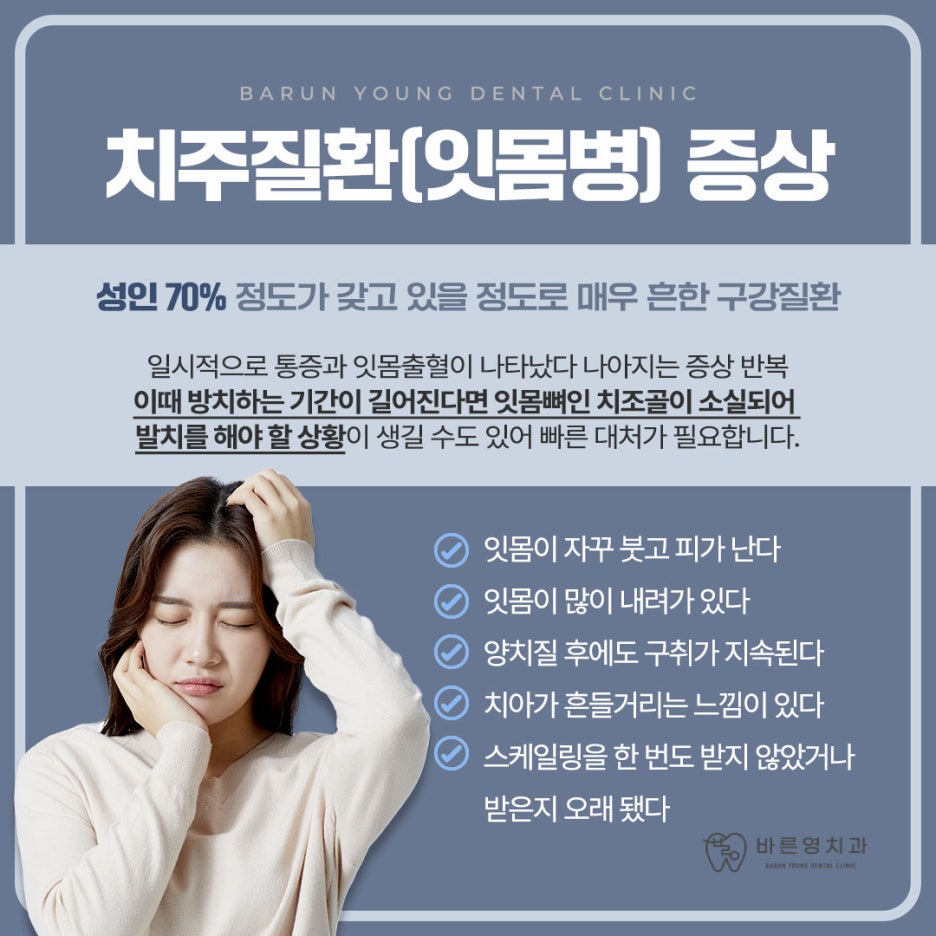
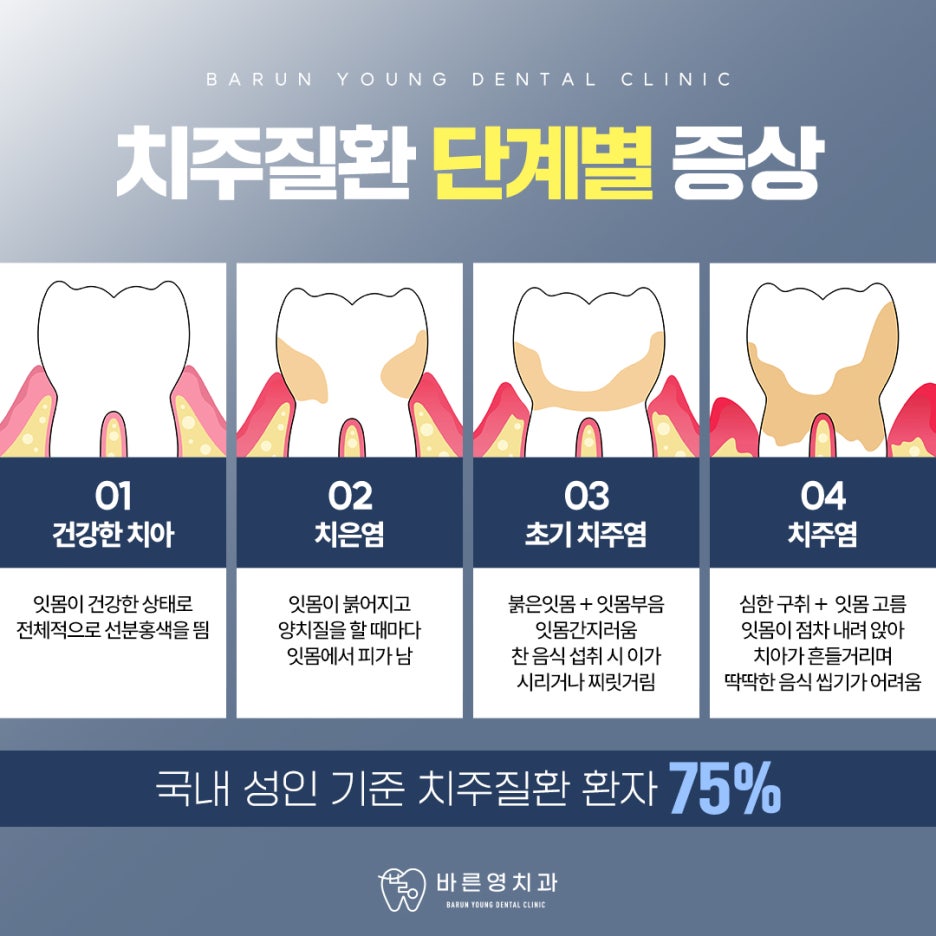
Have you ever brushed your teeth and noticed a small amount of blood from your gums, which then stopped bleeding after brushing, and you simply dismissed it? While it could be due to a minor injury from brushing or temporary gum weakness due to poor condition, if such gum bleeding occurs periodically, it's worth considering if it's an early sign of periodontal disease.
In the gingivitis stage, which is the early stage of periodontal disease, you may experience gum bleeding, red and swollen gums, and severe tooth sensitivity when consuming cold foods.
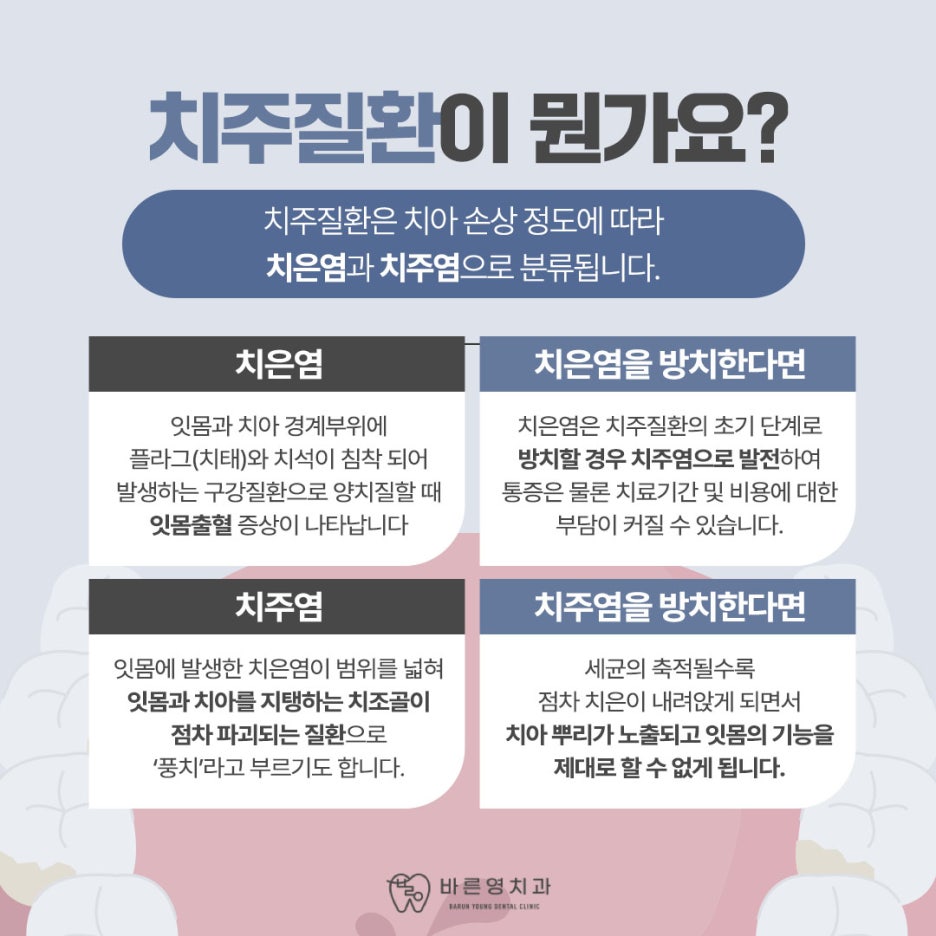
Furthermore, if gingivitis progresses to periodontitis, symptoms become more pronounced. Gums gradually recede, making teeth appear longer, and bad breath persists even after brushing. In severe cases, pus may emerge from the gums, or teeth may become severely loose. If treatment is not sought even at this stage, teeth may fall out, requiring prompt action.
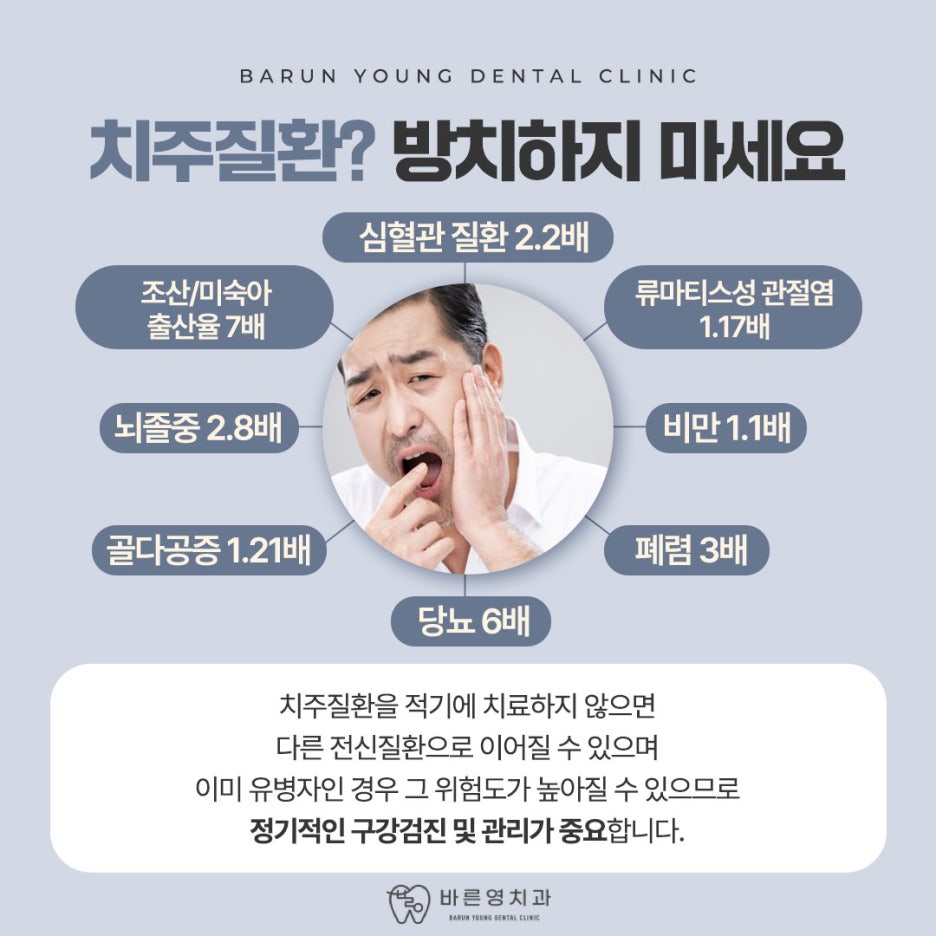
In the early gingivitis stage of periodontal disease, symptoms can be improved simply by regularly using dental floss or interdental brushes to prevent tartar buildup between teeth and by undergoing regular scaling.
However, if it progresses to the periodontitis stage, there is a high probability that the alveolar bone and nerves are already contaminated, which may require more complex treatment along with root canal therapy. Therefore, if you notice any symptoms that suggest periodontal disease, do not ignore them. It is wise to visit Yaksu Station Dental Clinic promptly for a diagnosis from medical staff and receive appropriate treatment.
If periodontitis has progressed and you do not visit Yaksu Station Dental Clinic for periodontal disease treatment, your teeth may become loose and eventually fall out. In such cases, after periodontal disease treatment and root canal therapy, implant treatment will be performed to place artificial teeth to replace the lost ones.
In this situation, the burden of treatment duration and cost will inevitably increase. Therefore, if you frequently accumulate tartar, or if your gums bleed every time you brush or apply strong pressure inside your mouth, please visit Shindang Station Internal Medicine for a precise diagnosis as soon as possible.
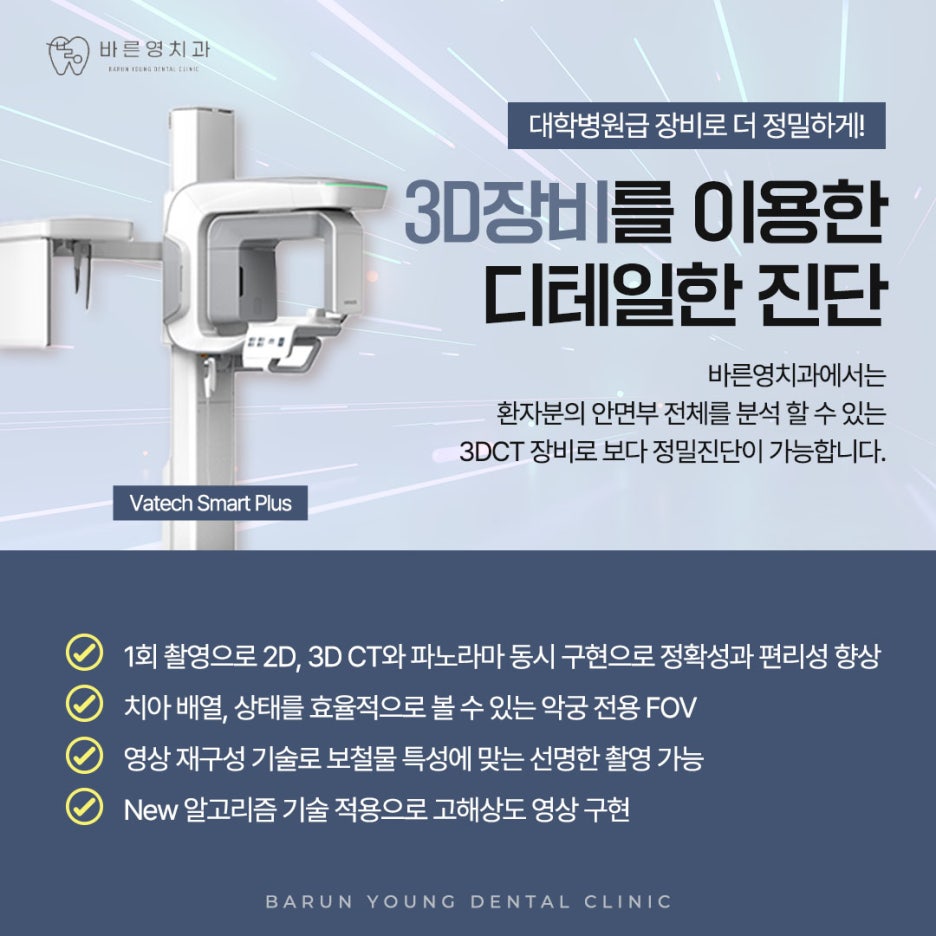
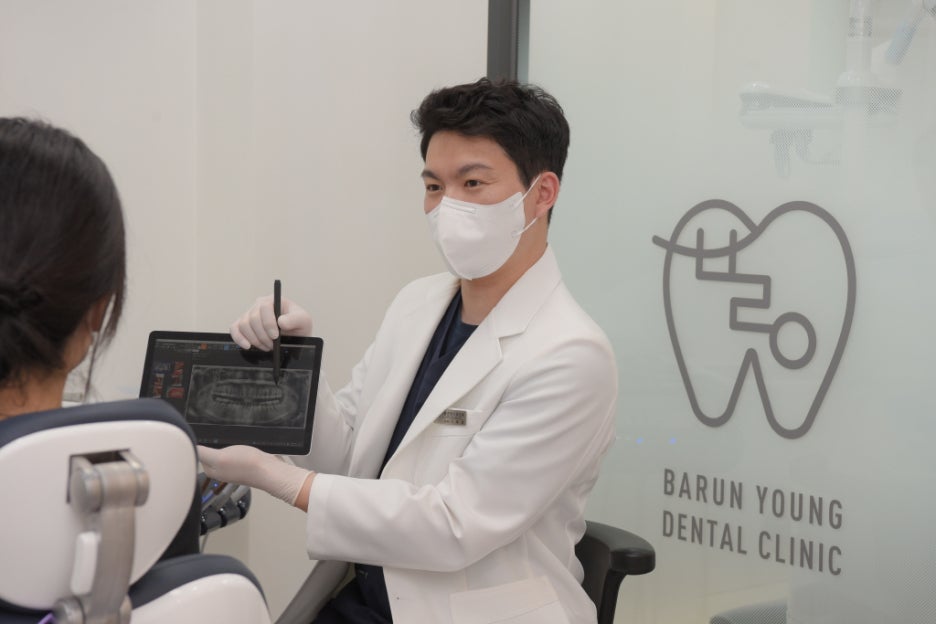
Yaksu Station Dental Clinic carefully examines and diagnoses even areas not visible to the naked eye. Upon your visit, we conduct a low-dose 3D CT scan to assess the patient's oral condition before proceeding with treatment. To alleviate the burden of pain for patients during treatment, we utilize a digital pain-free anesthesia system.
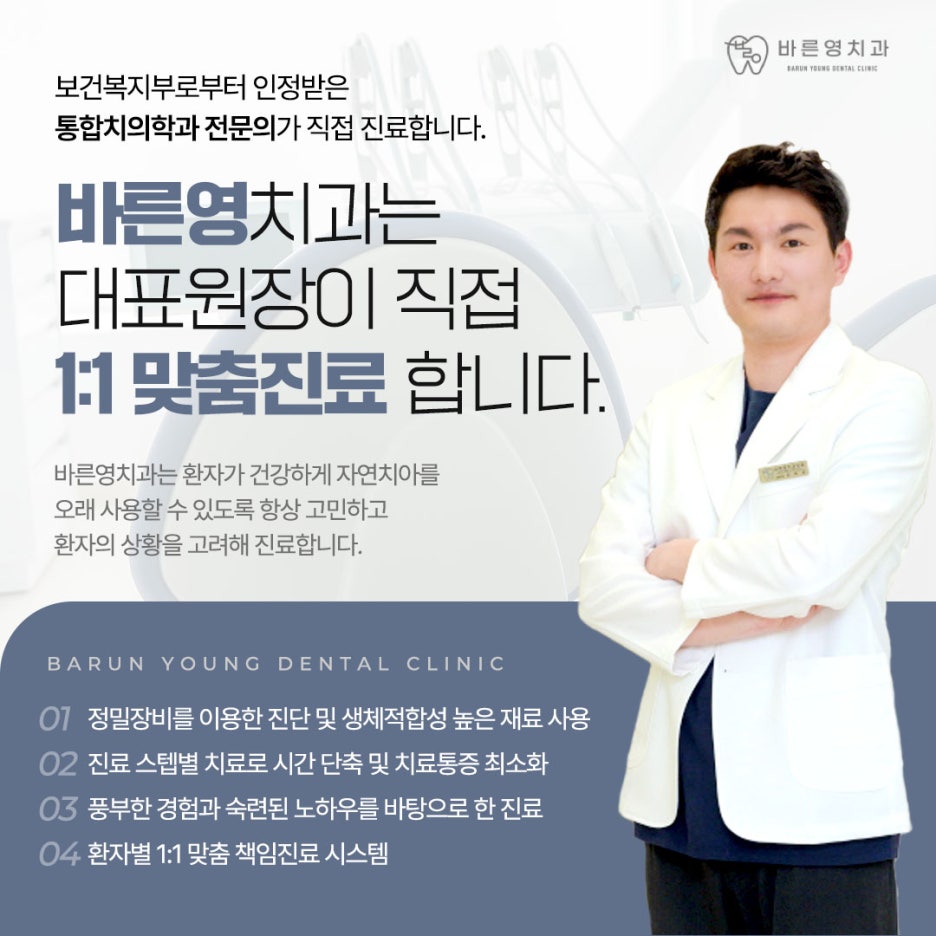
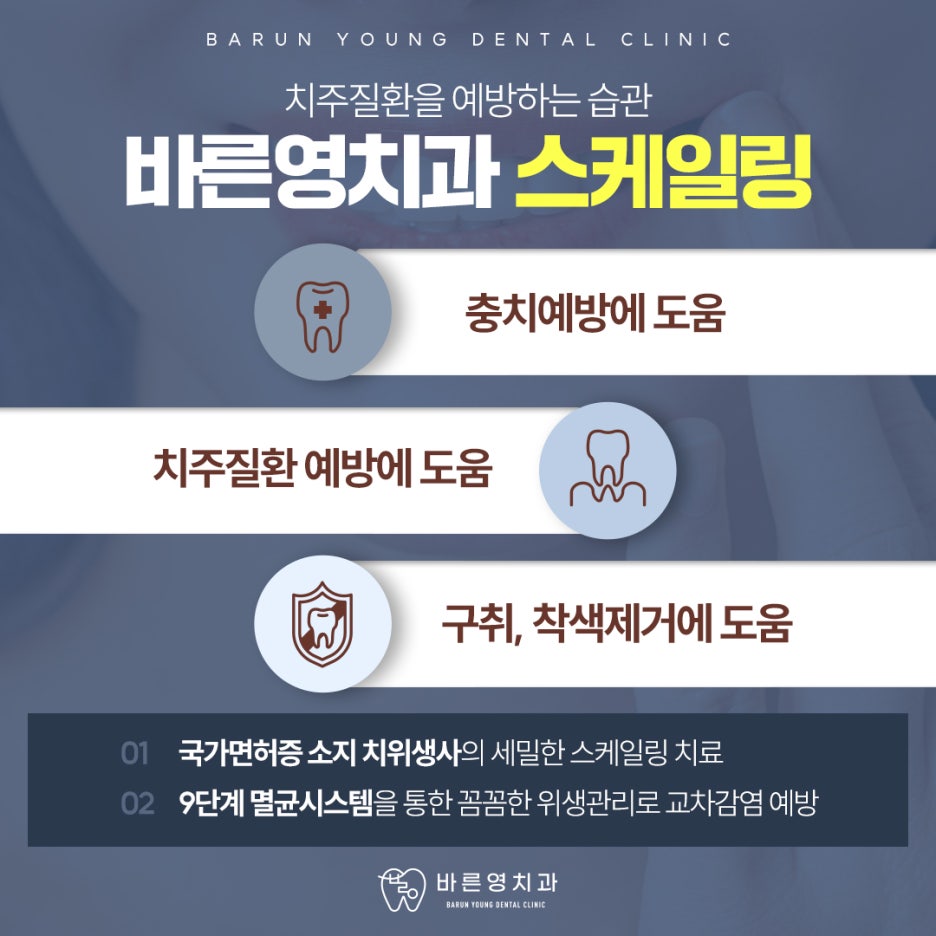
In cases of early periodontitis, a dental hygienist holding a national license at Yaksu Station Dental Clinic carefully examines the patient's condition and assists in improving symptoms through scaling. If more complex treatment is deemed necessary, the director of Yaksu Station Dental Clinic personally oversees the treatment plan, execution, and aftercare, providing 1:1 customized patient care.
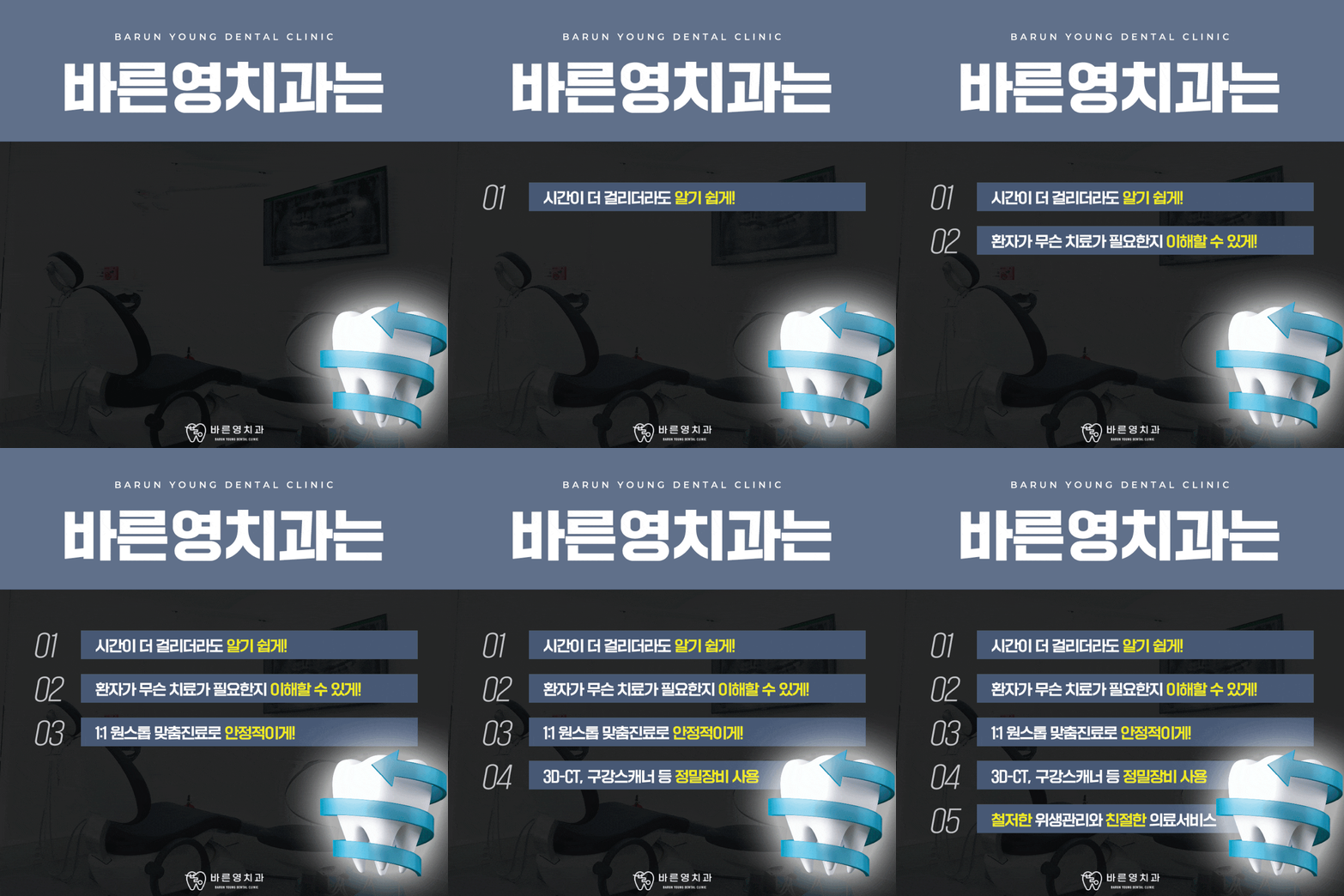
Yaksu Station Dental Clinic does not recommend extraction and implant treatment from the outset, even for patients with advanced periodontal disease. We prioritize saving natural teeth and, even if you have been advised to extract a tooth at another dental clinic, we will carefully re-examine to see if there is a way to save your natural tooth. All treatments are performed only after thoroughly explaining them to patients until they fully understand, even if it takes a long time.
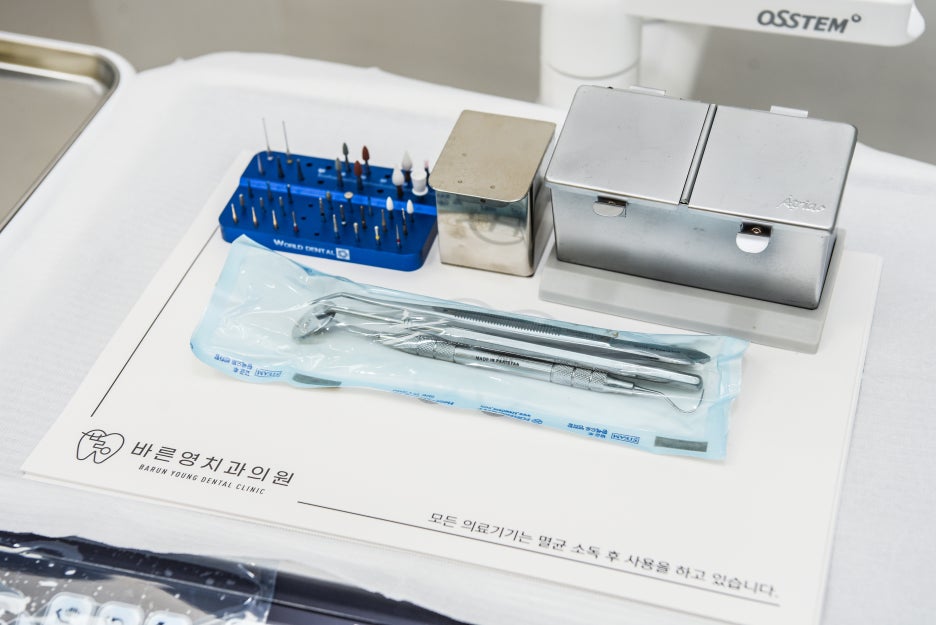
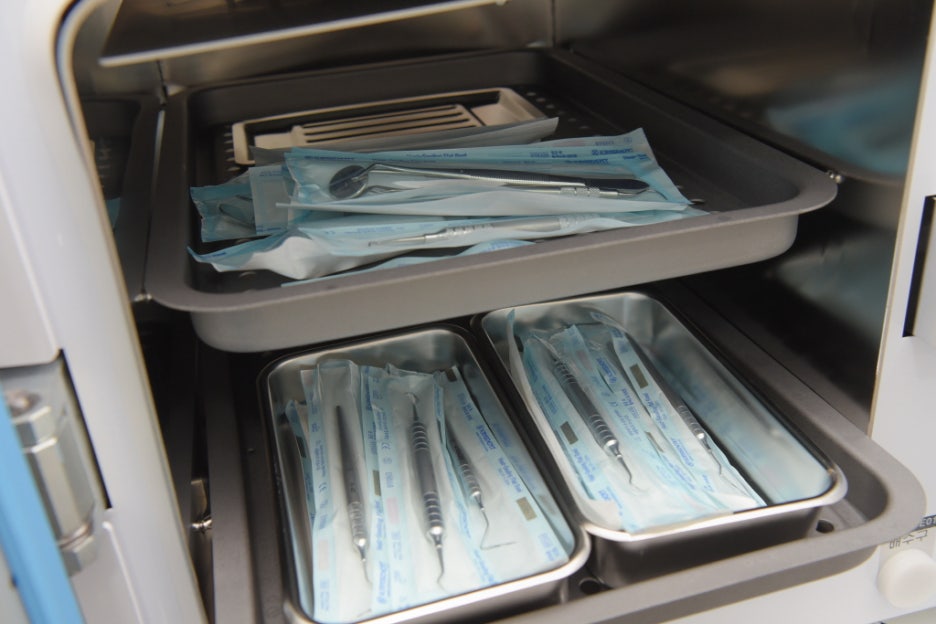
All medical instruments used within Yaksu Station Dental Clinic adhere to the principle of one instrument per patient and are thoroughly managed using a 9-step sterilization system to prevent cross-contamination between patients.
Even if periodontal disease has progressed significantly, requiring extraction and implant placement, the director personally plans and carries out the treatment. From navigation implant treatment, which reduces the margin of error by pre-confirming the path, to various surgical techniques, we provide customized treatment for each patient. Furthermore, after implant treatment is completed, we issue a 5-year warranty to ensure consistent aftercare.
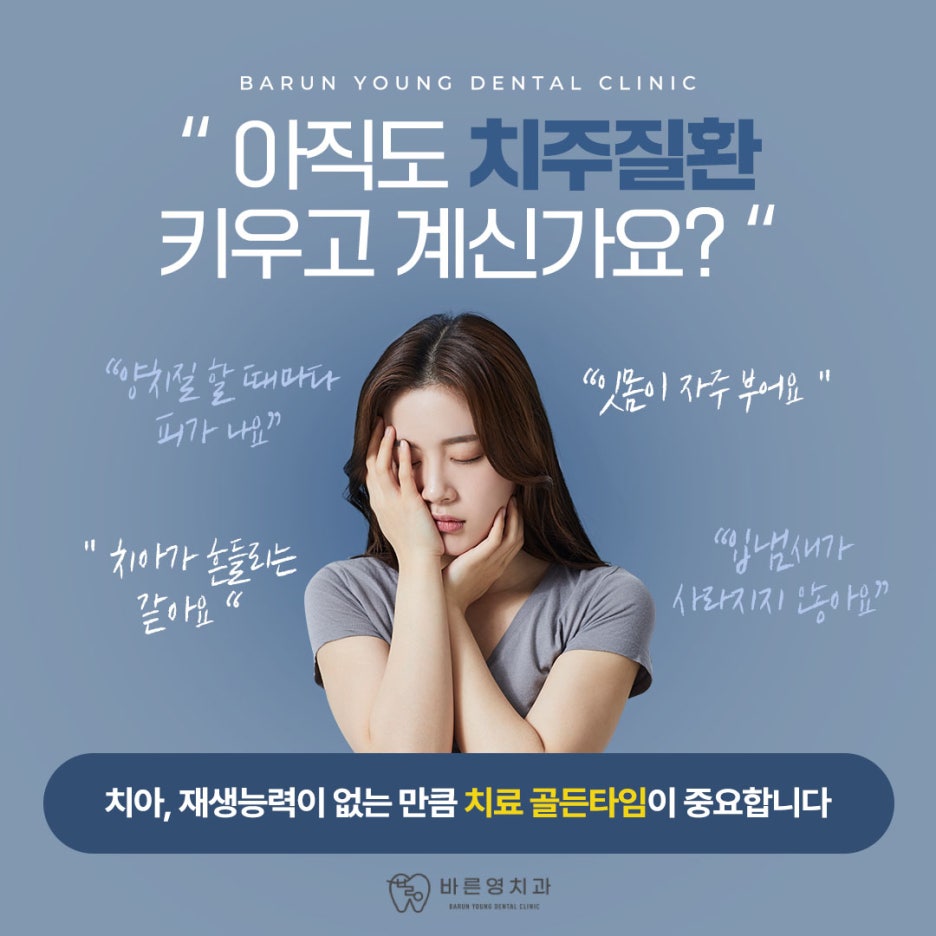
Patients with periodontal disease often visit thinking their pain is due to cavities. However, at Yaksu Station Dental Clinic and other dental clinics, about 70% of patients who visit are actually suffering from periodontal disease.
Periodontal disease can affect anyone. We hope you develop the habit of preventing it through regular scaling and oral examinations, and when initial symptoms appear, do not think ‘it will be fine’, but rather seek prompt consultation with the medical staff at Yaksu Station Dental Clinic for appropriate action.

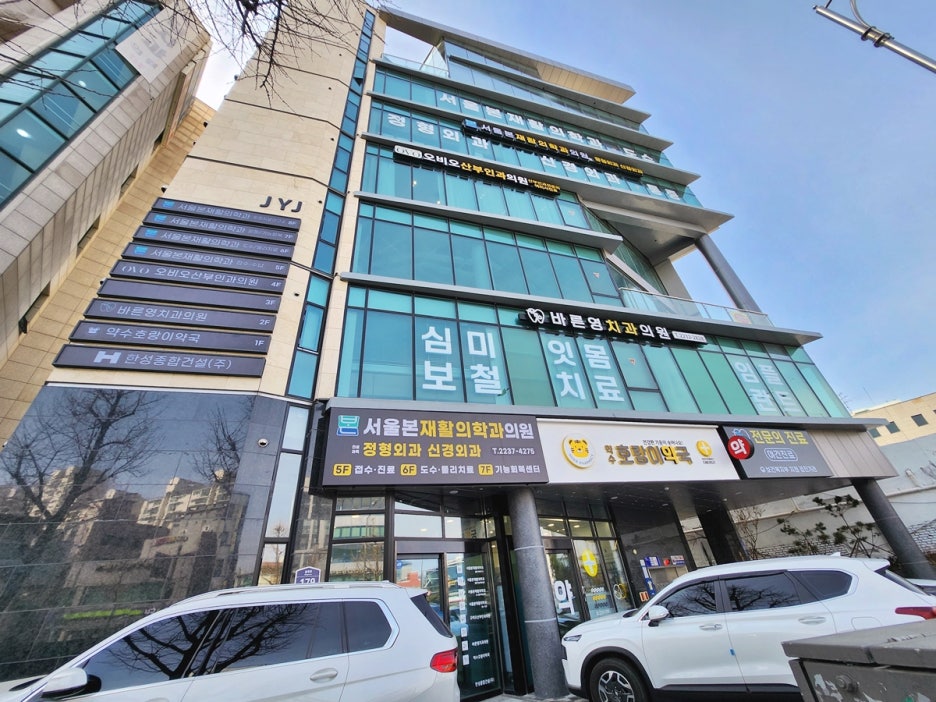
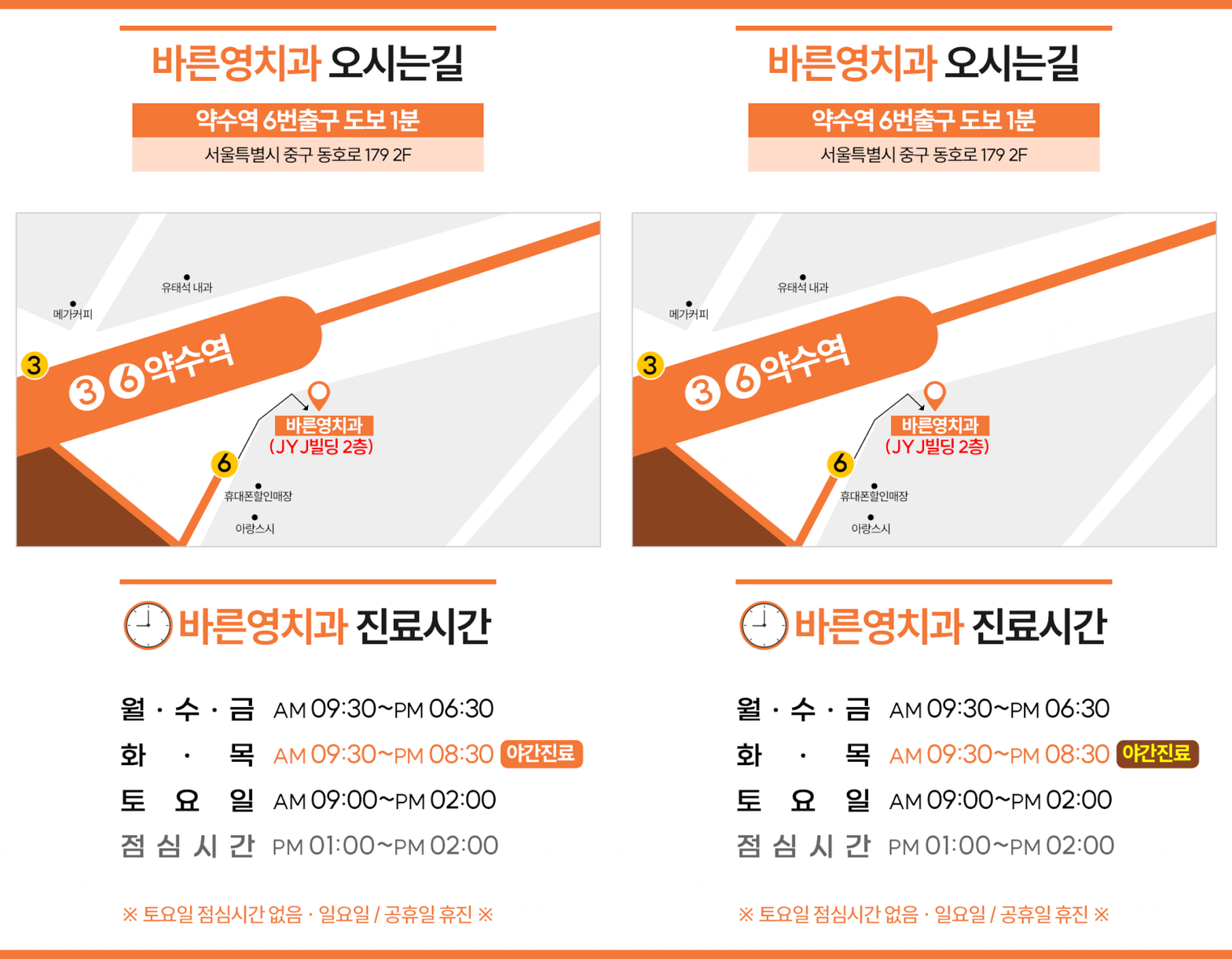
Yaksu Station Dental Clinic, Bareunyoung Dental Clinic, is located on the 2nd floor, a 1-minute walk from Yaksu Station Exit 6. We offer evening appointments every Tuesday and Thursday for those who are busy and have been postponing dental treatment. Please note that if you make a reservation in advance via Naver Reservation, KakaoTalk consultation, or phone inquiry, you can receive treatment more quickly.




Frequently Asked Questions
Why does periodontal disease occur?
Yes, periodontal disease occurs when bacteria penetrate through weakened gums due to aging, or when bacteria enter the gaps between the gums and teeth due to tartar formed from hardened food debris, causing inflammation.
What are the early symptoms of periodontal disease?
Yes, in the early gingivitis stage of periodontal disease, symptoms such as gum bleeding during brushing, red and swollen gums, and tooth sensitivity when consuming cold foods may appear.
What symptoms appear if periodontal disease worsens?
As it progresses to the periodontitis stage, gums recede, making teeth appear longer, and bad breath does not disappear even after brushing. In severe cases, pus may emerge from the gums, or teeth may become severely loose.
How is periodontal disease treated?
The early gingivitis stage of periodontal disease can be improved with regular scaling and proper brushing habits. The periodontitis stage may require more complex treatment and root canal therapy due to the high possibility of alveolar bone and nerve contamination.
How does Yaksu Station Dental Clinic diagnose and treat periodontal disease?
Yaksu Station Dental Clinic meticulously assesses oral conditions with low-dose 3D CT scans and applies a digital pain-free anesthesia system for diagnosis and treatment. We prioritize saving natural teeth and, if necessary, provide customized treatments such as navigation implants.
Are implants sometimes necessary after periodontal disease treatment?
Yes, if periodontitis has progressed severely and teeth have fallen out, implant treatment is performed to place artificial teeth to replace the lost ones after periodontal disease treatment and root canal therapy.