2026-09-07
Yaksu Station Dental Clinic: Cracked Teeth
Learn about cracked teeth, their symptoms, and treatment options at Yaksu Station Bareunyoung Dental Clinic. We cover everything from minor surface cracks to severe fractures, including when treatment is necessary and what to expect.
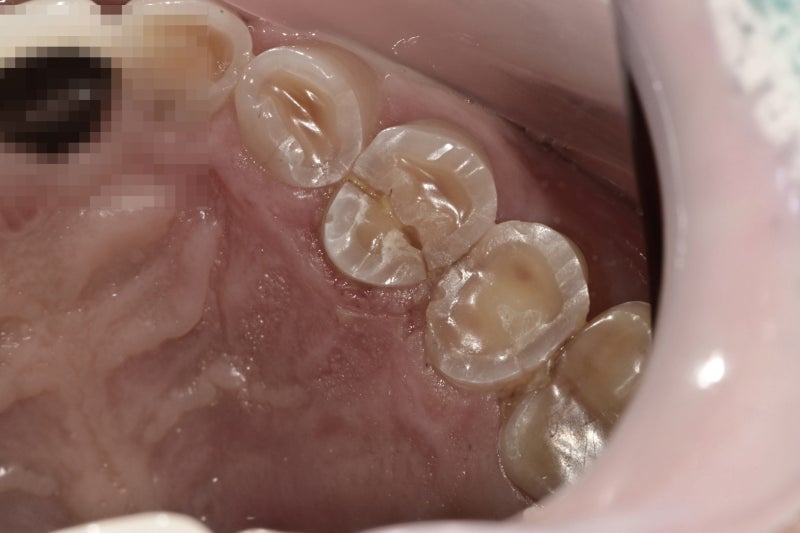
Hello.
I am Dr. Kim Tae-young, director of Bareunyoung Dental Clinic at Yaksu Station.
Today, I would like to explain the treatment methods for cracked teeth.
Cracked teeth can be divided into two cases depending on the symptoms.
First, teeth with only hairline cracks observed on the surface.
In fact, most adults have cracks in their teeth.
This can especially occur in people who have dietary habits that favor tough and hard foods, like in Korea.
However, the presence of a crack does not necessarily mean symptoms will appear or that treatment is always required.
If there are no symptoms and the crack is only on the surface, you can certainly continue to use your teeth as they are.
Second, teeth where these cracks have progressed, causing discomfort or sensitivity during chewing.
Such teeth may vary slightly depending on the severity of the symptoms, but
we check the symptoms after occlusal adjustment or nerve treatment followed by crown restoration.
When a crown is restored on a cracked tooth, it firmly holds the crown portion,
which can delay the progression of the crack, but it cannot stop it 100%.
If the crack eventually progresses to the root tip and causes symptoms, unfortunately, extraction will be unavoidable.
However, there are cases where a cracked tooth fractures without prior symptoms, and if the crack extends deep into the gums, below the alveolar bone,
it is not possible to hold the cracked part in that area, and even with treatment, the prognosis is very poor, so extraction may be necessary.
The patient also visited us with the second type of symptom.
The main complaint was: ‘I chewed something hard and it feels uncomfortable, like something is stuck.’
Upon examination, it was not food stuck, but the tooth was fractured.
Usually, in such situations, as explained above, the fractured fragment is too deep, requiring extraction.
When I started examining the patient, as expected, the tooth was partially fractured, and there was bleeding.
The patient was middle-aged, had well-developed jaw muscles, and a habit of enjoying hard and tough foods.
Therefore, not only the affected tooth but also the teeth overall showed wear, and hairline cracks were observed throughout.
In such situations, it is important to determine how far the fracture has progressed, but if it has reached the root, the tooth cannot be saved and must be extracted.
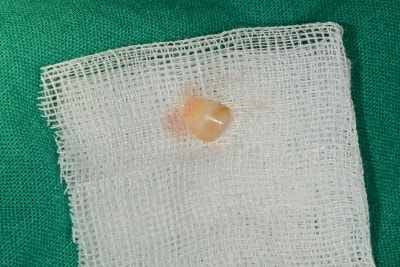
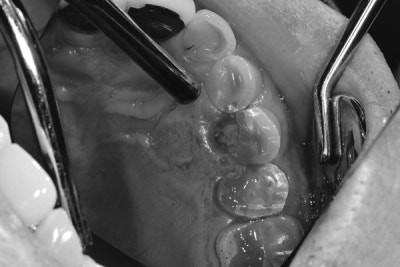
Although the fractured fragment did not extend to the root tip, the fracture line was deep within the gum, making extraction recommended. However,
the patient wished to use their own tooth for as long as possible, so we decided to proceed with treatment to save the tooth.
In such cases, the margin of the prosthesis is located deep within the gum and close to the alveolar bone. Even with prosthetic treatment,
alveolar bone resorption occurs, and the gums often swell, making future management difficult and the prognosis for the tooth not good. After fully explaining these circumstances, we decided to proceed with nerve treatment followed by a crown.
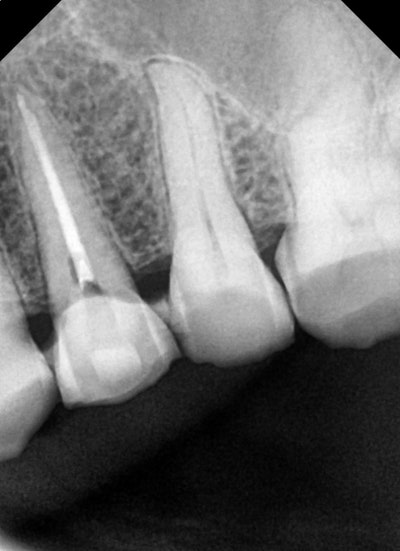
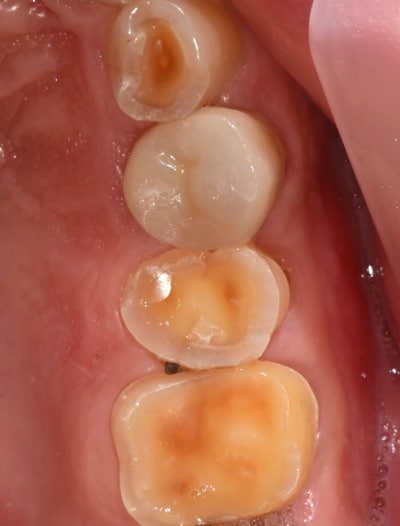
Even on an X-ray, the fracture line due to the crack is not clearly visible.
We completed nerve treatment, checking for pain improvement and symptoms, and restored the tooth's external appearance with prosthetic treatment.
The surrounding teeth were severely worn, making the shape look awkward, but
we meticulously performed occlusal adjustment to distribute the surrounding occlusal forces.
For teeth with severe wear like this, even if one tooth is treated, there is a high probability that symptoms will sequentially appear in other teeth.
Since further wear of the teeth can change the occlusion, we conduct regular check-ups.
We will help you use your teeth for a long time through regular check-ups!
Thank you^^
Frequently Asked Questions
Do cracked teeth always require treatment?
No, not necessarily. If there are only hairline cracks on the surface and no symptoms, you can continue to use them without treatment. However, if you experience discomfort or sensitivity during chewing, treatment should be considered.
What are the common treatment methods for cracked teeth?
It depends on the severity of the symptoms. Typically, occlusal adjustment or nerve treatment followed by a crown can cover the tooth's crown portion to delay the crack's progression. However, it cannot stop it 100%.
Can crown restoration 100% cure a cracked tooth?
No, it cannot stop it 100%. A crown can hold the tooth's crown portion to slow down the crack's progression, but if the crack eventually progresses to the root tip, extraction may ultimately be necessary.
Is tooth extraction always necessary for a fractured tooth?
Extraction is not always necessary. If the fractured fragment does not extend to the root tip and is formed deep within the gum, even if the prognosis is not good, nerve treatment followed by crown restoration can be attempted according to the patient's wishes.
What impact does frequently eating hard foods have on teeth?
A diet that frequently includes hard and tough foods can easily lead to cracks in the teeth. It can also accelerate tooth wear, affecting overall dental health.
How should cracked teeth be managed after treatment?
Regular check-ups are very important even after treatment. If tooth wear is severe, there is a high probability that symptoms will appear in other teeth, so changes in occlusion should be regularly checked.