2026-09-03
Why More Pull Isn't Always Better for a Facelift at Sinnonhyeon Station Plastic Surgery
A facelift isn't just about pulling skin tight. It requires considering facial structure and the causes of aging to achieve natural, balanced results, not just maximum tightness.
※ This article is intended to provide medical information.
It is not subject to review under Article 56, Paragraph 2 and Article 57 of the Medical Act,
and is not an advertisement unrelated to review content.
Hello,
I am Dr. Park Jeong-geun,
Director of Faceplus Plastic Surgery Clinic.

As we age, a decrease in facial elasticity can lead to a blurred jawline and sagging cheeks or mouth area.
Many people consider a facelift due to these concerns, but there's still a perception that ‘the more you pull, the better the result’.
However, a facelift is not simply a procedure that pulls the skin tightly; it's crucial to consider the facial structure and the causes of aging together.
In this article, we'll explore why pulling excessively isn't always the best approach for a facelift and what aspects you should check.

Table of Contents | ||
1. A facelift is not just about pulling the skin. 2. Pulling too much can actually look unnatural. 3. The direction of pull differs for each face. 4. What are the criteria for a good facelift? |
1. A facelift is not just about pulling the skin.
A facelift is not simply a procedure that makes the skin taut.
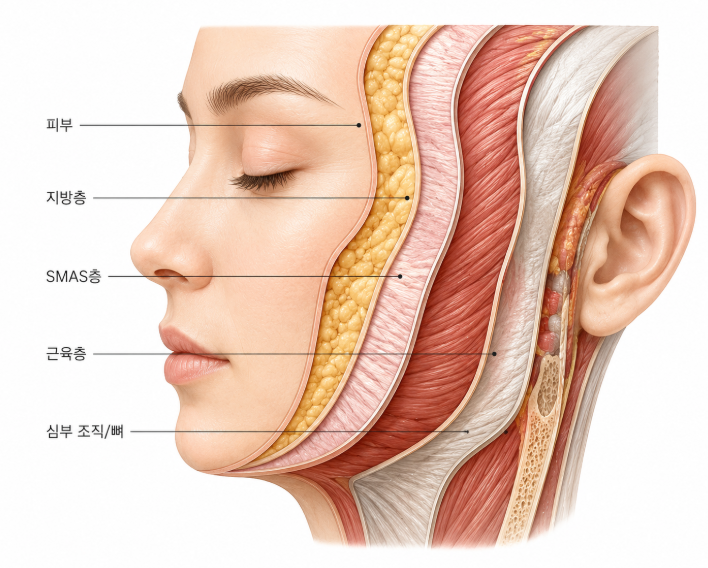
As aging progresses, not only the skin but also the fat layer and SMAS (superficial musculoaponeurotic system) move downwards.
Because of this, if only the skin is pulled tightly, it may appear taut temporarily, but sagging can reappear over time, or facial expressions may become awkward.
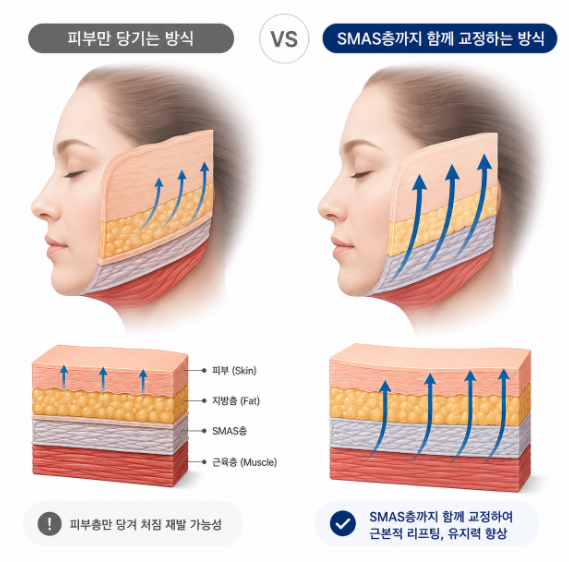
This is why methods that consider deeper facial structures are widely used today.
2. Pulling too much can actually look unnatural.
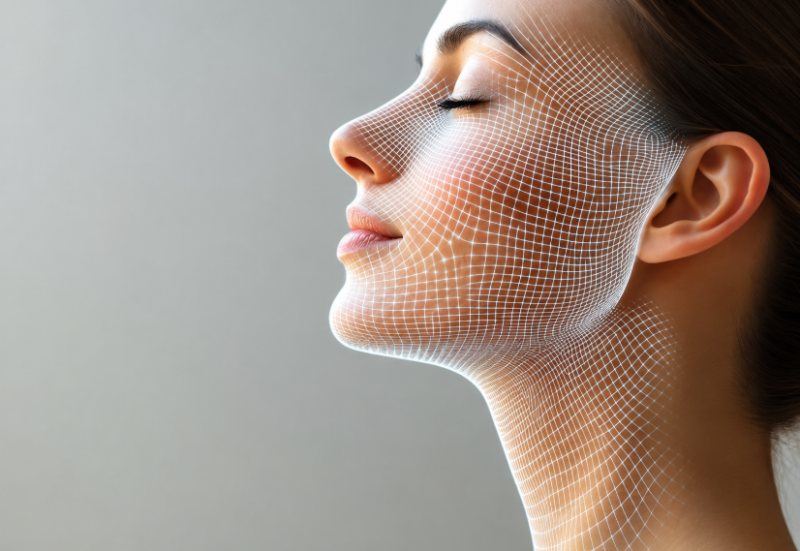
The goal of a facelift is not to pull the face as much as possible, but to naturally restore it to its original position.
Excessive pulling can make the skin around the ears look strained or cause unnatural changes in the corners of the mouth and eyes.
It can also make the face appear excessively deflated or give a stiff expression.
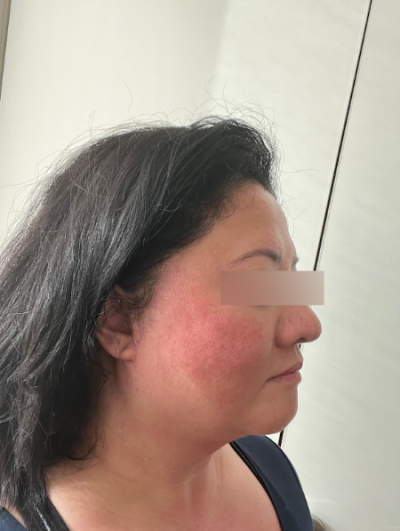
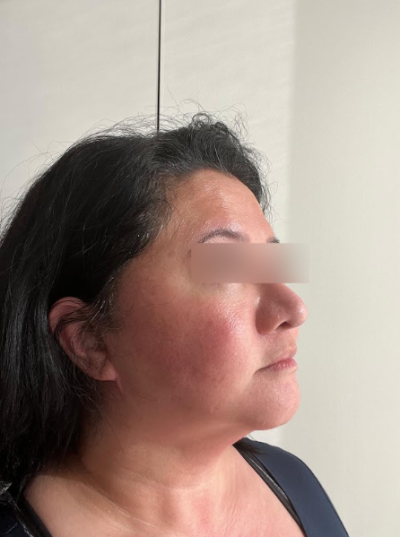
Ultimately, what's important is ‘how naturally’ rather than ‘how much’.
3. The direction of pull differs for each face.
Not everyone ages in the same way.
Some may experience cheek sagging first, while others may have more prominent sagging in the jawline or neck area.
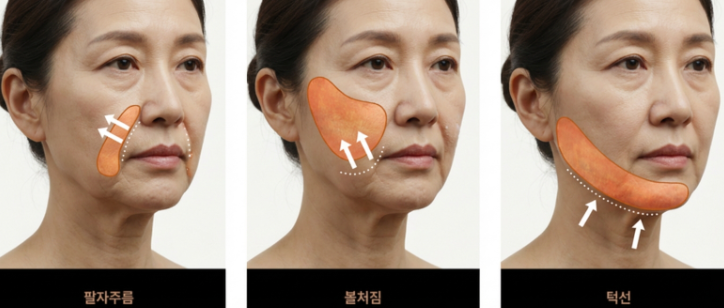
Therefore, the direction and extent of pulling can vary depending on the facial shape and the cause of sagging.
This is why a design that considers an individual's anatomical structure is crucial, even for the same facelift procedure.
4. What are the criteria for a good facelift?
A good facelift doesn't just mean fewer wrinkles.
It's important to achieve results where the overall facial balance is maintained, expressions move naturally, and there's no overly pulled sensation.
Additionally, considering incision location, scar management, skin tension, and left-right symmetry together can lead to more stable results.
When researching facelifts, including at Sinnonhyeon Station plastic surgery, it can be helpful to look at how the facial structure is analyzed and naturally improved, rather than ‘how tightly it's pulled’.
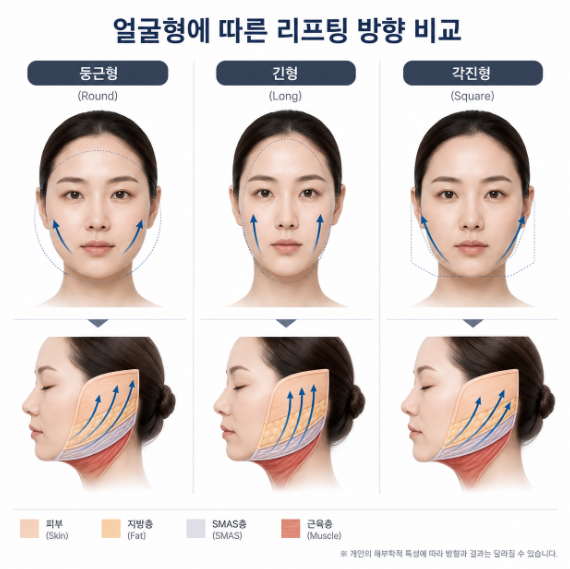
A facelift is not simply a procedure that pulls the skin tightly, but a process of understanding the causes of facial aging and correcting the structures of each layer in a balanced way.
Pulling excessively does not necessarily guarantee good results, and considering facial proportions, movement, and a natural impression together is known to be an important factor.
If you're considering a facelift, checking how your facial structure is analyzed and planned, rather than just the surgical method itself, can help you make a more informed decision.
-Operating Hours-
Weekdays 9:00 ~ 18:00 Saturdays 9:00 ~ 16:00 Public Holidays / Sundays Regular closure |
-Contact Us-
Faceplus Plastic Surgery Clinic | ||
Consultation Phone: 02-541-8500 Inquiries: KakaoTalk Inquiry |
-Directions-
Frequently Asked Questions
Is a facelift just about pulling the skin?
No, a facelift is not just about pulling the skin. As aging progresses, not only the skin but also the fat layer and SMAS (superficial musculoaponeurotic system) move downwards. Therefore, methods that consider deeper facial structures are widely used today.
Is it better to pull more during a facelift?
No, pulling excessively can actually lead to unnatural results. The skin around the ears may appear strained, the corners of the mouth and eyes may look awkward, and expressions may seem stiff. Natural restoration is key.
Is the direction of pull the same for everyone during a facelift?
No, not everyone ages in the same way. Therefore, the direction and extent of pulling can vary depending on the facial shape and the cause of sagging. A design that considers an individual's anatomical structure is crucial.
What are the criteria for a good facelift?
A good facelift doesn't just mean fewer wrinkles. It's important to achieve results where the overall facial balance is maintained, expressions move naturally, and there's no overly pulled sensation. Scar management and left-right symmetry should also be considered.