2026-07-20
What is 'Corneal Cross-Linking' to Help Prevent Recurrence After SMILE LASIK?
Corneal cross-linking (CXL) strengthens the cornea using riboflavin and UVA light, preventing vision regression and treating keratoconus. It's not always necessary after SMILE LASIK, but beneficial for those with thin corneas, high myopia/astigmatism, or irregular corneal shapes.

Hello, this is Gangnam Smile Eye Clinic 😊💙
Are you concerned that your vision might worsen again over time after undergoing LASIK, LASEK, or SMILE LASIK?
In fact, this is one of the most common questions many people ask when they visit our eye clinic.
One way to alleviate this anxiety is through ‘Corneal Cross-Linking’.
Today, we will take some time to learn about what corneal cross-linking is, how it is effective in preventing recurrence, and whether there are any disadvantages or side effects.
What is Corneal Cross-Linking?

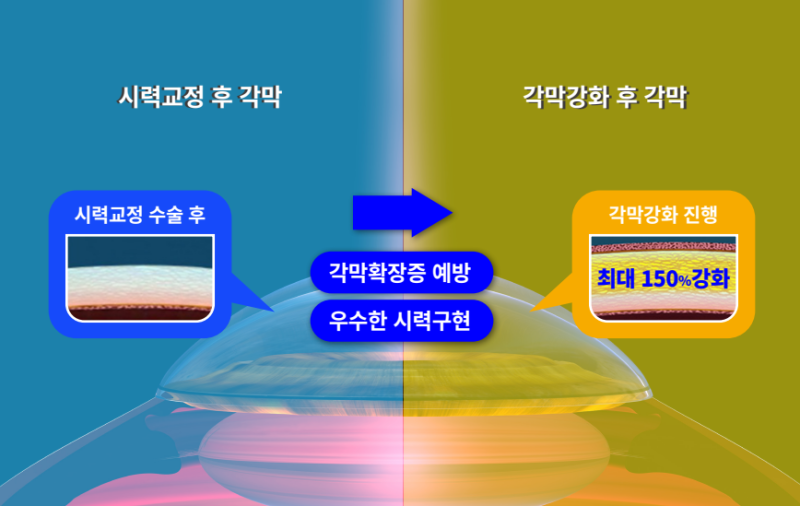
First, as the name suggests, corneal cross-linking is a procedure that hardens and strengthens the cornea.
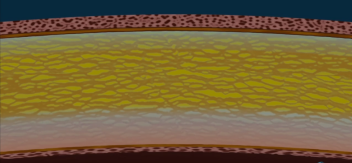
It uses riboflavin, a vitamin B2 component, and ultraviolet (UVA) light to make the collagen fibers of the cornea bind more densely.
This process increases the mechanical strength of the cornea and provides structural stability.
Simply put, it can be described as ‘reinforcement work’ to re-strengthen a thin and easily deformable cornea, or ‘a procedure that inserts invisible rebar’.
Why is Corneal Cross-Linking Necessary After SMILE LASIK?
Some patients may experience a gradual thinning and irregularity of the cornea over time after LASIK or LASEK, which can lead to a decline in vision again.
It can help with:
✅ Strengthening the structural stability of the cornea
✅ Reducing the risk of vision regression (myopia recurrence)
✅ Inhibiting the progression of keratoconus
✅ Preventing complications after LASIK and LASEK
A Treatment Method Performed Even in University Hospitals
Corneal cross-linking is not merely a supplementary procedure for vision correction surgery.
For several years now, it has been used as an official treatment for a progressive corneal disease called ‘keratoconus’ in university hospitals both domestically and internationally.
Keratoconus is a condition where the cornea, weakened by congenital factors or complications, loses its original convex shape and gradually deforms into a pointed shape. In severe cases, the cornea thins, leading to severe vision loss akin to blindness.
Corneal cross-linking has become a standard treatment to prevent the progression of this disease, proving its medical efficacy.
What is the Procedure?
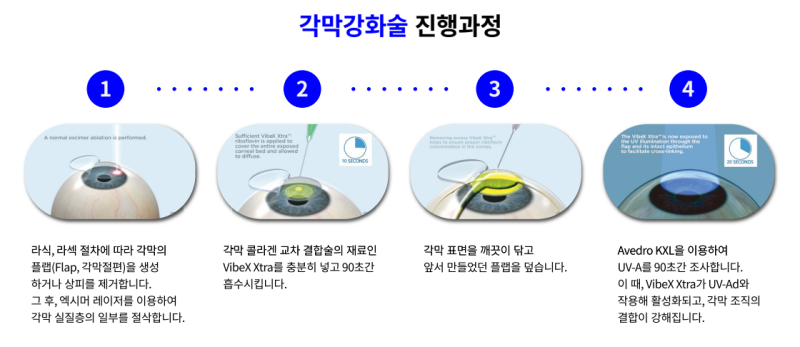
1. Riboflavin Instillation
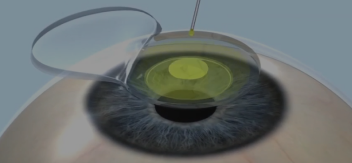
After correcting the refractive error, riboflavin solution is applied to the corneal surface through the corneal incision.
At this point, riboflavin reacts with ultraviolet light to strengthen the collagen fibers.
2. UV Irradiation
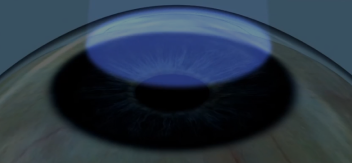
Low-intensity ultraviolet light is shone onto the cornea.
The irradiation time is approximately 1 to 3 minutes, and the entire procedure is completed within 5 minutes.
At this time, corneal cross-linking for preventive purposes does not use high-intensity ultraviolet light like in keratoconus treatment, and is performed only within a safe range.
3. Recovery and Management
When corneal cross-linking is performed during the vision correction surgery, there is no significant difference in recovery or pain compared to cases where it is not performed, so no special management is required.
Are There Any Side Effects?
As mentioned earlier, if the UV irradiation dose and time are appropriately distributed, there are no specific side effects.
It only enhances the stability of the surgery and improves the accuracy of the surgical outcome, with no difference in the separate recovery process.
However, after corneal cross-linking, the riboflavin medication may occasionally remain in the cornea for about a week, so it is advisable to be careful with UV exposure for about a week.
Wearing sunglasses outdoors is recommended.
Is Corneal Cross-Linking Absolutely Necessary After SMILE LASIK or LASEK?
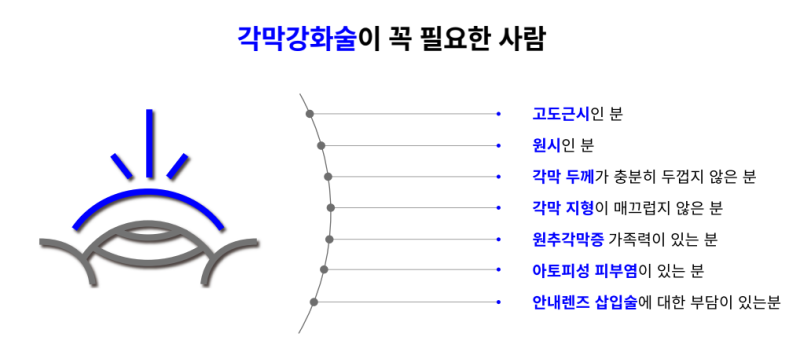
Corneal cross-linking is not essential for all SMILE LASIK and LASEK patients.
However, it can be an essential procedure for those who:
✅ Had thin corneas originally
✅ Have a high probability of vision regression (high myopia, astigmatism)
✅ Have irregular corneal shapes
✅ Have a possibility of keratoconus
In these cases, it is important to consult thoroughly with an ophthalmologist to prevent and manage the cornea in advance, thereby maintaining more stable vision.
For SMILE LASIK or LASEK, the ‘foundation’ that allows the vision to be maintained for a long time is as important as the immediate vision itself.
Corneal cross-linking may still be unfamiliar to patients, but its effectiveness and safety have already been globally proven.
If you are concerned about vision regression or have been diagnosed with weak corneas, please undergo a precise examination and consult with your doctor to proceed with the appropriate surgery.
If you want to know if corneal cross-linking is necessary for your eyes, or if you have any other questions,
click the link below to make an appointment, and receive a free precise corneal topography examination and consultation with an ophthalmologist.
⭣ ⭣ ⭣ ⭣ ⭣ ⭣

💙🤍 𝖦𝖠𝖭𝖦𝖭𝖠𝖬 𝖲𝖬𝖨𝖫𝖤 𝖤𝖸𝖤 𝖢𝖫𝖨𝖭𝖨𝖢💙🤍
𝗧𝗛𝗘 𝗟𝗜𝗚𝗛𝗧 𝗔𝗡𝗗 𝗧𝗛𝗘 𝗢𝗖𝗘𝗔𝗡 𝗜𝗡 𝗬𝗢𝗨𝗥 𝗦𝗠𝗜𝗟𝗘











Frequently Asked Questions
What is corneal collagen cross-linking?
Corneal collagen cross-linking is a procedure that uses riboflavin, a vitamin B2 component, and ultraviolet light to densely bind the collagen fibers of the cornea, thereby increasing the cornea's mechanical strength and structural stability. It serves to reinforce thin and easily deformable corneas.
Why is corneal collagen cross-linking necessary after SMILE LASIK?
Some patients may experience a decline in vision over time after LASIK or LASEK due to thinning and irregularity of the cornea. Corneal collagen cross-linking can help strengthen the structural stability of the cornea, reduce the risk of vision regression, and inhibit the progression of keratoconus.
How is corneal collagen cross-linking performed?
Corneal collagen cross-linking is performed by first instilling riboflavin solution onto the corneal surface, and then illuminating it with low-intensity ultraviolet light for about 1 to 3 minutes. The entire procedure is completed within 5 minutes, and preventive procedures are performed within a safe range.
Are there any side effects after corneal collagen cross-linking?
There are no specific side effects if the UV irradiation dose and time are appropriately controlled. However, since riboflavin medication may remain in the cornea for about a week after the procedure, it is advisable to be careful with ultraviolet light, such as wearing sunglasses during outdoor activities.
Do all SMILE LASIK patients need to undergo corneal collagen cross-linking?
No, corneal collagen cross-linking is not mandatory for all SMILE LASIK or LASEK patients. It is recommended for individuals with naturally thin corneas, those with high myopia or astigmatism who have a high likelihood of vision regression, and those with irregular corneal shapes or a possibility of keratoconus.
Does corneal collagen cross-linking require a long recovery period?
No, even if corneal collagen cross-linking is performed along with vision correction surgery, there is no significant difference in recovery or pain compared to cases where corneal collagen cross-linking is not performed. Therefore, no special additional care is required after the procedure.