2026-09-03
Upper Blepharoplasty for Patients in Their 50s: Understanding Different Types of Eyelid Ptosis
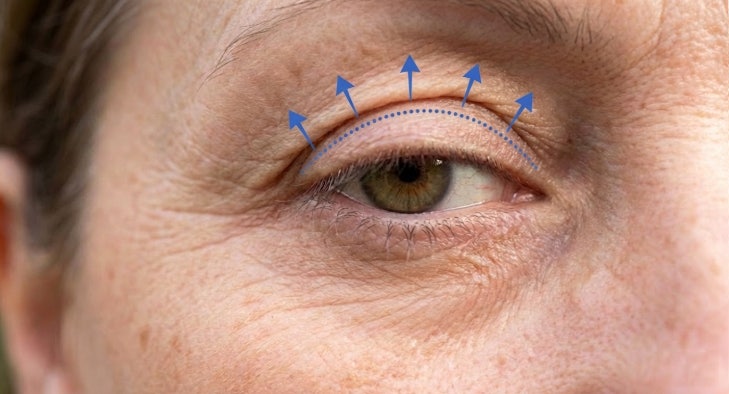
For those in their 50s and beyond, upper blepharoplasty considerations vary based on whether it's skin laxity, weakened eye-opening muscles, or eyebrow ptosis. Understanding these types is crucial for optimal results.
※ This article is intended to provide medical information.
It is not subject to review under Article 56, Paragraph 2 and Article 57 of the Medical Act,
and we inform you that it is not an advertisement unrelated to the review content.
Hello,
I am Dr. Park Jeong-geun,
Director of Face Plus Plastic Surgery Clinic.
When your eyes start to feel heavy and tired,
you might consider upper blepharoplasty.
Especially after the age of 50, the necessary surgery
differs depending on whether it's simply a problem of sagging skin,
weakened eye-opening strength, or if the eyebrows have also descended.
Even for the same ‘eyelid ptosis’, if the cause is different, the results
will be completely different, so it's important to understand the different types.
Table of Contents | ||
1. Why Upper Blepharoplasty is Needed 2. Skin Sagging Type 3. Weakened Eye-Opening Strength Type 4. Type with Accompanying Eyebrow Ptosis |
Why Upper Blepharoplasty is Needed
The biggest reason eyes appear tired after the age of 50
is not just simple skin aging, but rather
changes in the entire structure around the eyes.
The skin sags, the strength of the eye-opening muscles
weakens, and the forehead and eyebrows also descend.
Therefore, if you only judge by the eyelids, you often
miss the actual cause.
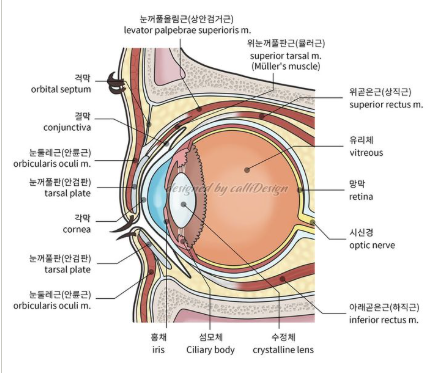
Upper blepharoplasty is not simply a procedure to remove skin,
but rather, it's best understood as a surgery that considers these structural changes
to improve both eye-opening function and overall impression.
Skin Sagging Type
This is the most common type, where the skin of the upper eyelid
sags and covers the eye.
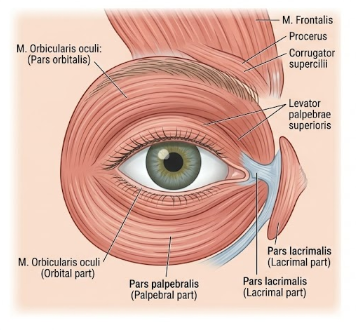
It's characterized by hidden double eyelids or a thick, heavy eyelid area
that creates a tired impression.
In this case, upper blepharoplasty to remove excess skin
can provide sufficient improvement.
However, if too much skin is removed, it can create a pulled or
unnatural look, so it's important to consider
the position of fat and the surrounding eye structure.
Weakened Eye-Opening Strength Type
Outwardly, it may resemble skin sagging, but the cause
is different.
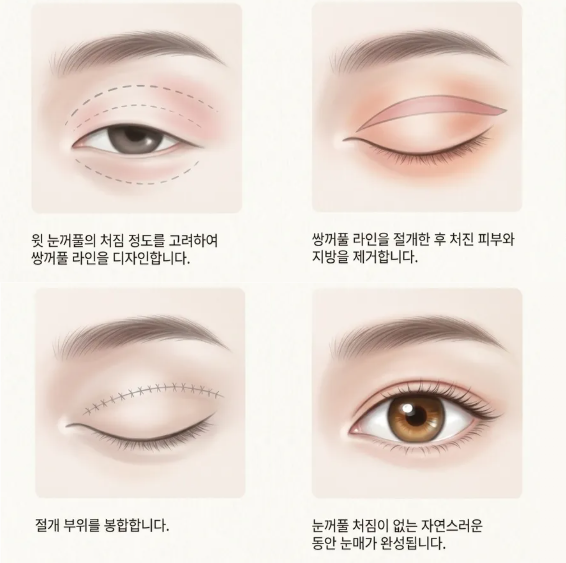
If you strain your forehead or your eyebrows lift when you open your eyes,
you are likely this type.
Simply removing skin may result in a lack of a clear, defined look
or a sagging impression returning over time.
In this case, a natural and stable result is achieved by
approaching the surgery in a way that also reinforces the function of the eye-opening muscles.
Type with Accompanying Eyebrow Ptosis
This is when the eyes appear to sag due to the descent of the eyebrows
rather than the eyelid itself.
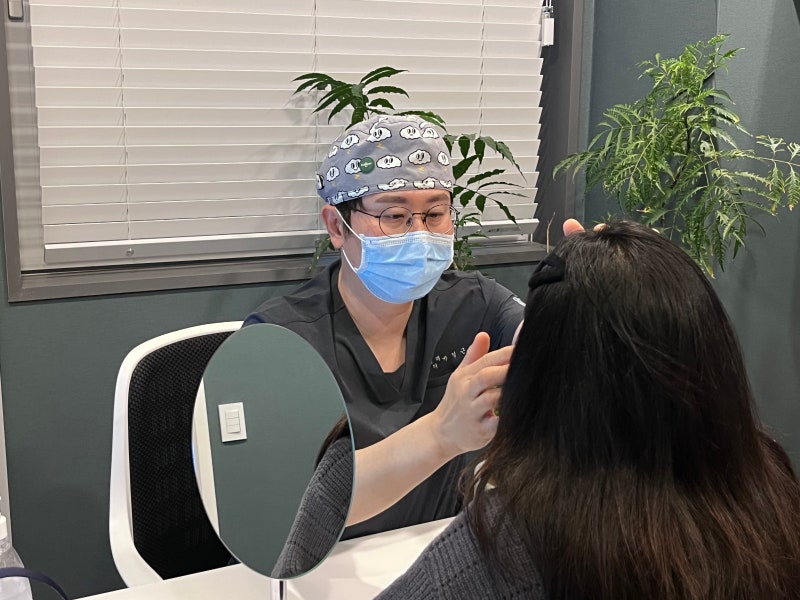
Especially after the age of 50, the forehead and eyebrows often
descend together, making the eyelids appear thicker.
In such cases, performing only upper blepharoplasty can narrow the distance
between the eyebrows and eyes, leading to a tired impression.
In reality, the position of the forehead and eyebrows significantly
influences the eye's impression, so
depending on the situation, considering a forehead lift or eyebrow lift together
can lead to natural results.
Thus, upper blepharoplasty is not simply a surgery to remove skin,
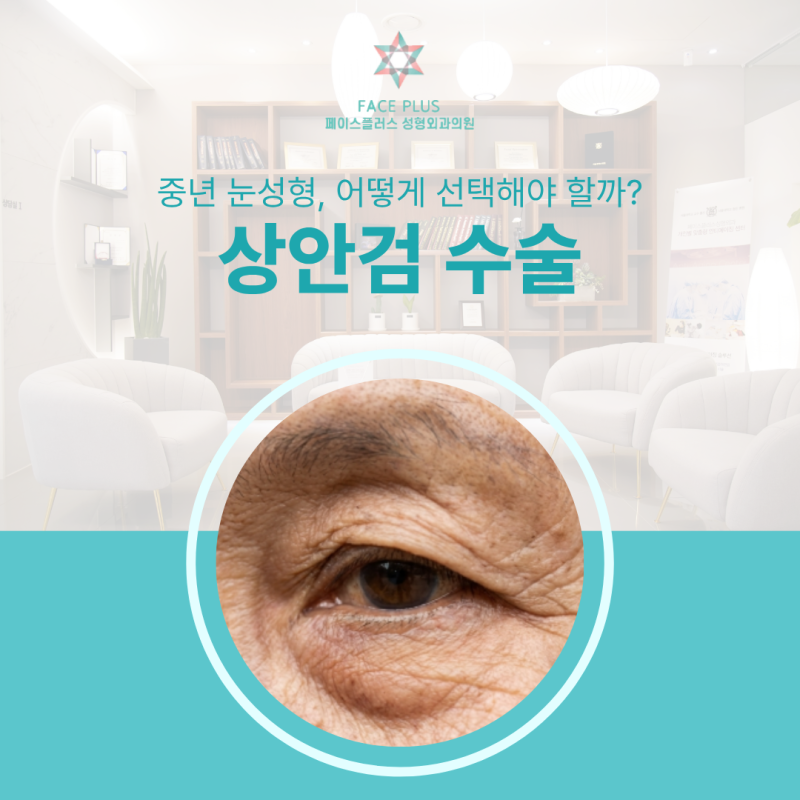
but a procedure that must be decided by looking at the entire
structure around the eyes.
Accurately identifying the type of your eyelid ptosis is the most important criterion,
and once this criterion is established, you can reduce unnecessary choices and achieve much more natural results.
-Operating Hours-
Weekdays 9:00 ~ 18:00 Saturdays 9:00 ~ 16:00 Public Holidays / Sundays Regular closure |
-Contact Us-
Face Plus Plastic Surgery Clinic | ||
Consultation Phone: 02-541-8500 Inquiries: KakaoTalk Inquiry |
-Directions-
Upper Blepharoplasty for Patients in Their 50s
Frequently Asked Questions
What are the main reasons for needing upper blepharoplasty in your 50s?
The biggest reason eyes appear tired after the age of 50 is not just simple skin aging, but rather changes in the entire structure around the eyes. Skin sagging, weakened eye-opening muscles, and forehead and eyebrow ptosis all play a complex role.
How can eyelid ptosis types be categorized?
Eyelid ptosis can be broadly categorized into skin sagging type, weakened eye-opening strength type, and type with accompanying eyebrow ptosis. Even for the same eyelid ptosis, if the cause is different, the results will be completely different, so it's important to understand the different types.
How is skin sagging type eyelid improved?
The skin sagging type is when the skin of the upper eyelid sags and covers the eye, which can be improved with upper blepharoplasty to remove unnecessary skin. However, removing too much skin can create an unnatural look, so the position of fat and the surrounding eye structure must also be considered.
How does upper blepharoplasty differ for weakened eye-opening strength?
The weakened eye-opening strength type is characterized by straining the forehead or lifting the eyebrows when opening the eyes. In this case, rather than simply removing skin, an approach that also reinforces the function of the eye-opening muscles is needed to achieve natural and stable results.
Is upper blepharoplasty alone sufficient when eyebrow ptosis is present?
No, if eyebrow ptosis is present, performing only upper blepharoplasty can narrow the distance between the eyebrows and eyes, leading to a tired impression. Depending on the situation, considering a forehead lift or eyebrow lift together can lead to natural results.
What is the most important consideration for upper blepharoplasty?
The most important consideration for upper blepharoplasty is accurately identifying the type of your eyelid ptosis. The decision should be made by looking at the entire structure around the eyes to reduce unnecessary choices and achieve much more natural results.