2026-07-14
Types of Double Eyelid Surgery: Non-incisional vs. Incisional vs. Partial Incisional
Explore the three main types of double eyelid surgery: incisional, non-incisional, and partial incisional. Learn about their pros, cons, and who is best suited for each method to achieve optimal aesthetic results.


Double eyelid surgery is one of the most common cosmetic procedures, often serving as an introduction to plastic surgery for many. This procedure can be performed for aesthetic enhancement or even for therapeutic purposes. Recently, various types of double eyelid surgeries have emerged, allowing for customized approaches based on an individual's eye shape and characteristics. These types can be broadly categorized into three: incisional, non-incisional, and partial incisional methods. Each method is suitable for different types of eyes. Today, we will explore the advantages and disadvantages of each surgical method and determine who is best suited for them.
1. Incisional Double Eyelid Surgery
Incisional double eyelid surgery, as the name suggests, involves excising a portion of unnecessary eyelid skin and then suturing it to create a double eyelid line. The incisional method has a very low chance of the double eyelid line loosening and provides strong fixation. If the double eyelid line loosens after an incisional procedure, it is possible that the fixation method was incorrect, so it can be helpful to thoroughly check this aspect.
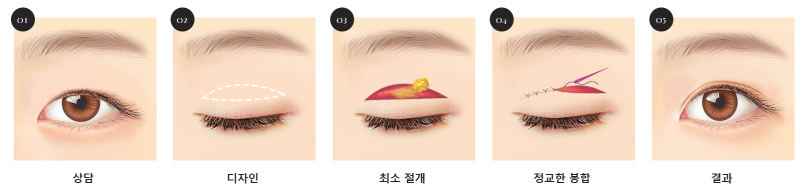
Types suitable for the incisional method
1. When the skin is thick, making it highly likely for non-incisional methods to loosen.
2. When there is significant ptosis, requiring definite ptosis correction.
3. When there is skin sagging, requiring the excision of some sagging skin.
4. When there is severe hollowness above the eyes, requiring fat removal or repositioning.
5. When the height of the double eyelid needs to be lowered.

Most people are hesitant about the incisional method due to concerns about scarring after surgery. However, if the surgery is meticulously performed by a sufficiently skilled medical professional, the results can be comparable to non-incisional methods with little difference.
2. Non-incisional Double Eyelid Surgery (Buried Suture, Natural Adhesion)
The non-incisional method creates a double eyelid by inducing natural adhesion between tissues and muscles without making an incision. It is the most preferred type due to its minimal invasiveness. The surgery time is relatively short, and the predictability of results is higher than with the incisional method. Furthermore, since no skin incision is made, there is almost no scarring, and less swelling and bruising occur after surgery, resulting in the shortest recovery period.
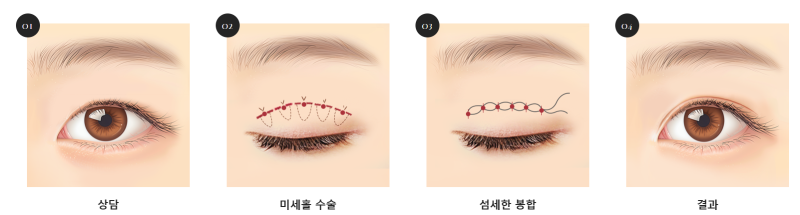
Types suitable for the non-incisional method
1. When the patient has thin skin.
2. When a quick recovery period is needed.
3. When the double eyelid line exists but frequently disappears.
4. When the patient has good eyelid opening strength.

While the non-incisional method has the disadvantage of potentially loosening over time due to weaker fixation, if the knots between tissues are tied in a double or triple manner to enhance fixation, the likelihood of the line loosening is reduced.
3. Partial Incisional Double Eyelid Surgery
Partial incisional surgery involves making minimal, partial incisions in the eyelid to refine only the necessary tissues. This method is more robust than the non-incisional method and less invasive than the incisional method. When considering double eyelid surgery, most people think of either the incisional or non-incisional methods. This method lies between the two, combining the advantages of both. It is preferred by those who worry about the non-incisional method loosening or find the incisional method too burdensome.
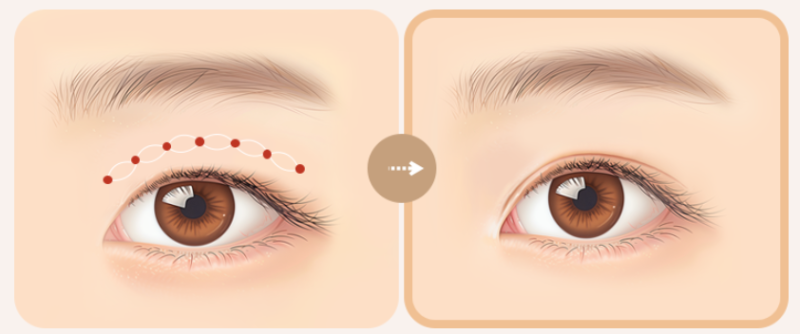
Types suitable for the partial incisional method
1. When concerned about the double eyelid line loosening.
2. When there is a lot of fat on the upper eyelid.
3. When full incision is too burdensome, and minimal incision is desired to refine only the necessary tissues.

Although the partial incisional method combines the advantages of other surgical techniques, there might be a feeling of discontinuity in the line due to differences in fixation depth. However, similar to the incisional method, if the surgery is meticulously performed by a sufficiently skilled medical professional, a clean result can be achieved.
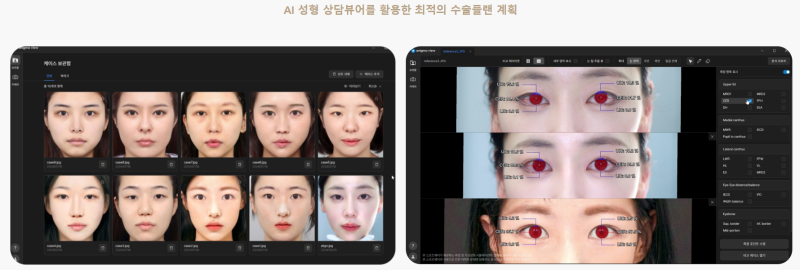

While various double eyelid surgical methods have emerged recently, it is crucial for all methods to accurately understand each individual's eye structure, fat volume, and muscle function, and to actively incorporate the patient's requests to apply the most suitable surgical technique. Furthermore, to achieve results that are not merely an enlargement of the eyes but are in harmony with the original facial features and lead to high satisfaction, meticulous design and thorough post-operative care are essential.


Frequently Asked Questions
What are the types of double eyelid surgery?
Double eyelid surgery is broadly divided into three types: incisional, non-incisional (buried suture, natural adhesion), and partial incisional methods. Each surgical method can be applied differently depending on an individual's eye characteristics.
When is incisional double eyelid surgery suitable?
Incisional surgery is suitable in cases such as when the skin is thick, making non-incisional methods likely to loosen; when there is significant ptosis requiring eyelid correction; when there is severe sagging skin or hollowness above the eyes; or when the double eyelid height needs to be lowered.
What are the advantages of non-incisional double eyelid surgery?
The non-incisional method has the advantages of a relatively short surgery time and leaving almost no scars. It also results in less swelling and bruising after surgery, leading to the shortest recovery period, which is why many people prefer it.
When is partial incisional surgery recommended?
Partial incisional surgery is recommended when you are concerned about the double eyelid line loosening or when you have a lot of fat on your upper eyelids. It is also a suitable surgical method when you find a full incision too burdensome but wish to refine only the necessary tissues through a minimal incision.
Does incisional surgery leave significant scars?
Most people are hesitant about the incisional method due to concerns about scarring. However, if the surgery is meticulously performed by a sufficiently skilled medical professional, it is said that clean surgical results can be obtained with little difference compared to the non-incisional method.
Does the non-incisional method often result in the double eyelid loosening?
The non-incisional method has the disadvantage of potentially loosening over time due to weaker fixation. However, if the knots between tissues are tied in a double or triple manner to enhance fixation, the likelihood of the line loosening is said to be reduced.