2026-07-14
Types of Canthoplasty and When They Are Needed
Explore the four main types of canthoplasty (epicanthoplasty, lateral canthoplasty, lower canthoplasty, and upper canthoplasty) and their effects, along with potential side effects.


Each person has a unique eye shape and size, eyelid thickness, and degree of eyeball protrusion.
While some individuals considering double eyelid surgery might achieve their desired eye shape with double eyelid surgery alone, others may require canthoplasty simultaneously, depending on their eye structure and characteristics.
Canthoplasty can be broadly divided into four types: epicanthoplasty (front canthoplasty), upper canthoplasty, lateral canthoplasty (back canthoplasty), and lower canthoplasty.
Today, we will explain the types and methods of canthoplasty based on eye shape, as well as their respective effects.
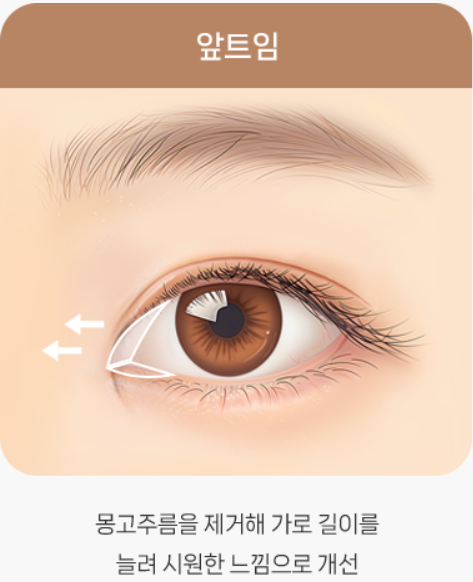
1. EpicanthoplastyEpicanthoplasty is widely known as a surgical method to remove the Mongolian fold. The surgical method involves incising the inner corner (medial canthus) of the eye and pulling it forward to fix it.
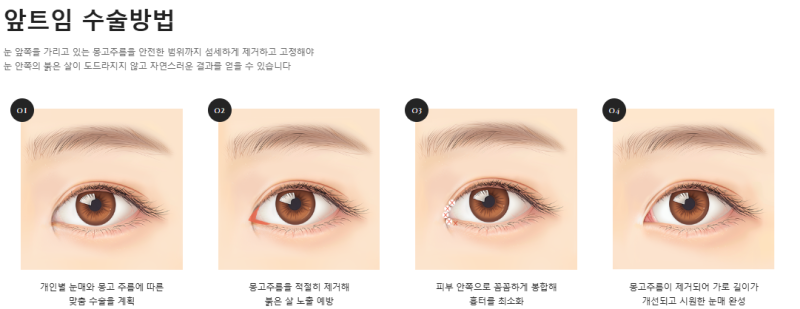
When epicanthoplasty is performed, the blocked inner corner of the eye is naturally extended forward, which can refreshingly improve the front line of a double eyelid that previously appeared somewhat rounded. This canthoplasty method can be effective for individuals with a hook-shaped Mongolian fold at the inner corner of the eye or those with a wide distance between their eyes.
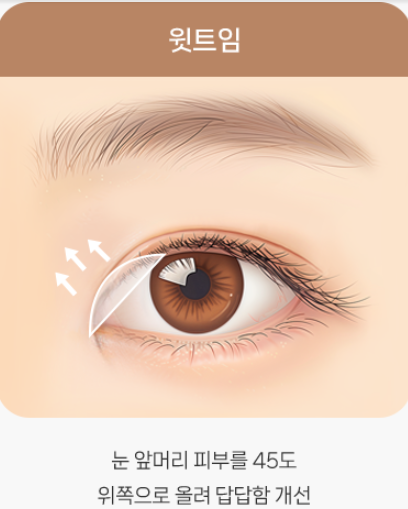
2. Upper CanthoplastyThis surgical method involves incising the upper part of the inner corner of the eye, connecting it to the fascia, pulling it to a natural extent, and fixing it upwards at a 45-degree angle.
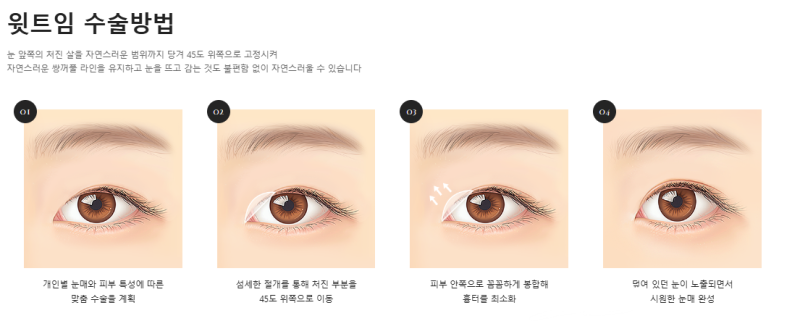
When upper canthoplasty is performed, a natural double eyelid line can be created, and the covered inner corner of the eye is extended upwards, making the partially hidden pupil at the front of the eye appear more open. This canthoplasty method is effective for individuals whose upper eyelids feel constricted or who have an imbalance in their double eyelids.
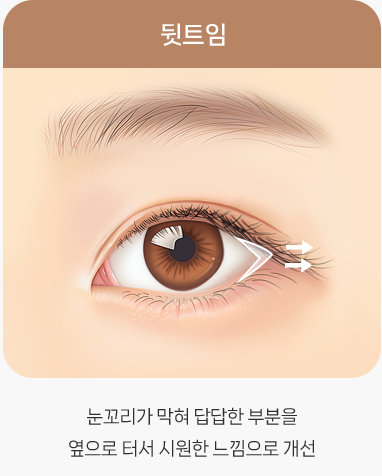
3. Lateral Canthoplasty This surgical method involves incising the outer corner (lateral canthus) of the eye and pulling it backward to fix it.
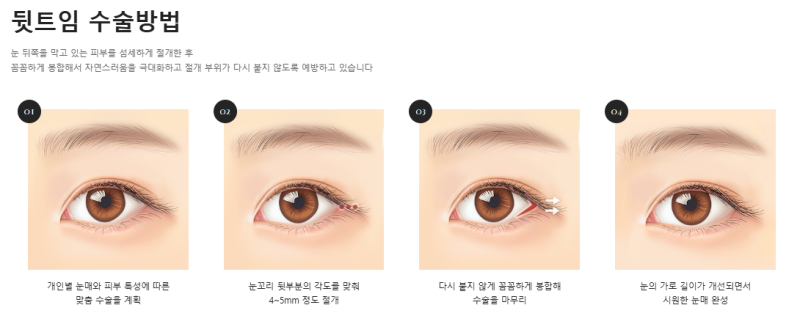
When lateral canthoplasty is performed, the length of the outer corner of the eye is extended, making the overall horizontal length of the eye appear longer. This canthoplasty method is effective for individuals with short horizontal eye length or those whose outer corners turn upwards, giving a sharp impression.
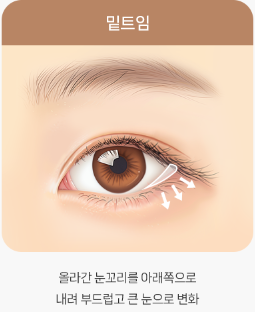
4. Lower CanthoplastyThis surgical method involves incising the lower conjunctiva of the eye, pulling it downwards, and naturally fixing it at a 45-degree angle.
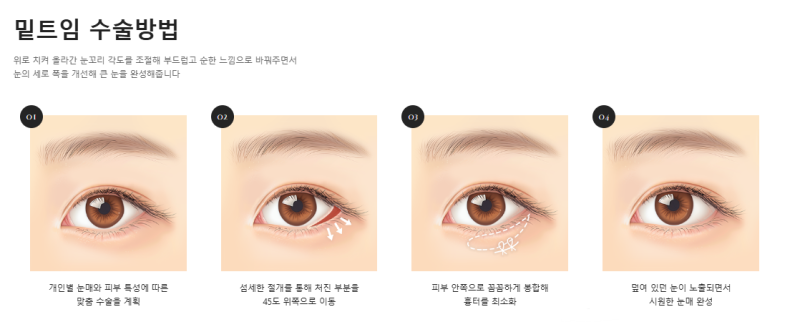
When lower canthoplasty is performed, the angle of the eye is lowered, softening the eye shape and extending the vertical length of the eye. This canthoplasty method is effective for individuals whose outer corners are upturned or who have droopy eyes.
Side Effects
All surgeries can have side effects, and we will now look at the side effects associated with canthoplasty.
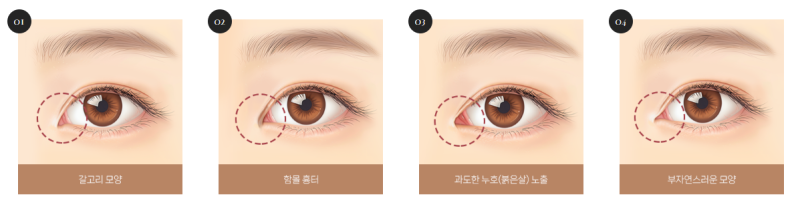
Common side effects after epicanthoplasty and upper canthoplasty include excessive exposure of the lacrimal caruncle, making the eyes appear too close together, or deformation of the inner corner of the eye, resulting in various issues such as a hook shape, sunken scars, or white scars.
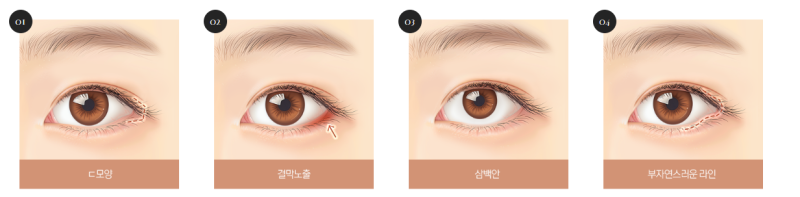
Furthermore, common side effects after lateral canthoplasty or lower canthoplasty include a ‘ㄷ’ shape, conjunctival exposure, scleral show (three whites of the eye), and unnatural lines.

Canthoplasty is a surgical method that can more effectively improve the horizontal and vertical length of the eyes, as well as the eye angle, which cannot be resolved by double eyelid surgery alone.
However, if an incorrect surgical method is performed without considering individual characteristics, side effects may occur. Therefore, it is recommended to proceed with an effective surgical plan through a thorough consultation with a highly skilled expert.



Frequently Asked Questions
What types of canthoplasty are there?
Canthoplasty can be broadly divided into four types: epicanthoplasty, upper canthoplasty, lateral canthoplasty, and lower canthoplasty. Each surgery helps to improve specific areas of the eye to create the desired eye shape.
When is epicanthoplasty effective?
Epicanthoplasty is primarily a surgery to remove the Mongolian fold, and it is effective for individuals with a hook-shaped Mongolian fold at the inner corner of the eye or those with a wide distance between their eyes. It can naturally expand the inner corner of the eye to create a more open look.
What effects do lateral canthoplasty and lower canthoplasty provide?
Lateral canthoplasty extends the horizontal length of the eye, making the eyes appear longer, and is effective in improving the sharp impression caused by upturned outer corners. Lower canthoplasty helps to lower the angle of the eye, softening the eye shape and extending its vertical length.
What are the potential side effects after canthoplasty?
Yes, various side effects can occur after canthoplasty. For epicanthoplasty/upper canthoplasty, excessive exposure of the lacrimal caruncle or scars may occur. For lateral canthoplasty/lower canthoplasty, issues such as a ‘ㄷ’ shape, conjunctival exposure, or scleral show may appear.
What is the most important consideration when contemplating canthoplasty?
When considering canthoplasty, the most crucial aspect is to thoroughly analyze individual eye characteristics and develop an effective surgical plan through ample consultation with a skilled expert. This is because incorrect surgery can lead to side effects.