2026-09-03
Thread Lift for Nasolabial Folds: How Much Improvement Can Be Expected for Deepened Lines?
Explore how thread lifts can improve deep nasolabial folds by addressing sagging cheeks and facial structure, distinguishing it from fillers, and emphasizing natural, balanced results.

※ This article is for the purpose of providing medical information.
It is not subject to deliberation under Article 56, Paragraph 2 and Article 57 of the Medical Act,
and is not an advertisement unrelated to the content of the deliberation.
Hello,
I am Dr. Park Jeong-geun,
Director of Faceplus Plastic Surgery Clinic.

Some people feel that their nasolabial lines
look particularly deeper than before when they look in the mirror.
If lines that initially only appeared when smiling
gradually remain even when expressionless,
it may not be merely a problem of skin wrinkles.
As the fat and soft tissues around the cheeks descend,
volume accumulates above the nasolabial folds,
and the demarcation can become even clearer.

For this reason, when considering a thread lift for nasolabial folds,
it's important to look not just at the nasolabial line itself,
but also at cheek sagging and overall facial structure.
So, with a thread lift,
how much improvement can be expected
for deepened nasolabial lines?
Table of Contents | ||
1. Reasons why nasolabial folds deepen 2. Cases where thread lifting is helpful 3. What's the difference from fillers? 4. Criteria for natural results |
1. Reasons why nasolabial folds deepen
Nasolabial folds are a natural boundary of the face
extending from the side of the nose to the corners of the mouth.
Therefore, it's not necessary to
completely eliminate all nasolabial lines.
However, as skin elasticity decreases
and tissues around the cheeks move downwards,
the area above the nasolabial folds can become heavy.
In such cases, simply filling the sunken area
may not be sufficient to address these nasolabial lines.

Even in consultations for thread lifts for nasolabial folds,
we don't just check the depth of the folds,
but also examine the sagging of the front and side cheeks.
This is because the necessary approach can vary
depending on the cause of the deepened nasolabial folds.
2. Cases where thread lifting is helpful
Thread lifting is a method that uses medical threads
to support sagging soft tissues.
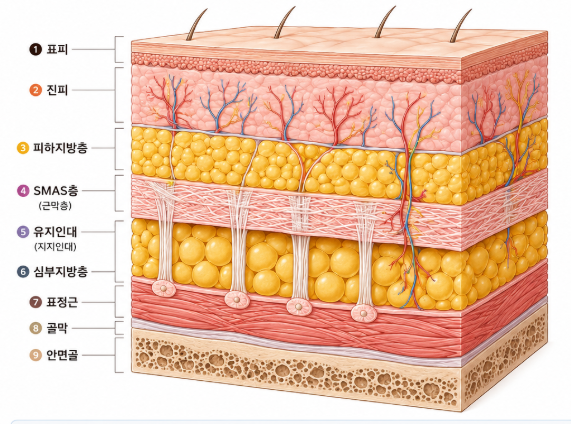
Therefore, a thread lift for nasolabial folds
should not be simply thought of as a procedure to smooth out the nasolabial line itself with threads.
If the nasolabial lines have deepened due to sagging cheek tissue,
the position of the sagging tissue must be considered.
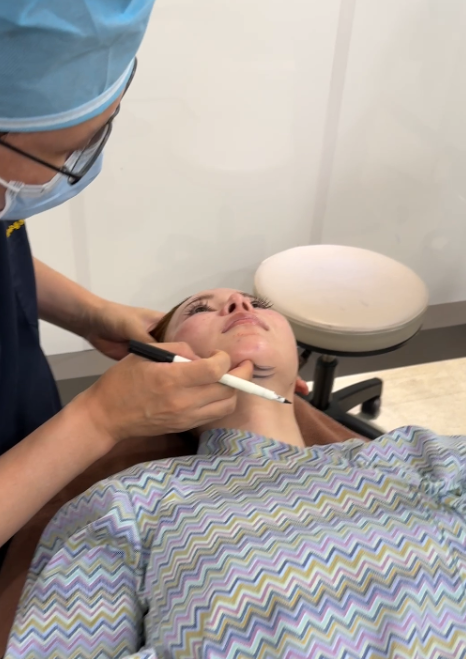
By supporting the tissue in the appropriate direction,
it can help alleviate the heavy appearance around the nasolabial folds.
Conversely, there are cases where there is little cheek sagging,
and the main cause is a lack of volume or skeletal structure in the nasolabial area.
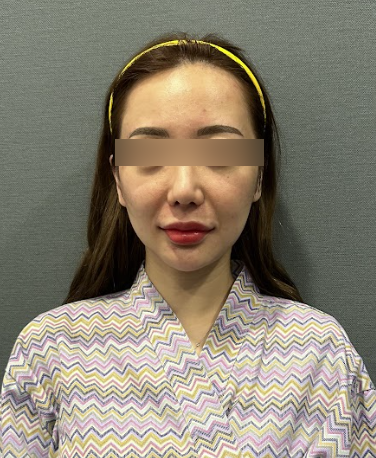

In such cases, it may be difficult to achieve the desired change
with a thread lift alone.
Ultimately, the key to a thread lift for nasolabial folds
is not to look at how deep the wrinkles are,
but to identify why they have deepened.
3. What's the difference from fillers?
When considering nasolabial folds,
you might wonder which method, filler or thread lift,
is more suitable.

Fillers focus on
restoring volume to sunken areas.
Thread lifts, on the other hand,
focus on supporting and repositioning
sagging tissues.
If a lack of volume is the primary cause,
fillers may be considered.
Conversely, if the tissue above the nasolabial folds has descended
due to cheek sagging,
a thread lift for nasolabial folds may be considered.
However, in real faces,
it's not uncommon for both hollowness and sagging
to appear simultaneously.

Therefore, rather than insisting on just one method,
it's important to assess the current volume and degree of sagging
of the face together.
4. Criteria for natural results
Just because nasolabial folds are deep
doesn't mean that pulling them strongly
is always a good idea.

Excessive pulling can lead to
an unnatural volume placement or
alter the curves of the face.
Therefore, when planning a thread lift for nasolabial folds,
it's important to examine the surrounding tissues
rather than focusing solely on the nasolabial area.
It's necessary to comprehensively check the direction of the tissues
extending from the front and side cheeks
all the way to the jawline.
The type, number, and direction of threads required
can also vary individually
depending on the amount of facial tissue and the degree of sagging.
Ultimately, a thread lift for nasolabial folds
should consider overall balance
rather than completely erasing the nasolabial lines.
It's best to approach it in a way that alleviates deepened boundaries due to sagging
and maintains the face's natural volume and lines.

Even if they appear to be the same nasolabial folds,
the causes, such as hollowness, loss of elasticity, or cheek sagging,
can differ from person to person.
It's crucial to identify the cause of the deepened nasolabial lines
and consult sufficiently with medical staff to determine the method
that suits your facial structure and skin condition.
-Operating Hours-
Weekdays 9:00 ~ 18:00 Saturdays 9:00 ~ 16:00 Public Holidays / Sundays Regular closure |
-Contact Us-
Faceplus Plastic Surgery Clinic | ||
Consultation Phone: 02-541-8500 Inquiries: KakaoTalk Inquiry |
-Directions-
Frequently Asked Questions
In what cases are thread lifts for nasolabial folds helpful?
Thread lifts for nasolabial folds can be helpful when the nasolabial lines have deepened due to sagging cheek tissue. By supporting the sagging tissue in the appropriate direction, it is effective in alleviating the heavy appearance around the nasolabial folds.
What is the difference between a thread lift and filler for nasolabial folds?
Fillers focus on restoring volume to sunken areas, while thread lifts focus on supporting and repositioning sagging tissues. If a lack of volume is the primary cause, fillers may be suitable; if cheek sagging is the primary cause, a thread lift may be appropriate.
Can thread lifts completely eliminate nasolabial folds?
No, it is not necessary to completely eliminate all nasolabial lines. Thread lifts focus on alleviating deepened boundaries due to sagging and maintaining natural volume and lines, considering overall facial balance rather than completely erasing the nasolabial lines.
What are the criteria for natural results from a thread lift for nasolabial folds?
For natural results, it's important to examine the overall direction of the surrounding tissues, including the front and side cheeks and extending to the jawline, rather than focusing solely on the nasolabial area. Excessive pulling can lead to an unnatural appearance, so a plan tailored to the individual's tissue volume and degree of sagging is crucial.
What are the main reasons why nasolabial folds deepen?
The main reasons why nasolabial folds deepen are decreased skin elasticity and the downward movement of tissues around the cheeks. This causes the area above the nasolabial folds to become heavy, and in many cases, simply filling the sunken area is not enough to improve them.