2026-07-14
Straight-Line Nose vs. Natural-Line Nose: A Comprehensive Comparison|Which Nose Shape is More Popular in Today's Rhinoplasty Trends?
Explore the differences between straight-line and natural-line noses, popular rhinoplasty trends, and how to choose the best design for your face.

When considering rhinoplasty, the most frequently compared designs are the straight-line nose and the natural-line nose.
Since the nose is located at the center of the face, the overall impression can vary significantly depending on the line design.
Recently, there's been a strong preference for natural yet sophisticated nose lines rather than excessively high noses,
leading many to wonder which nose line suits them best.
Today, we'll thoroughly explain the differences between the straight-line nose and the natural-line nose, which are often asked about in rhinoplasty consultations,
along with current rhinoplasty trends and criteria for choosing a design.
What is a straight-line nose?
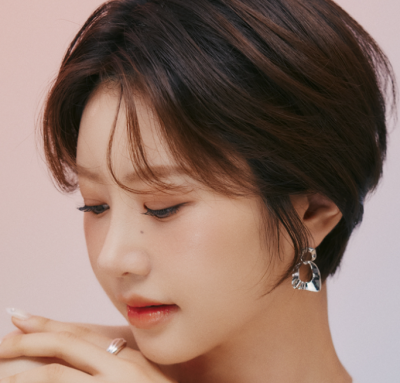
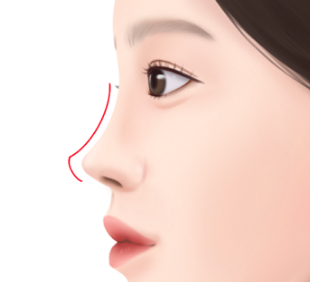
A straight-line nose refers to a line where the bridge of the nose rises in a straight form and then gently drops like a slightly upturned Korean traditional sock (beoseon) at the tip.
It's one of the most frequently mentioned designs in recent rhinoplasty because it can create a sophisticated yet not overly exaggerated impression.
The characteristics of a straight-line nose are as follows:
A naturally straight-rising bridge
A slightly upturned ‘beoseon’ line at the nose tip
A natural impression, not excessively high
A design that harmonizes well with the entire face
The straight-line nose is particularly popular among those who desire natural rhinoplasty results.
It's a frequently chosen design in recent rhinoplasty consultations because it can create a balanced line from both frontal and side views.
Furthermore, the straight-line nose has the advantage of simultaneously expressing a soft and sophisticated image.
What is a natural-line nose?

A natural-line nose (jaryeohan ko) refers to a smoothly continuous, natural nose line.
Rather than a linear feel, the entire line flows naturally, giving the face a soft impression.
The characteristics of a natural-line nose are as follows:
A line that flows naturally from the bridge to the tip
A natural nose bridge that isn't excessively high
A soft and natural image
A harmonious impression with the entire face
A natural-line nose is often considered by those who prefer a natural and balanced image.
By designing the line to match the face shape and facial feature proportions, it's possible to create a sophisticated nose line that isn't overdone.
In recent rhinoplasty, the difference between straight-line and natural-line noses is often not sharply distinguished, with both characteristics appearing together within a natural range.
Straight-Line Nose vs. Natural-Line Nose: Differences
The most common question regarding rhinoplasty design is the difference between these two nose lines.


Category | Straight-Line Nose | Natural-Line Nose |
Image | Sophisticated and clean feel | Natural and soft feel |
Nose Bridge | A line mixing straight and ‘beoseon’ shapes | A naturally continuous line |
Nose Tip | Slightly upturned ‘beoseon’ shape | A smoothly continuous nose tip |
Looking at recent rhinoplasty trends, there's a growing preference for natural straight-line nose designs.
However, the most suitable nose line can vary depending on face shape and facial feature proportions,
so it's not recommended to make a decision based solely on trends.
What is the current trend in rhinoplasty?
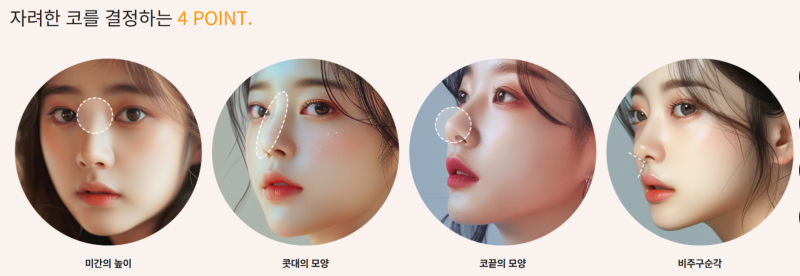
The recent trend in rhinoplasty is shifting away from unconditionally high and flashy noses of the past,
towards creating a sophisticated image while maintaining natural lines.
The following characteristics are particularly often mentioned:
A natural nose bridge that isn't excessively high
A nose line that harmonizes with facial proportions
A natural nose tip from the front view
A design that considers overall facial balance
For these reasons, straight-line nose designs are often preferred recently.
However, this is merely a general tendency, and there are certainly cases where a natural-line nose is more suitable depending on an individual's facial structure.
How do I choose the right nose line for me?
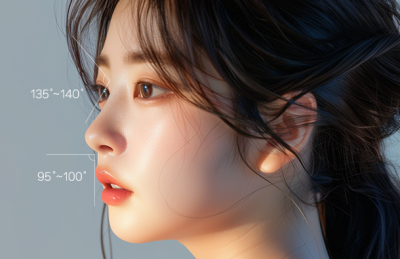
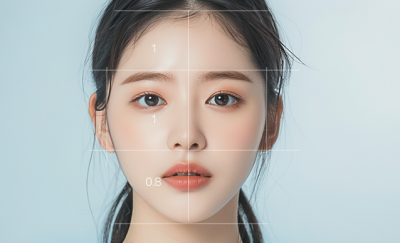
When deciding on a rhinoplasty design, the most important factors are facial proportions and harmony, rather than trends.
The following elements are particularly considered together:
Face shape (long face, round face, etc.)
Distance between eyes and nose
Nose tip skin thickness
Nose bridge height and existing nose shape
Overall facial feature balance
Even with the same straight-line nose, results can vary depending on an individual's facial structure, so personalized design consultation is crucial.
Furthermore, rhinoplasty is not just about raising the nose bridge, but an overall design process that considers the nose tip, bridge, and proportions together,
so it's best to decide on the direction through thorough consultation.
Conclusion
Straight-line noses and natural-line noses are rhinoplasty designs with distinct appeals.
While the straight-line nose, emphasizing naturalness, is frequently mentioned in recent rhinoplasty trends, the most important factor is harmony with the face.
If you're considering rhinoplasty, rather than simply choosing a trendy nose line,
it's best to decide on a nose line that suits your face shape and desired image through sufficient consultation.
Since the nose is a crucial element that determines the impression at the center of the face, creating natural results through personalized design is paramount.