2026-09-14
Smart Nova LASIK vs. SMILE LASIK: What's the Difference? From Astigmatism Correction to Cornea Preservation
Explore how Smart Nova LASIK differs from conventional SMILE through cyclotorsion tracking, fine 0.05D power design, and corneal preservation for sharper vision.


Hello, this is Gangnam Smile Eye Clinic! 😊💙
When researching SMILE LASIK, you will come across many different surgical names.
From standard SMILE LASIK to SMILE Pro,
and recently, even Smart Nova LASIK.
However, when comparing them, you might naturally wonder:
"They are all based on the SMILE method, so what is the actual difference?"
If you have astigmatism or if nighttime glare and visual crispness are top priorities for you,
it is important not just to ask "Is this SMILE LASIK or not?"
but to look closely at how your cornea is being sculpted.
Today, we will break down how Smart Nova LASIK differs from conventional SMILE surgeries
and what factors individuals with astigmatism should consider when choosing the right procedure.
What Is Smart Nova LASIK?
Rather than cutting a corneal flap, Smart Nova LASIK corrects vision by creating and extracting a tiny lenticule from within the cornea.
This foundational principle is identical to standard SMILE surgery.
However, the key is not merely the surgical action of "removing a lenticule."
In real-world surgery,
determining the precise optical center for correction,
compensating for eye rotation when a patient lies down,
and accurately targeting the astigmatism axis
are critical fine details that determine the quality of your visual outcome.
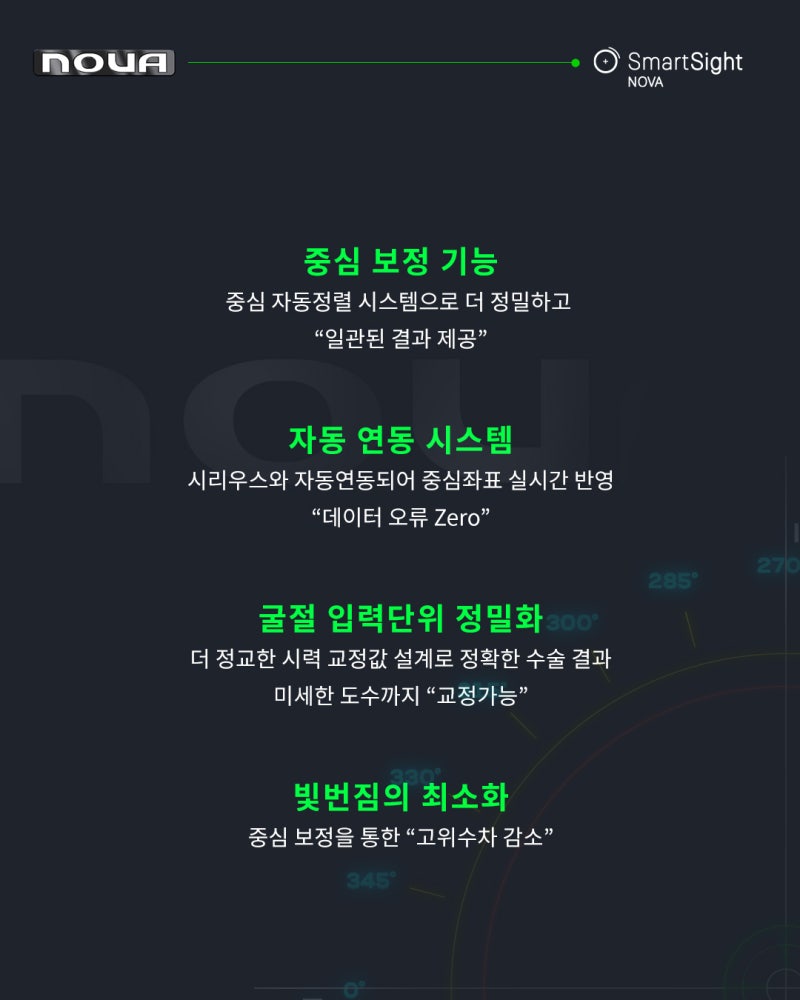
Smart Nova LASIK features an advanced system designed to target higher precision in these very areas.
So, compared to conventional SMILE LASIK, what are the most important distinctions to note?
First, If You Have Astigmatism, You Must Look at the 'Axis'
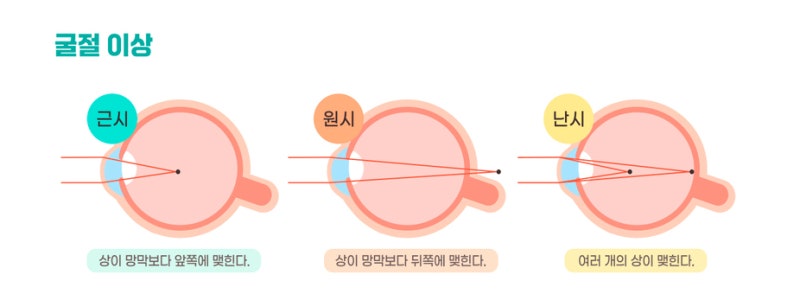
Astigmatism cannot be adequately evaluated just by how blurry your vision is.
It is a refractive error where light does not focus into a single focal point because the refractive power of the cornea or crystalline lens differs along different meridians.
Therefore, when correcting astigmatism, we must evaluate not only
"How many diopters of astigmatism do you have?"
but also
"Along which axis/direction does the astigmatism lie?"
This is where the concept of the astigmatic axis comes into play.
For example, in an eyeglass prescription, the cylinder (CYL) power and the axis (AXIS) are specified separately from your nearsightedness or farsightedness (SPH).
This underscores how vital it is to precisely mirror that directional axis during surgery.
However, the Eye Does Not Stay Perfectly Still During Surgery
Here is an interesting phenomenon.
Preoperative examinations are measured while you are seated upright and looking straight ahead.
However, the actual laser procedure is performed while you are lying down flat on your back (cyclotorsion).
During this transition, the eye position shifts subtly, and the eyeball naturally rotates.
Because astigmatism is directional, this slight rotation directly affects the alignment of the correction axis.
Think of it this way:
If measurements were taken aligned with the 12 o'clock position while sitting upright,
what happens if the eye rotates slightly when lying down?
The orientation of the laser ablation must adapt to that rotational shift.
Consequently, achieving optimal astigmatism correction requires not just laser accuracy,
but an intelligent system that accurately compensates for how the patient's eye is actually positioned during live surgery.
The Core of Smart Nova LASIK: Torsional Eye-Tracking Compensation
One of the most notable features of Smart Nova LASIK is its advanced tracking system,
which accounts for microscopic eye movements and rotational cyclotorsion during surgery.
Surgical planning begins with comprehensive diagnostic data gathered beforehand,
and the laser system tracks and compensates for positional shifts and eye rotation in real time.
For patients with astigmatism, this rotational axis compensation is especially crucial.
While conventional procedures often rely on manual marking and alignment by the surgeon,
Smart Nova LASIK incorporates automated, highly sophisticated eye-tracking and cyclotorsion correction
aimed at delivering personalized accuracy adjusted for your eye's actual orientation on the operating bed.
Therefore, if you have astigmatism, rather than simply asking
"Can I get SMILE LASIK?"
you should also ask
"How will my astigmatic axis and cyclotorsion be compensated during the procedure?"
Second, Ultra-Fine Diopter Customization in 0.05D Increments
Another distinguishing feature of Smart Nova LASIK is its granular diopter planning.
Standard refractive surgical lasers typically calculate treatment profiles in broader step increments,
whereas Smart Nova LASIK can plan corrections in refined steps of 0.05 diopters (D).
At first glance, 0.05D may seem like an insignificant increment.
However, premium vision correction is not just about carving away broad diopters;
it depends on how precisely the surgical plan mirrors your unique refractive profile.
This fine-tuned design is particularly advantageous if:
You have an anisometropic prescription difference between both eyes
You have complex astigmatism
You are sensitive to micro-refractive variations
You demand premium clarity and high-contrast vision
Such precise adjustments can be a deciding factor in elevating overall visual quality.
Yet, there is still more to consider.
When comparing SMILE surgeries, many patients solely ask,
"How well does it correct my astigmatism?"
In reality, there is an equally critical issue:
How effectively does the procedure minimize unnecessary corneal tissue loss?
Third, Why You Must Check the 'Side Cut' in SMILE Surgery
In SMILE surgery, the side cut is the micro-incision through which the separated lenticule is extracted.
Think of it as creating an access handle or portal to remove the lenticule smoothly.
However, when designing a procedure, surgical convenience alone is not the goal.
From the patient's point of view,
"How much healthy corneal tissue can be preserved during this process?"
is a paramount question.
Because the cornea is the structural tissue directly being reshaped,
preoperative corneal thickness and the remaining residual stromal bed (RSB) must be meticulously calculated.
Even within the lenticule-extraction family, tissue ablation requirements can vary based on lenticule shape, thickness, incision design, and intended correction profile.
Why Is Preserving Residual Corneal Tissue So Vital?
Refractive surgery is not just about achieving crisp 20/20 vision on day one.
It is about ensuring the structural integrity and biomechanical stability of the cornea for decades to come.
This is why comprehensive diagnostic workups assess:
Total corneal thickness
Corneal topography and posterior elevation
Myopia and astigmatism diopters
Estimated ablation depth
Postoperative residual corneal bed
Especially with higher degrees of myopia or astigmatism, a larger volume of tissue must be sculpted,
making tissue-saving efficiency an essential evaluation metric.
In other words,
It is not about how aggressively tissue is removed, but rather "how to achieve accurate targeted correction while preserving as much healthy corneal structure as possible."
Fourth, Night Vision and Glare Management
Occasionally, some individuals share feedback like:
"I can read the bottom line of the eye chart, but driving at night feels uncomfortable."
In dim conditions, the pupil naturally dilates. The interaction between the optical zone diameter, pupil size, individualized corneal curvature, and residual aberration directly impacts night vision quality.
Therefore, when selecting a procedure, do not stop at asking
"Will I test at 20/20?"
Consider:
"How comfortable, clear, and glare-free will my daily vision be in real life?"
Smart Nova LASIK offers an advanced surgical choice focused on higher-order optical precision and visual quality.
However, nighttime halos and light sensitivity are not dictated by surgical hardware alone;
they depend heavily on your baseline pupil diameter, dry eye status, and ocular optics.
Thus, thorough preoperative diagnostics are essential to determine your personal candidacy.
Smart Nova LASIK vs. Conventional SMILE: Key Points of Comparison
Evaluation Point | Smart Nova LASIK Focus |
Surgical Concept | Intrastromal lenticule extraction |
Astigmatism Correction | High-precision correction accounting for astigmatic axis and eye cyclotorsion |
Eye Movement Tracking | Real-time tracking and compensation for intraoperative shifts |
Power Increments | Customized treatment planning down to 0.05D increments |
Corneal Preservation | Holistic optimization balancing required correction with safe residual bed |
Quality of Vision | Focuses on high-contrast clarity and night vision performance beyond simple chart numbers |
Please remember one crucial truth:
Smart Nova LASIK is not automatically the universal best choice for every single eye.
Ultimately, the Question Is: Is Smart Nova LASIK Suitable for Your Eyes?
No matter how cutting-edge a surgical platform may be,
it cannot be chosen if it does not fit your unique ocular anatomy.
Before undergoing any procedure, comprehensive evaluations must verify:
Corneal thickness and biomechanical profile,
Magnitude of myopia and astigmatism,
Corneal topography and symmetry,
Tear film stability and dry eye status,
Mesopic pupil diameter,
and overall ocular health.
Having astigmatism does not mean you unconditionally must choose Smart Nova LASIK.
Conversely, even if your astigmatism is mild, depending on your lifestyle, profession, and corneal morphology, an alternative procedure may offer superior safety and satisfaction.
You should never pick a surgical brand name first and try to fit your eyes into it;
you must examine your eyes first, then select the method that matches your biology.
Smart Nova LASIK May Be an Ideal Option If:
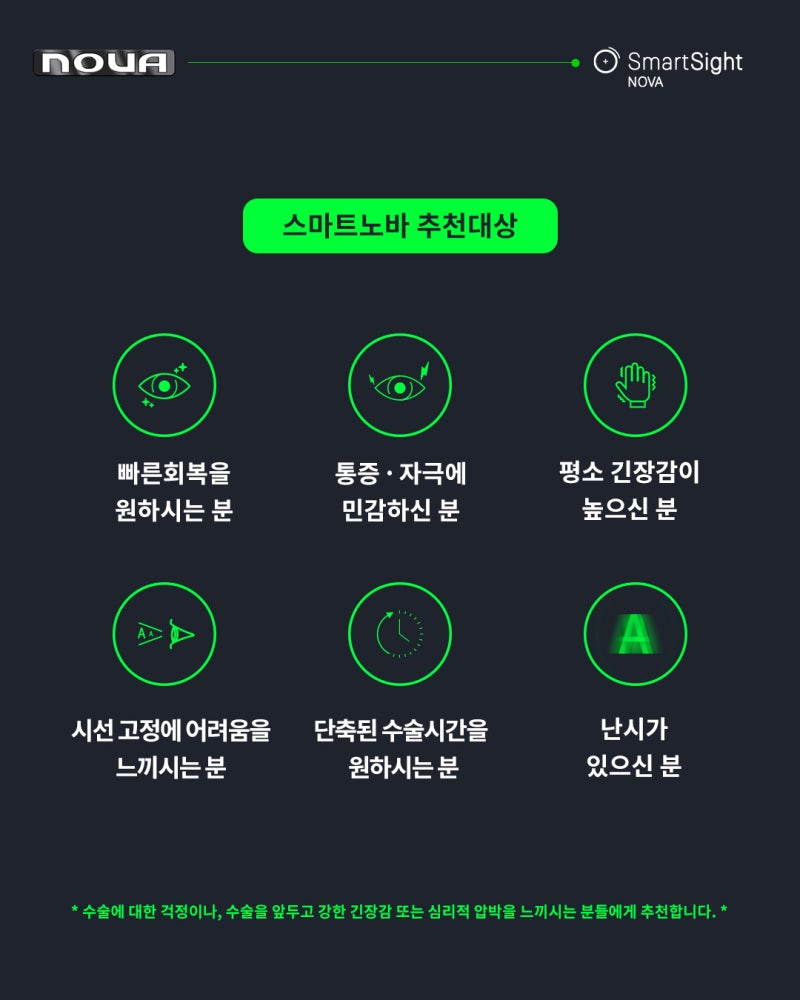
Who should explore Smart Nova LASIK during their consultation?
✔ Those with astigmatism seeking high-precision axis correction
If you want a treatment that factors in not just astigmatism power, but also precise axis alignment and cyclotorsion compensation, this procedure is worth strong consideration.
✔ Those who prioritize visual clarity over mere vision chart numbers
If your goal is crisp, high-definition contrast throughout daily life rather than simply hitting 20/20 on a wall chart, reviewing subtle technological differences is worthwhile.
✔ Those seeking efficient, tissue-conservative corneal surgery
If you want to verify your corneal thickness, planned tissue ablation, and residual stromal bed with maximum safety margins, explore these structural benefits in depth.
✔ Those curious about the practical differences between conventional SMILE and Smart Nova LASIK
Instead of relying on marketing labels, look at how the eye-tracking hardware works and how cyclotorsion is compensated in real time.
Is Smart Nova LASIK Always Superior to SMILE Pro?
We receive this question frequently.
The answer is that there is no absolute "always."
Selecting a vision correction procedure is not like buying a gadget based solely on spec sheets.
For one patient, torsional axis compensation might be the deciding clinical factor.
For another, baseline corneal thickness, surface dryness, or scotopic pupil size might serve as the primary clinical indicator.
Therefore, instead of asking,
"Is Smart Nova LASIK universally better?"
it is far more productive to ask,
"Which surgical advantages provide the greatest clinical benefit for my specific eyes?"
Gangnam SMILE LASIK: What to Prioritize Before Brand Names
When searching for SMILE LASIK in Gangnam, encountering terms like SMILE Pro, Smart Nova LASIK, and New SMILE Pro can easily lead to information overload.
Remember: the primary starting point in vision correction must always be your individual eyes.
Even with identical myopia, corneal topographies differ;
even with identical astigmatism, axis orientations differ;
and even with identical diopters, lifestyle habits and visual expectations vary.
True clinical excellence does not end with deploying the newest laser platform.
It must encompass a seamless continuum: Precision Diagnostics → In-Depth Eye Analysis → Procedure Selection → Custom Treatment Design → Surgery → Dedicated Recovery & Post-Op Care.
Interested in Smart Nova LASIK? Verify Your Candidacy First
Smart Nova LASIK builds upon the proven principles of intrastromal lenticule extraction while introducing advanced customization for astigmatic axes, cyclotorsional eye movement, and 0.05D planning.
However, one single procedure cannot be the best fit for everyone.
Before being swayed by brand names, undergo an exhaustive diagnostic evaluation to assess your corneal profile, degree of refractive error, and ocular health alongside an experienced ophthalmologist.
At Gangnam Smile Eye Clinic, we analyze your diagnostic data alongside your lifestyle and visual needs to help guide you toward the safest, most effective surgical choice.
If you are interested in Smart Nova LASIK, look beyond "Is it the latest?"
Ask instead: "Why is this procedure optimal for my eyes?"
That distinction is where your journey toward clear, comfortable vision truly begins.
💙 For SMILE surgery, trust Gangnam Smile Eye Clinic 💙
💙🤍 𝖦𝖠𝖭𝖦𝖭𝖠𝖬 𝖲𝖬𝖨𝖫𝖤 𝖤𝖸𝖤 𝖢𝖫𝖨𝖭𝖨𝖢💙🤍
𝗧𝗛𝗘 𝗟𝗜𝗚𝗛𝗧 𝗔𝗡𝗗 𝗧𝗛𝗘 𝗢𝗖𝗘𝗔𝗡 𝗜𝗡 𝗬𝗢𝗨𝗥 𝗦𝗠𝗜𝗟𝗘
Smart Nova Smart Nova LASIK













Frequently Asked Questions
How does Smart Nova LASIK differ from conventional SMILE LASIK?
While both rely on the fundamental principle of lenticule extraction without a flap, Smart Nova LASIK differentiates itself through advanced cyclotorsion compensation and ultra-fine 0.05D power adjustments. It automatically accounts for rotational eye shifts when lying down, optimizing both astigmatism axis alignment and corneal preservation.
Can Smart Nova LASIK correct moderate to high astigmatism?
Yes, it features an optimized platform for astigmatic correction. Because astigmatism is highly directional, Smart Nova LASIK tracks and compensates for cyclotorsional rotation in real time, enabling the laser to ablate along the precise physiological axis.
Why is 0.05D increment power design significant?
It elevates optical precision by reflecting subtle refractive variations. Tailoring a treatment plan in granular 0.05D units rather than standard broader steps allows for a highly customized correction, particularly beneficial for anisometropia or patients seeking premium contrast sensitivity.
Is Smart Nova LASIK unconditionally better than SMILE Pro?
Not necessarily. No single procedure is universally superior for every patient. Factors such as corneal thickness, pupil diameter, astigmatism severity, and dry eye syndrome vary widely, making in-depth diagnostics essential to determine which procedure fits your eyes best.
Why is minimizing corneal ablation important in refractive surgery?
Preserving corneal tissue maintains long-term structural and biomechanical stability. Ensuring adequate residual stromal bed thickness while precisely correcting refractive error helps prevent complications and promotes durable, healthy postoperative vision.