2026-07-28
Sinsa-dong Thread Lift: How Does It Differ from Laser Lifting?
Learn the differences between Sinsa-dong thread lifts and laser lifts, and why considering mid-face sagging and personalized design is crucial for natural, balanced results.



While decreased skin elasticity is a natural change that comes with aging,
more and more people are seeking improvement methods as it becomes a concern every time they take photos or meet others.
At this point, many people are interested in Sinsa-dong thread lifts.
However, when they start looking into it, various questions naturally arise, such as ‘How is it different from laser lifting?’,
‘How long do the effects last?’, or ‘Is it suitable for me?’
It’s easy to think of a thread lift as simply a procedure that pulls the skin,
but in reality, satisfactory results can only be expected by considering both the cause of sagging and the facial structure.
Today, we will explain, one by one, the most frequently asked questions during consultations by those considering a Sinsa-dong thread lift.
Why Mid-Face Sagging Must Also Be Considered in Sinsa-dong Thread Lifts
Many people think of thread lifting as a procedure that only pulls the jawline,
but in reality, it is closely related to sagging in the mid-face (front cheeks).
The mid-face refers to the area from below the eyes to the center of the cheeks. Over time,
if the fat and retaining ligaments in this area shift downwards, the three-dimensional volume of the front cheeks may decrease, and nasolabial folds may deepen.
At this point, by not only pulling the jawline but also analyzing the direction of mid-face sagging
and designing the threads accordingly, both the three-dimensional volume of the central face and the balance of the contours can be considered.
Conversely, if the threads are simply pulled strongly without sufficiently understanding the cause of sagging,
the improvement in nasolabial folds may not be as expected, or the face might appear wider.
Therefore, for Sinsa-dong thread lifts, rather than just the number of threads, analyzing the degree of sagging across the entire face, including the mid-face,
and the direction of tissue movement together to create a plan can be an important factor in achieving natural results.
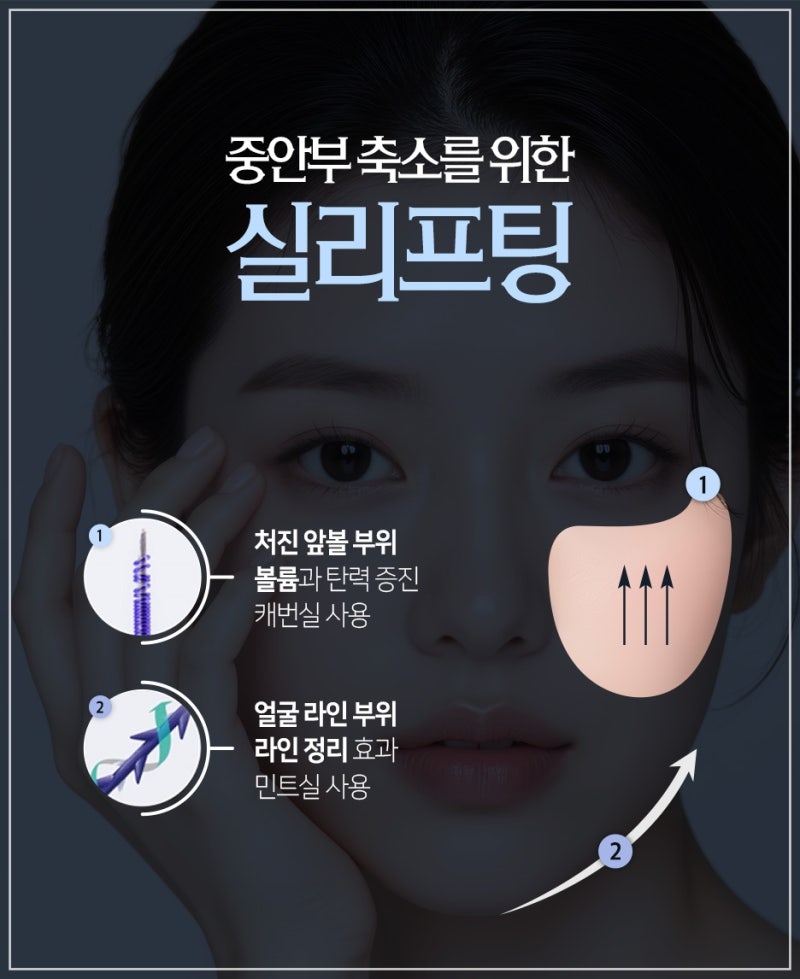
When researching thread lifts, you will encounter various types of threads.
Since each has differences in retention characteristics, elasticity, and application areas, it’s difficult to say that one is best for everyone.
It is important to choose the type of thread by considering the degree of facial sagging, skin thickness, and desired direction of change.
Furthermore, even with the same thread, the results can vary depending on which layer it is inserted into and in what direction it is designed.
Therefore, rather than just comparing the types of threads used, it is more important to ensure that a plan tailored to the individual's facial structure is also in place.
The Relationship Between Ideal Facial Proportions and the Mid-Face
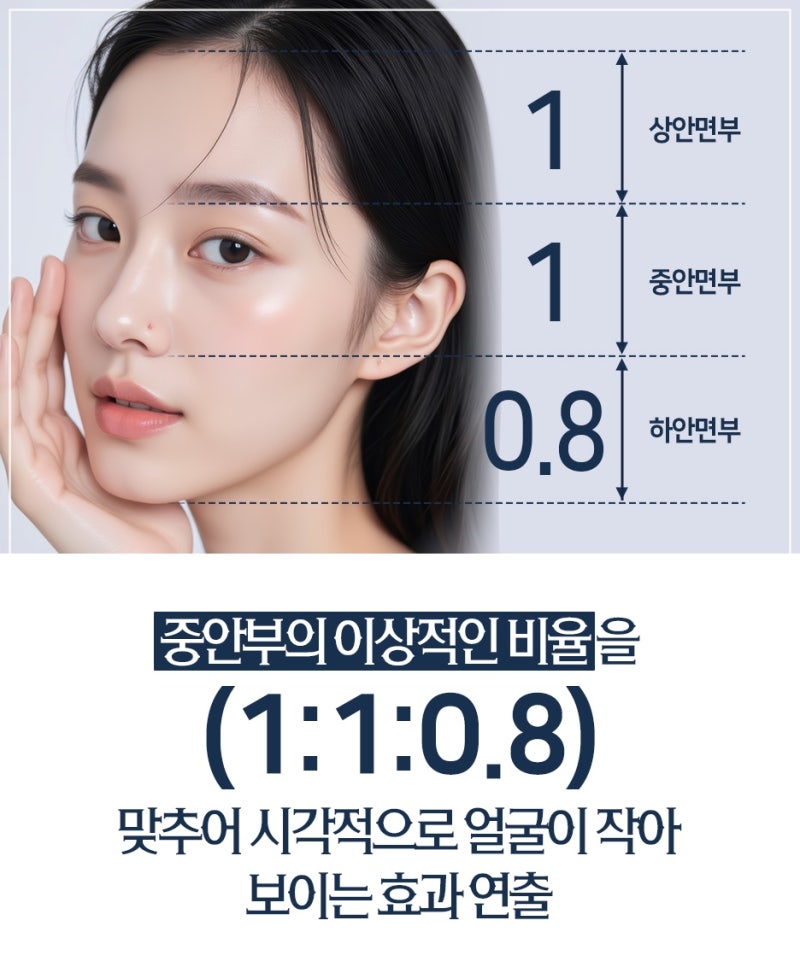
When discussing facial balance, it is often said that an ideal ratio is approximately 1:1:0.8 for the upper face, mid-face, and lower face, respectively.
However, as we age, if the fat and skin tissues in the mid-face sag downwards, the three-dimensional volume of the front cheeks decreases,
and nasolabial folds deepen, which can make the mid-face appear longer than it actually is.
This can lead to an imbalance in facial proportions, often giving the impression of looking tired or older.
In such cases, a thread lift that considers mid-face sagging, rather than just pulling the jawline, can be beneficial.
This is because it repositions the sagging tissues closer to their original location, considering both the three-dimensional volume of the central face and the balance of the contours.
Ultimately, a thread lift is not about aggressively pulling the face, but rather about examining the balance between the mid-face and lower face,
and designing the procedure to naturally harmonize the overall facial proportions.

Thread Lift Design Can Also Vary by Age Group.
20s | Period of collagen reduction, which affects skin elasticity | |
30s | Period of collagen and elastin reduction, and muscle sagging | |
40s | Period of accelerated aging due to decreased estrogen | |
50s | Period of reduced skin regeneration and elasticity | |
It is important to plan a thread lift not by applying the same method to all age groups, but by considering the different patterns of aging that occur with age.
For those in their 30s and 40s, skin elasticity begins to decrease, and changes in mid-face sagging or jawline are often relatively minor,
so the design may focus on maintaining facial balance.
On the other hand, for those in their 50s and 60s and beyond, skin sagging, along with relaxation of retaining ligaments and fat migration, can become more pronounced,
sometimes requiring a lifting plan that considers both the mid-face and lower face.
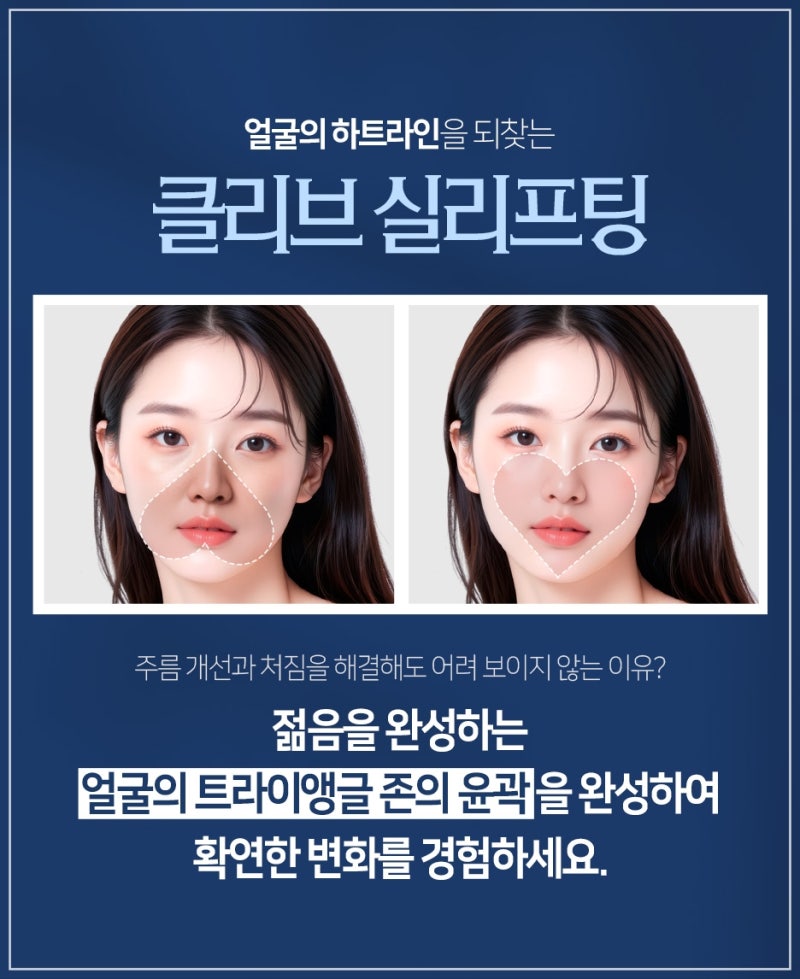
What is the Difference Between Laser Lifting and Thread Lifting? Sinsa-dong Thread Lift
When searching for lifting procedures, you'll first encounter laser lifting and thread lifting.
Both methods aim to improve elasticity, but their approaches differ.
Laser lifting delivers ultrasound or radiofrequency energy to a certain depth within the skin,
stimulating collagen production and gradually improving skin elasticity.
In contrast, Sinsa-dong thread lifting involves inserting special medical threads into the deeper layers of the skin to support and reposition sagging tissues in the desired direction.
In other words, if laser lifting helps the skin to generate its own elasticity,
thread lifting focuses on improving the position of sagging tissues.
Therefore, the appropriate method may vary depending on whether your primary concern is reduced skin elasticity, or if it's a breakdown of facial contours, such as sagging cheeks or jawline.

Criteria to Check When Undergoing a Thread Lift Procedure
A thread lift is not a procedure where the results are determined solely by the process of inserting threads.
Since everyone has different facial shapes, skin thickness, amount of fat, and direction of sagging, a planning process based on thorough diagnosis is necessary.
If you are considering a Sinsa-dong thread lift, it may be helpful to consider the following aspects:
First, it is advisable to check if customized design considering the individual's facial shape is possible. Second, it is also important to see if the environment allows for the use of various types of genuine threads suitable for the skin condition and area. Third, it is good to also check if there is a post-procedure care system in place for swelling or bruising that may occur after the procedure. |
Only when these factors are considered together can more natural changes be expected.






Frequently Asked Questions
What is the difference between thread lifting and laser lifting?
Laser lifting delivers ultrasound or radiofrequency energy to a certain depth within the skin to stimulate collagen production and gradually improve skin elasticity. In contrast, thread lifting involves inserting special medical threads into the deeper layers of the skin to support and reposition sagging tissues in the desired direction. In essence, if laser lifting helps the skin to generate its own elasticity, thread lifting focuses on improving the position of sagging tissues.
Why should mid-face sagging be considered during a thread lift?
Yes, mid-face sagging should be considered. The mid-face refers to the area from below the eyes to the center of the cheeks, and sagging in this area can reduce the three-dimensional volume of the front cheeks and deepen nasolabial folds. By analyzing the direction of mid-face sagging and designing the threads accordingly, rather than just pulling the jawline, natural results that consider both the three-dimensional volume of the central face and the balance of the contours can be achieved.
How are the types of threads chosen for a thread lift?
It is important to choose the type of thread by comprehensively considering the individual's degree of facial sagging, skin thickness, and desired direction of change. Each thread has differences in retention characteristics, elasticity, and application areas, so it’s difficult to say that one type is best for everyone. Even with the same thread, the results can vary depending on the insertion layer and design direction.
Is thread lifting applied uniformly to all age groups?
No, thread lifting is not applied uniformly to all age groups. It is important to plan the procedure by considering the different patterns of aging that occur with age. For example, for those in their 30s and 40s, the focus may be on maintaining facial balance, while for those in their 50s and 60s and beyond, skin sagging and relaxation of retaining ligaments may be more pronounced, requiring a lifting plan that considers both the mid-face and lower face.
What should be checked during a thread lift procedure?
When undergoing a thread lift procedure, it is advisable to check if customized design considering the individual's facial shape is possible, if the environment allows for the use of various types of genuine threads suitable for the skin condition and area, and if there is a post-procedure care system in place for swelling or bruising that may occur after the procedure. These factors are important for expecting natural changes.