2026-07-09
Sausage Eye Revision Surgery: Why Lowering the Line is Harder Than Raising It
Sausage eye revision surgery is complex. Lowering a high line and correcting tissue adhesion is more challenging than creating a new line. Understanding the structural causes and surgical difficulties is key to choosing the right clinic.


Sausage Eye Revision Surgery: Why Lowering the Line is Harder Than Raising It
Sausage eye revision surgery: Lowering the line is much harder than raising it.
It's easy to think that double eyelid surgery is all about creating a line.
However, the first thing to understand before undergoing sausage eye revision surgery is the opposite: lowering an already high line and dissecting adhered tissue to fix it in a new position is a much more complex process than creating a line for the first time. If you've decided on sausage eye revision surgery, knowing why this procedure is challenging will help you set criteria for choosing a clinic.
1. Structural Causes of Sausage Eyes
Sausage eye refers to a condition where the eyelid tissue appears bunched up.
The higher the line is set, the more eyelid tissue remains below the line. If this tissue is not properly managed, it cannot fold inward and instead pushes forward, appearing prominent. This problem is often more pronounced in East Asians, whose eyelids tend to have thicker fat layers than Westerners.
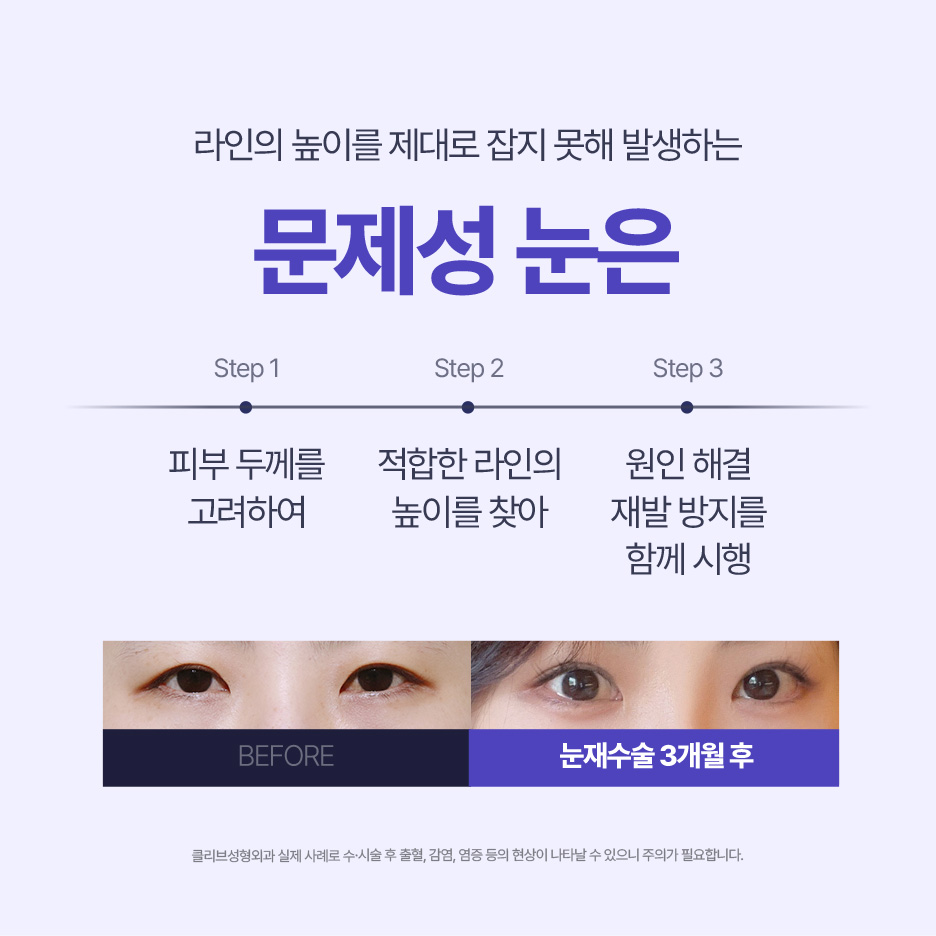
Sausage eyes occur when the line is set too high, in addition to insufficient removal of eyelid fat and tissue. In other words, it's a combination of two problems. This is why simply lowering the line in revision surgery doesn't solve the issue. Both line position correction and tissue management must be performed together.

2. Why Lowering the Line is Difficult
When creating a line in the initial surgery, it's a process of creating new adhesion in clean tissue.
Revision surgery to lower the line requires dissecting already formed adhesions and re-fixing them in a new position. The difficulty of dissection for once-adhered tissue varies greatly depending on its depth and extent. Excessive dissection can lead to thinning skin or an unstable line, while insufficient dissection means the line won't be lowered enough.

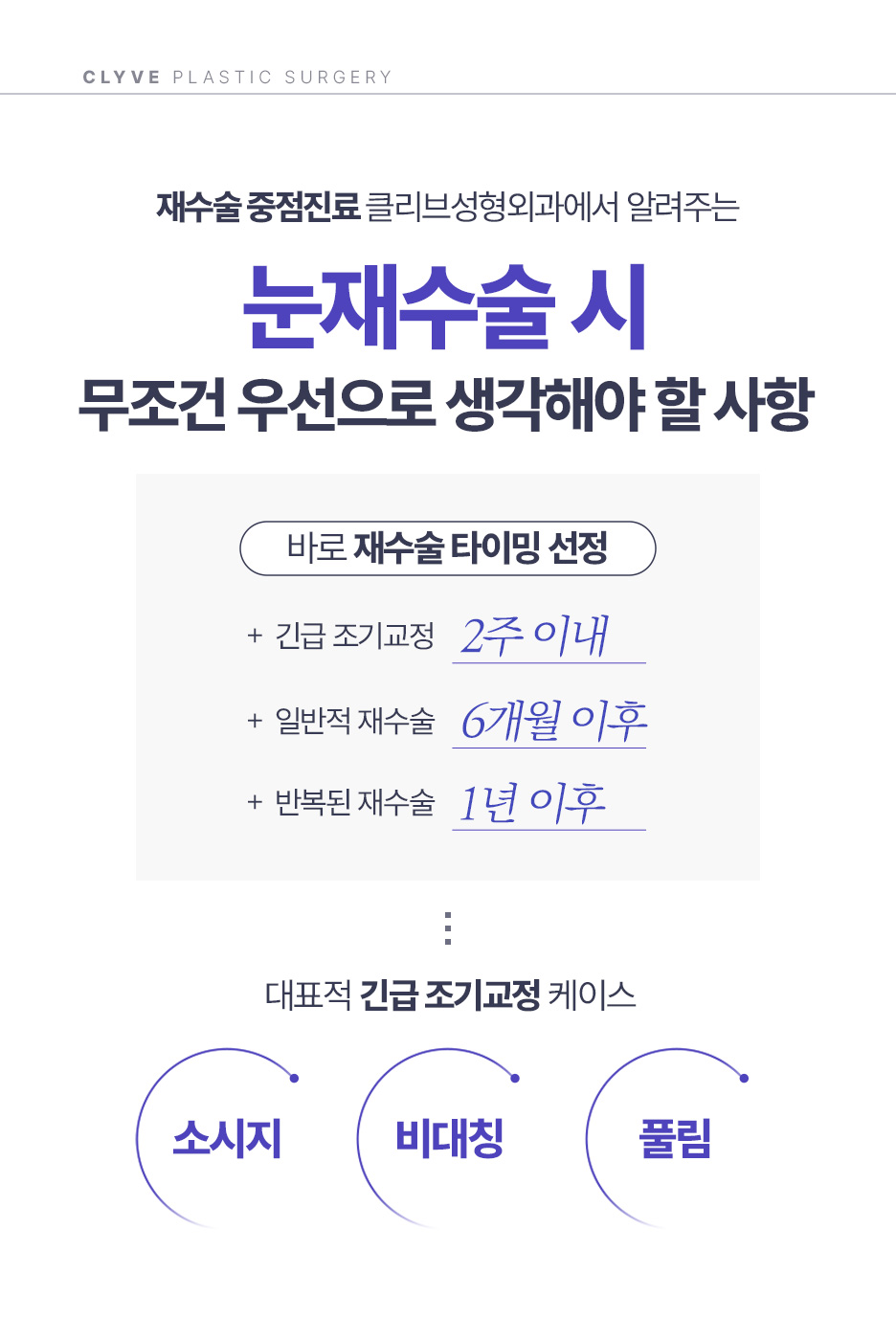
It is advisable to undergo eye revision surgery at least 6 months after the initial surgery. This is because an accurate diagnosis is possible only when swelling has subsided and the eye tissue has stabilized. If revision surgery is performed too early while the sausage eye condition persists, the tissue may not yet be firm, making the dissection process more complicated.

3. What Needs to Be Designed in Revision Surgery
There are three things the surgeon must decide in sausage eye revision surgery:
How much to lower the line, how much eyelid fat and tissue to remove, and whether ptosis is also present. Integrating these three aspects into the surgical plan determines the naturalness of the revision surgery's outcome.
In particular, a difference of millimeters in line height can change the entire impression. The target line must be precisely designed, considering the distance between the eyebrow and the double eyelid line, the desired impression, and the current skin laxity. Confirming whether the consultation includes a detailed explanation of this design process is the first criterion for choosing a clinic for sausage eye revision surgery.

It's natural to be afraid of surgery, especially after a disappointing experience. As you make this choice again despite your fear, it's right to find a doctor who can accurately explain why the previous outcome occurred.