2026-09-03
Middle-Aged Upper Blepharoplasty: Where Did the Change in Eyelid Shape Begin?
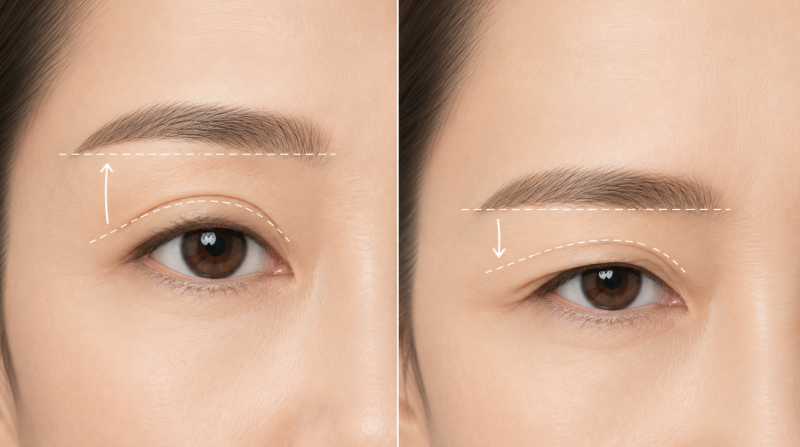
As we age, eyelids can sag, making eyes appear smaller and tired. Middle-aged upper blepharoplasty requires a comprehensive assessment of the entire eye area, not just skin removal, to achieve natural-looking results.
※ This article is for the purpose of providing medical information.
It is not subject to deliberation under Article 56, Paragraph 2 and Article 57 of the Medical Act,
and we inform you that it is not an advertisement unrelated to the content of deliberation.
Hello,
I am Dr. Park Jeong-geun,
Director of Faceplus Plastic Surgery Clinic.
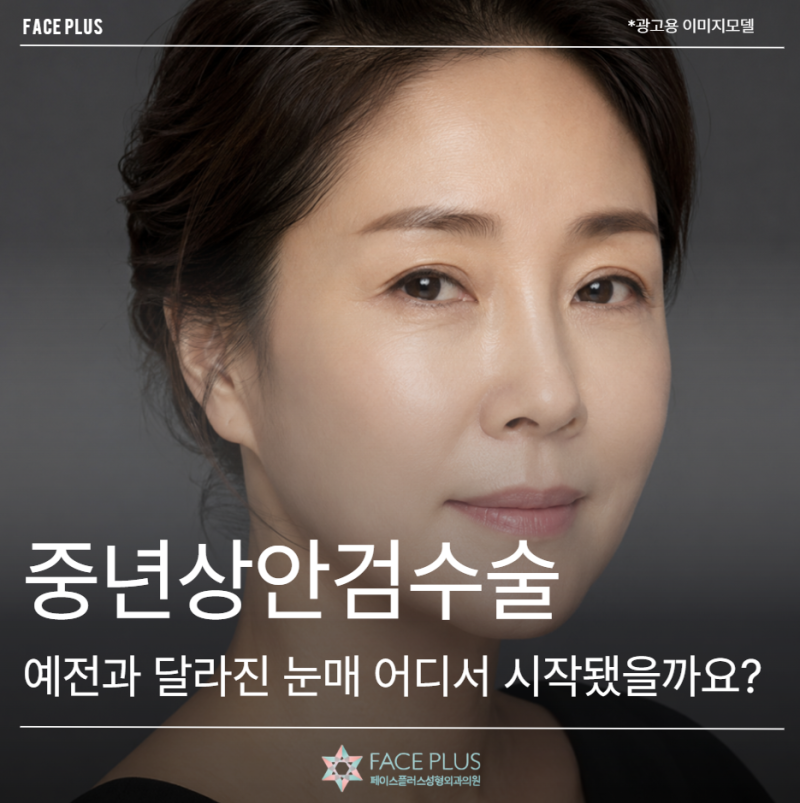
As you age, if your eyelids sag,
your eyes may appear smaller and more tired than before.
At this time, it's easy to think that simply removing the sagging skin
will make things better.
However, for middle-aged eyes, not only the skin but also
the eyebrow position, fat, and muscles change together.
Therefore, for middle-aged upper blepharoplasty,
rather than deciding based solely on the amount of sagging skin,
it is crucial to comprehensively assess how the entire eye area
has changed.
Today, I will summarize what aspects to consider
when looking into middle-aged upper blepharoplasty.
Table of Contents | ||
1. Why do eyelids sag in middle age? 2. Is removing only the sagging skin enough? 3. Why eyebrow position should be considered together 4. What to check for natural upper blepharoplasty |
1. Why do eyelids sag in middle age?
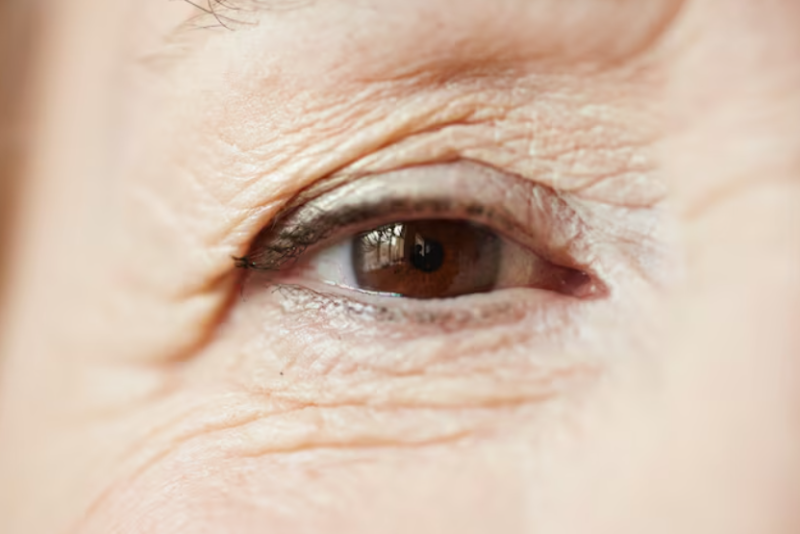
As we age, skin elasticity decreases,
which can cause the upper eyelids to sag downwards.
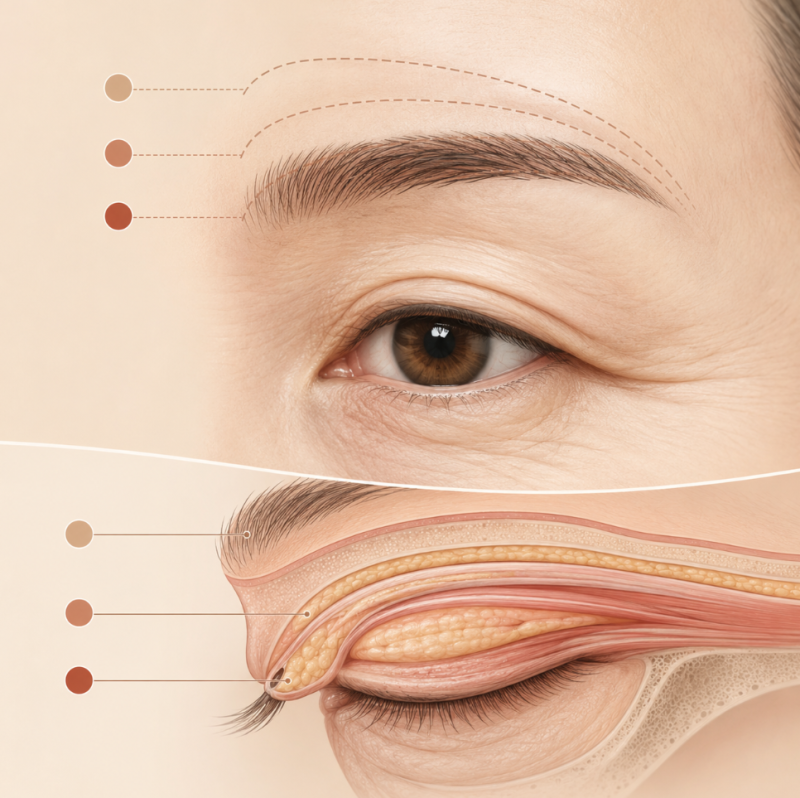
There are also cases where the position or volume of fat above the eyes changes,
or the eyebrows descend more than before.
When these changes occur together,
the eyes can look heavy and tired,
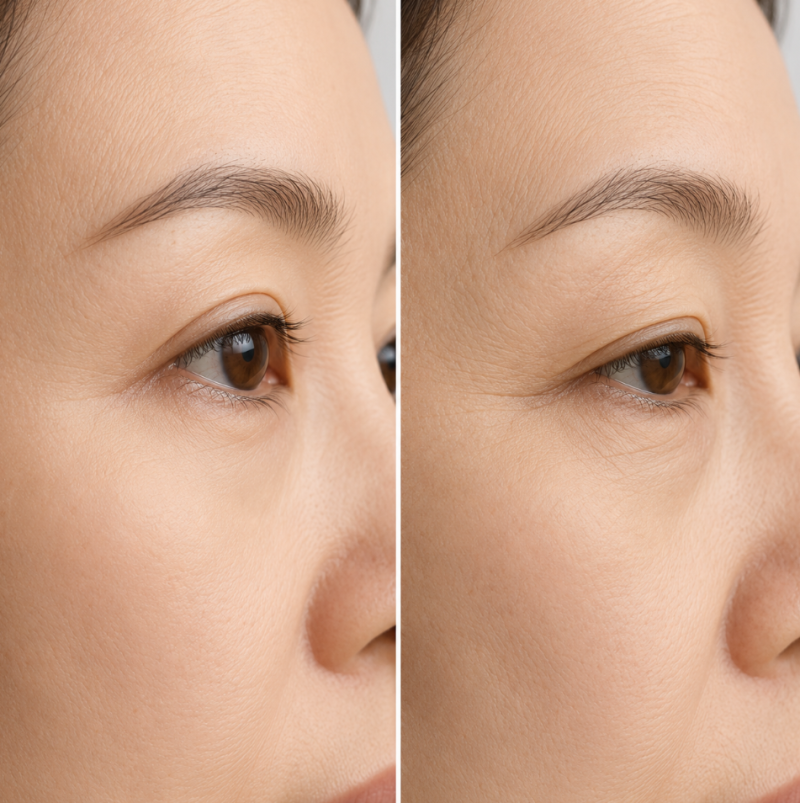
and the eyelids may fold, causing the existing double eyelid line
to become less visible.
Therefore, when considering middle-aged upper blepharoplasty,
we do not simply judge based on age alone.
The degree of eyelid skin sagging, its thickness,
and the condition of fat and muscles must be examined together.
2. Is removing only the sagging skin enough?
Upper blepharoplasty commonly brings to mind
the surgery of cutting away loose skin.
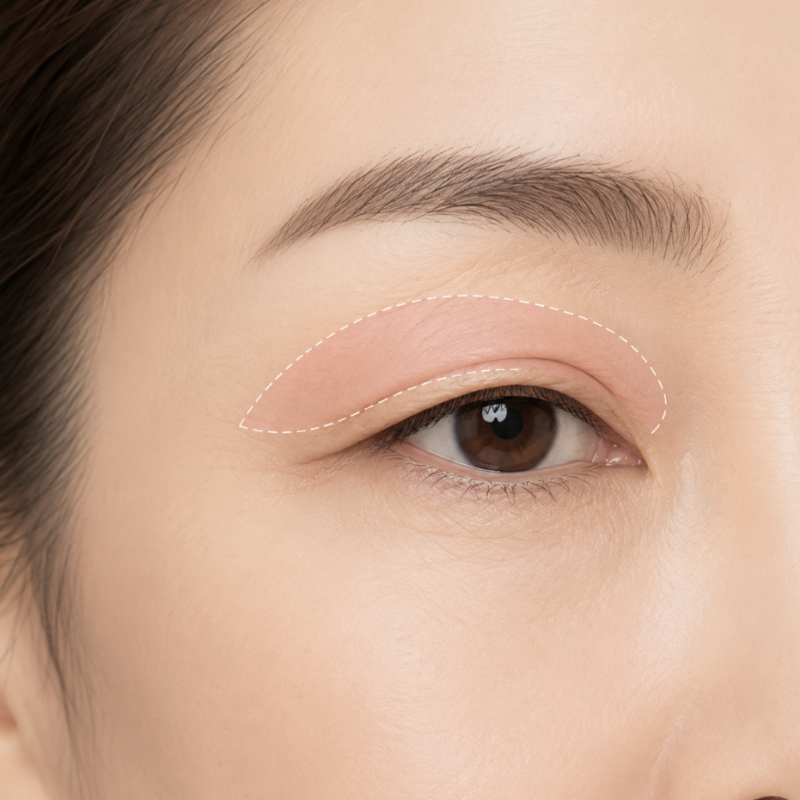
However, removing a lot of skin does not necessarily
make the eyes clearer and more natural.
If more skin than necessary is removed,
discomfort may arise when opening or closing the eyes,
and there is a possibility that the eye shape may appear
stronger than one's original impression.
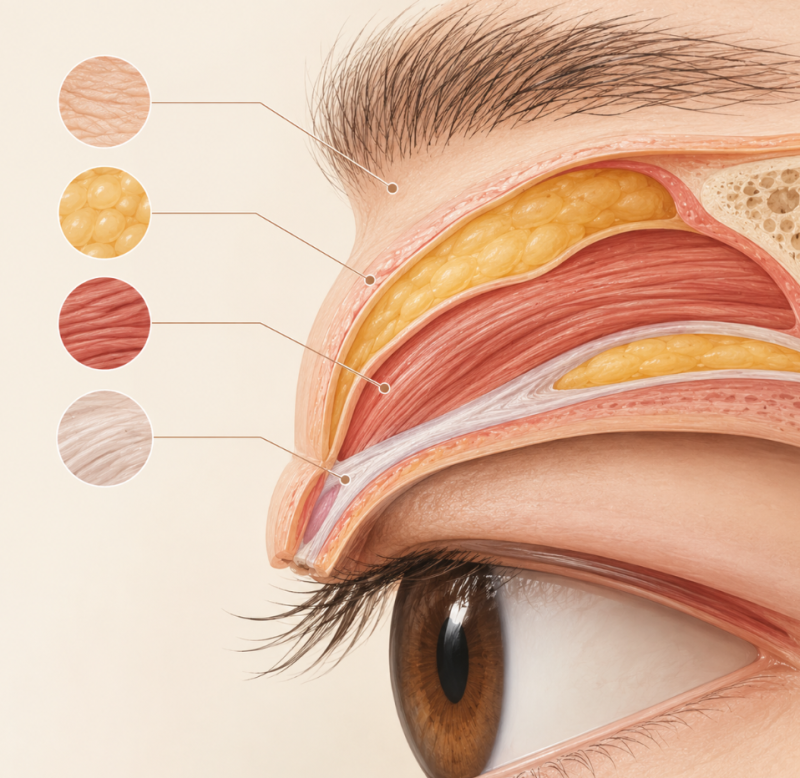
Conversely, if the cause of sagging is not sufficiently identified
and only the skin is restrictively trimmed,
the expected changes may not be significant.
Therefore, in middle-aged upper blepharoplasty,
determining the appropriate range of removal based on the current condition
is important.
3. Why eyebrow position should be considered together
Just because the eyelids appear to be sagging
does not mean the cause is always solely in the eyelids.
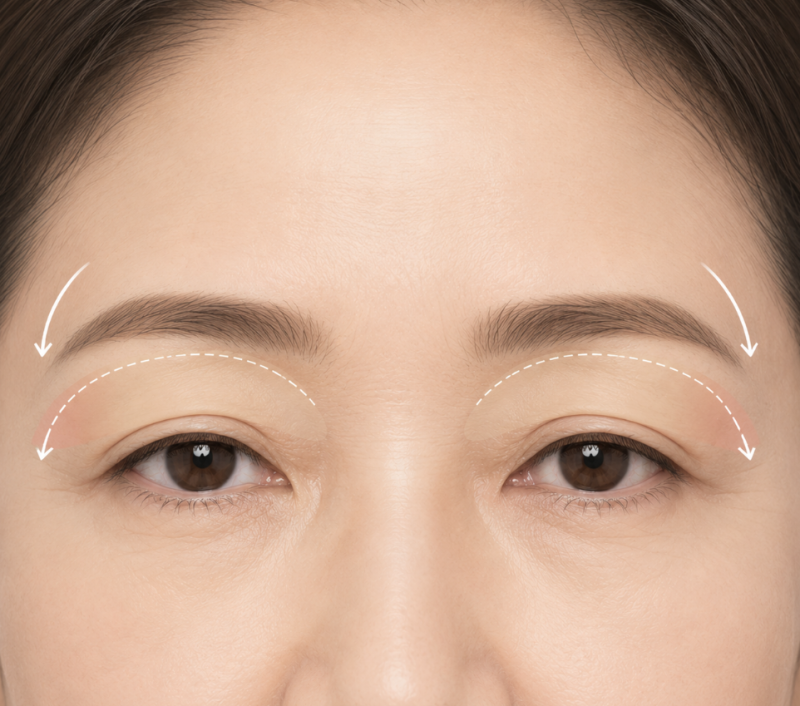
As time passes, if the eyebrows descend,
the skin beneath them also gets pushed down,
making the upper eyelid skin appear thicker and
heavier.
Especially if the outer corner of the eye is significantly covered
or the distance between the eyebrow and eye has shortened,
it is advisable to check the height and position of the eyebrows
along with the eyelids.
Therefore, in a consultation for middle-aged upper blepharoplasty,
it is necessary to examine not just the eyes in isolation,
but the overall structure extending from the forehead and eyebrows
to the upper eyelids.
4. What to check for natural upper blepharoplasty
What is important in middle-aged eye surgery
is not simply creating younger-looking eyes.
It is important to maintain an eye shape that harmonizes with the existing face
while tidying up unnecessarily sagging areas.
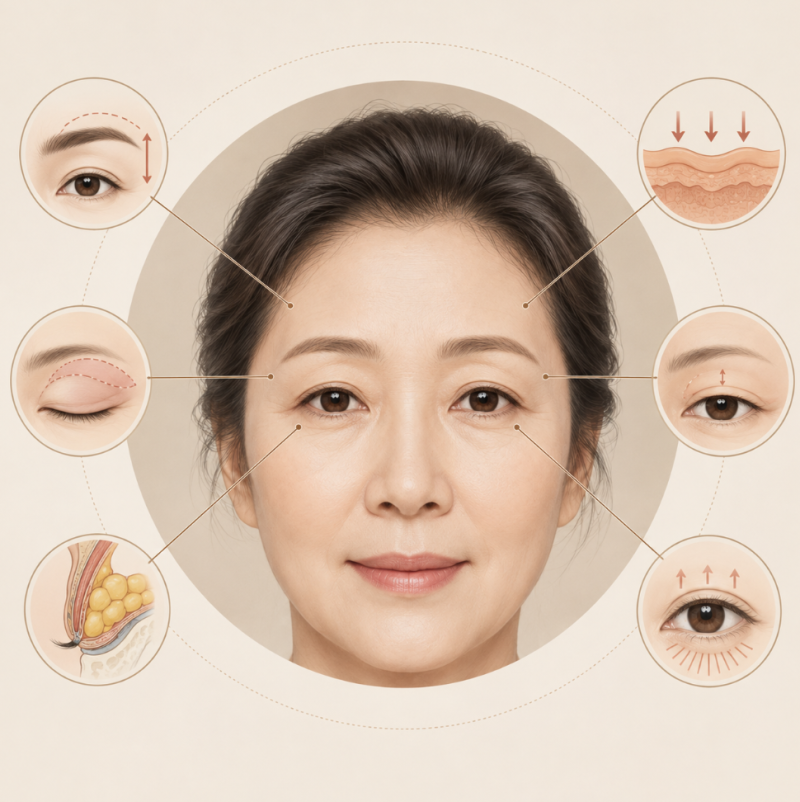
For this, not only the degree of skin sagging but also
the eyebrow position, eyelid thickness,
amount and distribution of fat, existing double eyelid line,
and the strength of eye-opening must be comprehensively assessed.
Even within the same age group, the periorbital structure differs,
so the method and scope of middle-aged upper blepharoplasty can also vary.
Furthermore, rather than creating overly defined double eyelids
or replicating the eye shape of a young person,
it is important to plan changes naturally, considering one's original impression.
Ultimately, middle-aged upper blepharoplasty is
not a matter of ‘how much to remove’,
but rather how meticulously one understands the current condition
of the eyelids, eyebrows, and surrounding tissues.
If you are concerned about sagging eyelids,
do not just look at the skin, but also check the surrounding eye structure,
and make a decision after sufficient consultation to determine if the method
is suitable for your individual eye shape and face.
-Operating Hours-
Weekdays 9:00 ~ 18:00 Saturdays 9:00 ~ 16:00 Public Holidays / Sundays Regular closure |
-Contact Us-
Faceplus Plastic Surgery Clinic | ||
Consultation Phone: 02-541-8500 Inquiries: KakaoTalk Inquiry |
-Directions-
Frequently Asked Questions
Why do eyelids sag in middle age?
Yes, they sag due to various complex reasons. As we age, skin elasticity decreases, causing the upper eyelids to sag, or changes in the position or volume of fat above the eyes, and descending eyebrows can all contribute to the appearance of sagging eyelids.
Is removing only the sagging skin sufficient for middle-aged upper blepharoplasty?
No, simply removing skin is not enough. Removing more skin than necessary can cause discomfort when opening or closing the eyes, and may result in a strong impression. Therefore, it is important to determine the appropriate range of removal based on the current condition.
Should eyebrow position also be considered during upper blepharoplasty?
Yes, it is advisable to consider it together. The cause of eyelid sagging is not always solely in the eyelids; often, the skin is pushed down as the eyebrows descend. Especially if the outer corner of the eye is significantly covered or the distance between the eyebrow and eye has shortened, the height and position of the eyebrows should be checked together.
How can one achieve natural results in middle-aged eye surgery?
A comprehensive diagnosis is essential for natural results. It's not just about creating younger-looking eyes, but about maintaining an eye shape that harmonizes with the existing face while tidying up sagging areas. To achieve this, the degree of skin sagging, eyebrow position, eyelid thickness, amount of fat, existing double eyelid line, and the strength of eye-opening must be comprehensively assessed.
Are all middle-aged upper blepharoplasty methods the same?
No, they differ for each individual. Even within the same age group, the periorbital structure varies, so the method and scope of middle-aged upper blepharoplasty can differ depending on the individual. It is important to plan natural changes, considering one's original impression.