2026-09-03
Lower Blepharoplasty vs. Under-eye Fat Repositioning: How to Choose the Right Option for You
Many people are told they look tired due to puffy or hollow under-eyes. The most common choices for this are lower blepharoplasty and under-eye fat repositioning. While they seem to have similar goals, their approaches and target candidates are completely different.

※ This article is intended to provide medical information.
It is not subject to deliberation under Article 56, Paragraph 2 and Article 57 of the Medical Act,
and is not an advertising post unrelated to the content of deliberation.
Hello,
I am Dr. Park Jeong-geun,
Director of Faceplus Plastic Surgery Clinic.
Many people are told they look tired due to puffy or hollow under-eyes.
The most common choices for this are lower blepharoplasty
and under-eye fat repositioning.
While they may seem to have similar goals on the surface,
their approaches and target candidates are completely
different.
Choosing a method that doesn't suit your condition
can lead to insufficient improvement or an unnatural look,
so it's important to accurately understand the criteria.
Table of Contents | ||
1. Causes of Under-eye Changes 2. When Under-eye Fat Repositioning is Appropriate 3. When Lower Blepharoplasty is Necessary 4. Key Selection Criteria Summary |
1. Causes of Under-eye Changes
Under-eye issues are not simply caused by excess fat.
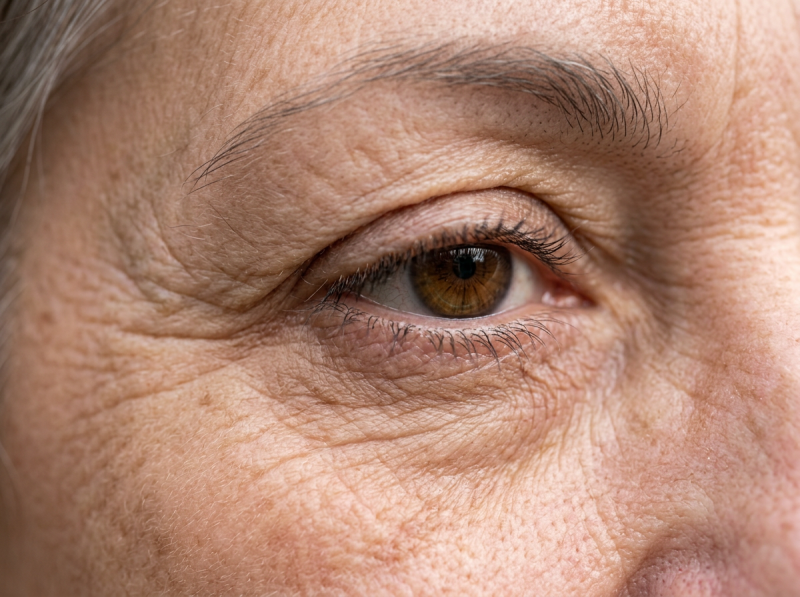
While fat can protrude forward,
conversely, hollowness can create shadows,
and over time, decreased skin elasticity can lead to wrinkles
appearing together.
Ultimately, it's correct to view under-eye changes as structural changes
where the position of fat and the condition of the skin
act together.

Therefore, the choice of surgery depends on which factor
is central.
2. When Under-eye Fat Repositioning is Appropriate
Under-eye fat repositioning is a method that doesn't remove protruding fat
but rather moves it to hollow areas to flatten the entire area.
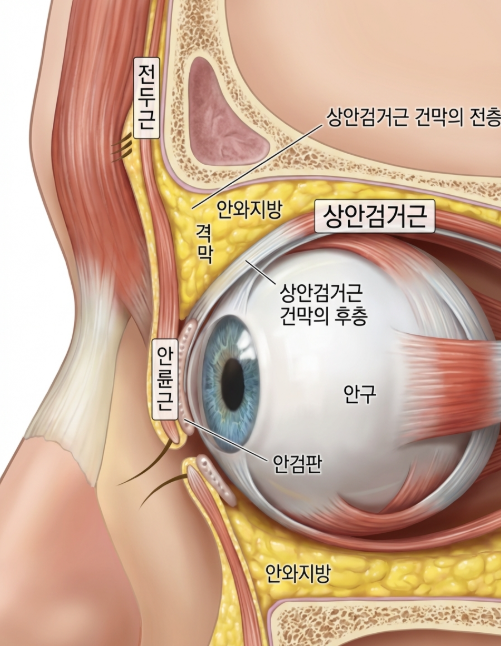
Therefore, it can create the most natural results
when the under-eye area is puffy and simultaneously the tear trough
is hollow.
Especially when skin elasticity is maintained to some extent,
simply reorganizing the fat can significantly improve
the overall impression.
However, if the skin is already lax, wrinkles may remain
even after fat reorganization, so it's important to distinguish
the scope of application.
3. When Lower Blepharoplasty is Necessary
Lower blepharoplasty is a method that addresses not only fat
but also lax skin and muscles.
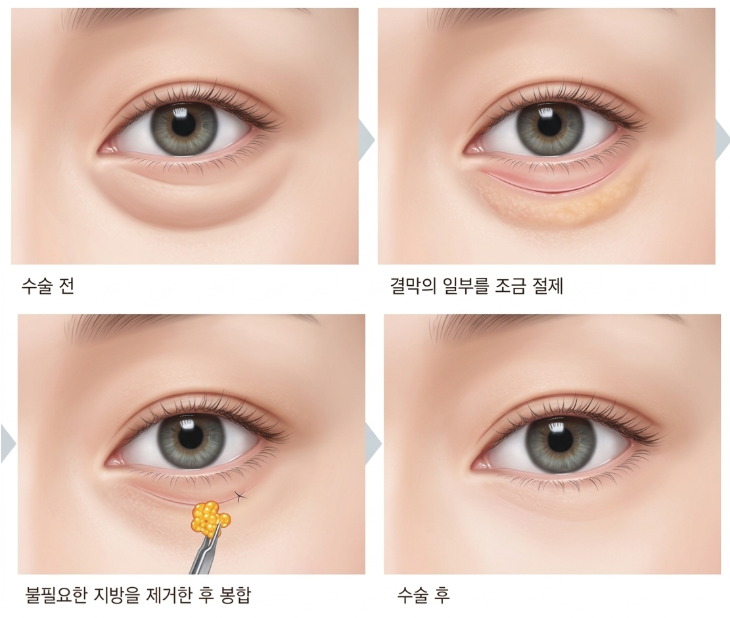
When the under-eye skin is sagging and there are many fine wrinkles,
simply moving the fat has limitations, so an approach that re-establishes
the structure itself is necessary.
Especially in middle-aged and older individuals where the under-eye area
appears generally saggy, lower blepharoplasty provides a more fundamental
improvement.
As it involves an incision, an understanding of the recovery process
is also necessary.
4. Key Selection Criteria Summary
The criteria can be summarized simply. If there is little
skin laxity, fat repositioning is often sufficient,
and if the skin is lax and accompanied by wrinkles,
lower blepharoplasty is more suitable.
What's important is not age, but the current under-eye
condition.
Even within the same age group, completely different choices may be needed
depending on skin elasticity and tissue condition.
Ultimately, the key to under-eye surgery is not which method is better,
but first determining what needs to be corrected.
-Operating Hours-
Weekdays 9:00 ~ 18:00 Saturdays 9:00 ~ 16:00 Public Holidays / Sundays Regular closure |
-Contact Us-
Faceplus Plastic Surgery Clinic | ||
Consultation Phone: 02-541-8500 Inquiries: KakaoTalk Inquiry |
-Directions-
under-eye lower blepharoplasty
Frequently Asked Questions
What are the main causes of under-eye changes?
Under-eye changes are not simply caused by excess fat. They are structural changes resulting from a combination of fat protrusion or hollowness, and decreased skin elasticity and wrinkles that occur over time. The choice of surgery depends on which factor is central.
When is under-eye fat repositioning appropriate?
Under-eye fat repositioning is a method that moves protruding fat to hollow areas to flatten the under-eye area. It can achieve the most natural results when the under-eye area is puffy and the tear trough is simultaneously hollow, and skin elasticity is maintained to some extent.
When is lower blepharoplasty necessary?
Lower blepharoplasty is a method that addresses not only fat but also lax skin and muscles. It is appropriate when the under-eye skin is sagging and there are many fine wrinkles, and simply moving the fat has limitations, requiring an approach that re-establishes the structure itself. It provides fundamental improvement, especially for middle-aged and older individuals whose under-eye area appears generally saggy.
What is the key criterion for choosing under-eye surgery?
The key criterion for choosing under-eye surgery is the current under-eye condition. If there is little skin laxity, fat repositioning is often sufficient, and if the skin is lax and accompanied by wrinkles, lower blepharoplasty is more suitable. The under-eye condition is more important than age.
Do older individuals always need lower blepharoplasty?
No. Older age does not automatically mean lower blepharoplasty is necessary. What's important is not age, but the current skin elasticity and tissue condition of the under-eye area. Even within the same age group, the appropriate surgical method can vary depending on an individual's under-eye condition.
What is the biggest difference between under-eye fat repositioning and lower blepharoplasty?
The biggest difference is the scope of the surgery. Under-eye fat repositioning primarily repositions fat to flatten the under-eye area, while lower blepharoplasty addresses not only fat but also lax skin and muscles to fundamentally improve sagging.