2026-09-03
Lower Blepharoplasty for Those in Their 50s: Is Removing Only Under-Eye Fat Enough?
For individuals in their 50s considering lower blepharoplasty, simply removing under-eye fat is often insufficient. This article explains why a comprehensive approach addressing skin laxity, muscle changes, and tear troughs is crucial for natural, satisfying results.
※ This article is intended to provide medical information.
It is not subject to deliberation under Article 56, Paragraph 2 and Article 57 of the Medical Act,
and we inform you that it is not an advertisement unrelated to the deliberation content.
Hello,
I am Dr. Jung-Keun Park,
Director of Face Plus Plastic Surgery Clinic.
If you find your under-eyes bulging and dark circles appearing prominent every time you look in the mirror, giving you a tired impression,
many people in their 50s consider lower blepharoplasty.
The most common question at this point is,
‘Wouldn't simply removing the under-eye fat solve the problem?’
However, lower blepharoplasty for those in their 50s is often not just a problem of fat;
it frequently involves a combination of reduced skin elasticity, muscle changes, and tear trough alterations.
Therefore, simply removing fat may not yield the desired results, or it might even make the under-eye area appear hollow. It is crucial to comprehensively assess your current condition.
Table of Contents | ||
1. Why Lower Blepharoplasty is Needed in Your 50s 2. Cases Where Removing Only Under-Eye Fat is Not Recommended 3. What Else Do We Check During Lower Blepharoplasty? 4. Checkpoints for Natural Results |
1. Why Lower Blepharoplasty is Needed in Your 50s
The biggest reason to consider lower blepharoplasty in your 50s is
that the under-eye structure changes with aging.
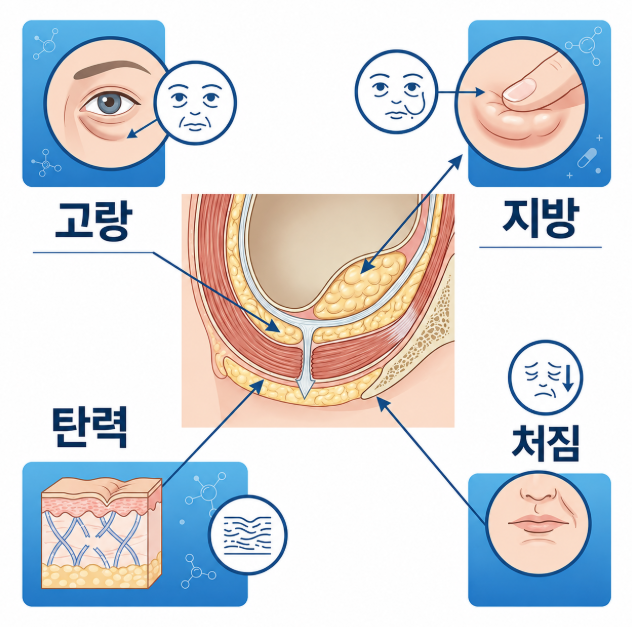
As you age, the tissues that hold the under-eye fat weaken, and skin elasticity decreases, causing the fat to protrude forward.
If skin sagging and tear troughs develop simultaneously, the under-eye area can appear even more bulging and dark.
These changes not only create a sense of fatigue but can also make you look older than your actual age.
Therefore, for lower blepharoplasty in your 50s,
it is important to consider various under-eye elements together to determine the most suitable method for each individual.
2. Cases Where Removing Only Under-Eye Fat is Not Recommended
Simply removing fat just because the under-eye area protrudes is not always the best option.
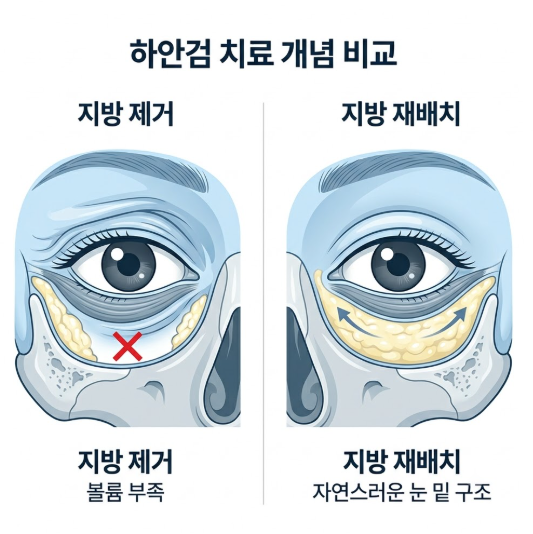
Especially for individuals in their 50s undergoing lower blepharoplasty, skin sagging is often present,
so removing only fat can make the under-eye area appear hollow, leaving a tired impression.
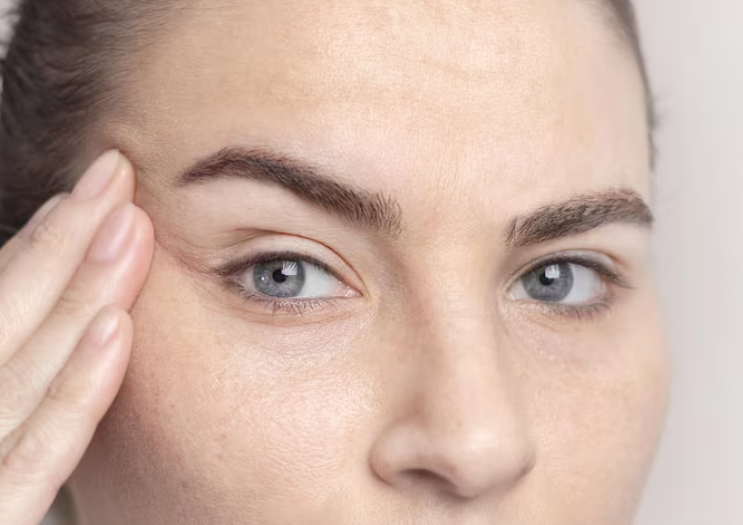
Additionally, if tear troughs are deep or there is significant skin laxity,
methods such as repositioning the fat or improving the sagging skin together may be considered.
In other words, to achieve natural results,
the volume, skin, and overall balance of the under-eye area must be considered together.
3. What Else Do We Check During Lower Blepharoplasty?
During a lower blepharoplasty consultation for those in their 50s,
we do not simply check the amount of fat.
Medical professionals typically
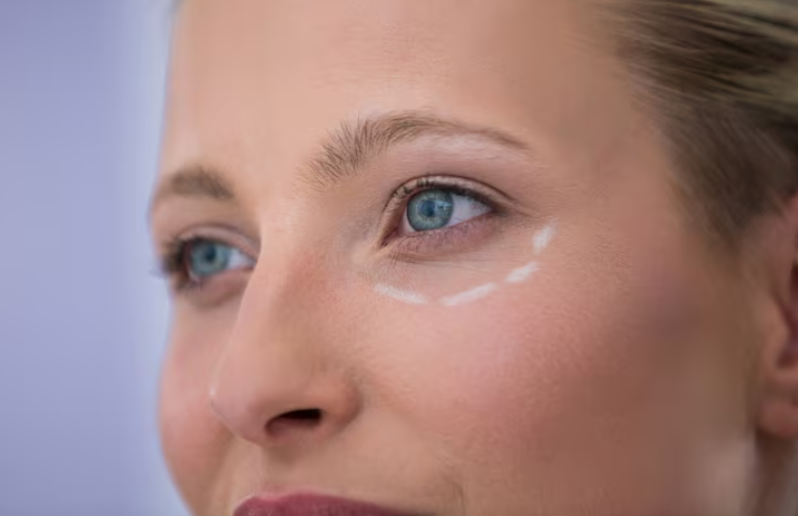
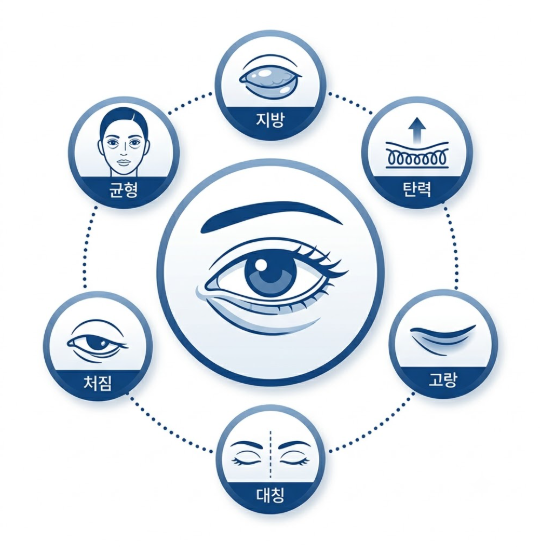
assess the degree of under-eye fat protrusion, the extent of skin sagging,
the depth of tear troughs, skin elasticity, left-right symmetry, and overall facial balance.
Even among individuals in their 50s, some may benefit more from fat repositioning, while for others, improving skin sagging might be more crucial.
Therefore, rather than deciding on a surgical method based solely on online reviews,
it is paramount to receive an accurate diagnosis of your current under-eye condition.
4. Checkpoints for Natural Results
Many people considering lower blepharoplasty in their 50s focus on ‘how much to remove.’
However, natural results are achieved not by removing a lot,
but by correcting what is needed in a balanced way.
Considering the harmony of under-eye fat, skin, and surrounding tissues
increases the likelihood of maintaining a natural look when smiling and a soft impression from the front.
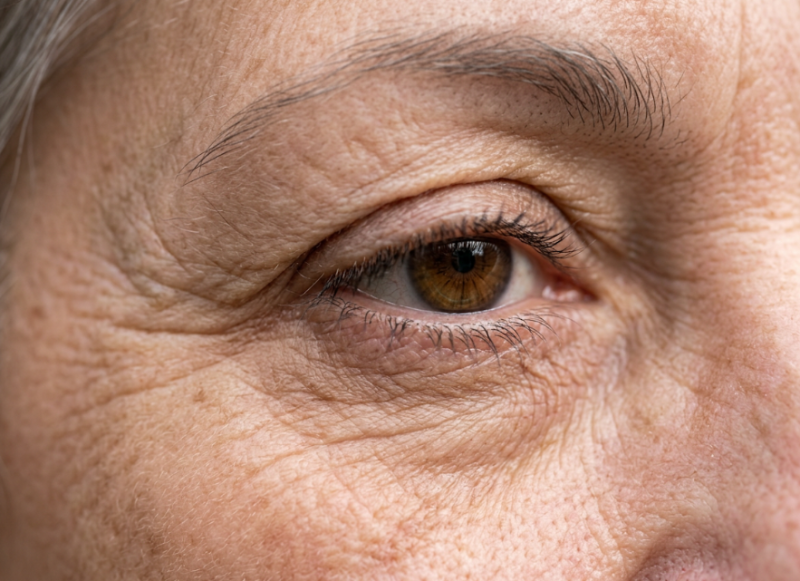
Furthermore, since each individual has different degrees of aging and skin elasticity,
the same method does not apply to everyone.
Ultimately, it is best to understand lower blepharoplasty in your 50s
not merely as a procedure to remove under-eye fat,
but as a process of comprehensively analyzing the under-eye structure
and creating a personalized plan.
Not all cases of under-eye protrusion
can be resolved by fat removal alone.
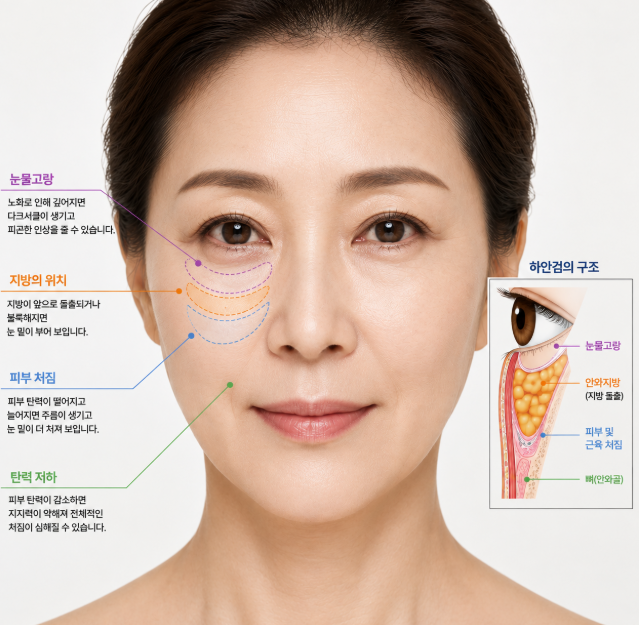
Especially for lower blepharoplasty in your 50s, considering skin sagging, elasticity, tear troughs,
and fat position together can lead to more natural and balanced results.
Above all, receiving an accurate diagnosis of your under-eye condition
and establishing a suitable treatment plan is the crucial first step to increasing satisfaction.
-Operating Hours-
Weekdays 9:00 ~ 18:00 Saturdays 9:00 ~ 16:00 Public Holidays / Sundays Regular closure |
-Contact Us-
Face Plus Plastic Surgery Clinic | ||
Consultation Phone: 02-541-8500 Inquiries: KakaoTalk Inquiry |
-Directions-
Frequently Asked Questions
For lower blepharoplasty in your 50s, is it sufficient to only remove under-eye fat?
No, lower blepharoplasty in your 50s often involves more than just under-eye fat. Skin laxity, muscle changes, and tear trough alterations frequently occur together, so removing only fat may not achieve the desired results or could even make the under-eye area appear hollow.
What is the main reason lower blepharoplasty is needed in your 50s?
The main reason lower blepharoplasty is needed in your 50s is that the under-eye structure changes with aging. As you get older, the tissues supporting under-eye fat weaken, and skin elasticity decreases, causing fat to protrude. Skin sagging and tear troughs can also develop simultaneously, making the under-eye area appear bulging and dark.
In what cases should only under-eye fat not be removed?
If skin sagging is also present, removing only fat can make the under-eye area appear hollow, leaving a tired impression. Additionally, if tear troughs are deep or there is significant skin laxity, methods such as repositioning the fat or improving the sagging skin together should be considered.
What aspects are checked during a lower blepharoplasty consultation for those in their 50s?
During a lower blepharoplasty consultation for those in their 50s, we do not simply check the amount of fat. We comprehensively assess the degree of under-eye fat protrusion, the extent of skin sagging, the depth of tear troughs, skin elasticity, left-right symmetry, and overall facial balance to find the most suitable method for the individual.
What are the checkpoints for natural lower blepharoplasty results in your 50s?
Natural results are achieved not by removing a lot, but by correcting what is needed in a balanced way. Considering the harmony of under-eye fat, skin, and surrounding tissues increases the likelihood of maintaining a natural look when smiling and a soft impression from the front. Since each individual has different degrees of aging and skin elasticity, a customized plan is crucial.