2026-07-20
LASIK and Double Eyelid Surgery: Which Comes First?
Deciding the order of LASIK and double eyelid surgery is a common concern. While generally flexible with proper recovery, LASIK is often recommended first to avoid complications with corneal measurements or eyelid stability.
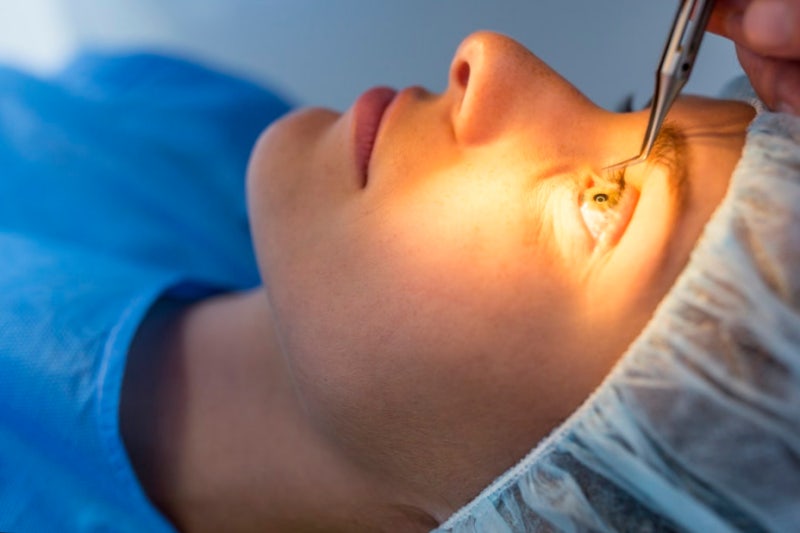

Hello, this is Gangnam Smile Eye Clinic 😊💙
The College Scholastic Ability Test (CSAT), which seemed like it would never end, has finally concluded.
To all the test-takers, you've worked incredibly hard.
While the initial excitement after the CSAT is fleeting,
now is the time when students start thinking about preparing for the new semester, managing their appearance, considering vision correction, and other plans they've put off.
Every year, immediately after the CSAT,
inquiries about vision correction surgeries like LASIK, LASEK, and SMILE LASIK,
as well as double eyelid surgery (blepharoplasty), significantly increase.
Since both surgeries are of high interest to students and job seekers preparing for a new start,
Should I get LASIK first? Or double eyelid surgery first?
The question of the order is always present.
Today, we will clarify this point precisely so there's no confusion.
LASIK and Double Eyelid Surgery: Does the Order Really Not Matter?

To get straight to the point,
if sufficient recovery time is secured between the two surgeries,
there is no absolutely fixed order.
However, if a choice is possible, we generally recommend the order of
‘vision correction surgery followed by double eyelid surgery’.
Why is it better to get LASIK before double eyelid surgery?

1. Swelling and pressure immediately after double eyelid surgery can affect corneal examination.
Double eyelid surgery is a surgical procedure that manipulates the eyelids, so
swelling or pressure may occur after the surgery.
If a LASIK examination is performed in this state, the corneal shape
may be measured differently from its actual form,
potentially affecting the surgical outcome.
2. Risk of double eyelids loosening due to the eyelid speculum used during LASIK.

During LASIK, an instrument (eyelid speculum) is used to hold the eye open.
Although very rare, there is a possibility that pre-existing double eyelids may weaken or
come undone.
Therefore, if possible, it is safer to proceed with LASIK, LASEK, or SMILE
first.
* But what if you've already had double eyelid surgery first?
We recommend undergoing vision correction examination after a sufficient recovery period of about 3 months.
Are there cases where double eyelid surgery should be done first?
Not everyone needs to get LASIK first.
In the following two situations, it may be advantageous to proceed with double eyelid surgery
first.
1. When corneal shape is distorted due to eyelid strength.

Especially in individuals with strong eyelid muscles, like many Koreans,
the upper eyelid can press on the cornea, making the upper part of the cornea appear asymmetrical.
It is difficult to establish an accurate vision correction surgery plan in this state,
so double eyelid surgery is performed first to reduce eyelid pressure,
and once the corneal shape stabilizes, vision correction surgery is then performed.
2. When eyelashes poke the cornea (e.g., entropion).

For those whose eyelashes scratch the cornea, causing injury,
irritation can continue even after LASIK or LASEK, hindering recovery.
In these cases, we recommend the order of double eyelid surgery to resolve the eyelash issue, followed by vision correction.
LASIK after Double Eyelid Surgery, or Double Eyelid Surgery after LASIK: When is it possible?
1. Vision Correction Surgery → Double Eyelid Surgery
Generally, for LASIK or SMILE surgery, it's possible after 1 month.
For LASEK, there's significant individual variation in recovery time,
so it's best to adjust the period after consultation.
2. Double Eyelid Surgery → Vision Correction Surgery

Generally, examination is possible approximately 3 months later.
Since this can vary depending on individual recovery speed and degree of swelling,
consultation with a specialist is essential.
What to remember for safe surgery
Since the results of both surgeries can have lifelong effects,
it's crucial to understand sufficient information, recovery periods, and precautions before surgery,
and decide on the most suitable order for yourself.
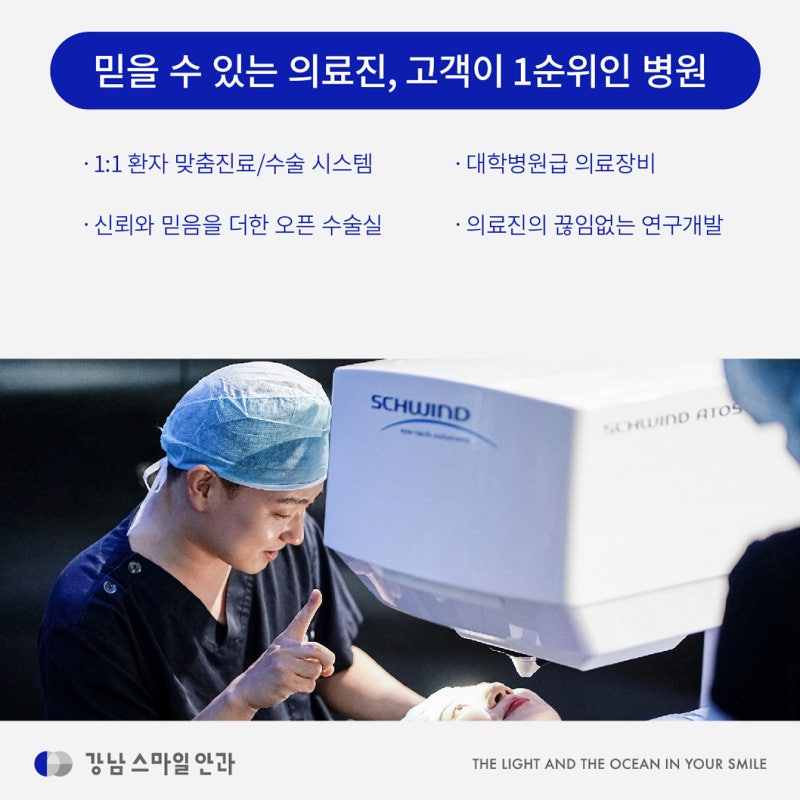
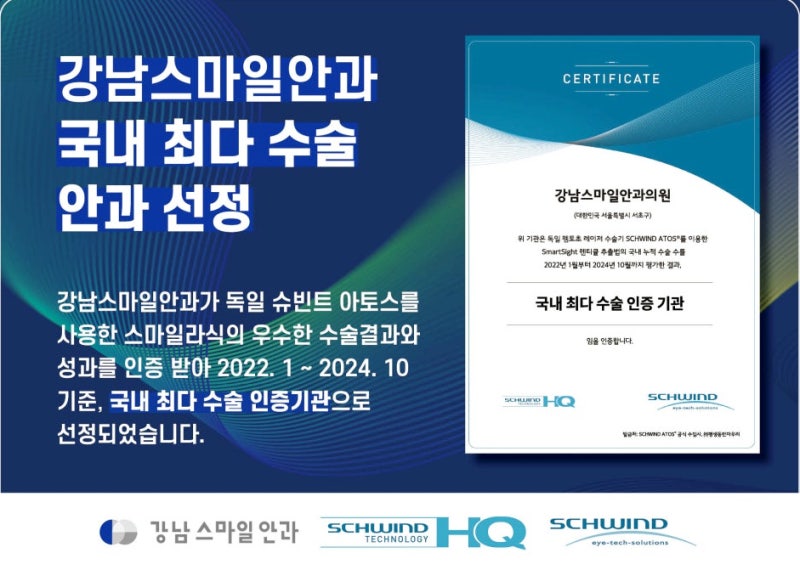
Gangnam Smile Eye Clinic is equipped with university hospital-level equipment,
a systematic examination system,
and 1:1 customized consultation,
always aiming for ‘patient-centered’ care.



Additionally, Gangnam Smile Eye Clinic is currently holding
a CSAT event,
so please make many reservations through our website.



Frequently Asked Questions
LASIK and double eyelid surgery, which one should be done first?
Generally, it is recommended to undergo vision correction surgery (LASIK, LASEK, SMILE) first. This is because swelling after double eyelid surgery can affect corneal examination, and there is a risk that existing double eyelids may weaken or come undone due to the eyelid speculum used during LASIK.
Can I get a LASIK examination immediately after double eyelid surgery?
No, it is not recommended to get an examination immediately. Swelling or pressure right after double eyelid surgery can cause the corneal shape to be measured differently from its actual form, which can affect the outcome of LASIK surgery. It is best to have the examination after a sufficient recovery period.
Are there cases where double eyelid surgery should be done first?
Yes, in certain situations, it may be advantageous to have double eyelid surgery first. This applies to cases where strong eyelid muscles distort the corneal shape, or conditions like entropion where eyelashes poke the cornea, causing injury.
When is double eyelid surgery possible after LASIK?
For LASIK or SMILE surgery, it is generally possible after 1 month. For LASEK, there is significant individual variation in recovery, so it is best to consult with a specialist to adjust the timing.
When can I get a LASIK examination after double eyelid surgery?
Generally, a vision correction examination is possible approximately 3 months after double eyelid surgery. This can vary depending on individual recovery speed and the degree of swelling, so consultation with a specialist is essential.