2026-07-14
Impression Based on Nose Type
Discover how different nose types impact your overall impression and learn about suitable rhinoplasty options for each.

Let's learn about the impression based on nose type.
The impression conveyed by your nose type plays a significant role. For congenital or acquired nose deformities, considering facial harmony and the anatomical structure of the nose allows for the correction of complexes and aesthetic improvements. Today, we'll discuss suitable nose surgeries for each type.
1. The Bulbous Nose (Bok-ko) that Appears Wide
A nose type with a round, blunt, and wide tip, commonly known as a ‘bok-ko’ (bulbous nose), occupies a large proportion of the overall face. It becomes even more prominent when smiling, which can negatively impact one's impression.
A bulbous nose, where the wide nostrils can make the overall bridge and height of the nose appear lower, cannot be effectively reduced in size through simple diet or exercise. Therefore, a surgical plan meticulously developed can bring effective results in reducing its volume.
While the wide nostrils of a bulbous nose can be somewhat improved with alar reduction, achieving substantial improvement can be difficult. Reinforcing and raising the nasal tip using implants or autologous cartilage yields a more definite change. For a low nasal bridge, silicone is mostly used to augment the height, but if the bone structure is wide, lateral osteotomy can create a slender appearance even from the front.
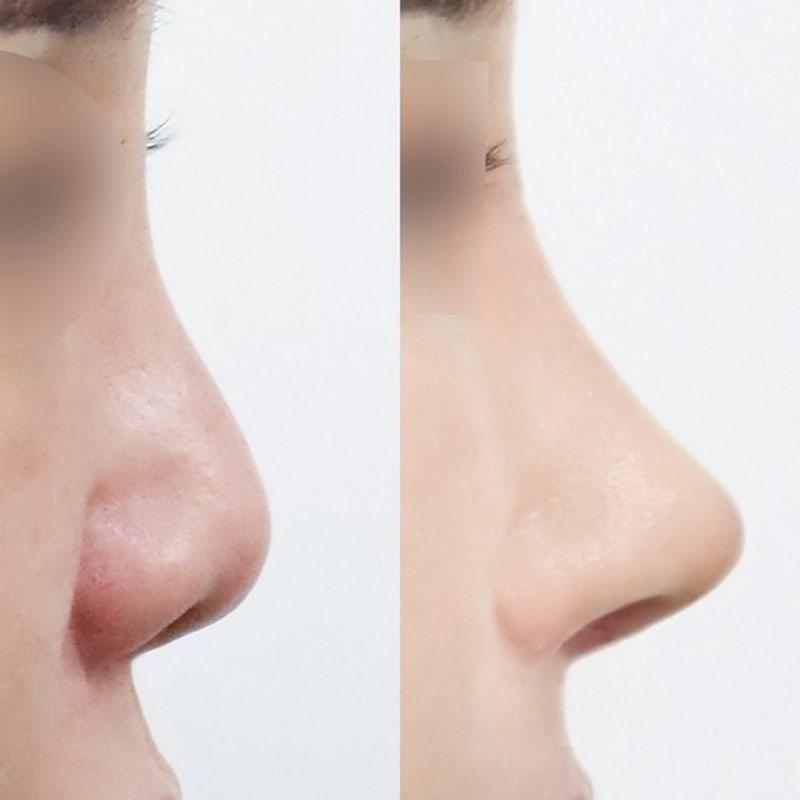
This patient had wide nostrils and a blunt tip when viewed from the front. The nasal tip was augmented using autologous cartilage. Simultaneously, since the nasal bone structure was wide, lateral osteotomy was used to reduce the width of the nasal bridge, and a 2.5mm silicone implant was used at the starting point of the nose to raise its height, showing an improved bulbous nose with a slender appearance even from the front.
2. The Aquiline Nose (Hump Nose) with a Strong Impression
An aquiline nose refers not only to a nose curved like an eagle's beak but also to cases where the nasal dorsum is convex and the nasal tip is drooping, similar to an arrow-shaped nose, contrary to a 'ski-jump' nose. Aquiline noses often create a fierce impression and make the face look unnatural, which is why aquiline nose correction surgery, involving shaving down the nasal dorsum to make it flat and lifting the drooping nasal tip, is frequently performed.
During the process of shaving down the aquiline hump, if it is not thoroughly corrected initially, there is a high possibility of recurrence. Therefore, it is crucial to ensure that the curvature is completely eliminated when performing aquiline nose surgery.
However, if there is no curvature on the nasal bridge but the nasal tip is drooping, making the nasal dorsum appear relatively protruding, it is called a pseudo-aquiline nose. This can be corrected not by shaving the nasal dorsum, but by a non-implant surgery method that corrects only the nasal tip using implants or autologous cartilage.
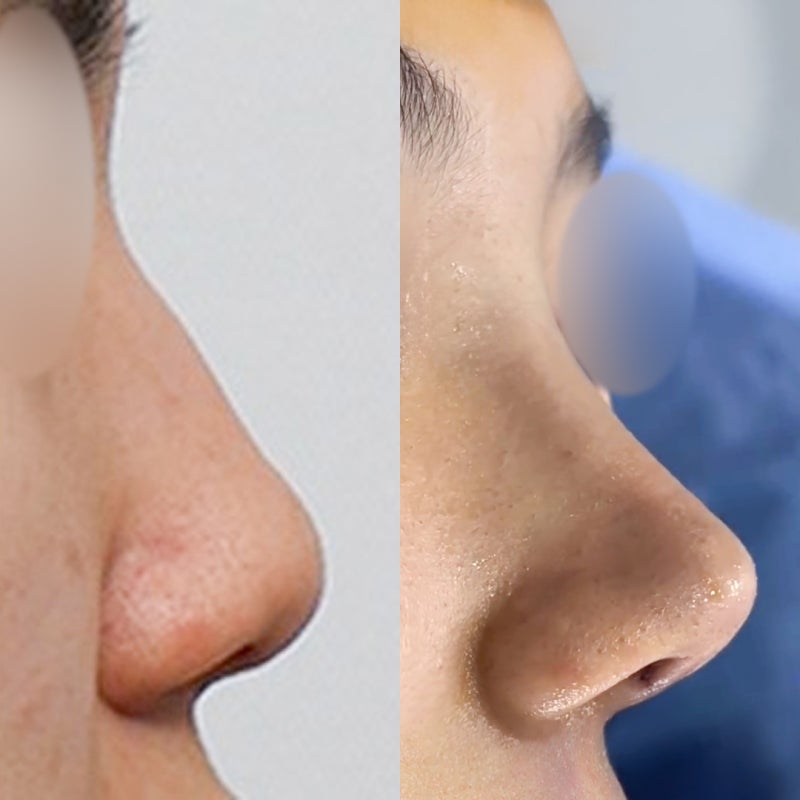
This patient had an aquiline nose with a curved nasal dorsum and a drooping nasal tip, making the nose appear long. The nasal dorsum was flattened through aquiline correction, and a low silicone implant was used to raise the nasal bridge. The nasal tip was improved using both septal and ear cartilage to correct the long and curved aquiline nose.
3. The Unrefined Short Nose
A short or upturned nose, where the tip appears lifted and the nostrils are significantly exposed, can give an unrefined impression and is often considered inauspicious in physiognomy.
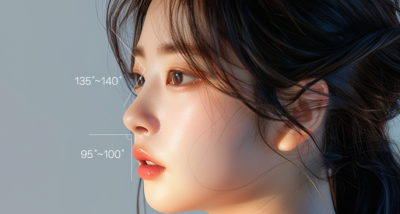
In cases of short or upturned noses, it is often due to underdeveloped cartilage or tight skin. If the nasolabial angle, which connects the nose and lips, is 110-115 degrees or more, it can be classified as a short or upturned nose.
To correct this, surgery is typically performed using septal extension graft to lengthen the lifted nasal tip, or by using columellar struts and reverse rotation grafts to create a support structure that lowers and fixes the alar cartilage, followed by a nostril lowering method to pull down the alar cartilage onto this support.
Nostril lowering requires a significant amount of cartilage, and simultaneously lowering and raising the nasal tip means there must be sufficient skin elasticity. If these conditions are not met, additional structures may need to be grafted. Methods include harvesting and grafting a portion of septal cartilage, or using materials such as autologous rib cartilage or donated rib cartilage to achieve a nose length that suits the face.
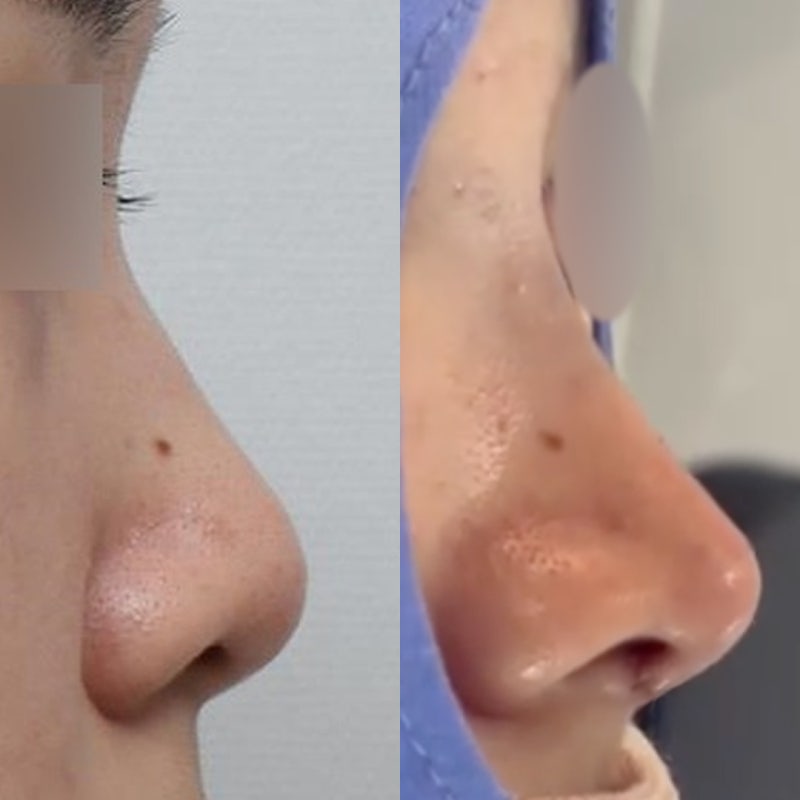
This patient had a low nose and an upturned nose where the nostrils appeared lifted when viewed from the front, requiring correction using alar lowering. However, there wasn't enough septal cartilage available for alar lowering, so donated rib cartilage was additionally used to correct the upturned nasal tip. Silicone was used to raise the low nasal bridge to an ideal height, showing an improved appearance.
※ Please be informed that this case has received individual consent for portrait rights for the purpose of this medical column.
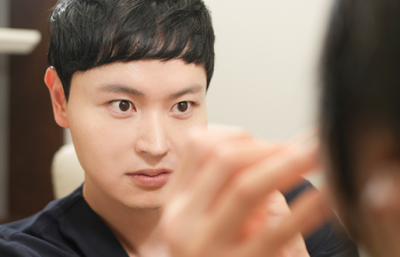
Among the features that make up the face, the nose is located at the center and is the most three-dimensional part, so its length, height, and shape can greatly influence one's impression. Therefore, I recommend consulting closely with an expert about your specific nose type and designing a plan that considers overall balance.

#BabaPlasticSurgery #NoseSurgery #AquilineNose #BulbousNose #UpturnedNose
Frequently Asked Questions
How is bulbous nose surgery performed?
A bulbous nose is a type where the nasal tip appears blunt and wide. The nostrils can be improved with alar reduction, and the nasal tip can be reinforced and raised using implants or autologous cartilage. If the nasal bridge is wide, lateral osteotomy can create a slender appearance.
Does an aquiline nose always need to be shaved down for correction?
No, it is not always corrected by shaving. In cases of pseudo-aquiline nose, where there is no curvature on the nasal dorsum but only the nasal tip is drooping, making the nasal dorsum appear prominent, it can be corrected by using implants or autologous cartilage only on the nasal tip, without shaving the nasal dorsum.
How can a short or upturned nose be corrected?
A short or upturned nose is primarily corrected through septal extension graft, which lengthens the lifted nasal tip, or by using the nostril lowering method. Since a significant amount of cartilage is used in these procedures, additional materials such as septal cartilage, autologous rib cartilage, or donated rib cartilage may be used.
What materials can be used in nose surgery?
Various materials can be used in nose surgery. Autologous cartilage (septal, ear cartilage) is mainly used for nasal tip augmentation, and silicone is used for nasal bridge height augmentation. For short nose correction, in addition to septal cartilage, autologous rib or donated rib cartilage may be used.
Can an aquiline nose recur after surgery?
Yes, there is a possibility of recurrence after aquiline nose surgery. If the aquiline hump is not thoroughly corrected during the initial shaving process, there is a high chance of recurrence later. Therefore, it is important to completely eliminate the curvature during surgery.