2026-09-07
If you want to get porcelain veneers at Yaksu Station Dental Clinic, it's good to understand this first (the process of regaining a bright smile)
Learn about porcelain veneers at Yaksu Station Dental Clinic. This article clarifies common questions about veneers, their materials (e.max, Feldspathic porcelain), and when they are suitable, helping you understand the process of achieving a brighter smile.
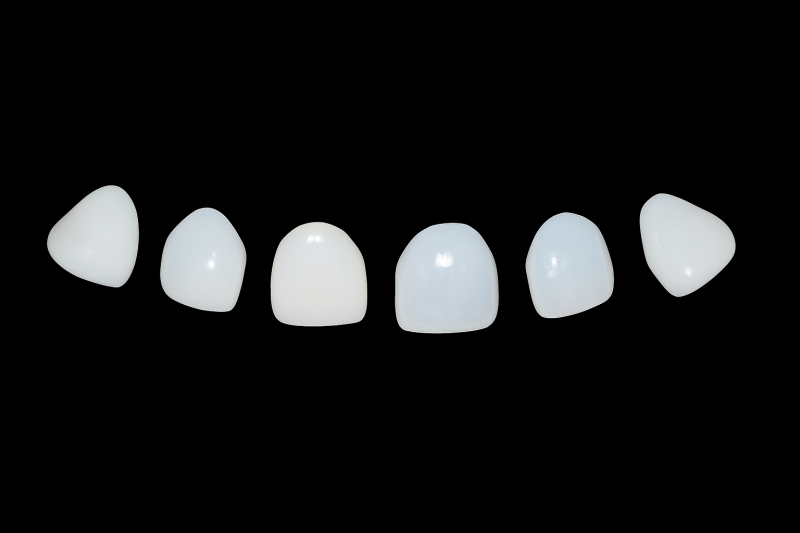
Porcelain veneer information from Sindang-dong Dental Clinic
Hello,
I'm Dr. Kim Tae-young, the head director of Bareunyoung Dental Clinic at Yaksu Station.
Recently, Naver's blog policy changed, making it difficult for hospitals to write informative blog posts, so it feels like a long time since I've greeted you.
When I consult with patients, they seem to have many questions about porcelain veneers.
These days, porcelain veneers are very popular, and there are many informative articles, but general public often wonder, ‘Is this the same as that?’ or ‘What is this?’
So, today, I'd like to take some time to talk about porcelain veneers, based on questions patients have actually asked.
If you read to the end, your questions about porcelain veneers will be answered.
What are porcelain veneers?
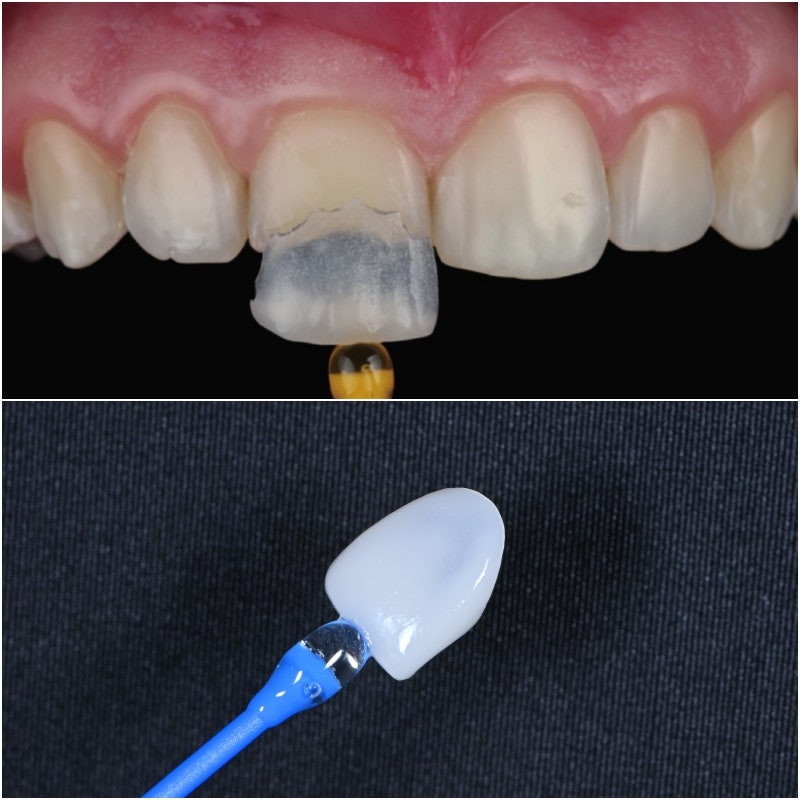
Porcelain veneers are a treatment aimed at restoring the shape and color of teeth, by removing only the necessary parts of the tooth's outer surface (enamel layer) or by not removing any tooth structure, to achieve aesthetic and functional recovery of the tooth's shape.
What are porcelain veneers and what are veneers?
If you search diligently, you'll find a lot of information, but it can be disorganized.
In conclusion, they are the same thing.
The treatment of attaching a thin ceramic prosthesis, like a porcelain veneer, to the tooth surface is called a veneer.
So, they are essentially the same thing, and what we call a porcelain veneer was originally referred to as a ‘laminate veneer’.
The word ‘veneer’ also means a thin sheet.
Therefore, it is a treatment that minimizes damage to the tooth by removing only the necessary parts, unlike crowns which require significant tooth reduction, and achieves adhesion on the enamel (the outer surface without nerves).
What materials are porcelain veneers made of?
Porcelain veneers are made of ceramic.
These days, there are advertisements claiming that porcelain veneers are made with a thickness of 0.1mm, and even 0.01mm, but I question whether a thickness of 0.01mm is truly possible.
Even 0.1mm is very thin, but not all surfaces are made to this thickness. Parts that require a thin expression are made thin, while parts that require sufficient thickness are given an appropriate thickness.
Since the thickness that needs to be corrected varies for each tooth, the thickness of porcelain veneers must also be produced in various ways.
Although it is known that they are made of ceramic, the specific material varies.
Zirconia, Feldspathic, e.max, etc.
Firstly, zirconia veneers are rarely used for porcelain veneers because their disadvantages outweigh their advantages in terms of adhesion and aesthetics.
I'll tell you what you might be curious about, based on recent questions I've received.
Director, what is e.max?
Recently, a patient had many questions and wrote down a few.
I like to share this kind of information, so I told them to ask anything, and indeed, the questions were similar.
‘Director, I hear many porcelain veneers are made with e.max. What is it?’
What is e.max?
In short, it's not a material name, but a product name.
Just as we call adhesive notes ‘Post-it notes’, e.max is the name of the product made by Ivoclar Vivadent using Lithium disilicate ceramics.
It's so famous that it's called e.max, and I also refer to this material as e.max for convenience.
Compared to the past, e.max has improved in all aspects, including aesthetics, strength, and manufacturing methods, so you can assume that almost all dental clinics use Lithium disilicate ceramics.
Also, recently, each dental clinic gives its own names, such as ‘oo film’, ‘oo nate’, ‘oooo sh’, so when patients come for consultation, they might ask, for example, ‘Can I get oo nate? Please do that for me.’
You can consider these to be product names, and the material itself uses the same material (block).
Some people also ask what Vita, Mark, and Feldspathic porcelain are, but you can consider them all to be the same thing.
The product name ‘Mark’ is a product made by Vita using the material called Feldspathic.
The advantage of this material is its excellent aesthetics, but it has the disadvantage of being relatively weak in strength and difficult to modify.
Advantages and Disadvantages of Each Material
I briefly explained the advantages and disadvantages earlier, and now I'll summarize them in a table.
Material | Advantages | Disadvantages |
Feldspathic porcelain | Excellent aesthetics, good expression of subtle translucency of teeth | - Low mechanical strength, risk of fracture, especially chipping at the edges. - Requires sufficient thickness in cases of severe color change. |
Lithium disilicate ceramics | - Very high mechanical strength (excellent flexural strength) - High resistance to fracture (chipping) - Excellent durability, discoloration, and wear resistance | - May require slightly more tooth reduction than feldspathic. - Risk to adhesion and stress distribution if enamel support is insufficient. |
These are the advantages and disadvantages of the materials.
However, with the recent advancements in bonding technology and significant improvements in laboratory skills at each dental lab, both materials can be considered excellent for porcelain veneers.
But while materials, lab work, and bonding are important, the most fundamental aspect is how the diagnosis is made and how the teeth are prepared for fabrication.
When are porcelain veneers used?
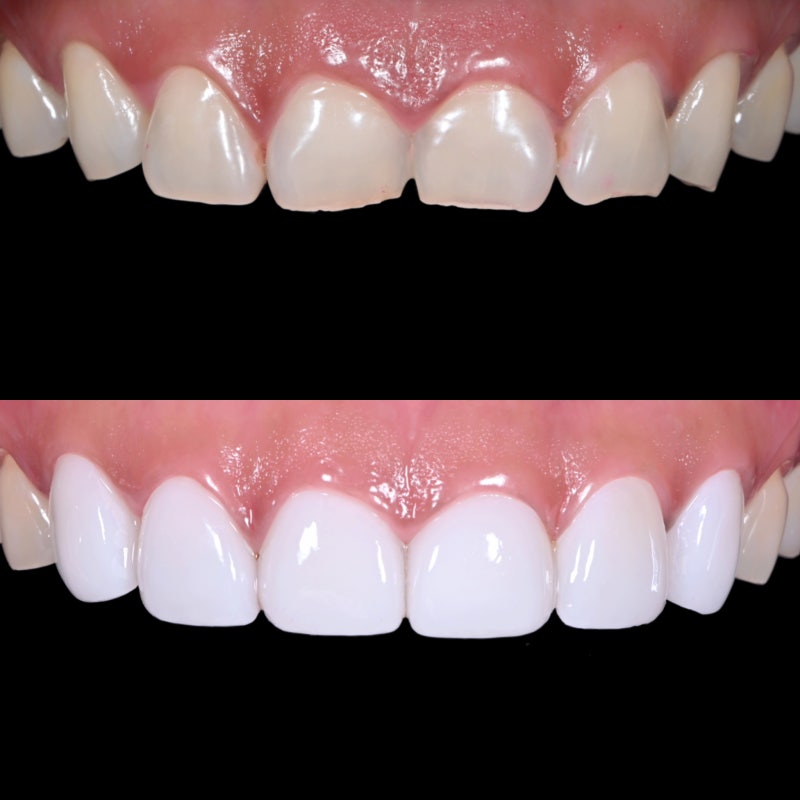
In the past, porcelain veneers were limited to specific cases.
These included microdontia, which requires almost no tooth reduction, or gaps between teeth, where thick porcelain veneers were attached without tooth reduction.
Recently, as explained earlier, if tooth reduction is minimized to only the necessary parts and the prosthesis is fabricated accordingly, the scope of indications for porcelain veneers can expand.

1. Tooth discoloration (tetracycline staining, fluorosis, intrinsic staining) that is difficult to improve with general whitening.
2. Abnormal tooth shape / Uneven tooth size
- Teeth that are too small or disproportionate (pegged lateral, underdeveloped teeth)
- Tooth wear or minor fractures, subtle shape abnormalities such as enamel hypoplasia.
3. Tooth alignment / Gaps
- Mild malocclusion, gaps between teeth (diastema)
- Mild positional abnormalities of adjacent anterior teeth.
4. When aesthetic improvement is desired
Improvement of smile, smile line, when considering anterior tooth color, shape, and alignment simultaneously.
5. Minor damage or old restorations
When old anterior resin restorations have discolored or have marginal fractures, micro-cracks or fractures, or surface finish damage.
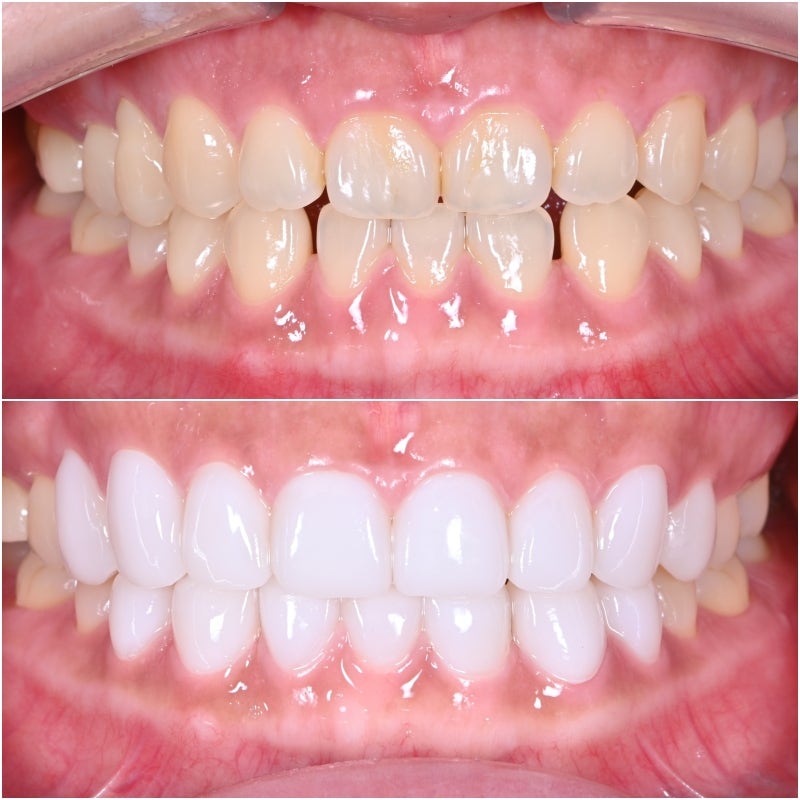
However,
Porcelain veneers alone cannot always satisfy all aesthetic demands.
Cases where porcelain veneer treatment is difficult:
Poor periodontal condition
Tooth alignment requiring orthodontics
Excessive bruxism and severe oral habits
Abnormal occlusal direction itself
Even if people have the same tooth shape,
diagnosis can differ because occlusion, periodontium, and oral habits vary.
Are porcelain veneers a panacea?
No, they are not.
While they bond to the tooth and become strong without easy fracture, because they are made thin, they can fracture if subjected to repeated occlusal interference. Also, if periodontal problems arise or surrounding discoloration occurs, there is a possibility of needing re-fabrication over time.
Therefore, it is important to visit frequently for occlusal checks in the beginning and to receive regular check-ups to reduce the risk of fracture.
I often say this during consultations:
Not all cases can be covered by porcelain veneers, and no-prep veneers are not always possible depending on tooth alignment.
Each person desires different results, and the diagnostic content can vary greatly even for the same person, depending on the condition of their teeth.
Today, I've mainly discussed what porcelain veneers are and how they are treated, focusing on frequently asked questions.
I hope your questions have been answered.
As I mentioned earlier, diagnosing based solely on teeth is not a proper diagnosis; it requires considering various factors such as oral habits and facial features. Therefore, if you have any questions, I recommend visiting us for a detailed consultation.
This was Bareunyoung Dental Clinic at Yaksu Station.^^
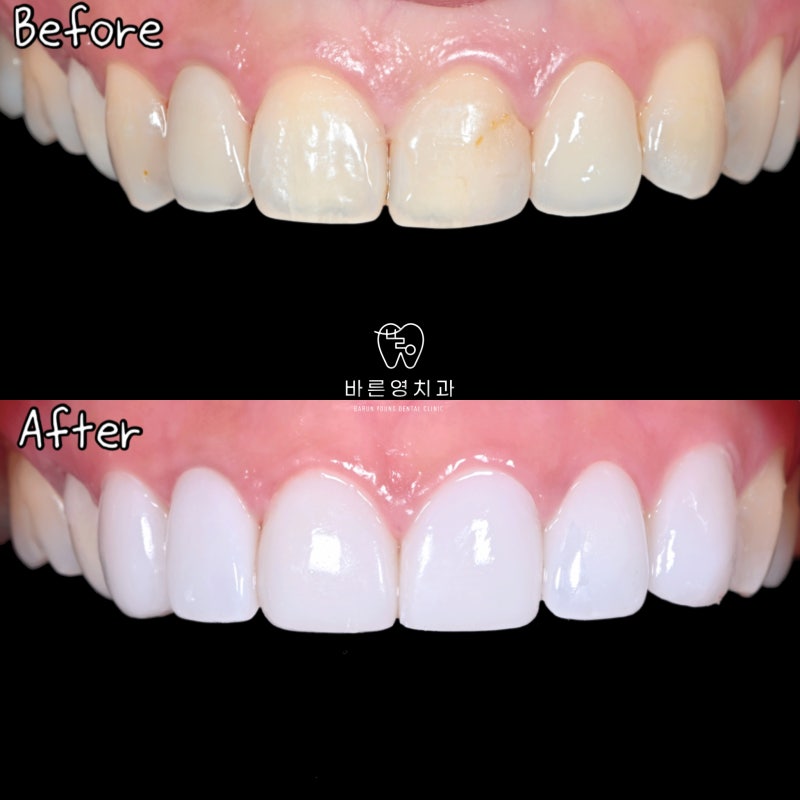
I believe that proper treatment leads to proper results. My desired dental clinic is one where everyone who visits with worries can leave feeling reassured and confident.
- Bareunyoung Dental Clinic
Directions
Dongho-ro 179, JYJ Building, 2nd floor
Right in front of Exit 6 of Yaksu Station, towards Yaksu Market
Village Bus 5 (Yaksu Station)
Village Bus 12 (Namsan Town, Yaksu Police Station)
Bus stops (Yaksu Heights, Sindang Social Welfare Center, Gaon Library, Kumho Tunnel Entrance)
From Yuyu Pharmaceutical towards Kumho Station
This post was written directly by Bareunyoung Dental Clinic in compliance with medical information provision (Medical Act Article 56, Paragraph 1).
Frequently Asked Questions
Are porcelain veneers and veneers different?
No, they are the same. Porcelain veneers refer to the treatment of attaching thin ceramic prostheses to the tooth surface, and the term ‘veneer’ also means a thin sheet, sometimes called a laminate veneer. Both treatments help restore aesthetics and function while minimizing tooth damage.
What materials are porcelain veneers made of?
Porcelain veneers are primarily made of ceramic. Specifically, e.max and Feldspathic porcelain are used, while zirconia is rarely used for veneers. Each material has its advantages and disadvantages in terms of aesthetics and strength.
Is e.max the name of a porcelain veneer material?
No, e.max is not a material name but a product name. It is the name of a Lithium disilicate ceramics product made by Ivoclar Vivadent, and due to its excellent aesthetics and strength, most dental clinics currently use this material.
In what cases can I get porcelain veneers?
Porcelain veneers can be applied for tooth discoloration, abnormal tooth shape, mild malocclusion, gaps between teeth, when aesthetic improvement is desired, and to address minor damage or issues with old restorations. Treatment is possible with minimal tooth reduction only where necessary.
Are porcelain veneers applicable to all dental problems?
No, porcelain veneers are not a panacea. Porcelain veneer treatment may be difficult in cases of poor periodontal condition, tooth alignment requiring orthodontics, excessive bruxism, severe oral habits, or abnormal occlusal direction. The diagnosis varies depending on the individual's oral condition.
What should I be aware of after getting porcelain veneers?
Yes, because porcelain veneers are made thin, there is a possibility of fracture due to repeated occlusal interference. Therefore, after treatment, it is important to visit frequently for occlusal checks in the early stages and to receive regular check-ups to reduce the risk of fracture. Re-fabrication may also be necessary over time.