2026-07-20
How to Choose an Ophthalmology Clinic for Your Parents' Cataracts, and Ways to Slow Down Presbyopia | Gangnam Station Cataract Clinic
Learn the differences between cataracts and presbyopia, how to choose a cataract clinic in Gangnam, select the right lens for surgery, and tips to slow down presbyopia.
Hello, this is Gangnam Smile Eye Clinic 😊💙
Did you know that Korea is one of the countries where people are most reluctant to take care of their own health?
While we care about the health and well-being of others—friends, partners, parents, children—
when it comes to our own health, we often say, ‘later’ or ‘this much is fine,’
and tend to put it off.
This is especially pronounced among older age groups.
In fact, according to a survey on eye health awareness among seniors by a global ophthalmology specialist company (Alcon),
8 to 9 out of 10 elderly individuals experience vision discomfort due to aging,
but they are not accurately informed about treatments for age-related eye diseases like cataracts.
In this era of 100-year lifespans, eye health management is essential,
and accurate information about cataract surgery seems necessary.
So today, we will explore the exact difference between cataracts and presbyopia,
the criteria for choosing a Gangnam Station cataract clinic,
how to select the right lens for your surgery,
and what methods exist to slow down presbyopia.
Gangnam Station Cataract Clinic: What is the difference between cataracts and presbyopia?
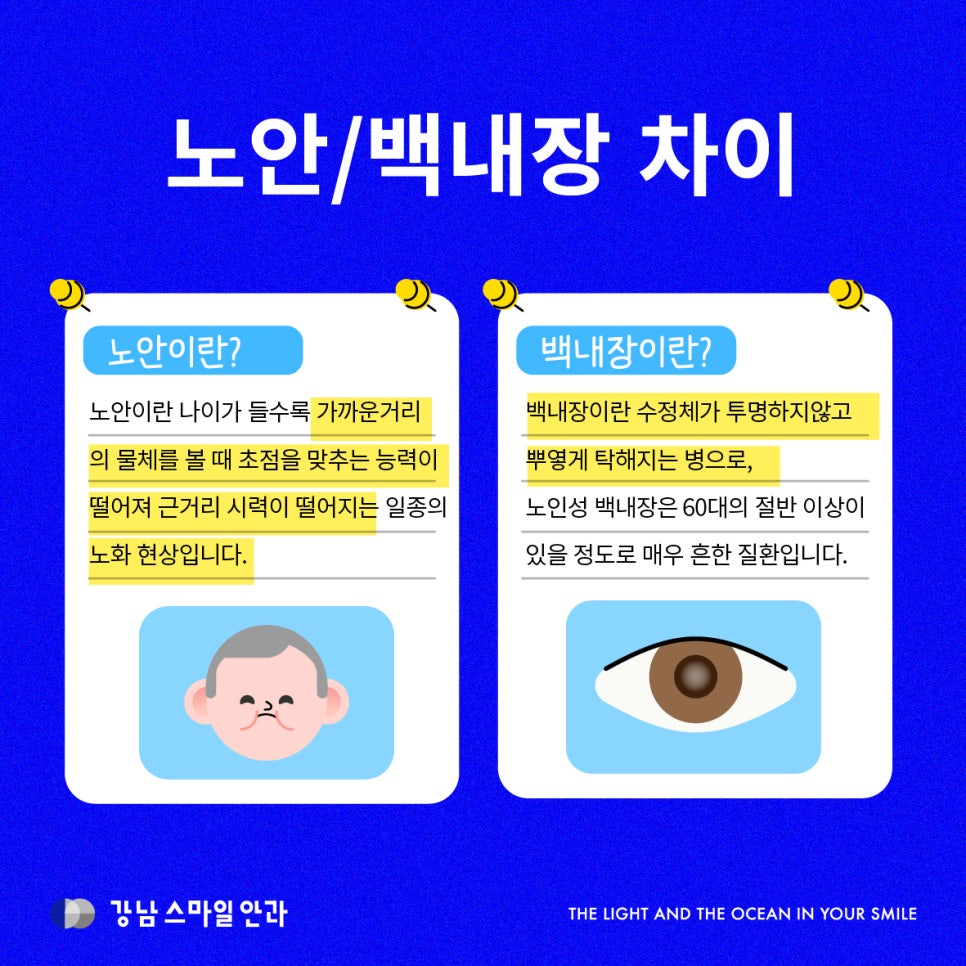
Both presbyopia and age-related cataracts
are often confused because they both cause symptoms of vision deterioration.
In particular, age-related cataracts are frequently mistaken for simple presbyopia.
Age-related cataracts account for the highest percentage of cataract causes,
and if left untreated, cataracts can lead to various complications,
so it is crucial to understand the difference and treat them early before complications arise.
First, cataracts refer to a condition where the lens, which adjusts focus based on distance,
becomes cloudy due to various reasons.
When the lens becomes cloudy, light cannot pass through properly,
preventing accurate focusing on the retina,
resulting in blurry vision, as if looking through a fog, and decreased eyesight.
On the other hand, presbyopia is a condition where, with increasing age,
the elasticity of the lens decreases and it thickens,
causing near objects or text to appear blurry.
Both conditions typically show initial symptoms around the ages of 40-50,
and often begin simultaneously,
requiring accurate examination and diagnosis by a specialist.
Gangnam Station Cataract Clinic: Treatment methods for presbyopia and cataracts?
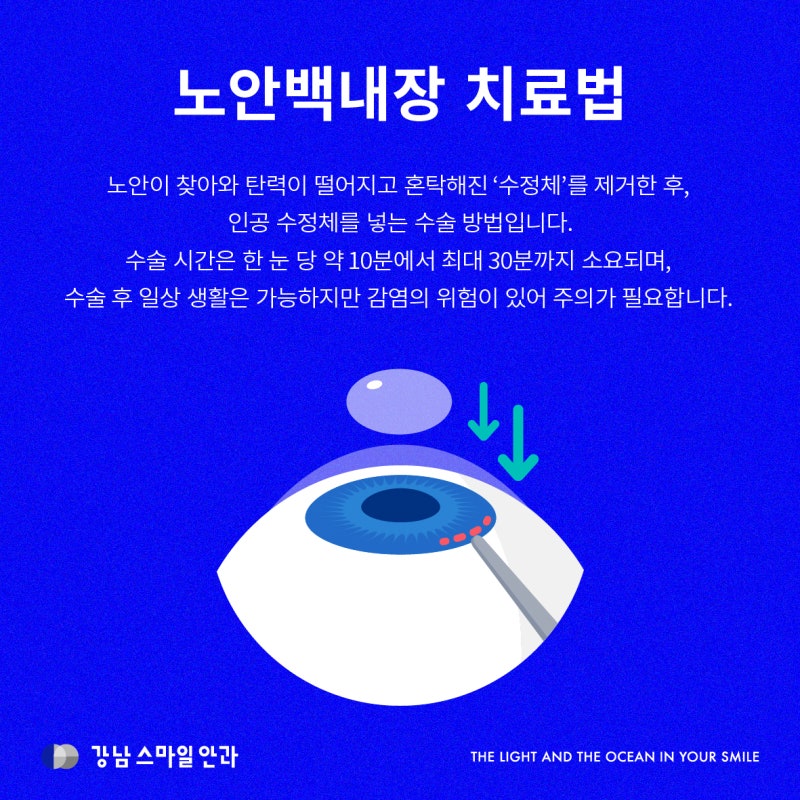
Since the 'lens' is the common structure causing both presbyopia and cataracts,
it can be resolved at once with 'intraocular lens implantation surgery'.
Intraocular lens implantation surgery involves removing the existing lens that has become cloudy due to cataracts,
or has lost elasticity and function due to presbyopia, and inserting an artificial intraocular lens.
Gangnam Station Cataract Clinic: How to choose a cataract clinic

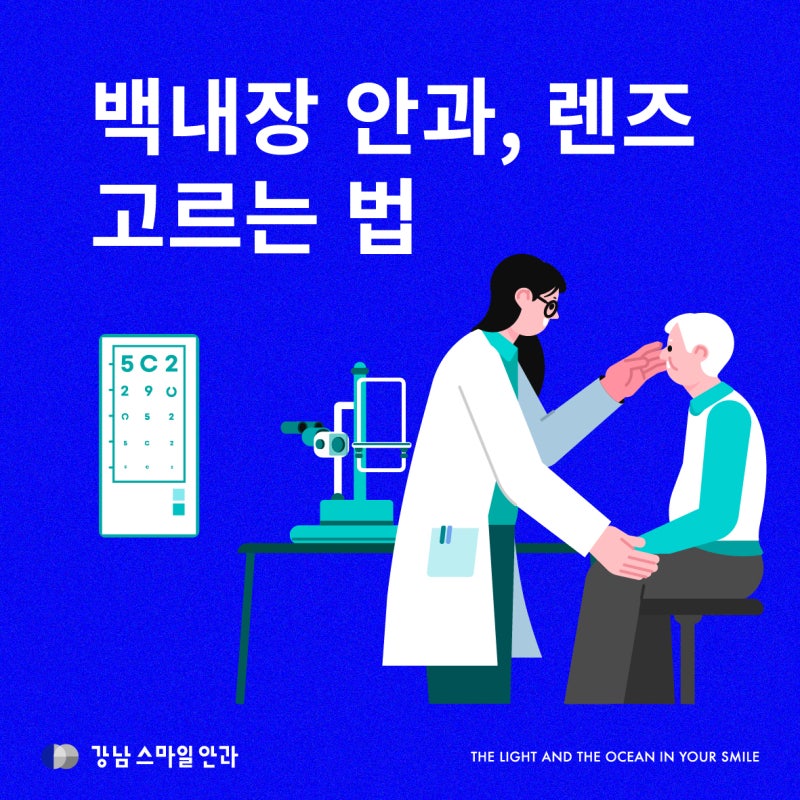
As presbyopia and cataract surgery are performed on a vital organ like the eye,
it is important to carefully consider the medical team's clinical experience and technical skill, rather than just the surgery cost,
as well as systematic post-operative care.
Choosing the 'intraocular lens' to replace the natural lens
can be said to be the most crucial aspect of the procedure.
In addition, it is advisable to check if the ophthalmology clinic
possesses various state-of-the-art equipment for cataract surgery,
and if it conducts thorough pre-operative precise examinations systematically.
Gangnam Station Cataract Clinic: How to choose a cataract lens

Lenses are broadly divided into monofocal and multifocal.
Monofocal lenses are covered by insurance,
so the financial burden of surgery is not significant,
and there is less concern about side effects like glare.
However, they can only focus at one distance (usually far distance),
so glasses are essential for near vision after surgery.
Multifocal lenses can correct vision at all distances,
eliminating the need for glasses after surgery,
and are highly preferred as they can also improve presbyopia.
However, as the focus is distributed to multiple points,
there is a possibility of issues such as glare or reduced visual clarity.
Rather than prioritizing just one factor when choosing a lens,
it is important to consider the individual's eye characteristics, lifestyle, and medical history
comprehensively.
For example, whether the patient's axial length is not too short for the lens,
whether they have a pupil size sensitive to glare,
whether their retina is weak,
or if they have a job or hobby where both near and far vision are important
should all be considered holistically.
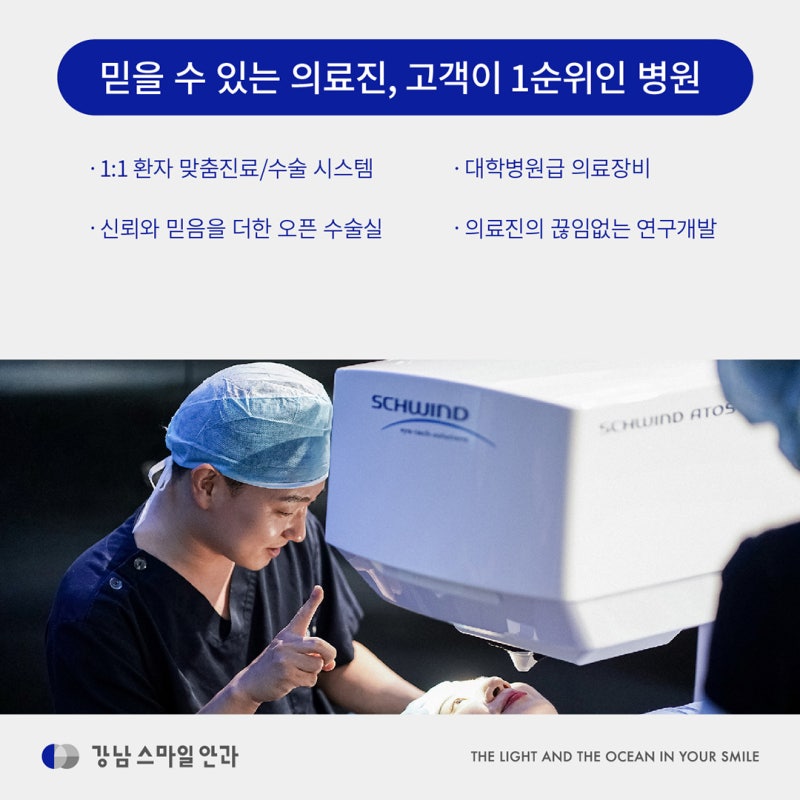
Gangnam Smile Eye Clinic, a Gangnam Station cataract clinic,
uses pre-operative examination equipment comparable to university hospitals
to conduct precise examinations and thorough 1:1 consultations,
then recommends an artificial intraocular lens suitable for each individual's eyes.
Furthermore, it is equipped with a specialized cataract surgery center and state-of-the-art surgical equipment
to perform surgeries safely,
and manages patients systematically by designing post-operative programs, including inpatient rooms.
Finally, to prevent age-related cataracts
and slow down presbyopia, maintaining healthy lifestyle habits is crucial.
The first step is to avoid prolonged use of electronic devices like smartphones or PCs,
consume foods rich in vitamins A, C, and E,
and engage in regular exercise to maintain and prevent eye health.
However, presbyopia is a condition that everyone experiences with aging,
so if you feel symptoms such as blurry vision or difficulty focusing,
we recommend choosing a hospital based on the points mentioned above
and visiting as soon as possible.
💙🤍 𝖦𝖠𝖭𝖦𝖭𝖠𝖬 𝖲𝖬𝖨𝖫𝖤 𝖤𝖸𝖤 𝖢𝖫𝖨𝖭𝖨𝖢💙🤍
𝗧𝗛𝗘 𝗟𝗜𝗚𝗛𝗧 𝗔𝗡𝗗 𝗧𝗛𝗘 𝗢𝗖𝗘𝗔𝗡 𝗜𝗡 𝗬𝗢𝗨𝗥 𝗦𝗠𝗜𝗟𝗘
Dry eye redness, foreign body sensation in dry eyes













자주 묻는 질문
백내장과 노안은 어떻게 다른가요?
백내장은 수정체가 혼탁해져 빛이 제대로 통과하지 못해 시야가 뿌옇게 보이는 증상입니다. 반면 노안은 수정체 탄력 저하로 가까운 글씨나 물체가 흐리게 보이는 증상입니다. 두 질환은 발병 시기가 비슷하여 혼동하기 쉽습니다.
백내장과 노안을 동시에 치료할 수 있나요?
네, 가능합니다. 백내장과 노안 모두 수정체에 문제가 생겨 발생하는 질환이므로, 혼탁하거나 기능이 저하된 수정체를 제거하고 인공수정체를 삽입하는 수술로 한 번에 해결할 수 있습니다.
백내장 수술 안과를 선택할 때 중요한 기준은 무엇인가요?
백내장 수술 안과를 선택할 때는 의료진의 임상 경험과 기술력, 체계적인 사후 관리 시스템, 다양한 최신 장비 보유 여부, 그리고 수술 전 정밀 검사 진행 여부를 면밀히 살펴보는 것이 중요합니다.
백내장 수술 시 렌즈는 어떻게 선택해야 하나요?
렌즈는 크게 단초점과 다초점으로 나뉩니다. 개인의 눈 특성, 라이프스타일, 보유 병력(안축장 길이, 동공 크기, 망막 상태 등)을 종합적으로 고려하여 의료진과 충분한 상담 후 자신에게 가장 적합한 렌즈를 선택해야 합니다.
노안을 늦추거나 예방하는 방법이 있나요?
네, 있습니다. 스마트폰이나 PC 등 전자기기 사용 시간을 줄이고, 비타민 A, C, E가 풍부한 음식을 섭취하며, 꾸준한 운동을 통해 눈 건강을 관리하는 것이 노안 예방 및 지연에 도움이 됩니다.
Frequently Asked Questions
What is the difference between cataracts and presbyopia?
Cataracts are a condition where the lens of the eye becomes cloudy, preventing light from passing through properly, resulting in blurred vision. Presbyopia, on the other hand, is a condition where the lens loses its elasticity, making it difficult to see close-up text or objects clearly. Both conditions often occur around the same age, making them easy to confuse.
Can cataracts and presbyopia be treated simultaneously?
Yes, it is possible. Both cataracts and presbyopia are caused by problems with the eye's lens, so they can be resolved at once by removing the cloudy or dysfunctional lens and inserting an artificial intraocular lens.
What are the important criteria when choosing an ophthalmology clinic for cataract surgery?
When choosing an ophthalmology clinic for cataract surgery, it is important to carefully consider the medical team's clinical experience and technical skills, a systematic post-operative care system, the availability of various state-of-the-art equipment, and whether precise pre-operative examinations are conducted.
How should I choose a lens for cataract surgery?
Lenses are broadly divided into monofocal and multifocal types. You should choose the most suitable lens for you after thorough consultation with your medical team, considering your individual eye characteristics, lifestyle, and medical history (such as axial length, pupil size, and retinal condition).
Are there ways to slow down or prevent presbyopia?
Yes, there are. Reducing screen time on electronic devices like smartphones and PCs, consuming foods rich in vitamins A, C, and E, and maintaining eye health through regular exercise can help prevent and delay presbyopia.