2026-07-23
Gangnam Upper and Lower Blepharoplasty: Which Surgery is Right for Me?
If your eyes appear smaller or you often hear you look tired, you might be experiencing eyelid aging. This article explores upper and lower blepharoplasty, helping you understand which procedure suits your specific needs based on the causes of eye aging.



If you look in the mirror and your eyes seem smaller than before,
or if you frequently hear that you look tired,
you might want to consider the possibility of aging around the eyes.
Especially after middle age, it's not uncommon for eyelid skin to sag
or for under-eye fat to protrude, making you look older
than your actual age.
In such cases, many people search for places that perform excellent upper and lower blepharoplasty,
but surprisingly, not many understand the difference between upper and lower blepharoplasty before their visit.
It's easy to think of them as the same eye surgery,
but the areas to be improved and the surgical goals can differ.
Today, we will explore the causes of aging around the eyes and determine when upper blepharoplasty
or lower blepharoplasty might be considered.
Upper and lower blepharoplasty are commonly known as eye surgeries for middle-aged individuals,
but they are not necessarily determined by age alone.
Recently, there have been cases where individuals with congenitally droopy eyes
or those whose upper eyelids cover their pupils, giving a stuffy impression,
or even those in their 20s and 30s who experience under-eye protrusion and sagging earlier than their peers,
consider upper and lower blepharoplasty.
What's important is not age, but the current eye structure, the degree of skin sagging,
and the presence of functional discomfort.
Therefore, it is advisable to evaluate an individual's eye condition rather than their age
to determine if the surgery is appropriate.
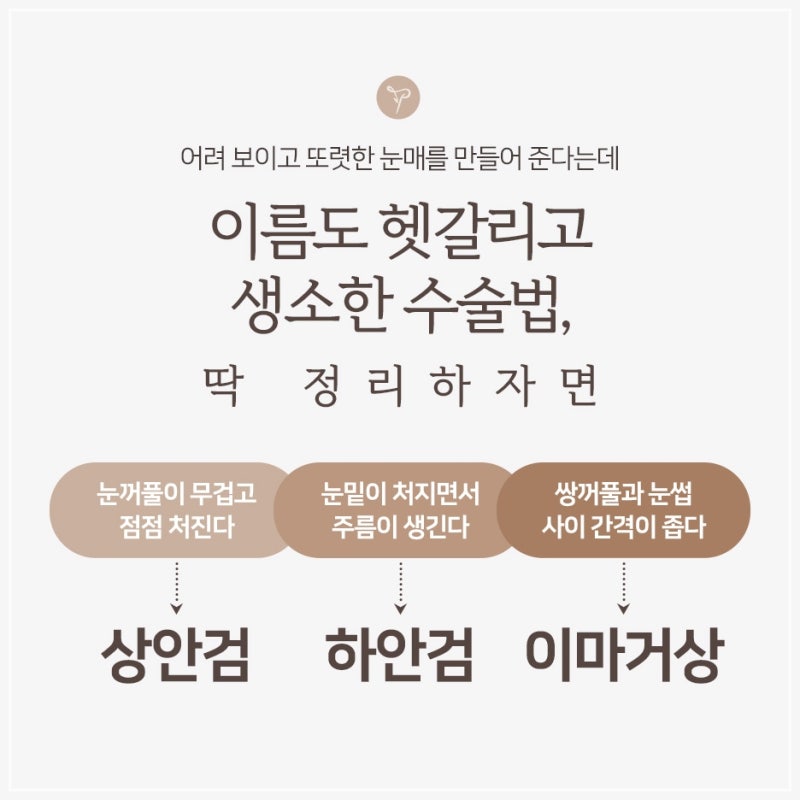
When is upper blepharoplasty necessary?
As we age, skin elasticity decreases,
and one of the first areas to show changes is the upper eyelid.
When stretched skin begins to cover the pupil,
the eyes can appear heavy,
and in severe cases, some may experience discomfort from partially obstructed vision.
Some individuals develop a habit of using their forehead muscles to open their eyes,
leading to forehead wrinkles or eye fatigue.
If sagging of the upper eyelid is the primary concern,
upper blepharoplasty can be considered.
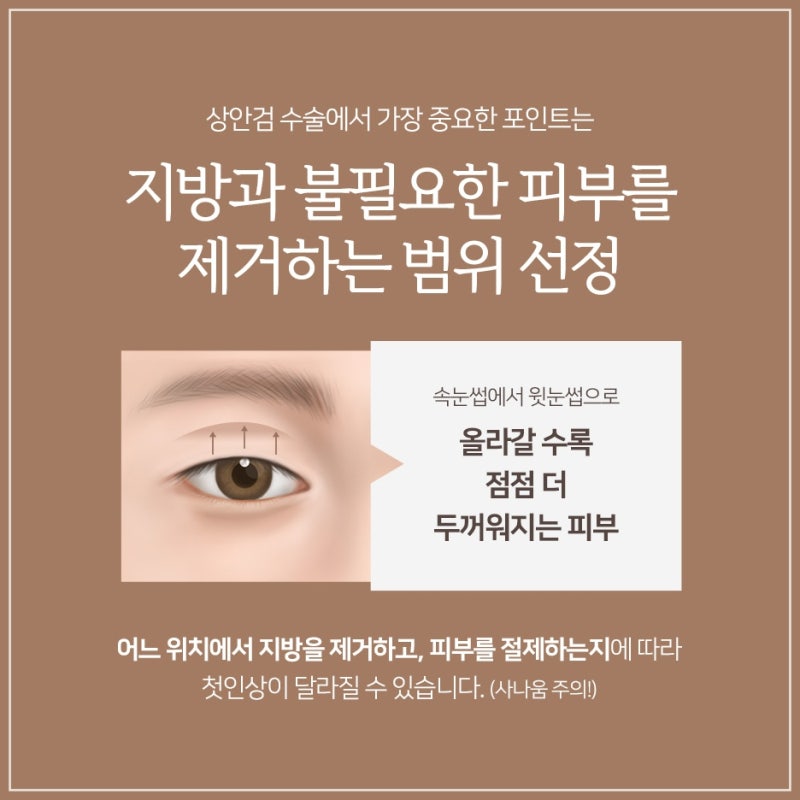
However, simply removing a lot of skin
does not guarantee good results.
It is crucial to assess the individual's degree of skin sagging, the function of the eye-opening muscles, and the amount of fat,
and then plan the appropriate scope of the procedure.
For this reason, when looking for a place that performs excellent upper and lower blepharoplasty,
it can be helpful to consider whether they take into account both the functional and aesthetic aspects of the eyes,
rather than just simple surgical experience.
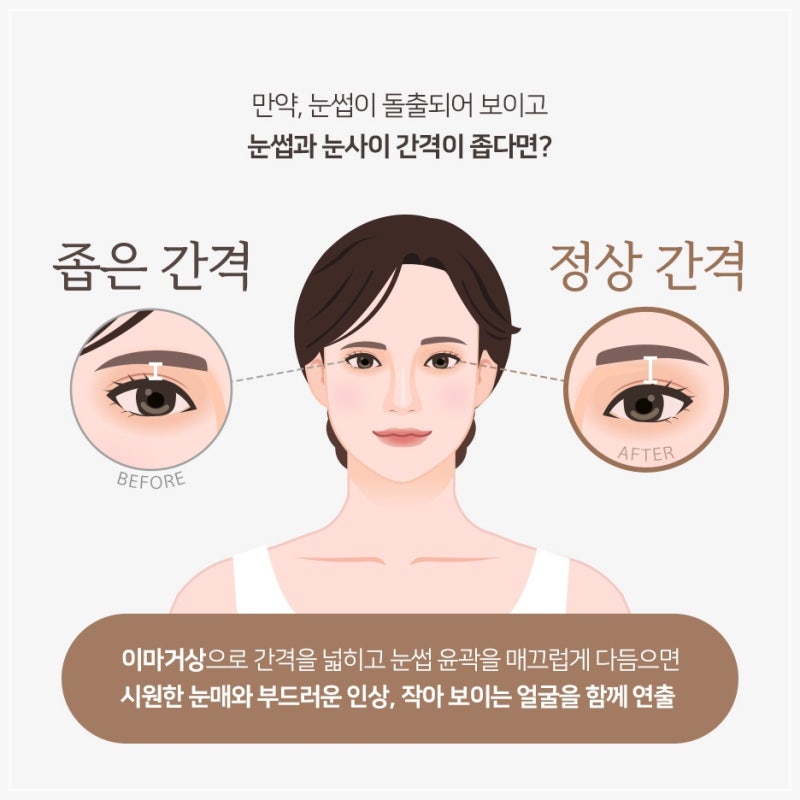
When is lower blepharoplasty necessary?
Conversely, if the under-eye area appears bulging
or dark circles are severe, many consider lower blepharoplasty.
When the tissues supporting the under-eye fat weaken, the fat protrudes forward,
and reduced skin elasticity can lead to wrinkles and sagging simultaneously.
These changes can make one look tired even after sufficient rest,
contributing to a fatigued impression.
Lower blepharoplasty is a surgery planned by considering both the protruding fat and the sagging skin.
However, not all under-eye aging progresses in the same way, so
a comprehensive assessment of the amount of fat, degree of skin sagging, and condition of the tear trough
is necessary.
Therefore, when choosing a place for upper and lower blepharoplasty,
it's important to ensure that they don't just remove under-eye fat,
but also consider the overall balance of the eye area when planning the surgery.
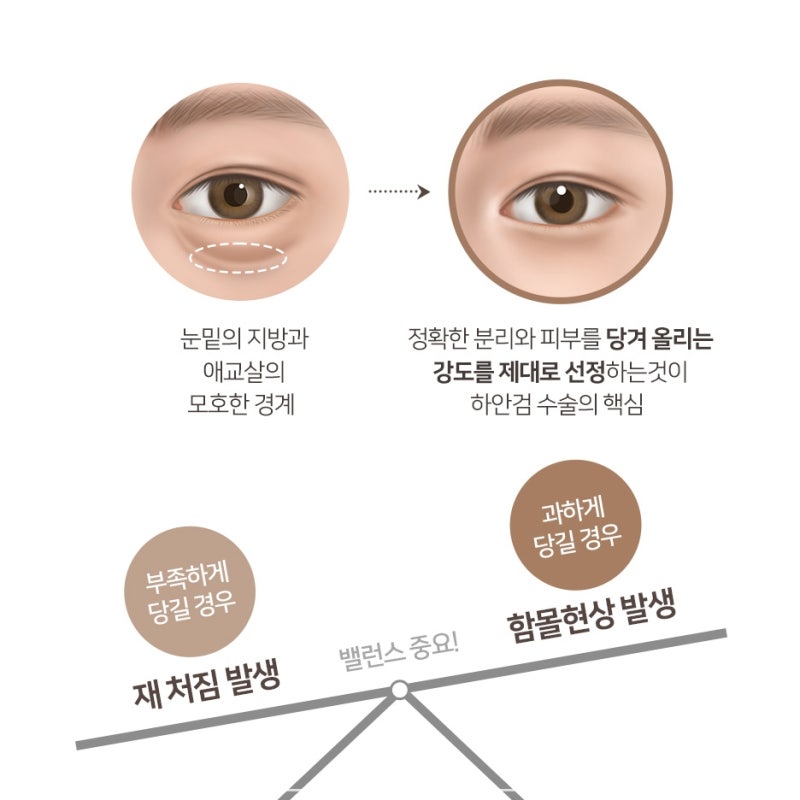
What's important in lower blepharoplasty?
What's important in lower blepharoplasty is not simply
removing a lot of sagging skin,
but rather how appropriately the skin is lifted and tightened.
If pulled insufficiently | Risk of re-sagging |
If pulled excessively | Risk of hollow appearance |
Therefore, comprehensively considering the degree of skin sagging, tissue elasticity,
and eye structure to find the right balance for each individual
can be said to be the core of lower blepharoplasty.
For this reason, lower blepharoplasty is not just a simple skin excision surgery,
but a procedure where precise control over the strength and extent of skin tightening is crucial.
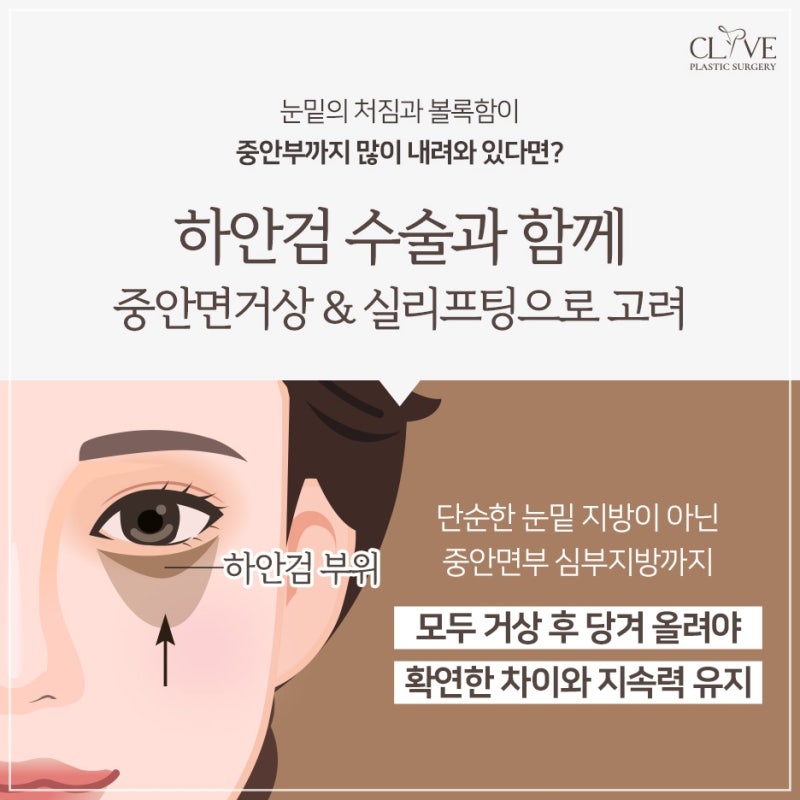
In cases where under-eye sagging and fat bulging are not limited to just below the eyes
but extend to the midface, lower blepharoplasty alone
may not sufficiently cover the area of improvement.
When cheek sagging also occurs, reducing the three-dimensional volume of the midface,
midface lift or thread lift can be considered in conjunction.
However, the applicable method should be determined after comprehensively evaluating the degree of skin sagging, the position of midface tissues,
and the overall balance of the face.

Eye aging does not manifest in the same way for everyone.
For some, sagging upper eyelids might be a major concern,
while for others, under-eye fat protrusion or
skin sagging might be more prominent.
Furthermore, in cases where under-eye sagging extends to the midface, it may be appropriate to consider
a midface lift or thread lift in addition to lower blepharoplasty.
The important thing is not to apply the same method to everyone,
but to comprehensively assess the current eye structure, skin elasticity, tissue position,
and aging patterns, and then create a plan tailored to those findings.
Therefore, if you are looking for a place that performs excellent upper and lower blepharoplasty, rather than simply comparing surgical methods or
costs, it's important to thoroughly diagnose your individual condition
and see if they guide you on which method, upper or lower blepharoplasty, is suitable, and if necessary, even other lifting methods.
As the eyes are a crucial part that determines the first impression of the face,
identifying your current concerns and choosing the method that suits you
can be the first step towards achieving more natural and satisfying results.






Frequently Asked Questions
When is upper blepharoplasty necessary?
Upper blepharoplasty can be considered when sagging of the upper eyelid is the primary concern. It is suitable when stretched skin covers the pupil, making the eyes appear heavy or obstructing vision, or when one uses forehead muscles to open their eyes, leading to forehead wrinkles or eye fatigue.
What problems does lower blepharoplasty improve?
Lower blepharoplasty focuses on improving bulging under-eyes, severe dark circles, and wrinkles and sagging caused by reduced under-eye skin elasticity. It helps to improve a tired appearance even after sufficient rest.
Can upper and lower blepharoplasty be performed regardless of age?
Yes, upper and lower blepharoplasty are not necessarily determined by age alone. Recently, there have been cases where individuals in their 20s and 30s with congenitally droopy eyes or early under-eye protrusion consider these procedures. What's important is not age, but the current eye structure, the degree of skin sagging, and the presence of functional discomfort.
What is the most important consideration for upper and lower blepharoplasty?
The most important consideration is a comprehensive evaluation of the individual's eye condition. Rather than simply removing a lot of skin, it's crucial to consider the degree of skin sagging, the function of the eye-opening muscles, the amount of fat, and tissue elasticity to create a balanced surgical plan tailored to the individual.
Is lower blepharoplasty alone sufficient for severe under-eye sagging?
No, if under-eye sagging and fat bulging are not limited to just below the eyes but extend to the midface, lower blepharoplasty alone may not sufficiently cover the area of improvement. In such cases, a midface lift or thread lift can be considered in conjunction.