2026-07-20
Gangnam Station Presbyopia Treatment: Blurred Vision Without Cataracts? Distinguish It From ‘This’!
Blurred vision without cataracts might not be presbyopia. Learn about epiretinal membrane and presbyopia treatments without cataracts.

Hello, this is Gangnam Smile Eye Clinic 😊💙
As we age, many people find that close-up text becomes blurry and they have difficulty focusing.
Often, they just assume it’s ‘presbyopia’ and move on.
However, if blurred vision persists even without cataracts, you should consider if there might be another cause.
Today, we will explore ‘epiretinal membrane’, a condition that can cause blurred vision similar to presbyopia symptoms, even without cataracts, and guide you through presbyopia treatments possible without cataracts!
Gangnam Station Presbyopia Treatment: Is Blurred Vision Always Cataracts or Presbyopia? Not Necessarily!
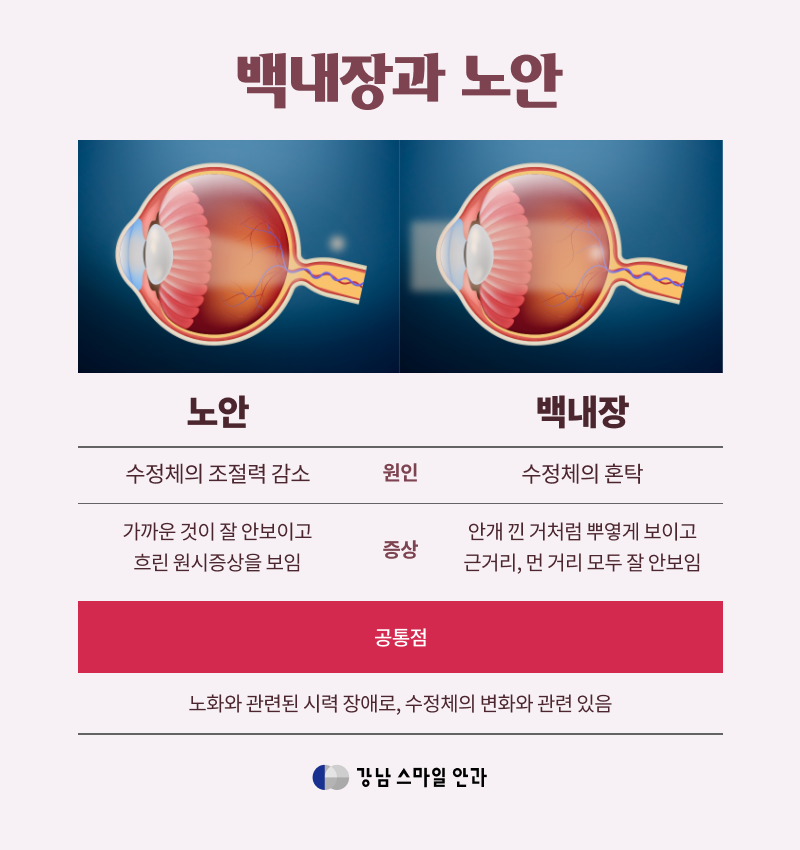
Presbyopia is a natural aging phenomenon of the eyes that typically appears after the mid-40s,
starting with difficulty focusing on close-up text or needing to strain your eyes to see clearly.
Initially, it might be mild, requiring you to hold books or smartphones further away to see them well, but as presbyopia progresses, focusing becomes increasingly difficult, leading to various discomforts in daily life such as fatigue, glare, and headaches.
If presbyopia is left untreated, the effectiveness of vision correction may decrease due to reduced accommodative power, or the quality of life itself may decline.
When vision is blurry or close-up text is hard to see, most people first think of cataracts or presbyopia.
Presbyopia is characterized by a decrease in the elasticity of the lens, making it difficult to see at close distances, while cataracts are distinguished by the clouding of the entire field of vision due to the opacification of the lens.
However, it is difficult to make an accurate diagnosis based on symptoms alone.
Gangnam Station Presbyopia Treatment: Distinguishing Epiretinal Membrane from Presbyopia
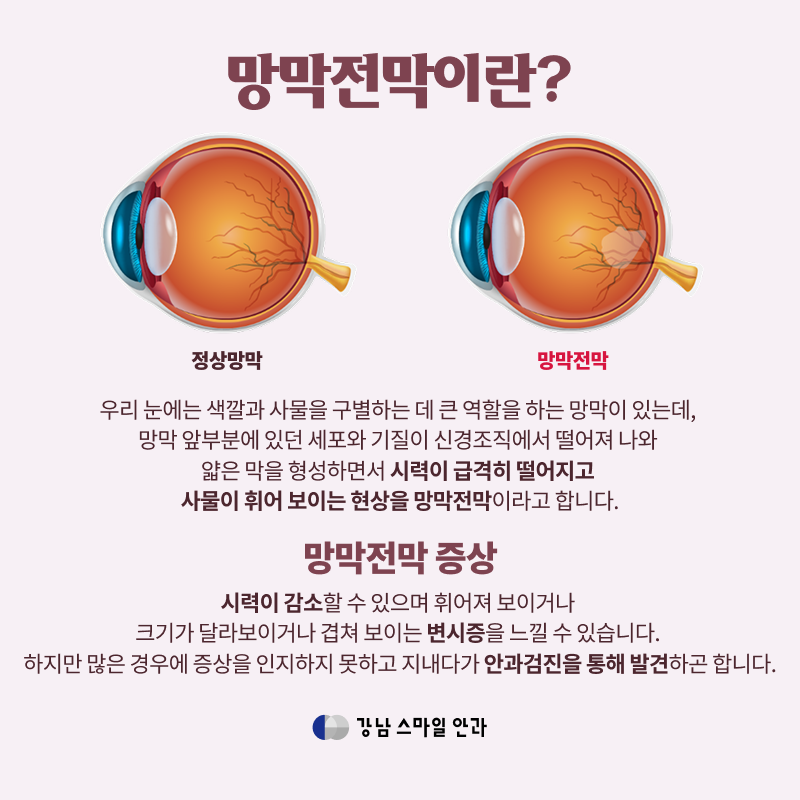
For example, if your vision isn't clear even after changing glasses, or if objects appear distorted or doubled, you should suspect a completely different cause: ‘epiretinal membrane’.
Epiretinal membrane is a condition where a thin fibrous membrane forms on the retina, specifically in the macula responsible for central vision, gradually wrinkling the retina.
It often develops with aging, primarily after the age of 40, and causes characteristic symptoms such as ‘metamorphopsia’, where the center of vision appears wavy or objects look distorted.
Other symptoms include a difference in the size of the visual field between both eyes, and diplopia, where objects appear doubled.
In particular, epiretinal membrane can coexist with presbyopia, making it difficult to pinpoint the exact cause with a presbyopia diagnosis alone.
If you’ve had glasses for presbyopia but your vision still feels abnormal or blurry, a detailed examination to check the condition of your retina is essential.
Depending on the progression of epiretinal membrane, regular follow-up observations are necessary. If vision distortion is severe or interferes with daily life, surgical treatment such as vitrectomy by a retinal specialist should be considered.
Missing the treatment window can lead to irreversible damage to the retinal structure, so early diagnosis is paramount.
Gangnam Station Presbyopia Treatment: Personalized Presbyopia Treatment Starts with ‘Cause Diagnosis’!
Many people believe that presbyopia treatment is always performed in conjunction with cataract surgery, but in fact, presbyopia correction is entirely possible even without cataracts.
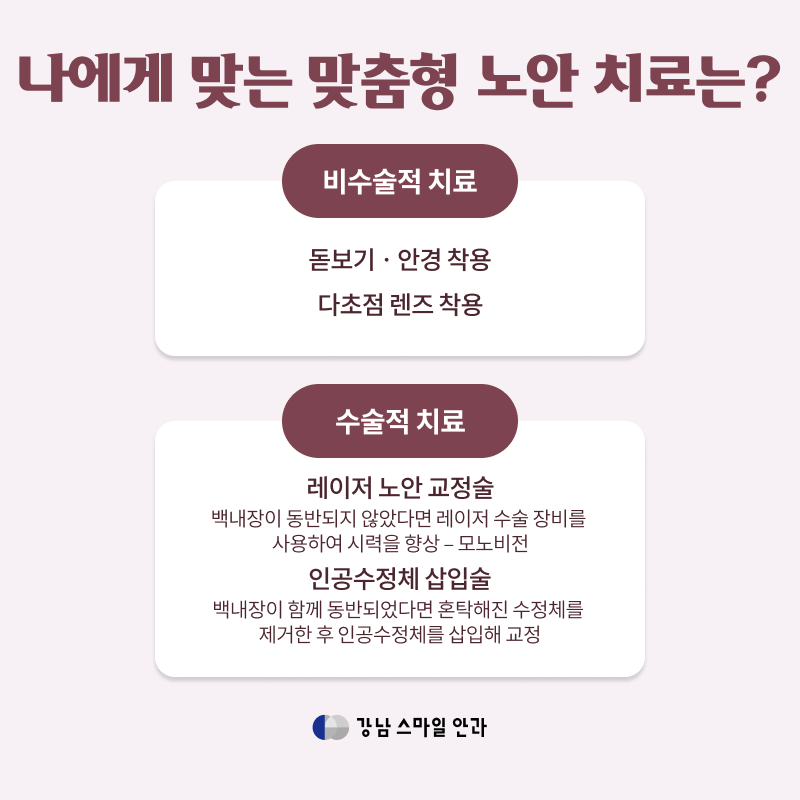
Recently, various personalized presbyopia treatment methods have been developed to suit individual eye conditions, such as multifocal intraocular lens implantation, premium presbyopia-correcting lens implantation, and laser-based surgery, allowing people in their 40s and 50s to regain clear vision without cataracts.
Since each treatment method has different characteristics and target candidates, it is important to choose the method that is right for you.
For example, multifocal intraocular lens implantation uses a lens that corrects both distance and near vision, making it suitable for those with cataracts or those in the early stages of cataracts.
On the other hand, presbyopia-correcting lens implantation (ICL) is a method that preserves the natural lens and corrects vision by adding an artificial lens, making it suitable for relatively younger presbyopia patients without cataracts.
Additionally, laser-based procedures adjust the cornea with a laser to improve accommodative power, and this can also be considered for early presbyopia patients whose cataracts have not progressed.
However, whether the symptoms are due to presbyopia or an epiretinal membrane or other retinal disease, the treatment approach will be completely different. Therefore, to receive such treatments, it is crucial to first distinguish the exact cause of blurred vision.
For this, various precise examinations such as visual acuity and accommodative power tests, fundus photography, optical coherence tomography (OCT), and refraction tests should be performed to thoroughly analyze the function and structure of the eye.
Choosing the optimal personalized treatment method based on an accurate diagnosis is the beginning of safe and effective presbyopia treatment.
If you delay treatment because you think ‘it’s still bearable’, the available treatment options may be limited later on. Therefore, it is recommended to accurately diagnose your eye condition at the appropriate time and start treatment at the best possible moment.
At Gangnam Smile Eye Clinic, we will guide you to the safest and most effective Gangnam Station presbyopia treatment direction through precise examinations and consultations tailored to your lifestyle and eye condition.
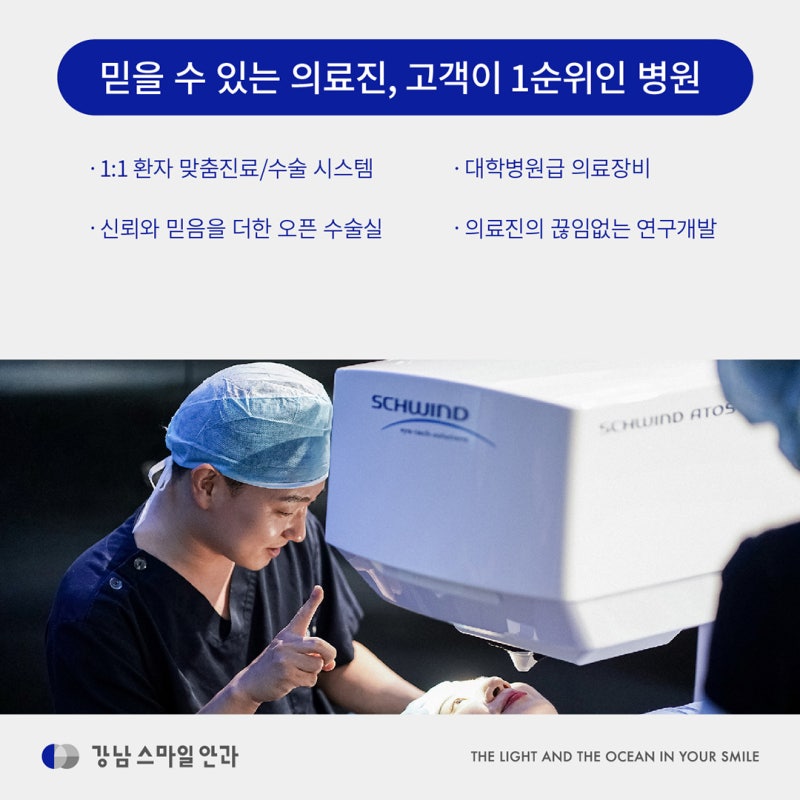
Gangnam Smile Eye Clinic, specializing in Gangnam Station presbyopia treatment,
is equipped with the latest equipment and a systematic examination system,
providing sincere care and surgery to each individual through 1:1 customized consultations.
We always prioritize the patient and emphasize transparency and safety.
If you have any other inquiries, please feel free to contact the clinic at any time.
💙🤍 𝖦𝖠𝖭𝖦𝖭𝖠𝖬 𝖲𝖬𝖨𝖫𝖤 𝖤𝖸𝖤 𝖢𝖫𝖨𝖭𝖨𝖢💙🤍
𝗧𝗛𝗘 𝗟𝗜𝗚𝗛𝗧 𝗔𝗡𝗗 𝗧𝗛𝗘 𝗢𝗖𝗘𝗔𝗡 𝗜𝗡 𝗬𝗢𝗨𝗥 𝗦𝗠𝗜𝗟𝗘
Gangnam Station Presbyopia Treatment Gangnam Station Presbyopia Treatment Gangnam Station Presbyopia Treatment Gangnam Station Presbyopia Treatment Gangnam Station Presbyopia Treatment Gangnam Station Presbyopia Treatment Gangnam Station Presbyopia Treatment Gangnam Station Presbyopia Treatment


Gangnam Station Eye Clinic Gangnam Lens Implantation Gangnam Station Lens Implantation Gangnam Station Eye Clinic Gangnam Lens Implantation Gangnam Station Lens Implantation Gangnam Station Eye Clinic Gangnam Lens Implantation Gangnam Station Lens Implantation











Frequently Asked Questions
When does presbyopia typically appear?
Presbyopia usually appears naturally after the mid-40s as an aging phenomenon of the eyes. It begins with difficulty focusing on close-up text or needing to strain your eyes to see clearly. Initially, it might be mild, requiring you to hold books or smartphones further away to see them well.
Is blurry vision always presbyopia or cataracts?
No, it's not. While presbyopia or cataracts are often the first things that come to mind when vision is blurry or close-up text is hard to see, if your vision isn't clear even after changing glasses, or if objects appear distorted, you should suspect an epiretinal membrane. An accurate diagnosis is necessary.
What symptoms does epiretinal membrane cause?
Epiretinal membrane causes characteristic symptoms such as metamorphopsia, where the center of vision appears wavy or objects look distorted, a difference in the size of the visual field between both eyes, and diplopia, where objects appear doubled.
Is presbyopia treatment possible without cataracts?
Yes, it is. Presbyopia correction is entirely possible even without cataracts. Recently, various personalized presbyopia treatment methods have been developed, including multifocal intraocular lens implantation, premium presbyopia-correcting lens implantation, and laser-based surgery.
How should I choose a presbyopia treatment method?
The choice of presbyopia treatment method depends on your individual eye condition and an accurate diagnosis of the cause of your symptoms. After analyzing the function and structure of your eye through precise examinations such as visual acuity and accommodative power tests, fundus photography, and optical coherence tomography (OCT), you should select the optimal personalized treatment method.
How is epiretinal membrane treated?
Depending on the progression of epiretinal membrane, regular follow-up observations are necessary. If vision distortion is severe or interferes with daily life, surgical treatment such as vitrectomy by a retinal specialist should be considered. Early diagnosis is important.