2026-07-20
Gangnam Station Eye Clinic Recommendation | LASIK Dry Eye, Essential Eyedrops for Fast Recovery
Learn about autologous serum eyedrops (PRP eyedrops) for faster recovery and dry eye relief after LASIK/LASEK surgery. Discover their benefits, proper usage, and precautions.

Hello, this is Gangnam Smile Eye Clinic 😊💙
After LASIK or LASEK surgery,
many people complain of discomfort,
such as dry eyes and severe glare.
Recently, autologous serum eyedrops (PRP eyedrops) are being used
to alleviate such delayed recovery and dry eye symptoms.
Today, we will take some time to learn about
the correct usage and precautions for autologous serum eyedrops
utilized at our recommended Gangnam Station eye clinic.
Gangnam Station Eye Clinic Recommendation: What is Autologous Serum?
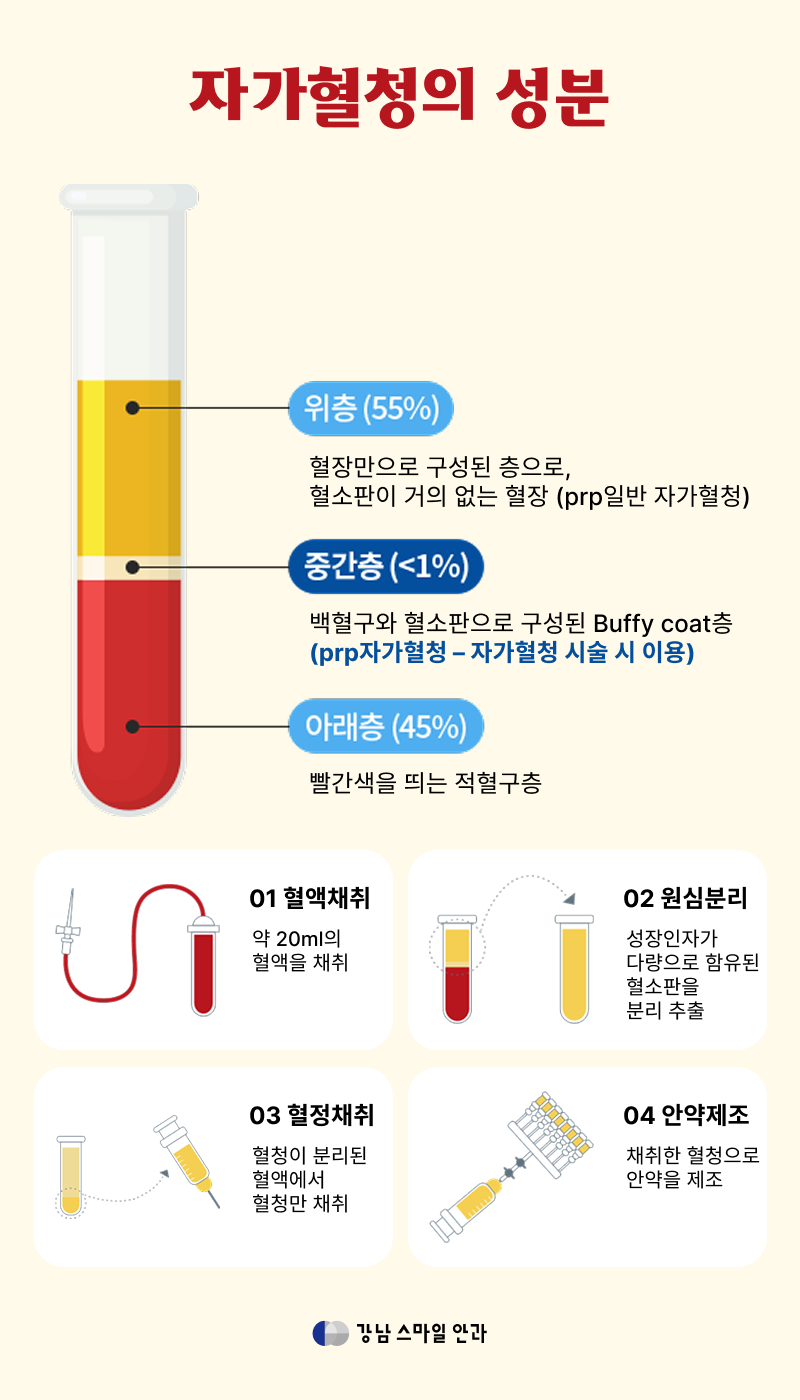
Autologous serum eyedrops are made by extracting only the serum components
from the patient's own blood or by concentrating
PRP (Platelet-Rich Plasma) which contains platelets.
This serum contains high concentrations of growth factors (EGF, FGF-b), vitamin A,
immunoglobulins, and fibroblast growth factors that aid in corneal regeneration,
helping with wound healing and inflammation suppression.
Unlike regular artificial tears, autologous serum contains ingredients that promote the eye's natural healing,
making it more effective in shortening the recovery period and alleviating pain after surgery.
The process of making autologous serum involves
first collecting about 20ml of blood, then using a centrifuge to
separate and extract platelets rich in epithelial regeneration factors.
Next, serum is collected from the blood where the serum has been separated,
and eyedrops are then manufactured from the collected serum.
Generally, one blood draw can produce 1 to 3 months' supply of autologous serum eyedrops,
and it takes about 1 hour to produce them.
Gangnam Station Eye Clinic Recommendation: Various Effects of Autologous Serum
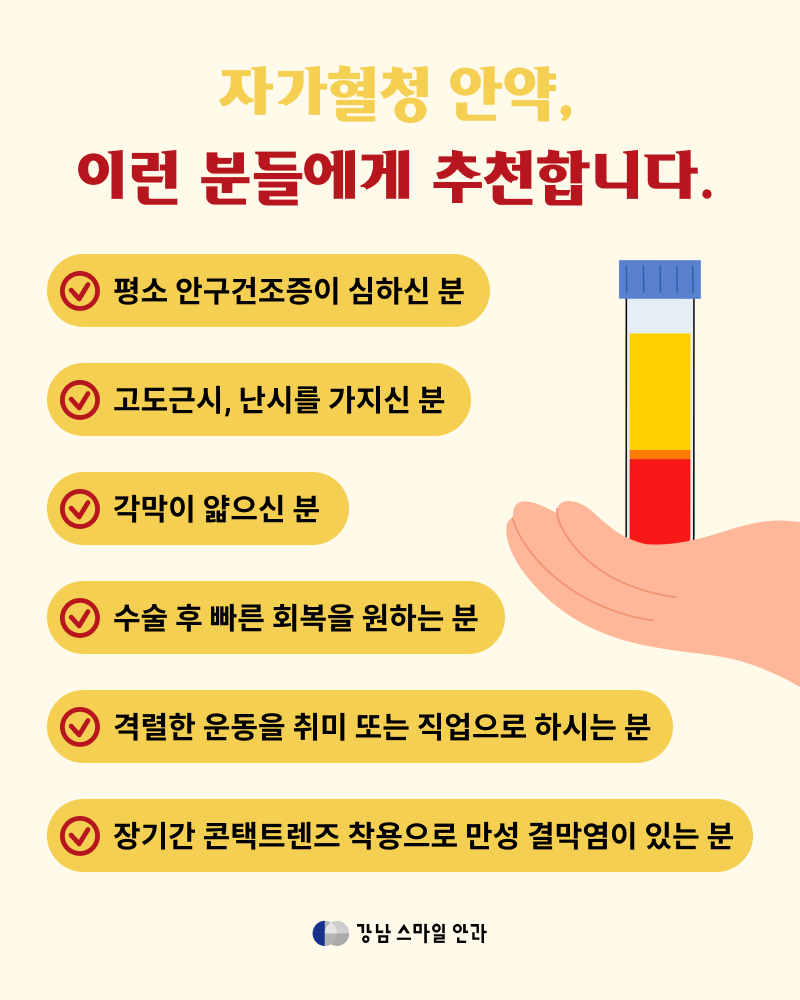
Resolution of Chronic Dry Eye Syndrome
Dry eye syndrome occurs when tear production is insufficient
or when tears evaporate too quickly even if they are produced well.
This can lead to a type of inflammatory reaction on the eye surface,
potentially damaging the ocular surface.
Various methods are used to treat dry eye syndrome,
which causes dryness, glare, blurriness, fatigue, redness, and pain.
Among these, autologous serum is particularly helpful for patients suffering from chronic dry eye,
as it promotes tear film stability and tissue regeneration on the eye surface,
aiding in natural and sustained recovery without the need for artificial tears or steroid eyedrops.
Promoting Corneal Regeneration After LASIK, LASEK Surgery
After LASIK, LASEK, or SMILE LASIK surgery,
the epithelium is temporarily damaged, so the recovery speed significantly impacts the surgical outcome.
In this regard, autologous serum is rich in growth factors and immune-modulating components,
which helps promote the regeneration of damaged corneal cells and reduce inflammatory reactions.
It is particularly effective in alleviating common post-operative symptoms such as pain, foreign body sensation,
glare, and halos, helping patients return to daily life more quickly.
It also helps reduce the risk of complications like infection or corneal haze that can occur if corneal epithelial recovery is delayed.
Shortening Keratitis Treatment Period and Healing Corneal Wounds
Autologous serum eyedrops can also be used as an effective adjunctive treatment for keratitis.
Keratitis is a condition where the cornea is damaged due to inflammation,
which can lead to vision loss. Tissue regeneration and inflammation control are crucial during treatment.
For patients experiencing keratitis or recurrent corneal damage,
combining autologous serum eyedrops with existing treatments can help alleviate inflammation
and promote the regeneration of damaged tissue.
This can shorten the treatment period for keratitis
and have a positive impact on preventing vision loss due to chronic inflammation.
Gangnam Station Eye Clinic Recommendation: Precautions When Using Autologous Serum?
Autologous serum eyedrops can be used immediately from the day of surgery,
and the method of use is determined after sufficient consultation with medical staff,
depending on the individual's eye condition and symptoms.
Unlike therapeutic eyedrops,
due to the characteristic of being directly manufactured from the patient's own blood,
the frequency of instillation and dosage may also vary individually.
When prescribed after vision correction surgery, a relatively dilute solution is often used.
If you experience irritation or stinging in your eyes during use,
we recommend visiting the ophthalmology clinic to have the concentration adjusted.
Furthermore, autologous serum eyedrops do not contain preservatives
and are rich in nutrients that facilitate microbial growth,
so they can easily spoil at room temperature. Therefore, special care must be taken with storage.
Autologous serum eyedrops are an effective method to aid post-operative recovery
and assist in the treatment of various eye conditions
such as chronic dry eye or keratitis.
However, proper prescription tailored to the individual's eye condition, correct usage,
and thorough storage are paramount,
so we strongly recommend using them only after sufficient consultation with medical staff.
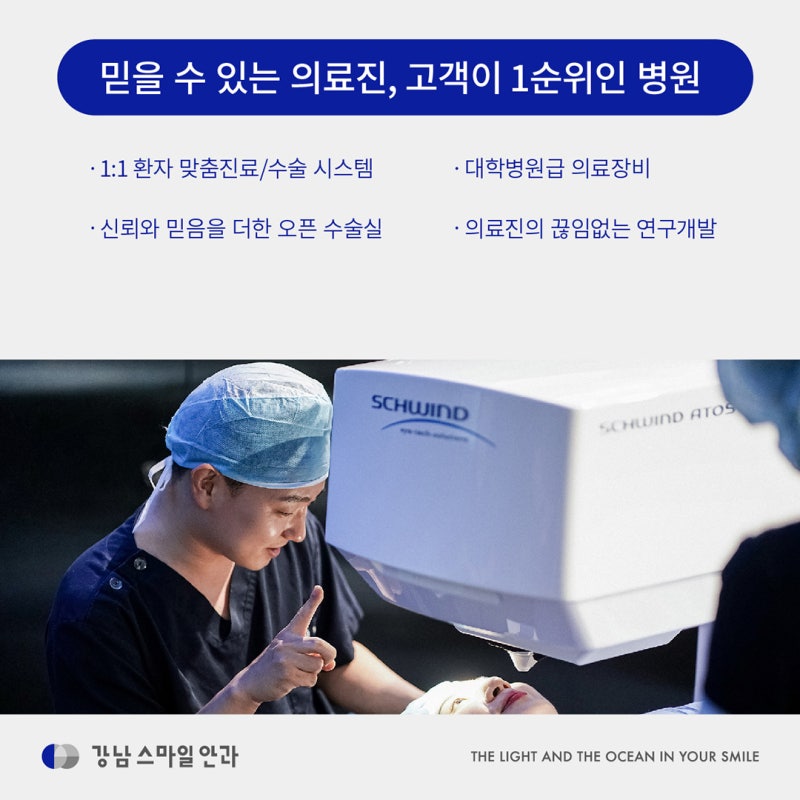
Gangnam Smile Eye Clinic
is equipped with the latest equipment and a systematic examination system,
providing sincere care and performing surgery for each individual through 1:1 customized consultations.
We always prioritize the patient,
and transparency and safety are our top concerns.
If you have any other questions,
please feel free to contact the eye clinic at any time.
💙🤍 𝖦𝖠𝖭𝖦𝖭𝖠𝖬 𝖲𝖬𝖨𝖫𝖤 𝖤𝖸𝖤 𝖢𝖫𝖨𝖭𝖨𝖢💙🤍
𝗧𝗛𝗘 𝗟𝗜𝗚𝗛𝗧 𝗔𝗡𝗗 𝗧𝗛𝗘 𝗢𝗖𝗘𝗔𝗡 𝗜𝗡 𝗬𝗢𝗨𝗥 𝗦𝗠𝗜𝗟𝗘
Gangnam Station Eye Clinic Recommendation


Gangnam Station Eye Clinic Recommendation Gangnam Station Eye Clinic Recommendation Gangnam Station Eye Clinic Recommendation Gangnam Station Eye Clinic Recommendation Gangnam Station Eye Clinic Recommendation Gangnam Station Eye Clinic Recommendation











Frequently Asked Questions
What are autologous serum eyedrops?
Autologous serum eyedrops are made by concentrating serum components or platelet-rich plasma (PRP) from the patient's own blood. They contain high concentrations of growth factors and immunoglobulins that aid in corneal regeneration, making them effective for wound healing and inflammation suppression.
What are the effects of autologous serum eyedrops?
Autologous serum eyedrops help resolve chronic dry eye syndrome, promote corneal regeneration after LASIK/LASEK surgery, and shorten the treatment period for keratitis while healing corneal wounds. They are effective in promoting the eye's natural healing, shortening recovery time, and alleviating pain.
How are autologous serum eyedrops made?
First, about 20ml of blood is collected, then a centrifuge is used to separate and extract platelets. Afterwards, serum is collected to manufacture the eyedrops. One blood draw can produce a 1-3 month supply, and the process takes about 1 hour.
What are the precautions when using autologous serum eyedrops?
Autologous serum eyedrops do not contain preservatives and can easily spoil at room temperature, so special care must be taken with storage. Additionally, if you experience irritation or stinging in your eyes during use, it is advisable to visit an ophthalmology clinic to have the concentration adjusted.
When can autologous serum eyedrops be used after LASIK?
Autologous serum eyedrops can be used immediately from the day of surgery. The frequency of instillation and dosage will be determined through sufficient consultation with medical staff, depending on the individual's eye condition and symptoms.