2026-07-20
Gangnam Station Cataract Surgery Methods: A Must-Compare Guide Before Choosing
Explore the differences between ultrasonic and laser cataract surgery at Gangnam Smile Eye Clinic to make an informed decision based on your eye condition and lifestyle.
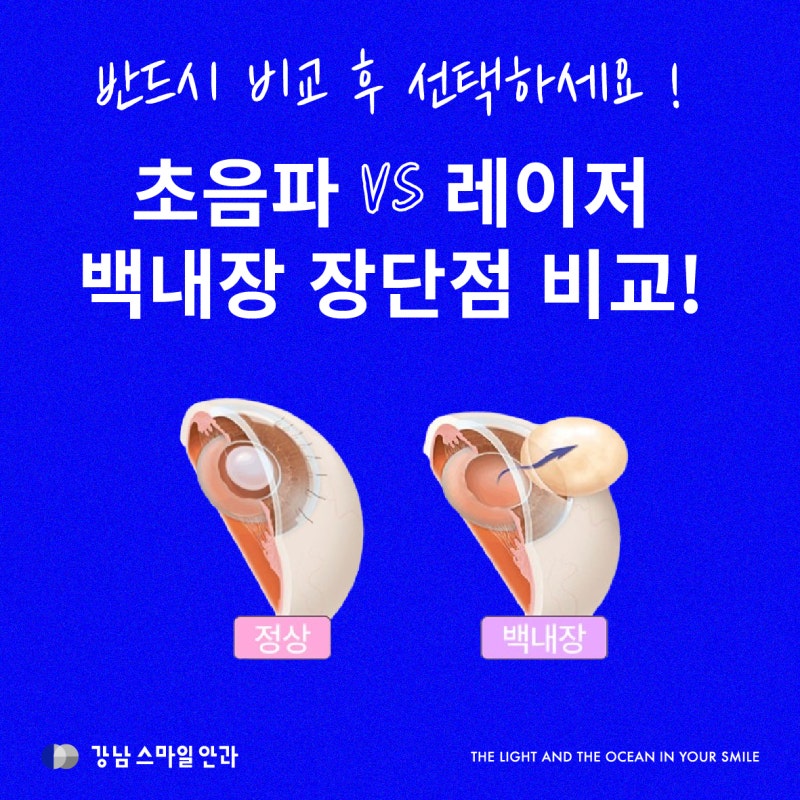
Hello, this is Gangnam Smile Eye Clinic 😊
Most eye diseases can be improved with medication or non-surgical methods.
However, cataracts are an exception.
Cataracts cannot be treated with medication and
are a condition that can only be improved through surgery.
Depending on the surgical method, there are cataract surgeries using ultrasound and
cataract surgeries using lasers.
These two methods differ not only in their surgical process and technical aspects but also
in recovery speed and safety.
In this article, we will delve into the differences between ultrasonic cataract surgery and laser cataract surgery
and compare which method is a better choice.
Gangnam Station Cataract: Differences Between Ultrasonic Cataract Surgery and Laser Cataract Surgery
Cataract surgery generally involves three main steps: corneal incision, removal of the clouded lens, and insertion of an intraocular lens.
The differences between ultrasonic cataract surgery and laser cataract surgery
are most prominent in the corneal incision and lens removal processes.
Let's explore the differences and pros and cons of each process.
1. Corneal Incision Process
Corneal incision is the first step in cataract surgery,
involving making an incision in the cornea, the outermost layer of the eye.
Surgical instruments enter the eye through this incision.
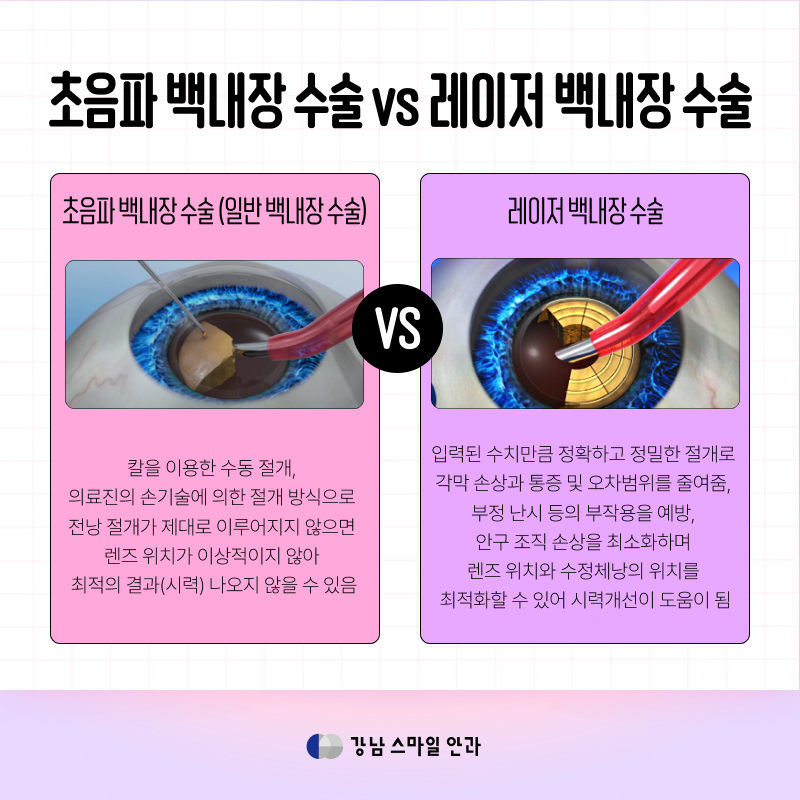
In ultrasonic cataract surgery (conventional cataract surgery),
the medical staff directly incises the cornea using a surgical blade.
This method can result in variations in incision size and depth depending on the surgeon's skill,
leading to less uniform incisions and
a potential risk of corneal damage.
Specifically, errors in the incision site or corneal damage can lead to
complications such as irregular astigmatism.
On the other hand, laser cataract surgery uses a femtosecond laser to
make extremely precise incisions according to values entered into a computer.
Laser technology allows for accurate setting of incision depth and angle,
minimizing corneal damage.
Because laser incisions are very precise, they can reduce errors during the incision process
and protect the cornea, lowering the risk of complications.
Preventing irregular astigmatism during the incision process is an advantage that
improves the quality of vision recovery.
2. Clouded Lens Removal Process
Lens removal refers to the process of breaking up the clouded lens
and then removing it with an aspirator.
It is crucial to safely fragment the lens and
avoid damaging the lens capsule.
In ultrasonic cataract surgery, ultrasonic energy is used to
fragment the lens.
Ultrasonic energy can affect not only the lens but also surrounding tissues like the cornea and lens capsule,
so a greater amount of ultrasound used can increase the risk of complications such as corneal edema, inflammation, or lens capsule damage.
If lens capsule damage occurs, the intraocular lens fixation can become unstable,
posing a risk of vision loss.
Laser cataract surgery involves precisely incising the lens with a laser first,
then fragmenting and aspirating it.
Laser technology can precisely fragment the lens in a short time,
minimizing the use of ultrasonic energy.
The laser does not apply direct physical impact to the lens capsule,
offering high stability and minimizing damage to the lens capsule.
This plays an important role in reducing the risk of postoperative complications
and can lower the incidence of corneal edema or inflammation.
Gangnam Station Cataract: Ultrasonic vs. Laser Cataract – Which Method is Better?

Ultrasonic cataract surgery is a long-standing method
applicable to most patients and relatively less burdensome in terms of cost.
While surgical outcomes can vary depending on the medical staff's skill,
good results can be expected if performed by an experienced specialist.
Laser cataract surgery allows for precise and safe surgery
and can also offer astigmatism correction, making it particularly recommended for patients with astigmatism.
The laser-assisted incision and lens fragmentation process enhances safety
and shortens the recovery period, allowing for a quicker return to daily life.
However, it requires expensive equipment and precise technology,
so the relatively higher surgical cost should be considered.
Gangnam Station Cataract: A Personalized Choice Based on Your Eye Condition is Necessary!
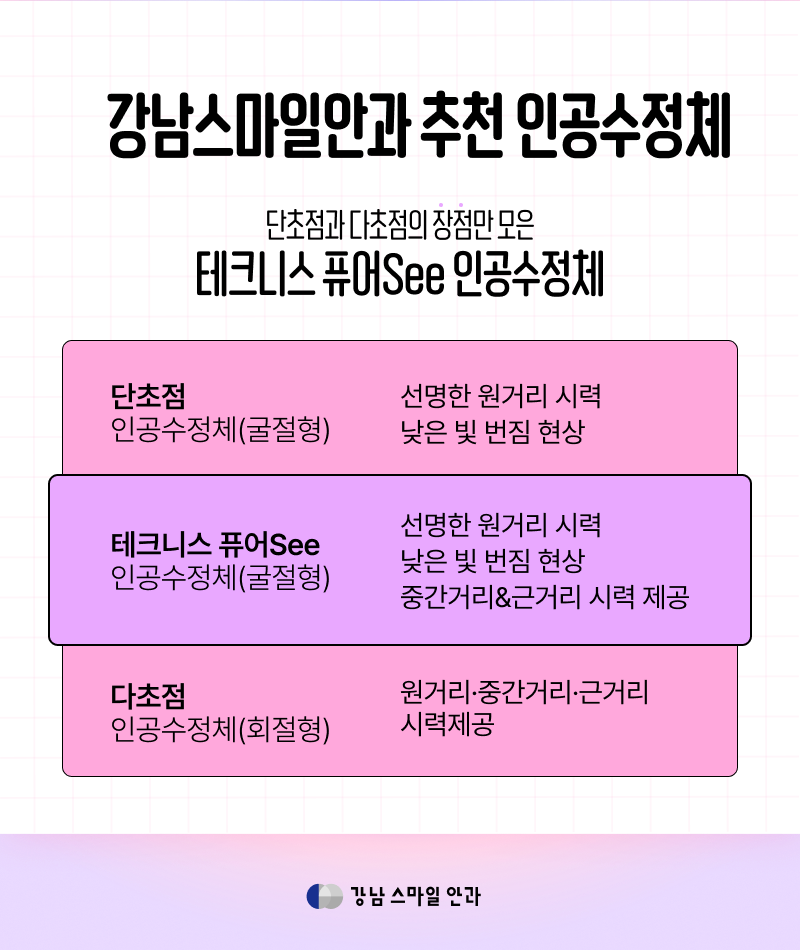
Ultrasonic cataract surgery and laser cataract surgery
each have distinct advantages and disadvantages,
so there is no single correct answer that applies to all patients.
It is most important to choose the appropriate surgical method through personalized diagnosis and consultation,
considering your eye condition, vision, and lifestyle.
Especially for those with astigmatism, the elderly, or those with underlying diseases,
a more careful approach is needed.
At Gangnam Smile Eye Clinic, through precise examinations,
we meticulously analyze the patient's eye condition
and all surgeries are safely performed by skilled medical staff.
Through sufficient consultation before surgery,
we recommend the most suitable surgical method for each patient,
and even after surgery, we assist with stable vision recovery
through a systematic management program.
If your vision is blurred due to cataracts or you are experiencing discomfort in daily life,
or if you have any questions about this,
feel free to consult with Gangnam Station Cataract Eye Clinic at any time
to find the optimal cataract surgery method for your eyes!
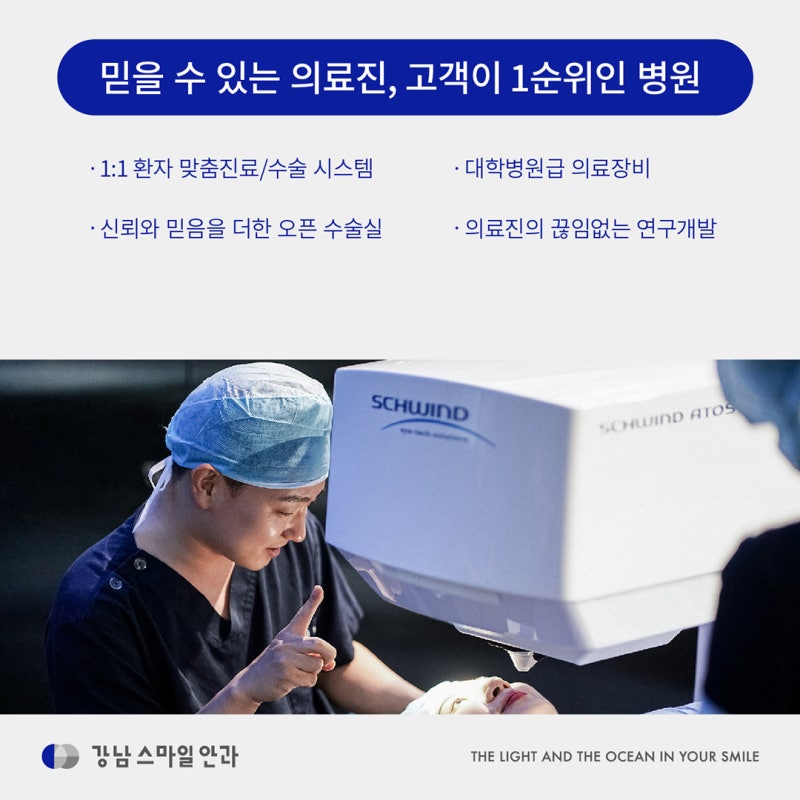
Gangnam Smile Eye Clinic
is equipped with the latest equipment and a systematic examination system,
and provides sincere one-on-one customized consultations and surgeries for each individual.
Furthermore, we always prioritize the patient,
and place transparency and safety first.
If you have any other inquiries,
please feel free to contact the eye clinic at any time.
💙🤍 𝖦𝖠𝖭𝖦𝖭𝖠𝖬 𝖲𝖬𝖨𝖫𝖤 𝖤𝖸𝖤 𝖢𝖫𝖨𝖭𝖨𝖢💙🤍
𝗧𝗛𝗘 𝗟𝗜𝗚𝗛𝗧 𝗔𝗡𝗗 𝗧𝗛𝗘 𝗢𝗖𝗘𝗔𝗡 𝗜𝗡 𝗬𝗢𝗨𝗥 𝗦𝗠𝗜𝗟𝗘













ultrasoniccataractdifference lasercataractdifference lasercataracteyeclinic gangnamstationlasercataract
Frequently Asked Questions
What is the biggest difference between ultrasonic cataract surgery and laser cataract surgery?
The biggest difference lies in the technology used for corneal incision and clouded lens removal. Ultrasonic surgery uses a surgical blade and ultrasonic energy, while laser surgery is performed precisely using a femtosecond laser.
Is laser cataract surgery more precise than ultrasonic surgery?
Yes, laser cataract surgery uses a femtosecond laser to precisely incise the cornea and fragment the lens according to values entered into a computer. This helps minimize corneal damage and reduce the risk of complications.
Should cost be considered when choosing a cataract surgery method?
Yes, cost should be considered. Ultrasonic cataract surgery is relatively less expensive, while laser cataract surgery requires expensive equipment and precise technology, which can result in a higher surgical cost.
Which cataract surgery method is more suitable for patients with astigmatism?
Laser cataract surgery is particularly recommended for patients with astigmatism. Laser surgery can offer astigmatism correction effects through precise incision and lens fragmentation, improving the quality of vision recovery.
What is the best cataract surgery method to choose?
The best method is determined through personalized diagnosis and consultation, considering each patient's eye condition, vision, and lifestyle. Gangnam Smile Eye Clinic recommends the optimal method after a precise examination.