2026-07-14
Finding the Right Nose Line for You, by Type of Rhinoplasty
Discover the different types of noses and rhinoplasty procedures to find the perfect line for your face. Understand common nose shapes, surgical options, and materials like autologous tissue for a natural look.
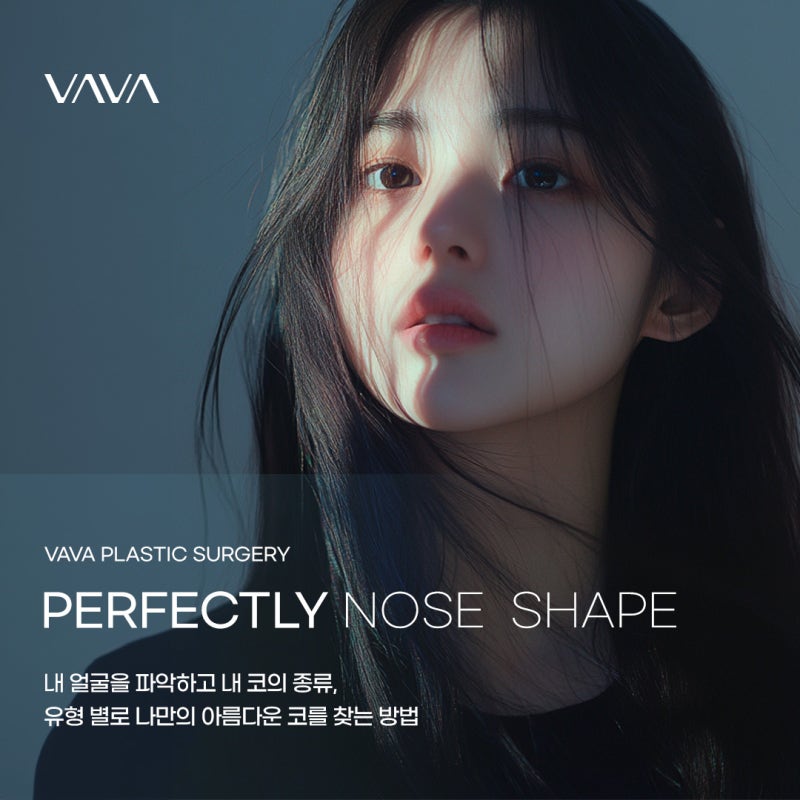
Finding the Right Nose Line for You, by Type of Rhinoplasty. First, you need to accurately understand the types of noses. And what are the types of rhinoplasty?
People's facial features are all different. The shape or thickness of the double eyelid line, the plumpness of the lips, the overall facial contour.
Thus, it can be said that a person's overall image can be determined by the characteristics of the facial features that make up their face. For this reason, many people strive to improve their image, both subjectively and objectively.
Modern people, whose ‘appearance’ has become a competition with others, constantly strive to solve their own appearance complexes using various methods due to the comparison between themselves and social trends they face every time they look in the mirror. Perhaps that is why, recently, more and more people are using temporary methods like ‘cosmetic makeup’ but are also looking for additional ways to improve their appearance. However, because these processes can bring significant changes to one's image and appearance in the short term or temporarily, those who wish to permanently improve their appearance often choose plastic surgery.
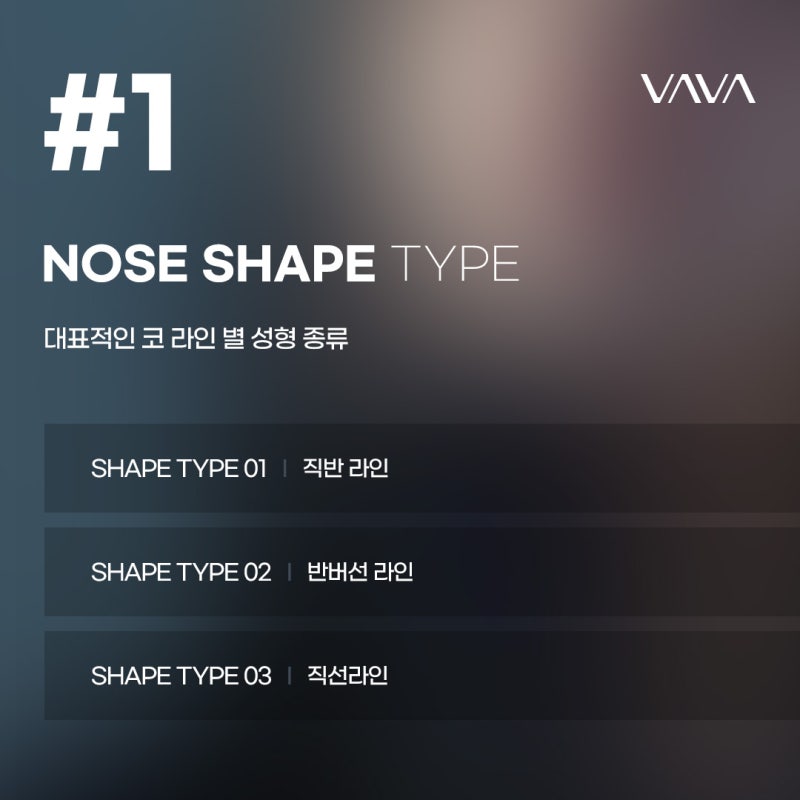
While it's difficult to divide nose lines into exactly three categories, classifying them according to a kind of standard can serve as a code or reference for both the patient desiring surgery and the medical staff performing it. This is the point where the forehead between the eyes begins and the nose connects. And a person's nose line is determined by the shape that extends down to the tip of the nose.
The ‘straight-with-curved-tip’ line (jikban line) typically has a strong straight bridge, with a slight curve at the tip to create natural beauty. It gives a soft, not sharp, impression, making it particularly popular among women who prefer a cute look.
The ‘straight’ nose line can be described as straight from the bridge to the tip, and it is often preferred by men. However, women who desire a charismatic and sophisticated impression often choose a straight line.
The ‘semi-upward’ line (banbeoseon line) emphasizes a continuous curve from the start of the bridge to the tip of the nose, with a slight curve towards the tip. It is excellent for those who prefer a soft impression or desire a baby-like look.
While each person's facial features may differ, even small changes in the nose can relatively lead to significant image changes compared to other areas. Therefore, rather than following trends, it is important to carefully consider and choose the type of rhinoplasty. This is because, like all surgical procedures, the type of rhinoplasty depends on the type of nose.

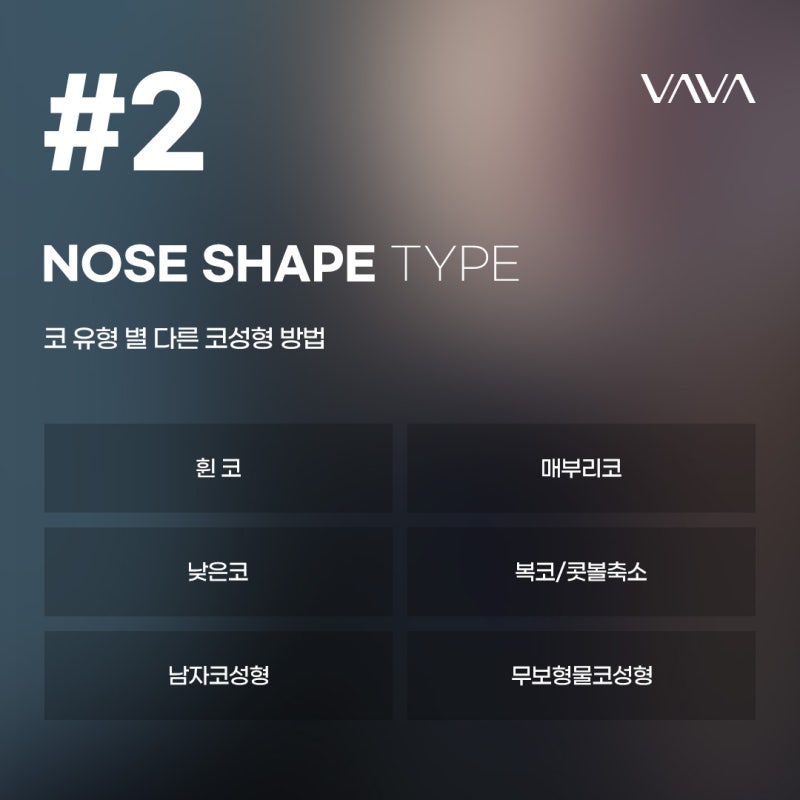
Generally speaking, the types of noses for which surgical procedures are performed can be categorized into ‘deviated nose, hooked nose, low nose, bulbous nose/alar reduction, and male nose’. As you can see from the types of noses, I believe they are self-explanatory. A deviated nose refers to a condition where the entire nose, from the bridge to the tip, is curved rather than straight. A hooked nose is a term referring to a nose where the bridge is curved like a hawk's beak or the middle part of the nose is significantly protruded. A low nose can be described as a nose that loses its three-dimensional effect on the face due to its low height. A bulbous nose is a nose where the skin or fat layer on both sides of the nose appears thick, and the overall area of the nose may be large. The last type is the male nose. You might wonder why male noses are classified separately. Most men have thicker skin and bones than women, so they are specifically classified to differentiate the types of plastic surgery.
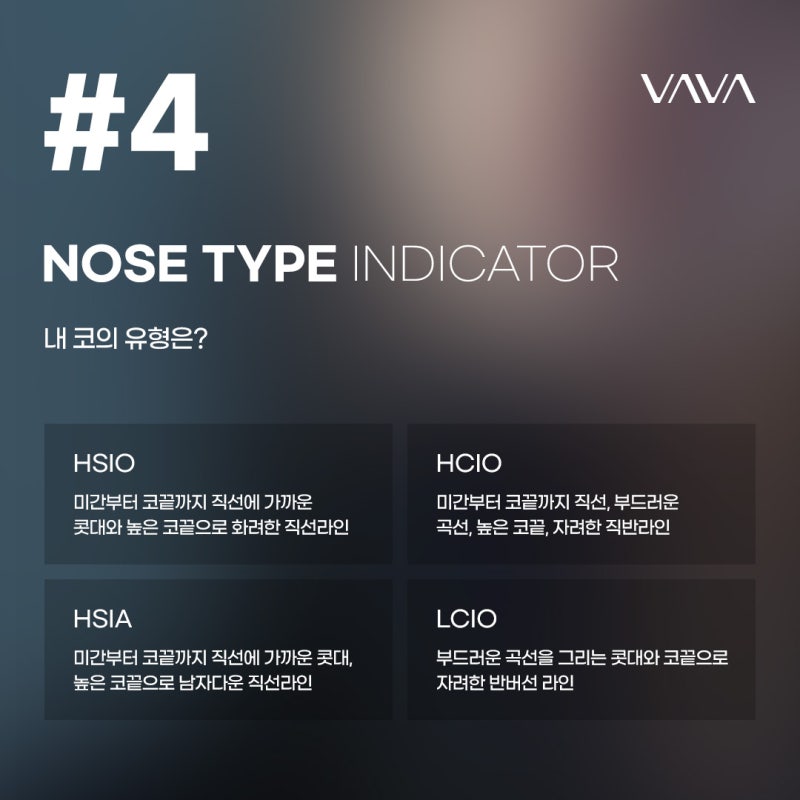
Based on a table like this, various types of rhinoplasty have been organized more easily, similar to VAVA's MBTI analysis for each type. We hope this helps you understand your nose type and make a decision.
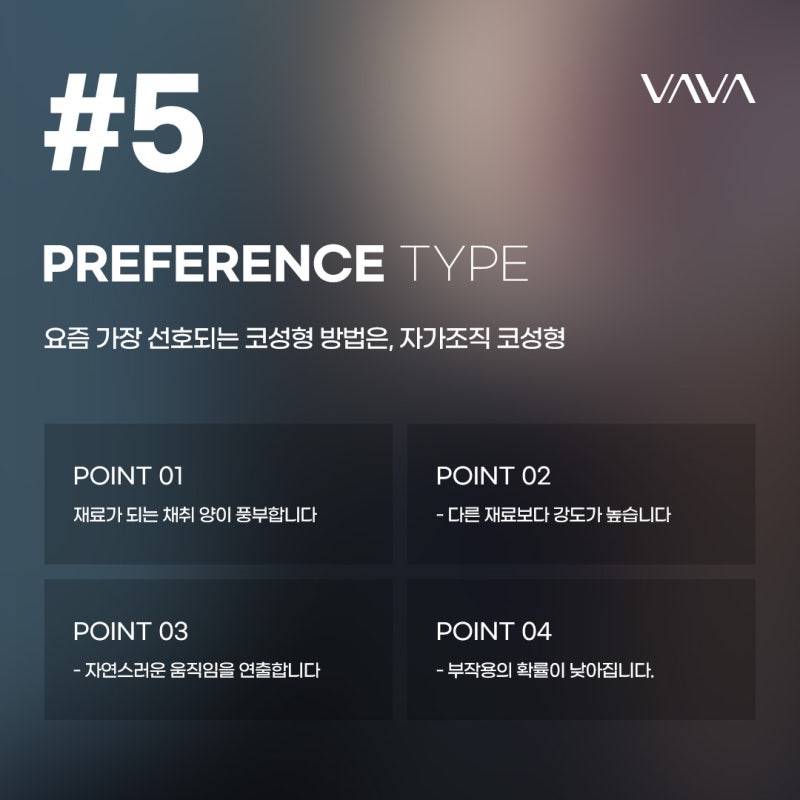
Furthermore, autologous tissue has recently been preferred for the following reasons:
ㆍCartilage or dermis derived from autologous tissue has a lower possibility of side effects than other implants.ㆍAutologous tissue is abundant in quantity and has higher strength compared to other implants.ㆍAutologous tissue has high durability and a low absorption rate after rhinoplasty.ㆍAutologous tissue makes the nose's movement appear more natural than artificial implants.
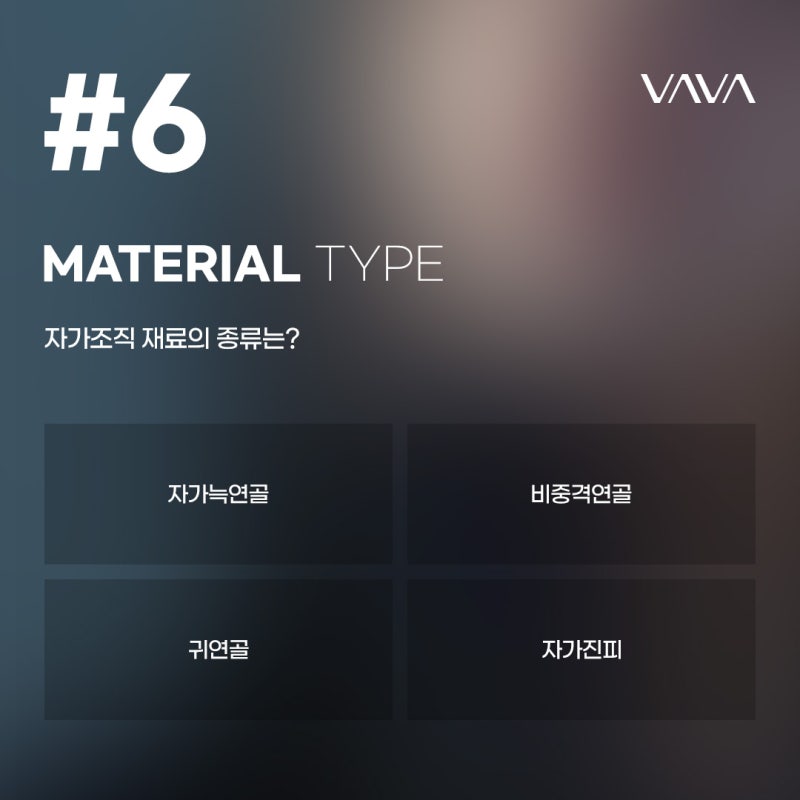
Even if autologous costal cartilage is not used, donated costal cartilage can be utilized, starting with its low absorption rate. Furthermore, costal cartilage, as the name suggests, is harvested and used from a part of the ribs, making it excellent in firmness and support. However, at the same time, it can also provide natural movement like a normal nose, making it a highly preferred material. Additionally, ear cartilage or autologous dermis can be used for the nasal tip to create the desired line. All these materials are autologous tissues, which can lower the possibility of inflammation or side effects compared to other implants.
In today's post, we summarized the types of rhinoplasty, lines, and materials used, categorized by nose type.
It is important to accurately understand your nose by considering the height, length, and angle of the bridge and tip, and to find a medical solution that matches your proportions.

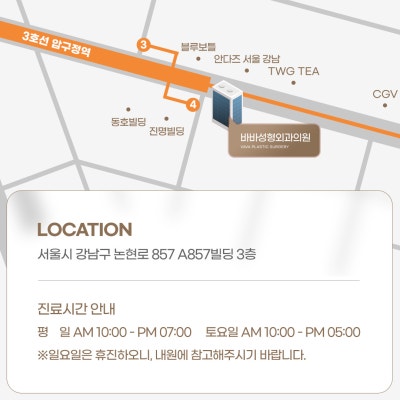
VAVA's entire team strives to provide the truly best medical care, not just ending with simple medical consultations or surgeries, but by doing our best as specialists so that everyone can experience improved lives and happiness.
#코성형종류 #코성형수술 #코재수술 #바바성형외과의원
Frequently Asked Questions
What nose lines can I choose for rhinoplasty?
For rhinoplasty, you can choose from three main nose lines: the straight-with-curved-tip line, the straight line, and the semi-upward line. The straight-with-curved-tip line creates a natural look with a straight bridge and a curved tip. The straight line gives a sophisticated impression with a straight bridge to tip. The semi-upward line produces a soft impression with a continuous curve at the nasal tip.
What autologous tissue materials are commonly used in rhinoplasty?
Commonly used autologous tissue materials for rhinoplasty include autologous costal cartilage, ear cartilage, and autologous dermis. These autologous tissues have a lower risk of side effects compared to other implants, are abundant in quantity, have high strength and durability, and allow for natural nose movement.
What are the advantages of using autologous tissue in rhinoplasty?
Using autologous tissue in rhinoplasty offers several advantages. It has a lower risk of side effects than other implants, is abundant in quantity, and has high strength. Additionally, it boasts good durability, a low absorption rate after surgery, and the advantage of making the nose's movement appear more natural than artificial implants.
What is a hooked nose?
A hooked nose is a term referring to a nose where the bridge is curved like a hawk's beak or the middle part of the nose is significantly protruded. Such a nose can affect the overall impression, and many people wish to improve it through rhinoplasty.
Why is male rhinoplasty classified separately?
Male rhinoplasty is classified separately because most men have thicker skin and bones than women. Since the anatomical characteristics of male noses differ from those of females, it is common to approach the types of plastic surgery differently.
Can donated costal cartilage also be used as a material for rhinoplasty?
Yes, donated costal cartilage can also be used as a material for rhinoplasty. Donated costal cartilage shows a low absorption rate, and since a part of the ribs is harvested and used, it offers excellent firmness and support. At the same time, it can also provide natural movement like a normal nose, making it a highly preferred material.