2026-09-03
Facial Contouring Surgery vs. Double Jaw Surgery: What's the Difference in Recovery Time and Surgical Scope?
Learn the key differences between facial contouring and double jaw surgery, including their purposes, surgical scopes, and recovery times, to make an informed decision.

※ This article is for the purpose of providing medical information.
It is not subject to deliberation under Article 56, Paragraph 2 and Article 57 of the Medical Service Act, and we inform you that it is not an advertising post unrelated to the deliberation content.
Hello,
I am Dr. Park Jung-geun,
Director of Face Plus Plastic Surgery Clinic.

When consulting patients in the examination room,
some people think that facial contouring surgery and double jaw surgery
are the same procedure.
While both surgeries are related to improving facial shape,
there are clear differences in their surgical objectives, scope,
and recovery processes.
With various information available online,
many people experience confusion.

Today, we will explore the differences between facial contouring surgery and double jaw surgery,
including their recovery periods and surgical scopes.
Table of Contents | ||
Difference in Objectives: Facial Contouring vs. Double Jaw Surgery How Do the Surgical Scopes Differ? Differences in Recovery Time What to Check When Choosing Surgery |
1. Difference in Objectives: Facial Contouring vs. Double Jaw Surgery

Facial contouring surgery
is a procedure that refines the outer lines of the face.
It typically includes zygoma reduction surgery,
square jaw reduction surgery,
and genioplasty (chin surgery).
The goal is to improve areas that appear wide or angular,
creating a softer facial line.
On the other hand, double jaw surgery
involves repositioning the upper and lower jaws themselves.
It is performed to correct conditions such as
prognathism (underbite), microgenia (receding chin), protruding mouth,
and facial asymmetry.
It also considers chewing function and occlusion (bite) status.
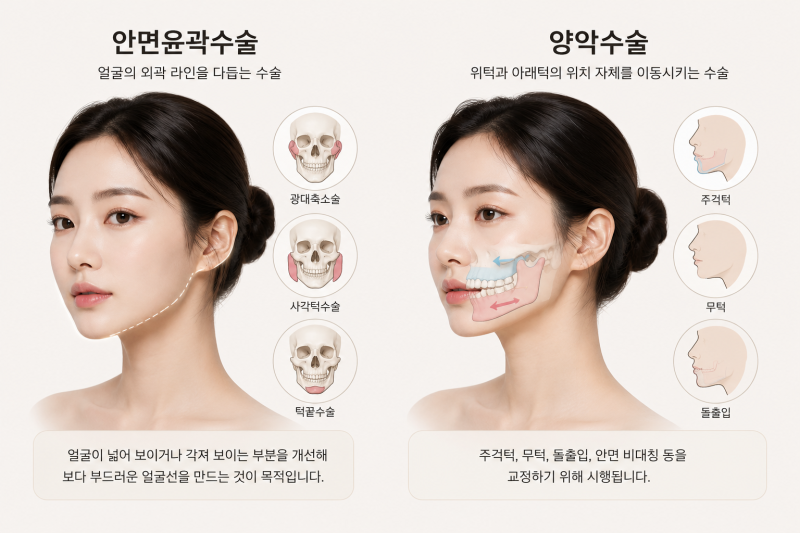
Therefore, facial contouring surgery
focuses on improving the facial lines,
while double jaw surgery
is a procedure that also considers
jawbone position and functional improvement.
2. How Do the Surgical Scopes Differ?
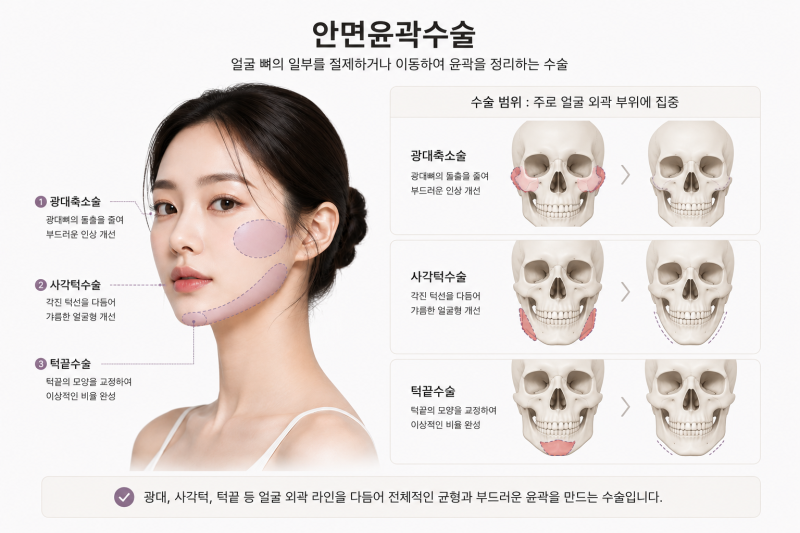
Facial contouring surgery
involves excising or repositioning a part of the facial bone
to refine the contour.
Typical methods include reducing prominent cheekbones,
shaping an angular jaw,
and correcting the shape of the chin.
The surgical scope is primarily focused on the outer areas of the face.
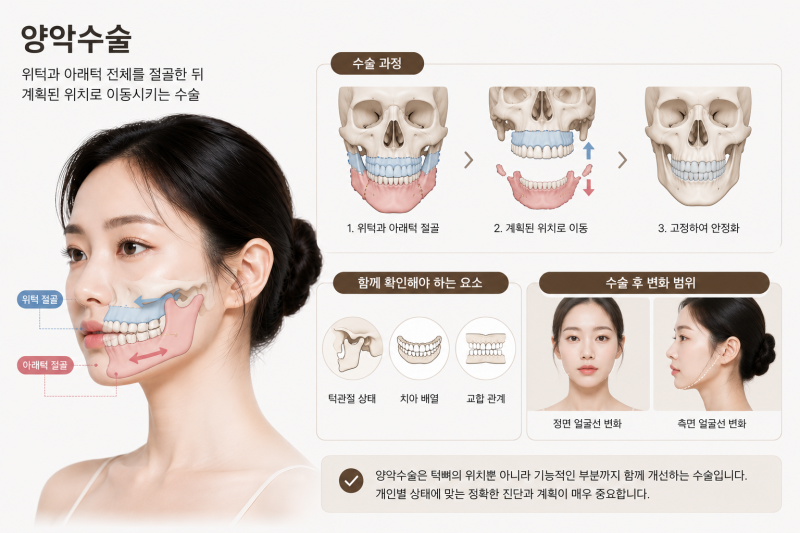
Double jaw surgery
involves osteotomy (cutting) of both the upper and lower jaws,
followed by repositioning them to a planned location.
The condition of the temporomandibular joint, tooth alignment,
and occlusal relationship
must all be checked together.
After surgery,
changes can appear not only in the frontal view but also in the side profile.
3. Differences in Recovery Time

The most common question patients have
is about recovery time.
For facial contouring surgery,
significant swelling can occur for about 1 to 2 weeks immediately after surgery.
It then gradually stabilizes over time.
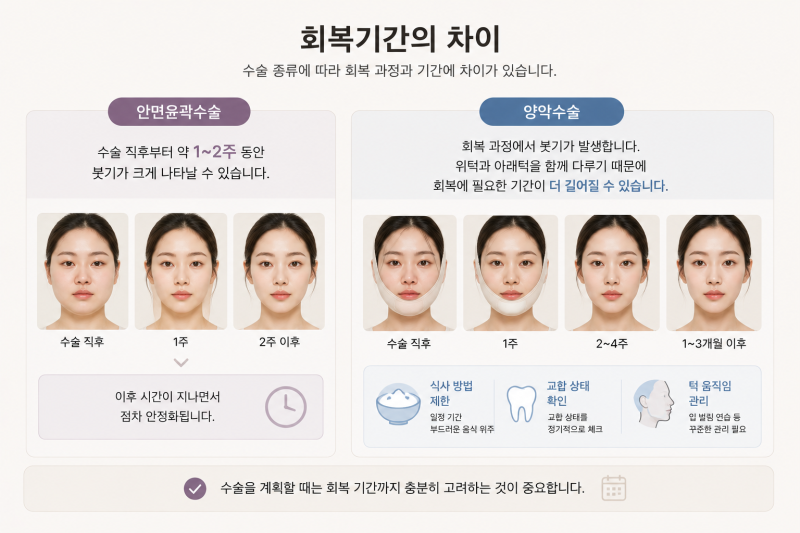
Double jaw surgery also
causes swelling during the recovery process.
However, because it involves both the upper and lower jaws,
the recovery period required
may be longer.
There may also be restrictions on eating methods
for a certain period, and
the occlusal status and jaw movement
must be continuously monitored.
Therefore, when planning surgery,
it is important to fully consider the recovery period.
4. What to Check When Choosing Surgery
Choosing double jaw surgery simply because you want a smaller face
is not appropriate.
Conversely, if you have jawbone position or
occlusion problems,
considering only facial contouring surgery
may not provide a sufficient solution.
What is important
is to accurately assess your current facial bone structure
and jaw function.
Through CT scans and consultations,
it is necessary to identify the cause
and establish a surgical plan that is appropriate for it.
Facial contouring surgery and double jaw surgery
are not interchangeable procedures.
This is because their surgical objectives and target patients
are different.
Rather than deciding based solely on online reviews or photos,
please choose the surgical method that is suitable for you
through thorough consultation.

Today, I explained the differences between facial contouring surgery and double jaw surgery,
including their recovery periods and surgical scopes.
If you are considering surgery,
please start by getting an accurate diagnosis of your current condition
and determining which surgery is necessary.
-Operating Hours-
Weekdays 9:00 ~ 18:00 Saturdays 9:00 ~ 16:00 Public Holidays / Sundays Regular closure |
-Contact Us-
Face Plus Plastic Surgery Clinic | ||
Consultation Phone: 02-541-8500 Inquiries: KakaoTalk Inquiry |
-Directions-
Frequently Asked Questions
Are facial contouring surgery and double jaw surgery the same procedure?
No, the two surgeries have clear differences. Facial contouring surgery refines the outer lines of the face, while double jaw surgery involves repositioning the upper and lower jaws themselves, so their objectives and scopes differ.
What is the purpose of facial contouring surgery?
The purpose of facial contouring surgery is to refine the outer lines of the face to create a softer facial line. It primarily improves areas that appear wide or angular through procedures such as zygoma reduction, square jaw reduction, and genioplasty (chin surgery).
When is double jaw surgery necessary?
Double jaw surgery is performed to correct the position of the upper and lower jaws themselves, for conditions such as prognathism (underbite), microgenia (receding chin), protruding mouth, and facial asymmetry. It also considers improving chewing function and occlusion (bite) status.
How do the recovery periods differ for the two surgeries?
For facial contouring surgery, significant swelling can occur for about 1 to 2 weeks immediately after surgery and then gradually stabilizes. Double jaw surgery, because it involves both the upper and lower jaws, may require a longer recovery period, with dietary restrictions and continuous monitoring of occlusion.
What is the most important consideration when choosing surgery?
The most important consideration when choosing surgery is to accurately assess your current facial bone structure and jaw function. It is crucial to identify the cause through CT scans and consultations, and then establish a surgical plan that is appropriate for you.