2026-07-20
Dry Eye Syndrome: Causes, Symptom-Specific Treatments, and Warm Eye Compress Methods | Ocular IPL, Meibomian Gland Expression
Learn about the causes, symptoms, and various treatment options for dry eye syndrome, including warm compresses, IPL, and meibomian gland expression.

Hello, this is Gangnam Smile Eye Clinic😊
As the chilly and dry winter arrives,
many people may be experiencing dryness in their skin or eyes.
Dry eye syndrome, in particular, has become a chronic condition for modern people,
with over 90% of the population in major Korean cities reporting that they have experienced it.
Indeed, it accounts for a significant number of cases
among the reasons people visit ophthalmologists.
However, did you know that if dry eye syndrome is left untreated,
it can lead to conditions like blepharitis or vision deterioration?
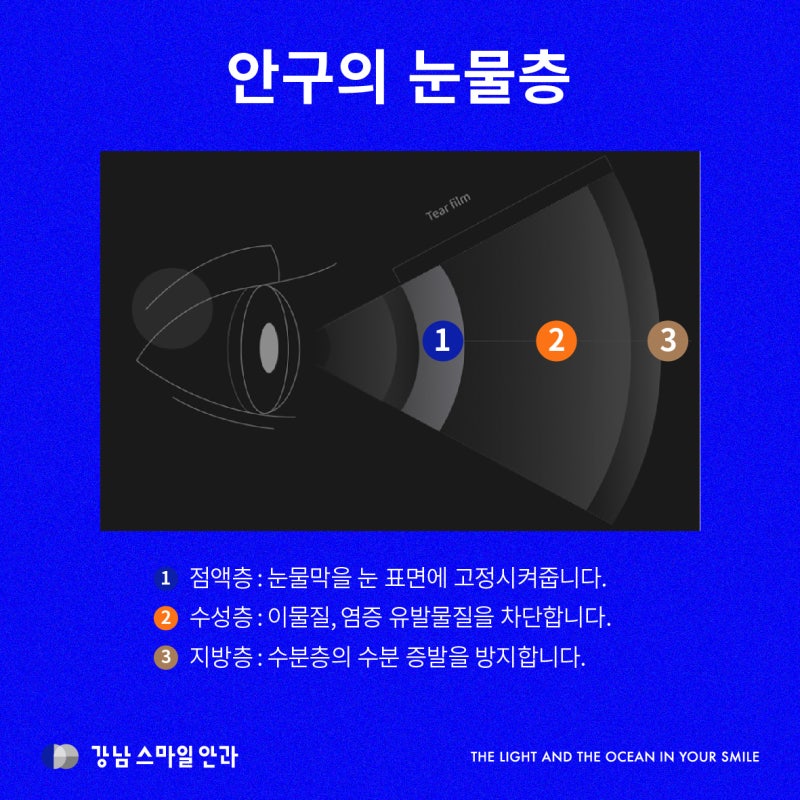
The ocular surface is composed of three layers:
the tear film, the lipid layer, and the mucin layer.
When the balance of these three layers is disrupted, leading to unstable tear secretion,
dry eye syndrome occurs.
Without tears, which act as a lubricant when blinking,
scratches can form on the corneal or conjunctival surface,
and various antimicrobial components in the tears cannot function effectively.
For dry eye treatment, it is crucial to accurately identify the type of dry eye syndrome
based on its underlying structure.
Types of Dry Eye Syndrome

Dry eye syndrome is generally divided into three types:
aqueous deficient, evaporative, and mixed.
1. Aqueous Deficient Type
The aqueous deficient type of dry eye syndrome
is, as the name suggests, a type where the production of water, or tears,
does not occur properly.
Most dry eye patients may simply think their eyes are dry due to a lack of tears,
but the aqueous deficient type is actually an uncommon case,
unless it's due to medication or an underlying disease.
2. Evaporative Type
The second type, evaporative dry eye,
accounts for the majority of dry eye cases,
making up a staggering 70-80% of dry eye causes.
Therefore, most people complaining of dry eye syndrome
can be attributed to excessive tear evaporation.
While the amount of tears itself may not be insufficient,
the secreted tears do not remain on the eye for a sufficient period,
causing a sensation of dryness.
This occurs when the eye's oil glands (meibomian glands) become inflamed due to aging or cosmetics,
causing the clear, transparent oil to solidify,
and disrupting the balance of the lipid layer, leading to dry eye syndrome.
3. Mixed Type
The mixed type, as the name implies, is a combination of both
aqueous deficient and evaporative dry eye.
The most basic treatment for all types of dry eye syndrome
is frequent instillation of preservative-free artificial tears.
It is recommended to frequently instill artificial tears containing hyaluronic acid
to keep the cornea moist.
Additionally, if you are taking dermatological medications that suppress sebaceous glands, such as ‘isotretinoin’,
it can affect tear secretion,
so it is advisable to consult with a specialist to adjust the medication.
So, what are the specific dry eye treatments
for the evaporative type, which is the most common cause of dry eye?
Evaporative Dry Eye Treatment: Addressing the Cause of Dry Eye Syndrome
The treatment for evaporative dry eye syndrome fundamentally aims to
remove the sebum and inflammation in the meibomian glands.
Therefore, when washing your face morning and evening at home,
gently wipe your eyelids down to the root of your eyelashes, as if removing makeup,
and it is beneficial to combine this with warm compresses.
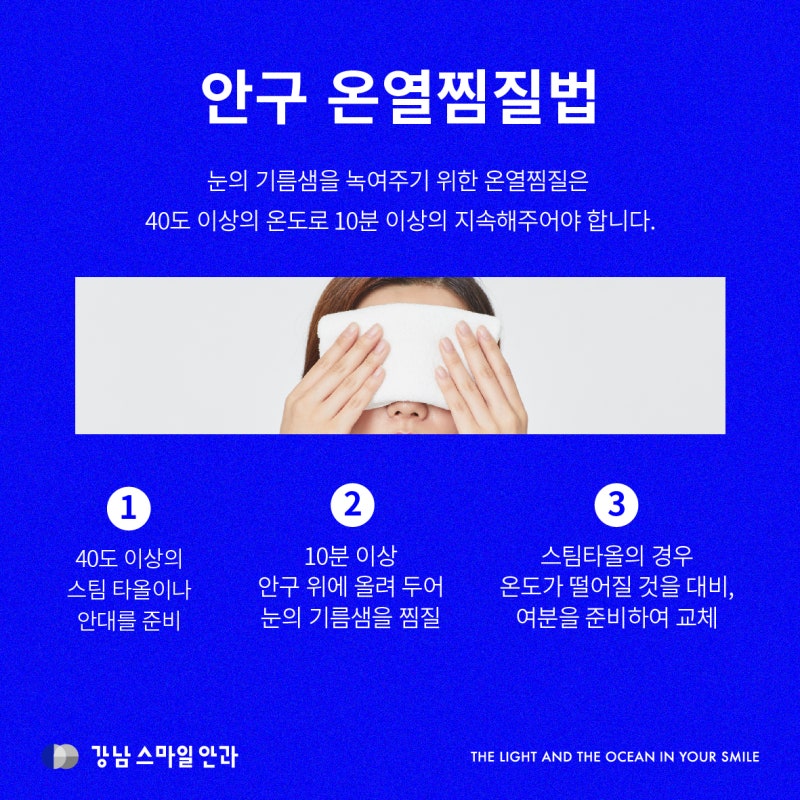
Warm compresses are best done at over 40 degrees Celsius for about 10 minutes,
but if using a steam towel, it cools down quickly,
requiring the inconvenience of preparing spares for replacement.
Also, since achieving the appropriate temperature can be more difficult than expected,
it is recommended to use a heated eye mask or an eye compress device.
However, using an eye mask or device
is not tailored to each individual's eye condition,
so rather than home care,
it is better to visit an ophthalmologist for professional care.
Ocular IPL and Meibomian Gland Expression (Sebum Squeezing)
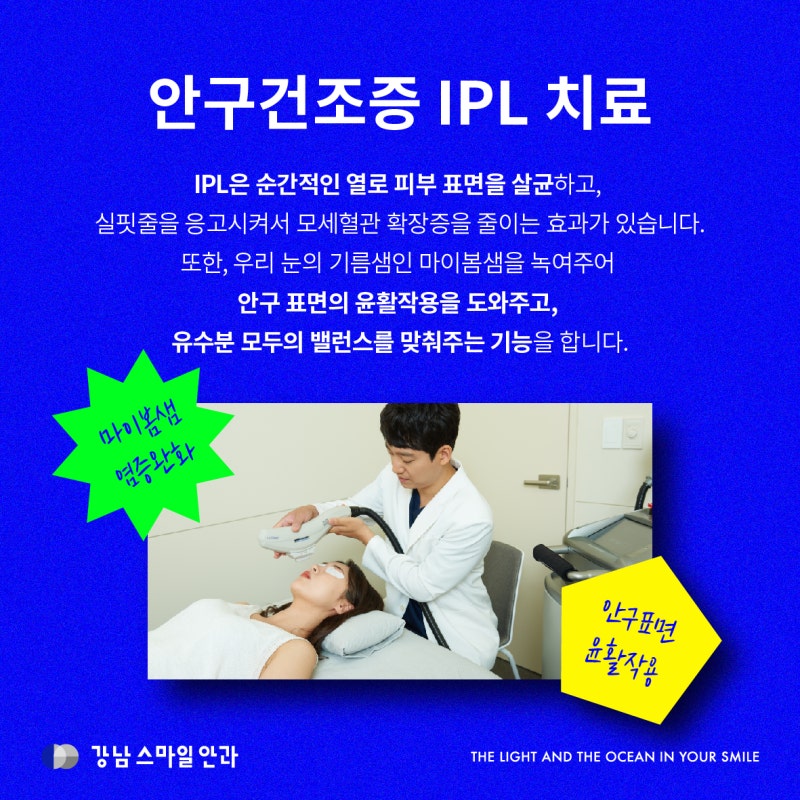
IPL sterilizes the skin surface with instantaneous heat
and has the effect of coagulating capillaries to reduce telangiectasia,
making it one of the widely used care methods in dermatology.
In ophthalmology, it has the effect of melting meibomian gland blockages.
By melting the meibomian glands, it aids in the lubrication of the ocular surface
and creates a clean lipid layer, balancing both oil and moisture.
Approximately 50 meibomian glands are distributed on our upper and lower eyelids combined.
The upper eyelid secretes relatively smoothly with natural blinking,
but the lower eyelid has almost no muscle movement,
making it highly susceptible to blockages from dead skin cells or cosmetics.
The problem is that if left untreated, the oils that have not been discharged for a long time
harden, leading to a decline in meibomian gland function.
If the cells of the dysfunctional meibomian glands atrophy,
it becomes difficult to recover even with treatment,
potentially leading to an intractable disease.
In such cases, it is advisable to combine IPL treatment with squeezing treatment.
Our clinic's squeezing treatment is performed by an ophthalmologist with expertise,
using always clean, sterilized hands, forceps, and cotton swabs
to prevent meibomian gland infection and provide a refreshing extraction effect.
Gangnam Smile Eye Clinic's Eye Care Center
offers systematic management for dry eye syndrome.
Gangnam Smile Eye Clinic
is equipped with the latest equipment and a systematic examination system,
providing personalized 1:1 consultations and
sincerely treating and operating on each patient.
We also always prioritize the patient,
placing transparency and safety first.
If you have any other inquiries,
please feel free to contact the eye clinic at any time.
💙🤍 𝖦𝖠𝖭𝖦𝖭𝖠𝖬 𝖲𝖬𝖨𝖫𝖤 𝖤𝖸𝖤 𝖢𝖫𝖨𝖭𝖨𝖢💙🤍
𝗧𝗛𝗘 𝗟𝗜𝗚𝗛𝗧 𝗔𝗡𝗗 𝗧𝗛𝗘 𝗢𝗖𝗘𝗔𝗡 𝗜𝗡 𝗬𝗢𝗨𝗥 𝗦𝗠𝗜𝗟𝗘




Frequently Asked Questions
Why does dry eye occur?
Dry eye occurs when the balance of the three layers of the tear film (aqueous, lipid, and mucin layers) is disrupted, leading to unstable tear secretion. Insufficient tears, which act as a lubricant when blinking, can cause damage to the corneal or conjunctival surface.
What are the main types of dry eye?
Dry eye is broadly classified into aqueous deficient, evaporative, and mixed types. Among these, evaporative dry eye accounts for 70-80% of all dry eye causes and occurs due to meibomian gland dysfunction, which disrupts the balance of the lipid layer of the tear film.
What home care can be done for evaporative dry eye?
Yes, gently cleaning your eyelids and applying warm compresses at home is beneficial. Warm compresses are effective when done for about 10 minutes at over 40 degrees Celsius, and it is more convenient to use a warm eye mask or eye steaming device than a steam towel.
What is ocular IPL treatment?
Ocular IPL is a treatment that uses instantaneous heat to melt meibomian glands, helping to lubricate the ocular surface and create a clean lipid layer to balance oil and moisture. It is also one of the widely used care methods in dermatology.
What is meibomian gland expression (squeezing)?
Meibomian gland expression (squeezing) is a treatment that removes hardened sebum and inflammation from the meibomian glands. It is more effective when combined with ocular IPL, and a professional ophthalmologist safely performs it using sterilized tools.
What happens if dry eye is left untreated?
If dry eye is left untreated, it can lead to conditions such as blepharitis or vision deterioration. Especially if meibomian gland dysfunction persists for a long time, recovery can be difficult, potentially becoming an intractable disease, so professional management is important.