2026-07-09
Double Eyelid Revision Surgery: Correcting Sausage Eyes and Loosened Lines at a Renowned Clinic
Learn how to correct 'sausage eyes' and 'loosened lines' after double eyelid surgery and prevent recurrence. This article from Clyve Plastic Surgery, a clinic specializing in double eyelid revision, explains the causes and effective solutions for these common issues.
How to fix 'sausage eyes' vs. 'loosened lines' and prevent recurrence? Double Eyelid Revision Surgery at Clyve Plastic Surgery, a clinic known for excellent results.
Has it been a long time since your surgery, but it still feels like the swelling hasn't gone down?
Or, has it not been long at all, but you already feel like the line has loosened?
I believe that among the most common types of double eyelid revision surgeries are ‘sausage eyes’ and ‘loosened lines’. Let's explore with Clyve Plastic Surgery, a clinic specializing in double eyelid revision, why these two types are so prevalent among various issues, and how to resolve them effectively to prevent recurrence.
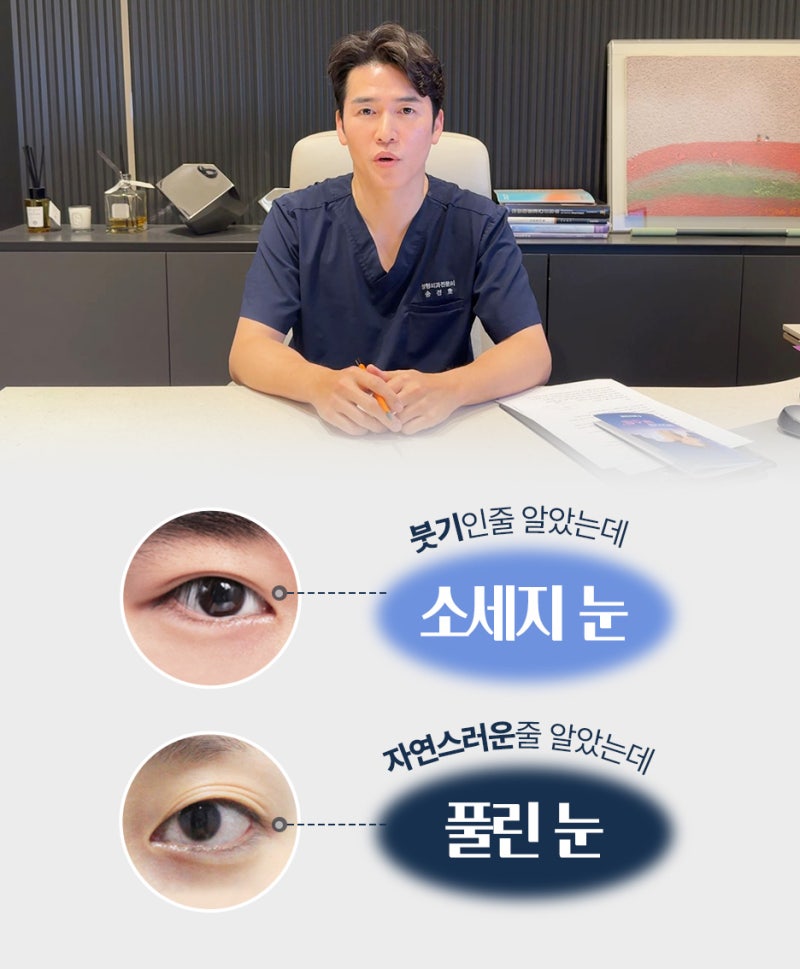
I thought it was just swelling... I thought it looked natural...
Everyone experiences swelling after double eyelid surgery. This applies to both incisional and non-incisional (buried suture) methods. In most cases, significant swelling subsides within 1-2 weeks after surgery, and residual swelling gradually disappears around one month. This period can vary by individual, with some experiencing residual swelling for up to two months.
Consequently, more than half of those with ‘sausage eyes’ find it difficult to recognize that their condition is incorrect, only seeking double eyelid revision surgery much later.
Similarly, with ‘loosened lines’, there might still be residual swelling, giving the impression that the line will become thinner. However, many celebrate their success too early, only to find the line has loosened too much later on, leading them to seek revision surgery.
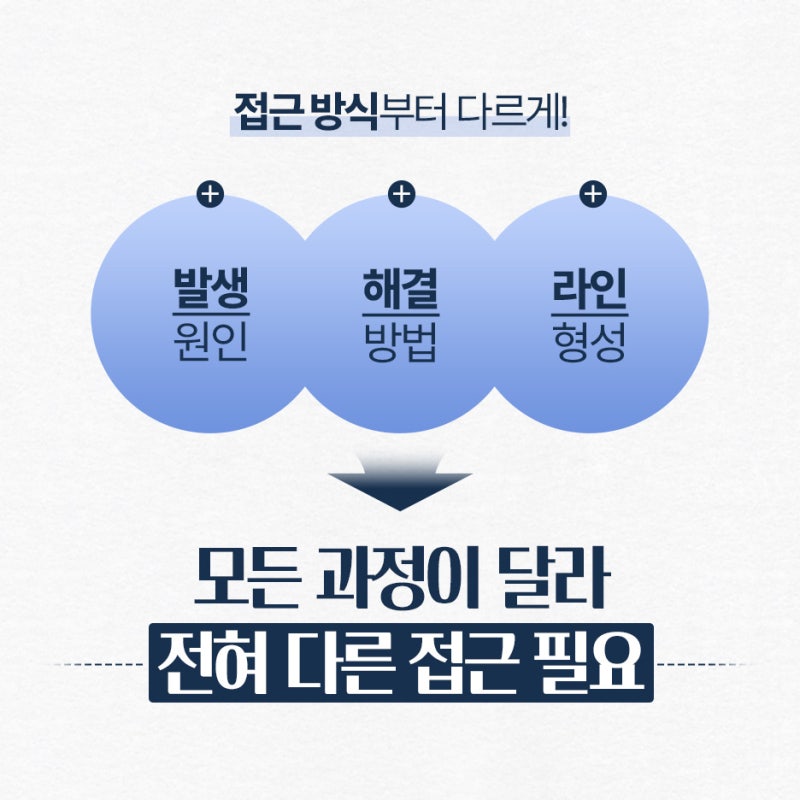
Correcting ‘sausage eyes’ and ‘loosened lines’ isn't just about creating a new line; it requires considering many factors, including the cause, current condition, solution, and new line formation. If even one of these aspects is insufficient, similar symptoms can recur at any time. Therefore, it's crucial to consult thoroughly and make a decision at a clinic specializing in double eyelid revision surgery with extensive experience in these two types of procedures.
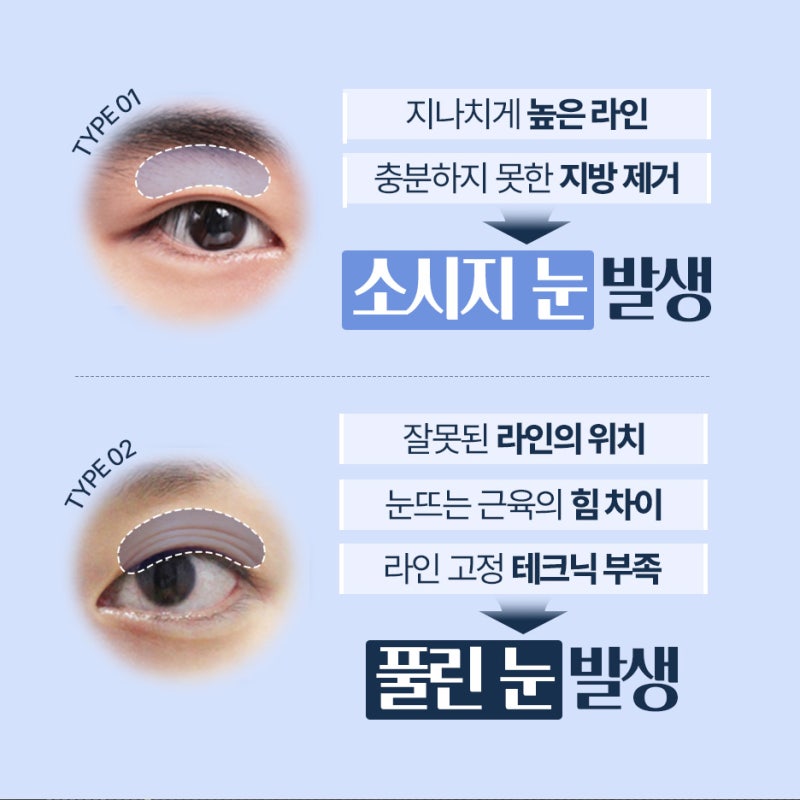
First, to perform proper double eyelid revision surgery, we need to understand why these two problems occur, right?
The problem known as ‘sausage eyes’ primarily arises when insufficient fat is removed during the initial surgery, or when the line itself is set excessively high, creating a rolled-up appearance.
Conversely, ‘loosened lines’ are mainly caused by not considering the strength of the muscle that opens the eye, an incorrect initial line placement, or insufficient technique during the line fixation process after creation.
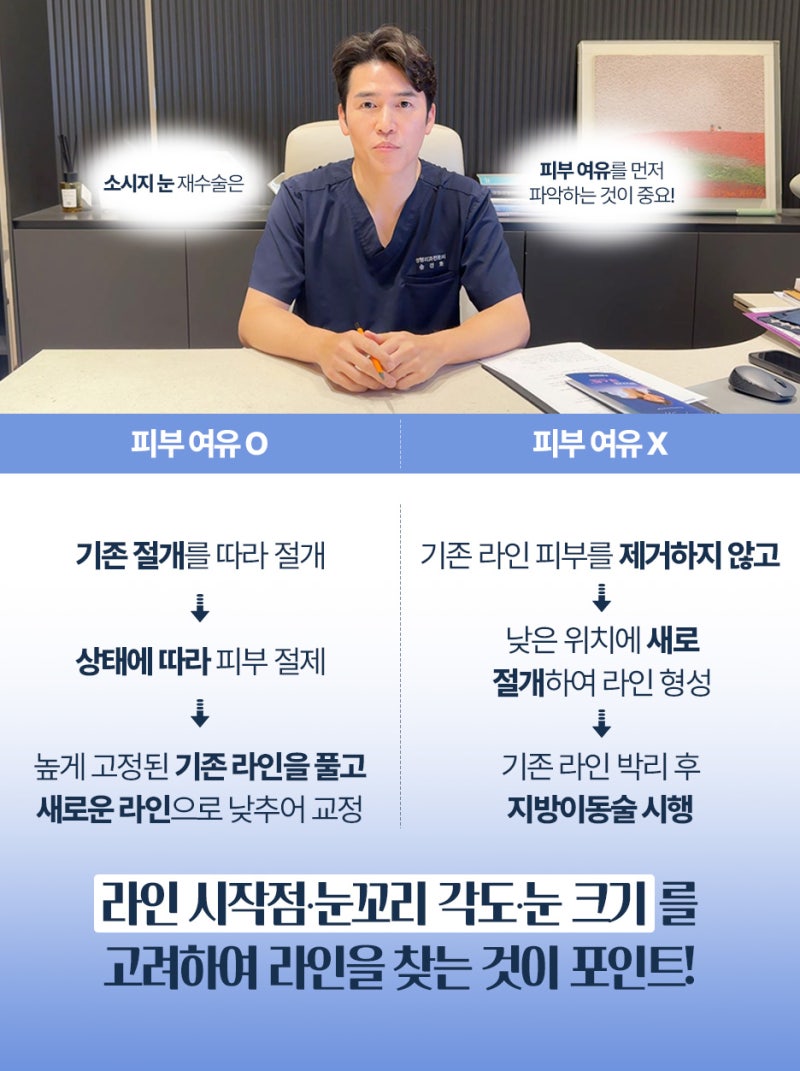
For 'sausage eyes', assessing skin laxity first is most crucial.
At Clyve Plastic Surgery, a clinic specializing in double eyelid revision, we consider the starting point of the line, the angle of the outer corner of the eye, and the size of the eye for both ‘sausage eyes’ and ‘loosened lines’. We erase the existing line and find a new one to create a completely transformed eye shape.
If there is sufficient skin laxity, we re-incise along the original incision, excise unnecessary skin, and release the fixed line to prevent the formation of a double line. On the other hand, for those with insufficient skin laxity, we do not remove the existing line but create a new incision line slightly lower, combining dissection and fat repositioning to avoid multiple layers of scars.
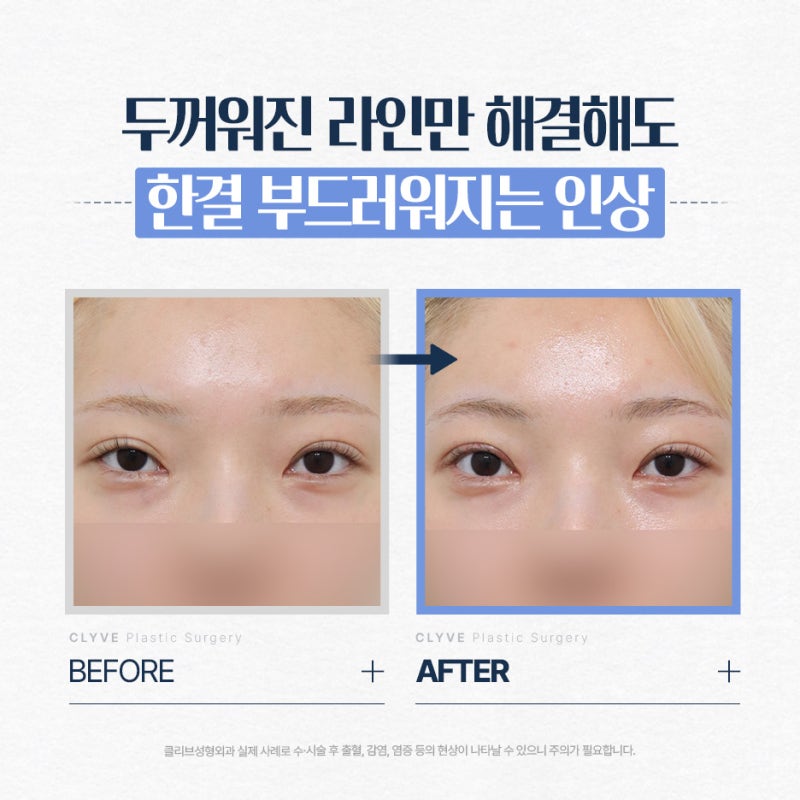
By properly positioning the thickened line, a much softer and more natural eye line can be created. However, if only the line height is adjusted without adequate fat removal, similar problems can recur, making it essential to accurately assess the need for and extent of fat removal.
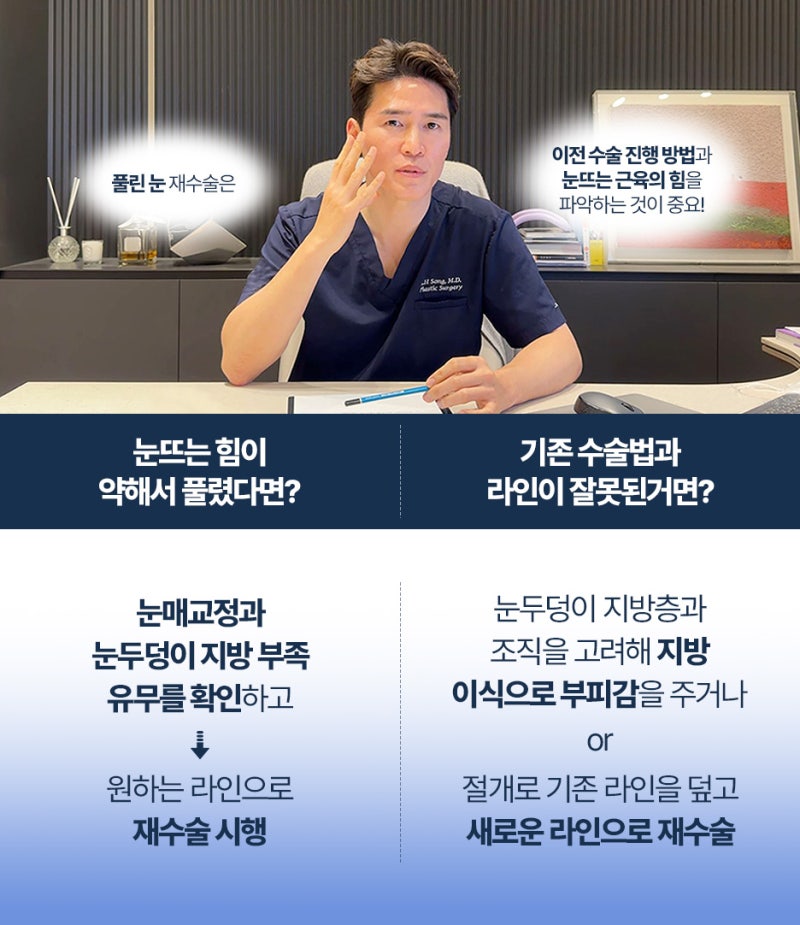
For 'loosened lines', it's crucial to accurately understand the strength of the eye-opening muscle and the original surgical method.
The problem of double eyelid lines loosening or fading after surgery can naturally occur due to weakened eye-opening strength, but the possibility of an incorrect original surgical method cannot be ruled out.
Therefore, it's essential to first identify which problem applies. If the eye-opening strength is insufficient, blepharoptosis correction and fat repositioning in the upper eyelid should be performed to strengthen the muscle and make the line appear clearer. If there's no problem with eye-opening strength but the line was not properly formed initially, then double eyelid revision surgery should be performed by giving volume with fat grafting or by covering the existing line with an incision and creating a new one, considering the fat layer and tissue of the upper eyelid.
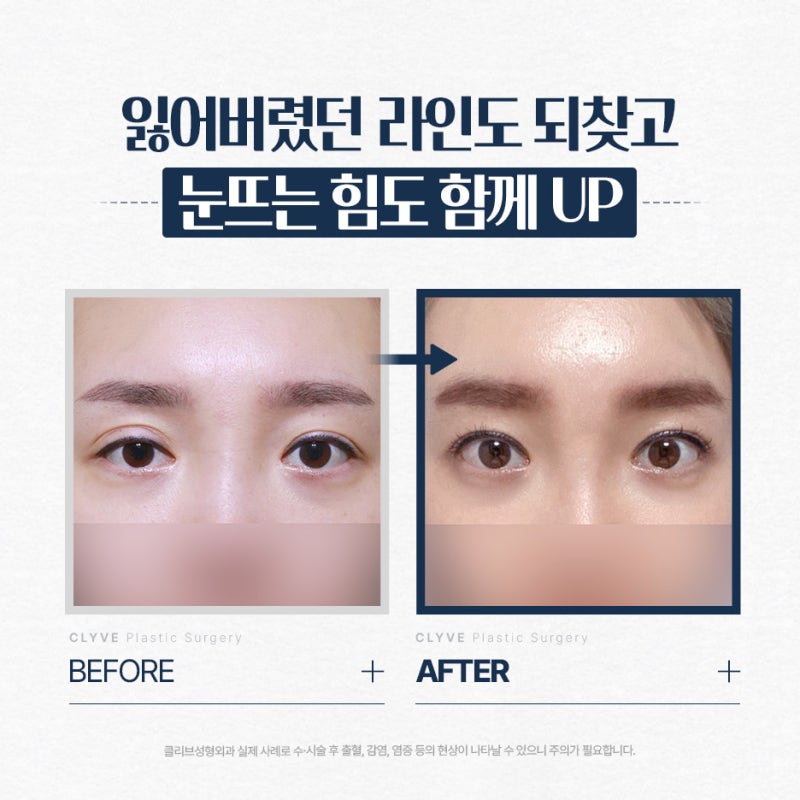
In cases of ‘loosened lines’, while both sides can loosen symmetrically, it's more common for them to loosen asymmetrically. Therefore, re-adjusting the left-right balance and determining the surgical direction by considering the differing strengths of the levator muscles is extremely important.
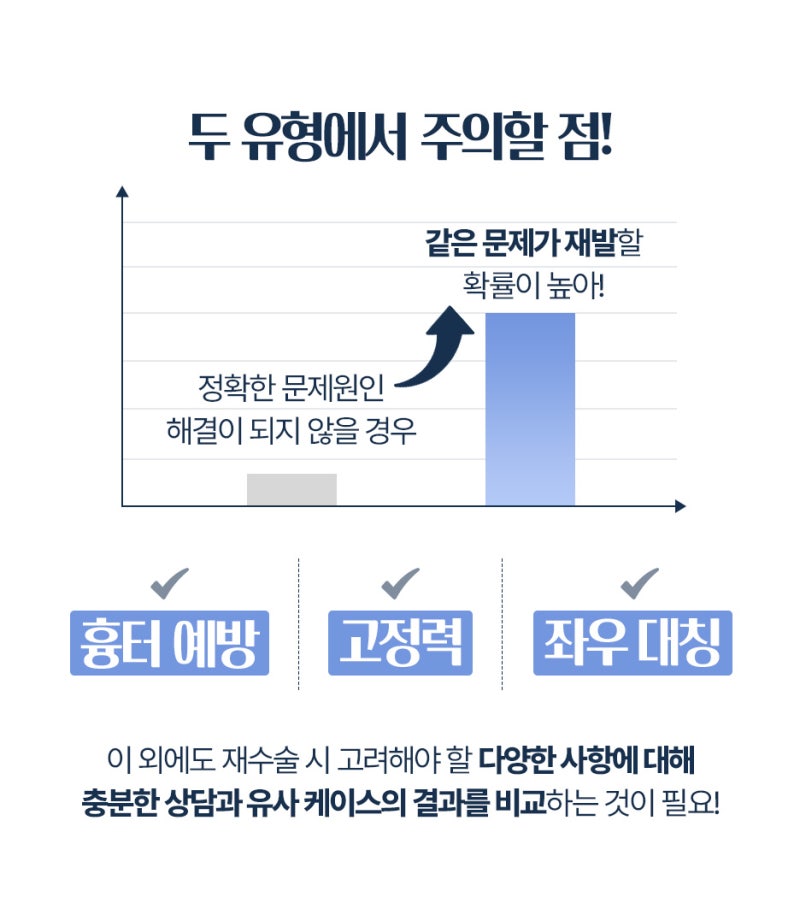
Correcting ‘sausage eyes’ and ‘loosened lines’ inherently carries a certain probability of recurrence, making it crucial to address the precise root cause of the problem. Additionally, meticulous details are necessary to prevent the formation of 2-3 layers of scars during this process and to ensure that the new line is firmly fixed.
Before making a decision, it's advisable to review various before-and-after cases similar to your own and choose a clinic specializing in double eyelid revision surgery where you feel confident and trust the results.
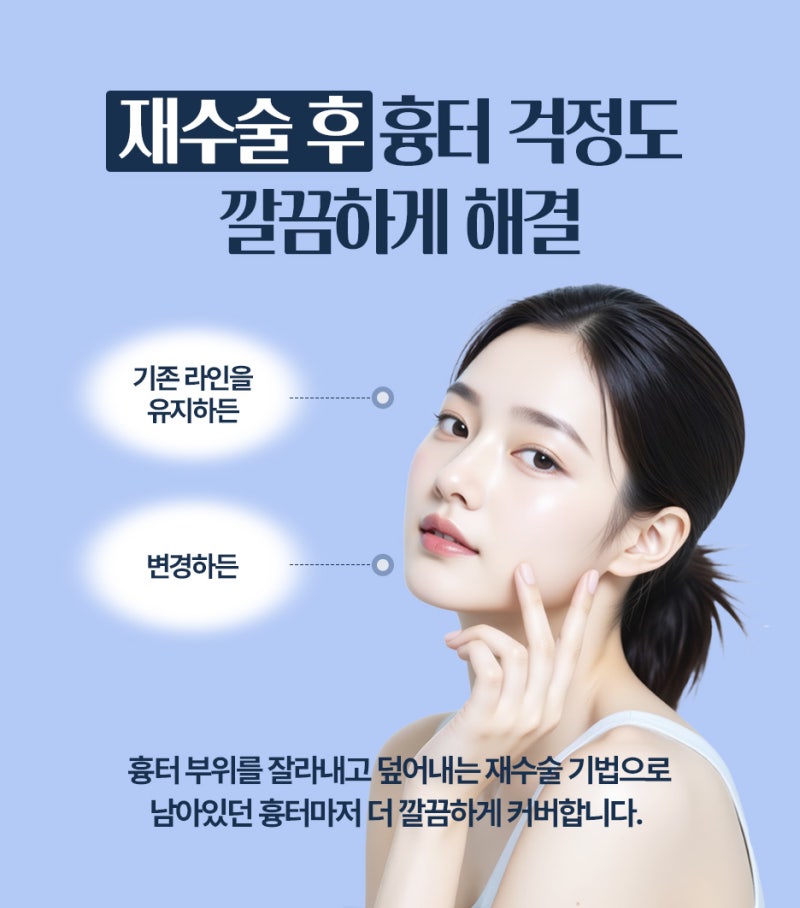
Any type of double eyelid revision surgery inevitably involves an incision or partial incision to form a new line. Naturally, patients undergoing surgery cannot help but worry about scars.
With Clyve Plastic Surgery's unique scar cover solution, which either utilizes the existing line or excises and covers the scar area if not, the size of existing scars can be significantly reduced. This allows for positive results in various aspects beyond just achieving an ideal line.
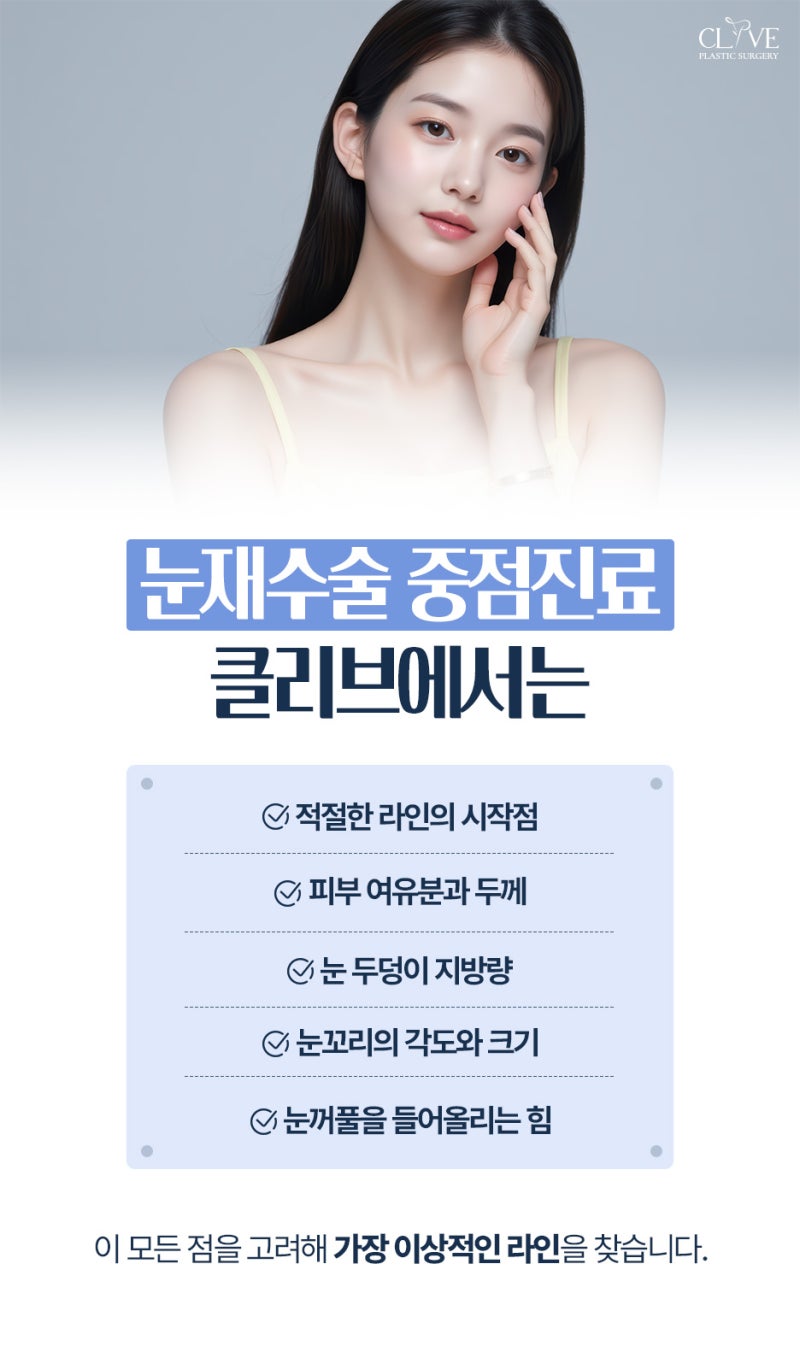
At Clyve Plastic Surgery, a clinic specializing in double eyelid revision, even the smallest issues are thoroughly checked multiple times to propose a confident surgical method. We don't just focus on creating a new line; we prioritize preventing recurrence.
By meticulously examining all tissues around the eye—including the appropriate starting point of the line, skin laxity and thickness, amount of fat in the upper eyelid, angle and size of the outer corner of the eye, and the strength of the eyelid-lifting muscle—and eliminating variables, our eye revision surgery has already brought satisfaction to many patients.
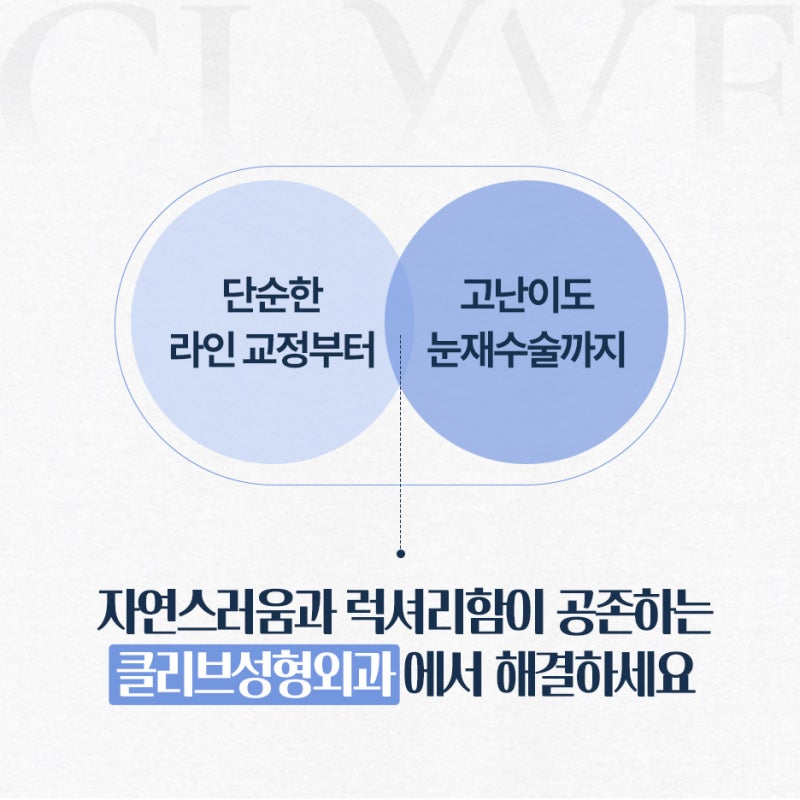
Since its inception in plastic surgery, Clyve Plastic Surgery, a clinic renowned for excellent double eyelid revision, has consistently shown a high interest in revision surgeries and continuous efforts to resolve them. From simple line corrections to highly complex eye revision surgeries, we can create eye lines that embody both naturalness and luxury, regardless of the patient or type of issue.
If there's anything you're dissatisfied with or concerned about regarding your eyes, please feel free to consult with us at any time to find a solution.


Frequently Asked Questions
Why do 'sausage eyes' occur?
‘Sausage eyes’ primarily occur when insufficient fat is removed during the initial surgery or when the double eyelid line is set excessively high. This can give the eyelid a rolled-up appearance.
What causes double eyelid lines to loosen?
The main causes of double eyelid lines loosening are weak eye-opening muscle strength, incorrect initial line placement, or insufficient technique during the line fixation process.
How is 'sausage eye' revision surgery performed?
For ‘sausage eye’ revision surgery, if there is sufficient skin laxity, the existing incision is re-incised, unnecessary skin is excised, and the line is released to prevent the formation of a double line. If there is insufficient skin laxity, a new incision line is created at a lower position than the existing line, combining dissection and fat repositioning.
What should be considered during 'loosened line' revision surgery?
During ‘loosened line’ revision surgery, the strength of the eye-opening muscle must be assessed first. If the strength is insufficient, it is strengthened through blepharoptosis correction and fat repositioning. If the problem is with line formation, a new line is created through fat grafting or by covering the existing line with an incision. Left-right asymmetry is also considered to adjust the balance.
I'm worried about scarring after double eyelid revision surgery.
Yes, it's natural to worry about scars. At Clyve Plastic Surgery, we help reduce the size of existing scars and create an ideal line through our scar cover solution, which either utilizes the existing line or excises and covers the scar area.
How long does swelling last after double eyelid surgery?
Significant swelling after double eyelid surgery usually subsides within 1-2 weeks, and residual swelling gradually disappears around one month. Depending on the individual, residual swelling can persist for up to 2 months.