2026-07-15
Curious about Abdominal Tightening Renuvion? From Effects to Recovery!
Learn about Renuvion for abdominal tightening, its effects, recovery process, and how it compares to other procedures.
Many people are looking to restore their abdominal skin elasticity these days.
There's a steady increase in individuals seeking consultations for loose abdominal skin after childbirth or sagging bellies after rapid weight loss.
Among these, a procedure that has recently gained attention is abdominal tightening Renuvion.
Today, we'll systematically explain what Renuvion is, its effects, recovery process, and how it differs from other procedures.
What is Renuvion?
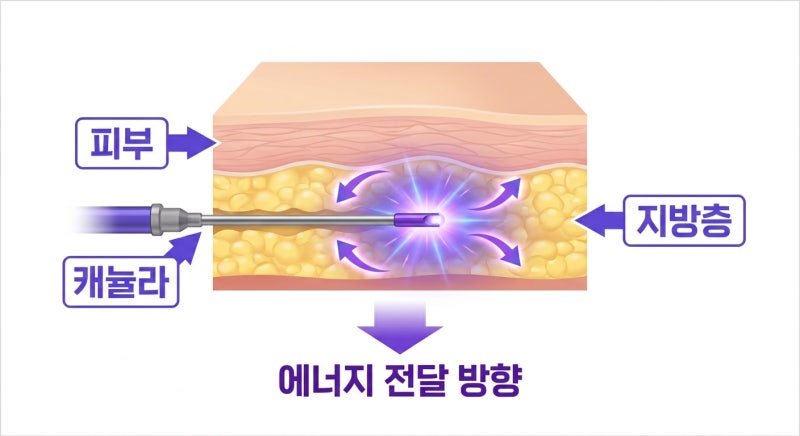
Renuvion is a device that uses helium plasma and radiofrequency energy simultaneously to contract tissues beneath the skin.
Simply put, it's a method that directly applies heat to the fibrous layer inside the skin to tighten loose tissue.
Instead of applying energy from outside the skin, a thin tube (cannula) is inserted under the skin to act directly on the tissue.
This allows for concentrated heat delivery to the internal tissues while minimizing damage to the outer skin surface.
It is particularly often applied to areas with a large skin surface and thick fat layer, such as the abdomen.
It's also frequently performed in conjunction with liposuction; a common combination is to remove fat and then use Renuvion to contract the remaining sagging skin.
Who is Abdominal Tightening Renuvion suitable for?
Renuvion is particularly helpful in the following cases:
- When abdominal skin has loosened after childbirth
- When significant weight has been lost through dieting, but the skin hasn't retracted accordingly
- When concerned about residual skin laxity after liposuction
- When overall abdominal skin elasticity has decreased
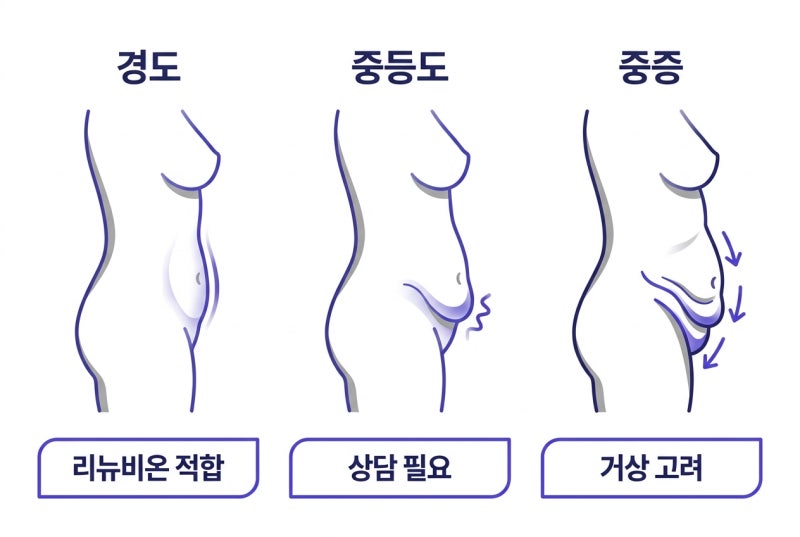
However, if the degree of skin laxity is very severe, Renuvion alone may have limitations.
In such cases, abdominoplasty, which involves direct skin removal through an incision, might be more suitable.
The appropriate method must be determined after directly assessing the current skin condition.
The suitable procedure varies depending on the degree of skin laxity. It's important to first understand ‘how much skin laxity I have’ before a consultation.
Tummy Tuck vs. Renuvion, what's the difference?
When considering abdominal tightening, people often compare a tummy tuck (a surgical procedure that directly incises and lifts the skin) with Renuvion.
Both methods have similar goals but quite different approaches.
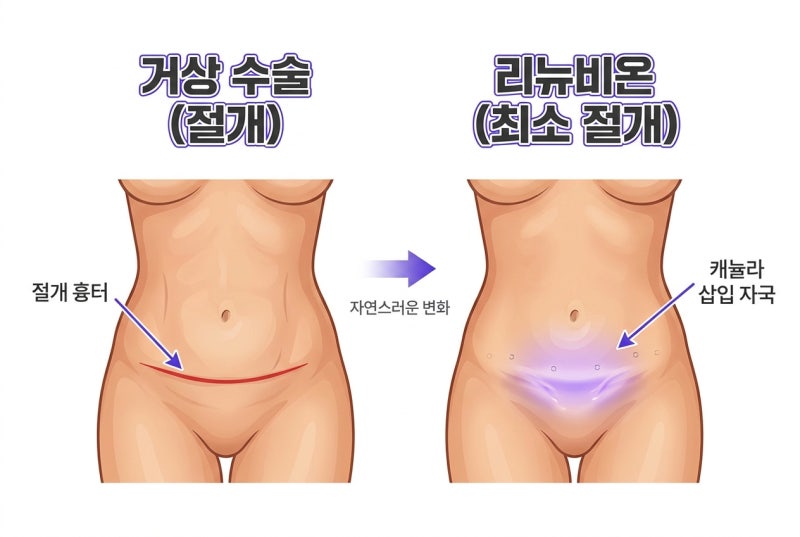
A tummy tuck involves actually incising the skin, cutting it away, pulling it tight, and suturing it.
It can provide powerful results for severe laxity but leaves surgical scars and has a long recovery period.
It typically takes about 1-2 weeks to return to daily life.
Renuvion is a method that contracts tissue beneath the skin without an incision.
It has a much lower scar burden and faster recovery.
However, it works best for mild to moderate laxity, and for severe laxity, it's difficult to expect the same corrective effect as a tummy tuck.
Category | Tummy Tuck | Renuvion |
Incision | Yes | Minimal to None |
Scarring | Present | Minimized |
Suitable Laxity | Severe | Mild-Moderate |
Recovery Period | 1-2 weeks | Immediate recovery |
Duration of Effect | Long-term | 4-5 years |
The choice between a tummy tuck and Renuvion is based on ‘your skin condition.’
If your laxity isn't severe and you're concerned about scars, Renuvion could be an option.
Conversely, if the laxity is significant, a tummy tuck may yield more realistic results.
What are the actual effects of Renuvion?
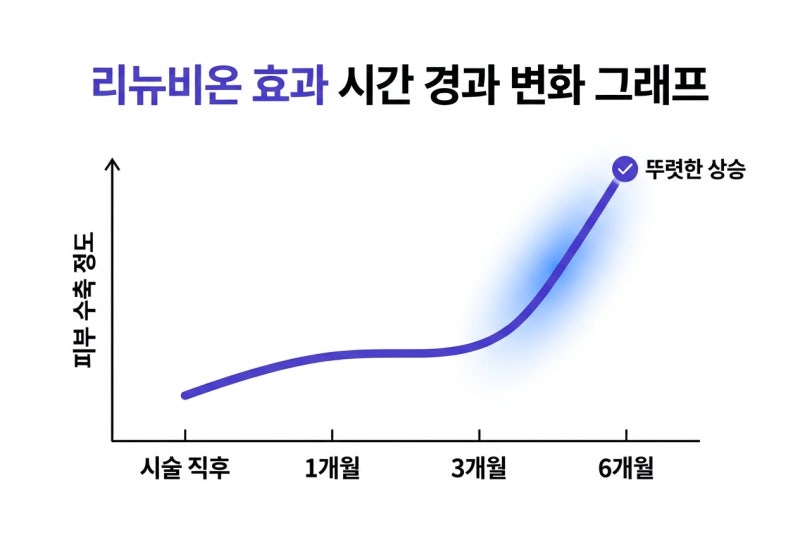
Renuvion shows a tightening effect immediately after the procedure,
but the tissue gradually contracts and tightens over several months post-procedure.
Many people feel the effects more distinctly 3 to 6 months after the procedure than immediately afterward.
When performed in conjunction with liposuction,
the skin in the area where fat was removed often contracts, resulting in a much smoother and firmer feel.
The duration of the effect varies depending on skin care, weight changes, and age.
If you gain a significant amount of weight after the procedure, the skin can loosen again, so maintaining your weight plays an important role in prolonging the effects.
How does Renuvion recovery proceed?
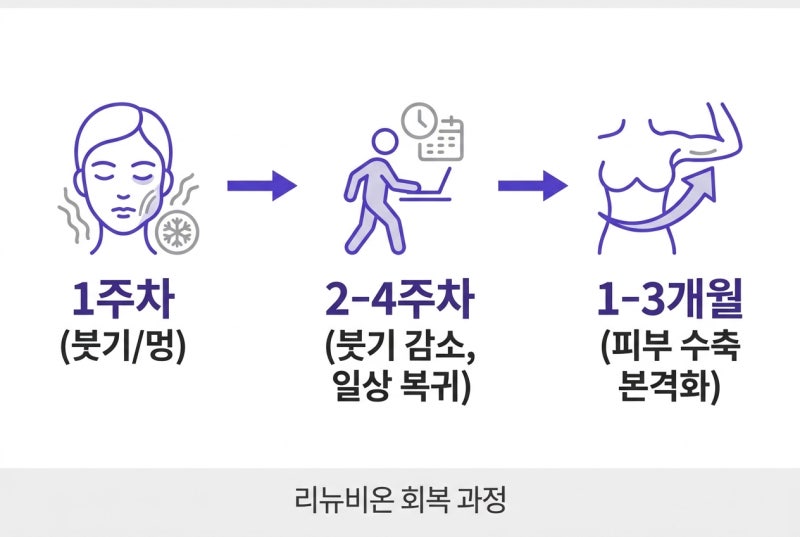
The first week after the procedure is when swelling and bruising occur.
You might feel your entire abdomen is swollen, and the skin color may appear reddish or purplish.
Wearing a compression garment during this period helps with recovery.
From weeks 2-4, swelling gradually begins to subside.
Most daily activities become possible, but it's best to avoid strenuous exercise or movements that put pressure on the abdomen.
After 1-3 months, the skin contraction effect becomes fully apparent.
Many people only then feel, ‘Ah, there's a difference.’
If performed simultaneously with liposuction, the recovery period might be a bit longer.
It's advisable to discuss thoroughly with a specialist and plan your recovery schedule in advance.
Things to check before the procedure
Before deciding on abdominal tightening Renuvion, there are a few good things to check.
First, you need to have the current degree of skin laxity accurately assessed.
This is because whether Renuvion is suitable or if another method is needed depends on the level of laxity.
Also, the experience of the doctor performing the procedure is important.
Renuvion results can vary depending on the operator's proficiency with the equipment.
It's advisable to check if the medical staff has sufficient experience and conducts thorough consultations beforehand.

Abdominal tightening Renuvion is a method that can improve abdominal skin elasticity without an incision,
and it can provide highly satisfactory results for suitable candidates.
However, since the results vary depending on the degree of laxity, individual skin condition, and whether other procedures are performed concurrently, a thorough consultation is essential first.
You likely have many questions, such as what's right between a tummy tuck and Renuvion, whether it should be combined with liposuction, and how to plan the recovery period.
The most accurate way to address these points is to confirm your condition through a direct consultation and make a decision.